The Hidden Trap of Late-Life Wealth Accumulation: Why Decumulation Must Begin at 45

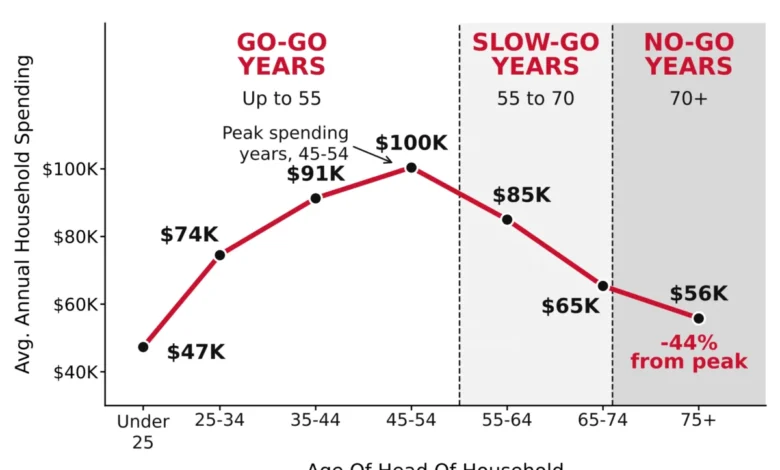
The traditional paradigm of retirement planning has long dictated a linear trajectory: accumulate aggressively during one’s primary earning years, exit the workforce around the traditional retirement age of 65, and gradually draw down capital over a subsequent three-decade span. However, contemporary financial research and observational insights from behavioral economists suggest that this model is fundamentally flawed. Waiting until late life to intentionally spend accumulated wealth often results in unspent capital, unfulfilled life experiences, and a phenomenon known as behavioral compounding—where decades of disciplined saving create psychological barriers that prevent individuals from enjoying their hard-earned assets.
Financial analysts and retirement experts increasingly point to age 45 as a more appropriate starting point for capital decumulation, commonly referred to as the "go-go years." Beyond this milestone, the biological and psychological capacity to consume experiences—such as rigorous travel, physical excursions, and high-engagement leisure—begins a steady decline. Without a deliberate shift in spending strategy, retirees frequently find themselves with abundant financial resources but severely diminished desires to utilize them.
Behavioral Compounding: The Psychological Barrier to Spending
The primary driver behind unspent retirement capital is not necessarily a lack of financial literacy or economic resources, but rather the deeply ingrained habituation of frugality. Behavioral psychologists note that financial discipline functions much like a muscle. Decades of self-denial, budgeting, and prioritizing long-term asset accumulation create a psychological wiring that resists sudden modification.
For lifelong savers, the instruction to increase spending—even when backed by empirical retirement models demonstrating structural safety—is frequently met with internal resistance. This phenomenon explains why individuals possessing substantial net worth often continue to exhibit hyper-frugal behaviors late in life, agonizing over relatively minor discretionary purchases. The cognitive framework developed during early career stages, when capital was scarce, persists long after financial independence has been achieved.
This behavioral inertia exposes a paradox within modern wealth-building movements, such as Financial Independence, Retire Early (FIRE). The very discipline required to amass sufficient capital to exit the workforce prematurely often becomes the psychological impediment that prevents retirees from enjoying the fruits of their labor. Consequently, wealth that could have funded life-enriching experiences remains untouched, ultimately transferring to heirs or financial markets rather than serving its primary purpose of enhancing the saver’s quality of life.

The Declining Utility of Capital Over Time
Empirical observations of consumer spending across age cohorts consistently demonstrate that discretionary expenditures follow a bell curve, peaking during middle age and declining sharply past age 65 or 70. This trend is driven by several interrelated factors:
- Physical Mobility and Health Constraints: Rigorous activities, international travel, and physically demanding hobbies naturally decline as individuals age. Even when financial barriers are completely removed—such as through fully funded travel offers or family subsidies—elderly individuals frequently decline participation due to fatigue, health anxieties, or a general loss of novelty-seeking motivation.
- Shift in Entertainment Preferences: Older demographics typically pivot toward low-cost, passive forms of entertainment. High-ticket experiences and luxury items yield diminishing marginal utility, while routine daily habits become deeply entrenched.
- Eldercare Cost Anxieties: The escalating cost of long-term care and medical expenses in later life acts as a powerful psychological deterrent. Fearing catastrophic healthcare outlays, retirees often hoard cash reserves well beyond what actuarial tables suggest is necessary, sacrificing present-day comfort for a worst-case financial scenario.
Redefining the Retirement Spending Timeline
To counter the tendency toward late-life capital hoarding, financial planners advocate for a restructured timeline that front-loads experiential spending. Rather than viewing retirement as a uniform phase beginning at 65, experts categorize life stages into distinct operational windows:
- Ages 20 to 45 (Accumulation Phase): Focus on career development, asset building, and establishing financial security, while managing family obligations. Aggressive discretionary spending is generally discouraged during this period due to long-term liabilities.
- Ages 45 to 65 (The Decumulation Window): Characterized by peak physical vitality combined with established financial stability. Experts argue this 15-to-20-year window represents the optimal period for intentional wealth consumption, maximizing experiences while physical health remains intact.
- Ages 65 and Beyond (Passive Maintenance Phase): Expenditures naturally skew toward healthcare, domestic comfort, and essential living costs, as discretionary consumption drops organically.
Implications for Modern Wealth Management
The growing recognition of behavioral lock-in has prompted a shift in how financial advisors approach retirement modeling. Traditional safe withdrawal rates, historically anchored near 4%, have frequently proven overly conservative in light of historical market returns and modern portfolio performance. Many retirees find their net worth significantly higher at age 70 than it was at the time of their retirement.
To bridge the gap between accumulation and consumption, financial professionals recommend implementing structured spending targets, such as discretionary "YOLO funds" or predetermined annual capital reduction goals. By formalizing spending as an intentional line item rather than an afterthought, savers can systematically dismantle the psychological barriers constructed over decades of accumulation.
Ultimately, the empirical reality of aging suggests that wealth possesses an expiration date tied not to the lifespan of the account holder, but to their active engagement with the world. Failing to intentionally deploy capital during peak physical years risks transforming a lifetime of labor into an unintended inheritance, leaving experiences permanently unrealized.