But the trade deficit worsened, driven by the AI boom. And the drunken sailors in Washington pushed the Debt-to-GDP ratio to 121.7%.

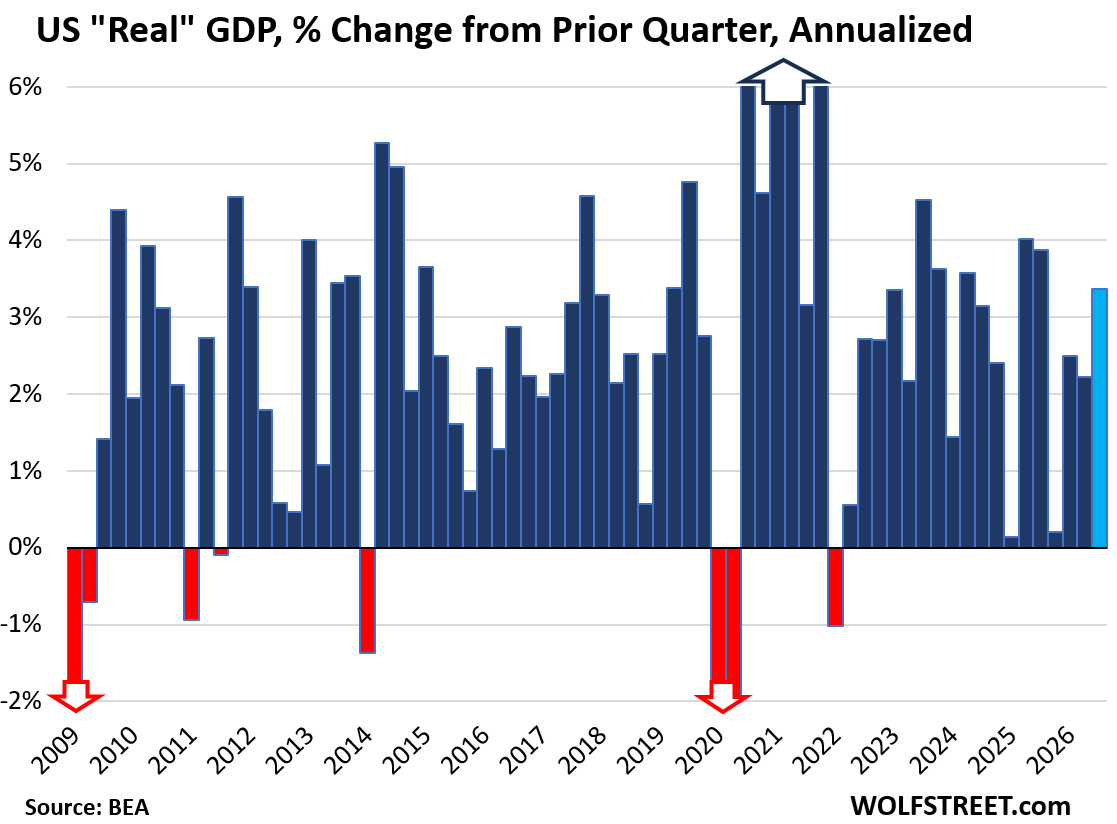
The Bureau of Economic Analysis (BEA) released its advance estimate for third-quarter gross domestic product (GDP) on October 29, 2026, revealing a complex picture of the United States economy. While the headline figure of 3.4% annualized growth suggests a robust expansion, a granular examination of the data exposes a divergence between a surging private sector and an increasingly burdened federal fiscal position. The report highlights how the ongoing artificial intelligence investment cycle is simultaneously fueling domestic productivity and creating a significant drag on the trade balance through massive hardware imports.
The Anatomy of Q3 Growth
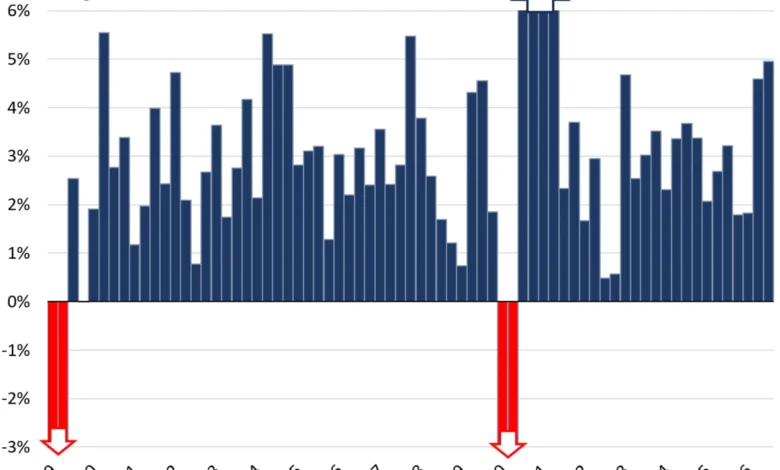
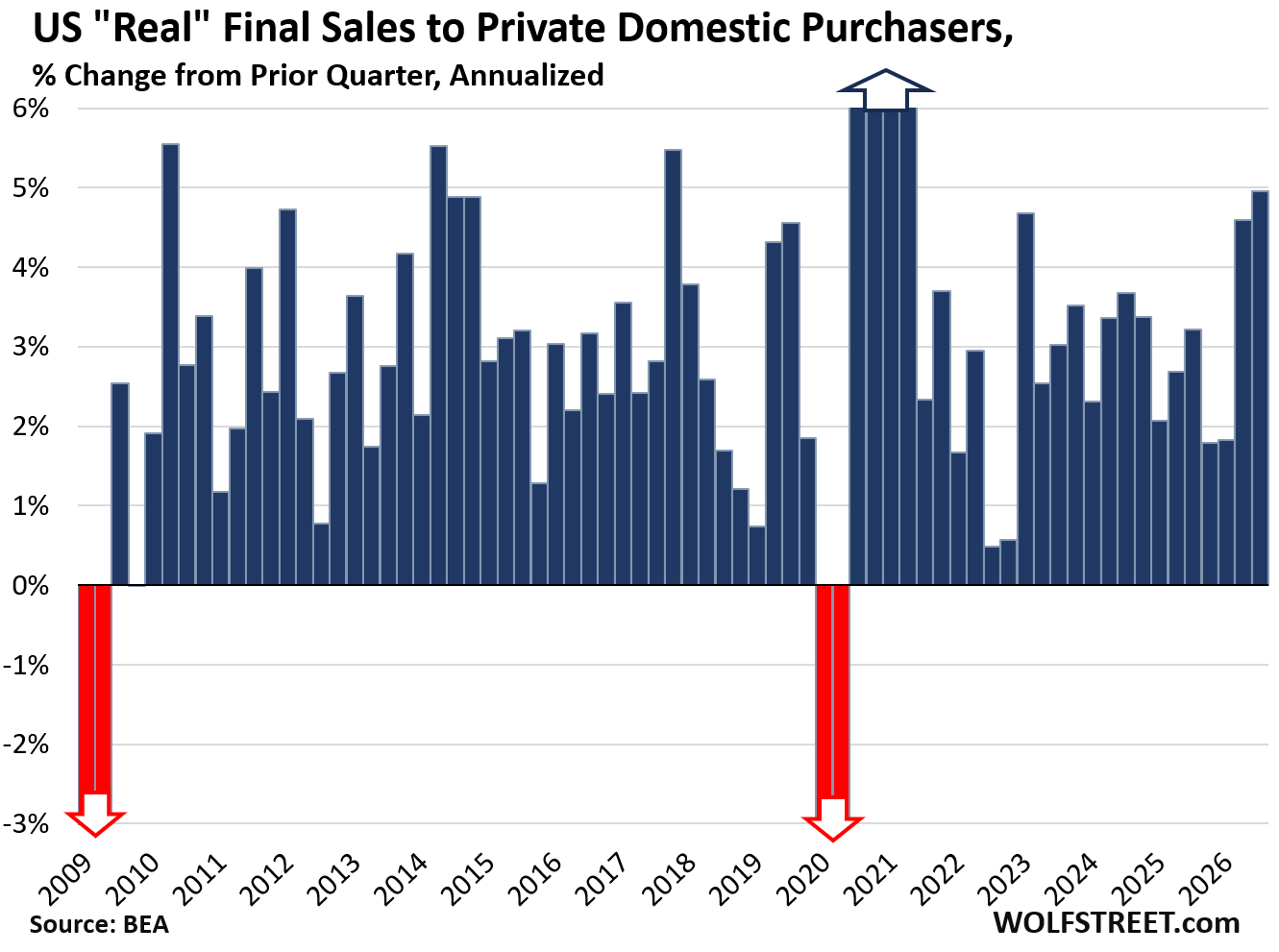
At the core of the 3.4% growth figure lies a "red-hot" private domestic economy. Economists often look to "Real Final Sales to Private Domestic Purchasers"—a metric that excludes volatile government spending, net exports, and inventory fluctuations—to gauge the true underlying health of the U.S. consumer and corporate sectors. This metric expanded by an annualized 4.9% in the third quarter, marking the fastest pace of growth since the post-pandemic recovery surge in the second quarter of 2021.
This growth trajectory follows a strong second quarter, which saw a 4.6% increase in private demand. By stripping away the noise of government intervention and international trade, the data suggests that private sector demand, representing roughly 88% of total GDP, remains remarkably resilient despite persistent interest rate pressures and inflationary headwinds.
The AI-Driven Trade Deficit
A significant anomaly in the Q3 report is the impact of the trade deficit, which shaved 3.32 percentage points off the overall GDP growth rate. This was primarily driven by a 19.7% annualized surge in imports, a trend heavily influenced by the capital-intensive nature of the current AI boom. Corporations are currently engaged in a massive procurement cycle for high-end semiconductor chips, data-center cooling systems, and specialized infrastructure components, much of which is sourced from overseas.
While these imports are categorized as a deduction from GDP, they are effectively the physical embodiment of a massive domestic capital investment surge. As U.S. tech giants and enterprise firms rush to build out the next generation of computing architecture, the immediate accounting effect is a worsening of the trade deficit. Concurrently, exports faltered, plunging by 5.7% in the quarter, further widening the gap and acting as a significant anchor on the headline growth figure.
Consumer Resilience and Investment Trends
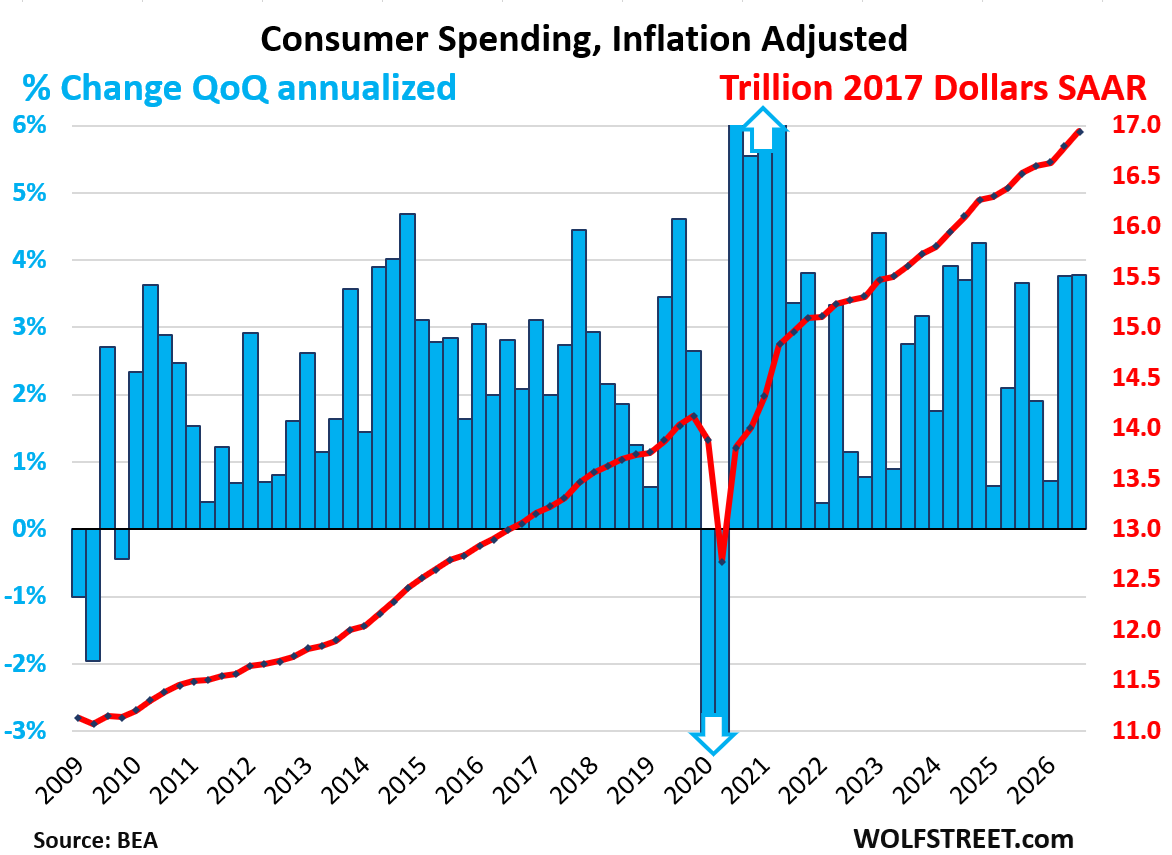
Consumer spending remains the bedrock of the U.S. economy, accounting for approximately 69% of GDP. In the third quarter, real personal consumption expenditures rose by 3.8%—the second consecutive quarter of such growth. This strength was broad-based, spanning both goods and services, indicating that despite a cooling labor market in some sectors, household purchasing power remains supported by steady income growth and accumulated savings.
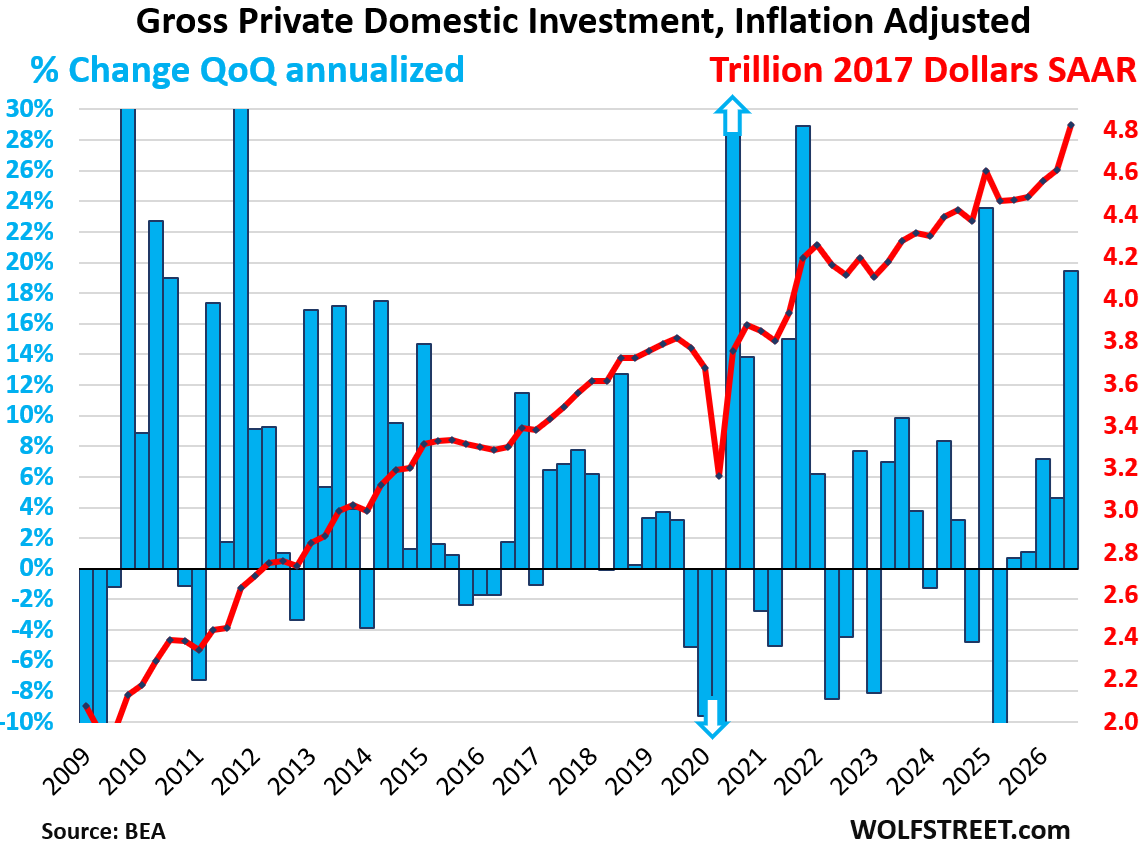
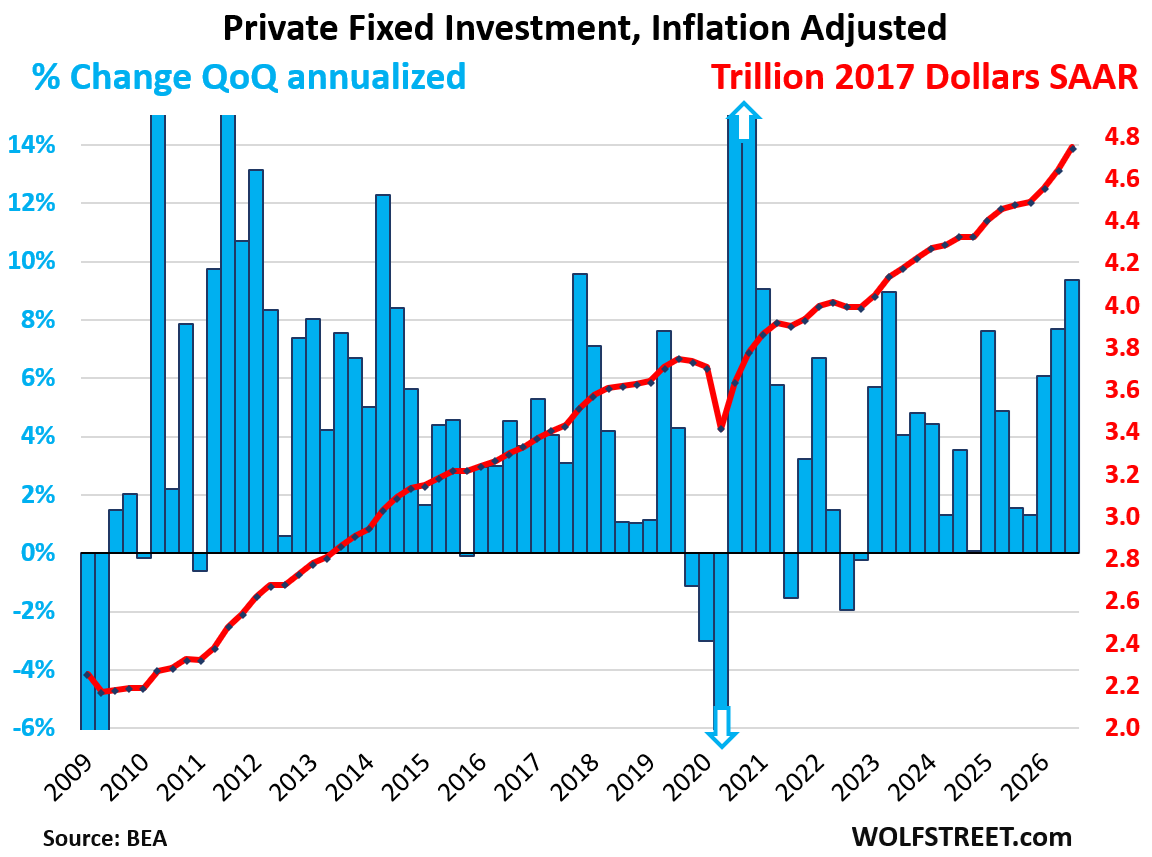
On the business side, gross private domestic investment saw a dramatic 19.4% annualized spike, reaching $4.8 trillion. This figure, however, requires nuance: a substantial portion of this growth was tethered to the accumulation of inventories, particularly the aforementioned AI hardware sitting in warehouses awaiting installation. When looking strictly at "private fixed investment"—which excludes inventory fluctuations—the growth was a still-impressive 9.4%. This represents a sustained acceleration from 7.7% in the second quarter and 6.1% in the first, signaling that business confidence in capital expenditure remains high, even as the residential housing sector faces a contraction due to an emerging inventory glut in new single-family and multi-family units.
Fiscal Policy and the Debt-to-GDP Ratio
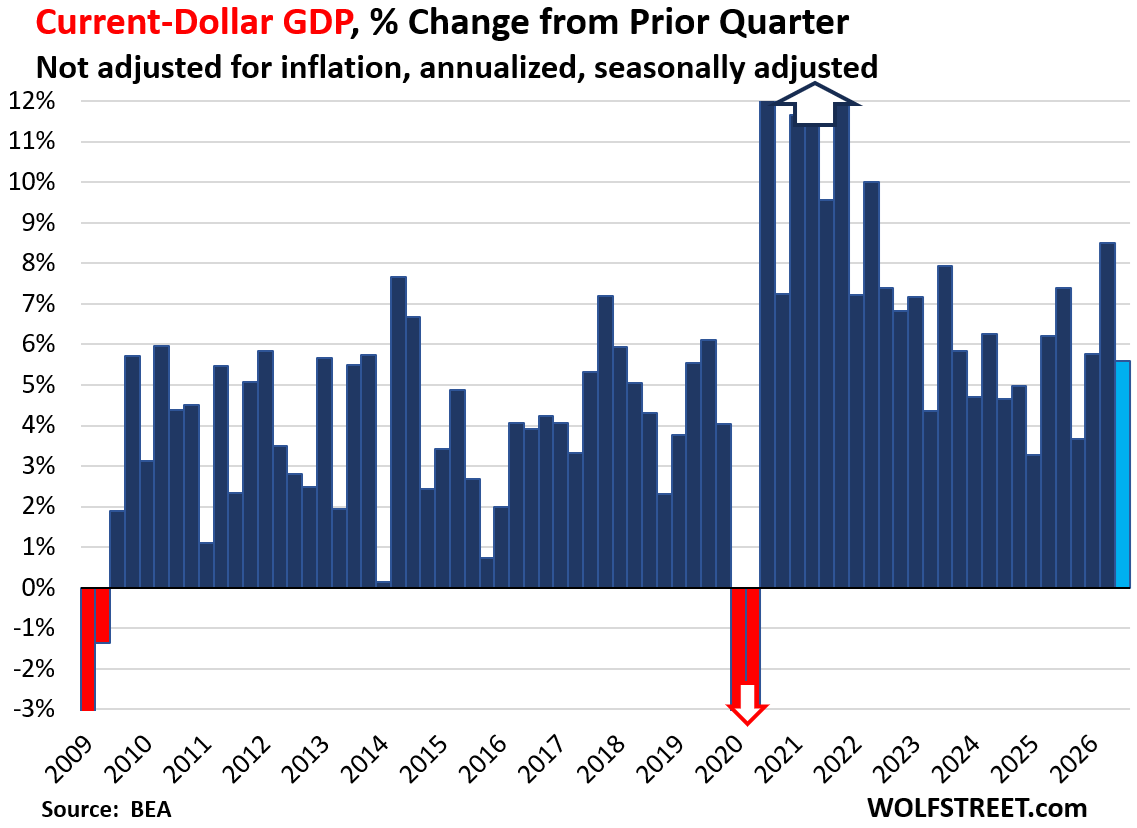
While the private sector demonstrates expansionary vigor, the public sector continues to present a structural challenge to long-term stability. Nominal GDP, which is not adjusted for inflation, grew by 5.6% to reach $33.0 trillion. However, the federal government’s fiscal trajectory is outpacing the economy’s expansion. The Debt-to-GDP ratio reached 121.7% in the third quarter, a result of federal debt rising by 1.8% quarter-over-quarter, while the economy’s nominal growth lagged behind.
This ratio is a critical indicator of fiscal sustainability. The federal government’s consumption expenditures and gross investment spiked by 15.8% in the third quarter, reversing a contraction in the previous period. This increase in federal outlays added 0.91 percentage points to the total GDP growth. Conversely, state and local government spending remained essentially flat, declining by 0.1%. The divergence between federal spending and private sector growth raises questions regarding the sustainability of current deficit-financed stimulus, particularly as discussions regarding potential tax reforms and spending cuts continue to circulate in Washington.

Contextualizing the Performance
To place these figures in historical context, the 3.4% growth rate in Q3 is significantly higher than the 20-year average of 2.2% (which includes recessionary periods) and the 2.5% average observed between the 2008 Great Recession and the 2020 pandemic.
However, the "GDP deflator"—a measure of inflation within the economy—recorded at 2.2% for the quarter. This represents a relief from the higher inflationary pressures seen in previous periods, largely due to a decline in energy prices during the third quarter. The combination of strong growth and moderating inflation provides a unique backdrop for the Federal Reserve’s monetary policy deliberations. While the economy is clearly not in a recession, the fiscal burden and the reliance on imported capital goods present distinct risks that policy analysts are watching closely.
Implications for the Future
The third-quarter data provides a definitive answer to concerns regarding a near-term economic collapse, proving that the U.S. economy remains in a state of high-velocity transition. The "AI-driven" nature of the investment suggests a focus on long-term productivity enhancements rather than speculative consumption alone. However, the reliance on high-dollar imports to fuel this growth creates a structural trade vulnerability that may persist as long as the hardware race continues.
The most pressing concern remains the fiscal position. With the Debt-to-GDP ratio climbing, the federal government faces a narrowing window to manage the cost of its obligations. Economists point out that while the economy is currently growing, the compounding effect of debt levels exceeding 120% of GDP will likely necessitate a shift toward either aggressive fiscal consolidation or higher productivity growth to avoid a crowding-out effect in the private credit markets.
As the administration and Congress look toward the next fiscal year, the Q3 data serves as a double-edged sword: the economy is fundamentally strong enough to handle current interest rates, yet it remains heavily dependent on both continued private-sector capital investment and sustained government deficit spending. The challenge for policymakers will be to nurture the private sector’s momentum while navigating the constraints of a ballooning national debt.