Beyond the Ballot: How Brazil’s Historic 2026 Election Reshapes the Future of Latin American Democracy

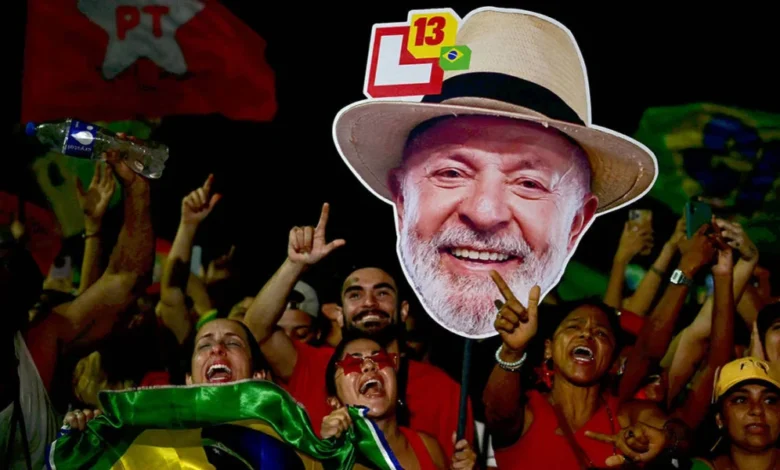
SÃO PAULO — In an electoral showdown that rewrote the history books of modern South American politics, Brazilian President Luiz Inácio Lula da Silva secured a historic reelection victory, defeating challenger Flávio Bolsonaro in a fiercely contested runoff. The October 2026 election not only demonstrated the resilience of Brazil’s democratic institutions but also shattered a long-standing statistical precedent: until Lula’s remarkable comeback, no presidential candidate in Brazil’s democratic history had ever successfully overturned a first-round deficit in a second-round runoff.
With a turnout exceeding 128 million voters—representing nearly three million more ballots cast than in the initial round—the election underscored the deep polarization defining the nation, while simultaneously reaffirming the public’s engagement with democratic governance. Yet, as political analysts Robert Muggah and Ilona Szabó de Carvalho point out, this renewed democratic confidence must now be matched by rigorous institutional and structural reforms. To secure long-term stability, the administration faces the critical task of building broad coalitions that extend far beyond the traditional boundaries of the political left, drawing strategic lessons from recent democratic resilience observed in international contexts such as Hungary and Serbia.
The Anatomy of a Historic Comeback: Chronology of the 2026 Race
The path to the October 2026 runoff was paved with intense ideological battles, economic crosswinds, and high-stakes political maneuvering. The electoral calendar unfolded against a backdrop of intense public scrutiny over inflation, social welfare programs, and the ongoing struggle for the preservation of democratic norms following the turbulent political climate of the early 2020s.
In the initial first round of voting held earlier in October, Flávio Bolsonaro—carrying the political mantle of his father, former President Jair Bolsonaro—surprised several pollsters by securing a narrow plurality. Historically, trailing in the first round of a Brazilian presidential election carried a severe psychological and mathematical disadvantage. Commentators and political scientists widely regarded a first-round lead as an insurmountable momentum builder for runoff victories.
However, Lula’s campaign orchestrated a rapid and aggressive strategic pivot. Mobilizing grassroots networks across the vital industrial centers of the Southeast and the historically supportive stronghold of the Northeast, the incumbent administration reframed the runoff as a referendum on democratic continuity, economic stability, and social protection.
By the time the Superior Electoral Court (TSE) officially announced the final results of the second round on October 27, 2026, Lula had captured nearly 52% of the valid vote, successfully edging out Flávio Bolsonaro, who finished with approximately 48%. The narrow four-percentage-point margin highlighted a deeply divided electorate, split along geographic, economic, and generational lines, yet ultimately yielding a decisive mandate for the incumbent head of state.
Electoral Data and Voter Turnout Metrics
The mechanics of the 2026 election revealed shifting patterns in voter behavior across Brazil’s vast and diverse demographic landscape. Total voter participation surged in the runoff, driven by intensive mobilization efforts from both major political camps.
| Metric | First Round | Second Round (Runoff) |
|---|---|---|
| Total Votes Cast | ~125 Million | ~128 Million |
| Luiz Inácio Lula da Silva Vote Share | Trailed plurality | ~52% |
| Flávio Bolsonaro Vote Share | Led plurality | ~48% |
| Key Battleground Regions | National dispersion | Southeast and urban centers |
The data indicates that while the Bolsonaro camp maintained robust support among agribusiness-heavy interior states and conservative urban middle-class voters, Lula’s ability to capture undecided and centrist voters in pivotal states like Minas Gerais and São Paulo proved decisive. The increase of nearly three million voters between the first and second rounds suggests that get-out-the-vote campaigns successfully galvanized previously disengaged citizens, turning the runoff into a high-turnout referendum on the nation’s future trajectory.
Official Responses and Domestic Reactions
Following the certification of the results by the TSE, reactions from political stakeholders underscored both the triumph of the electoral system and the persistent friction within the political sphere.
International allies and domestic supporters praised the efficiency and transparency of Brazil’s electronic voting system, which once again processed tens of millions of votes swiftly and securely. Economic markets reacted with cautious optimism, prioritizing political stability and the continuity of fiscal policy over ideological shifts. Business associations emphasized the urgent need for structural fiscal adjustments, tax reform implementation, and infrastructure investments to sustain post-election economic growth.
Conversely, representatives from the conservative opposition voiced concerns over the narrowness of the defeat and pledged to act as a formidable legislative check against executive overreach. While acknowledging the official tallies, opposition leaders stressed that nearly half of the voting population demanded a redirection of national priorities, particularly regarding public spending, security policies, and government oversight. This legislative reality ensures that the incoming administration will operate within a divided National Congress, necessitating negotiation rather than unilateral decree.
Broader Implications: Lessons from Global Democracies
The narrow victory and the persistent polarization of the electorate raise fundamental questions about the long-term health of Brazilian governance. According to political analysts Muggah and Szabó de Carvalho, winning the executive office is merely the first step; the true challenge lies in institutional consolidation.
To prevent democratic backsliding and mitigate hyper-partisanship, Brazil must look beyond its borders for comparative lessons. Recent political developments in nations such as Hungary and Serbia demonstrate how fragile democratic systems can be strained when political power remains hyper-concentrated within partisan factions. In those European contexts, democratic resilience was ultimately reinforced through broad-based coalitions that united disparate political actors around the foundational defense of constitutional checks and balances, independent judiciaries, and civil liberties.
For Brazil, applying these lessons requires a deliberate departure from insular politics. Lula’s administration faces the imperative of forging cross-ideological alliances within the National Congress. Achieving sustainable progress on structural reforms—such as administrative modernization, public security overhauls, and environmental governance—will require co-opting moderate members of the opposition and securing broad legislative consensus.
Looking Ahead: Challenges for the Second Term
As President Lula prepares to embark on his new mandate, his administration inherits a complex matrix of domestic and international expectations. Domestically, the government must balance fiscal responsibility with social programs aimed at poverty reduction. The polarization exposed by the October 2026 results demands a conscious effort toward national reconciliation, ensuring that governance addresses the legitimate grievances of the nearly 48% of citizens who voted for change.
Internationally, Brazil retains a pivotal role in global diplomacy, particularly regarding climate change, Amazon rainforest preservation, and multilateral trade negotiations. How the administration navigates its internal congressional dynamics will heavily influence its credibility on the world stage.
Ultimately, the 2026 election will be remembered not just for its record-breaking statistics and dramatic second-round reversal, but as a critical juncture for Brazilian democracy. Whether the nation can transition from a state of polarized electoral competition to a phase of constructive institutional reform will depend entirely on the willingness of its political leadership to build inclusive coalitions that transcend traditional ideological divides.
Related posts: