Unusual Market Divergence: U.S. Treasury Volatility Spikes While Bitcoin Options Point to Historic Quiet

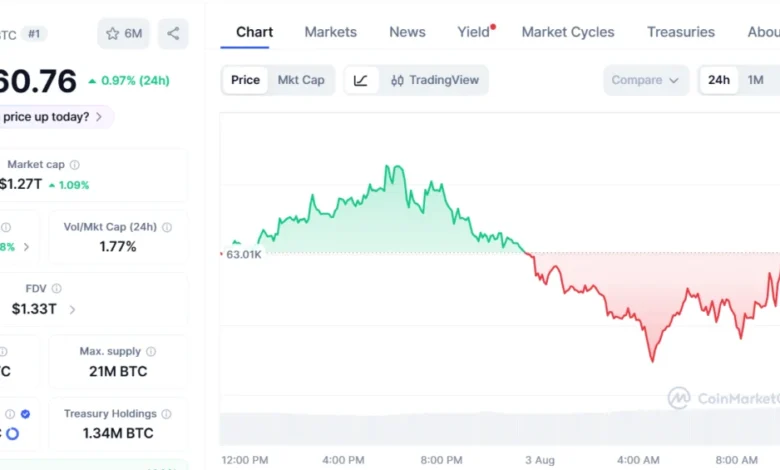
In a striking reversal of traditional financial market dynamics, the world’s leading cryptocurrency is currently exhibiting an aura of calm while the usually steadfast U.S. government bond market experiences a surge of acute nervousness. U.S. Treasury volatility has escalated sharply over recent trading sessions, driven by mounting macroeconomic pressures, shifting interest rate expectations, and inflation concerns. Meanwhile, Bitcoin—an asset historically synonymous with wild price swings and severe market turbulence—is maintaining an uncharacteristically subdued outlook in the options market.
This unexpected divergence has captured the attention of quantitative analysts, macro economists, and institutional investors alike. While fixed-income traders scramble to hedge against mounting uncertainties in sovereign debt, digital asset derivatives traders are pricing in historically low levels of expected price fluctuations. As traditional financial markets grapple with the ripple effects of rising yields and tightening economic conditions, the evolving relationship between the bond market and the cryptocurrency ecosystem underscores a fascinating shift in cross-asset sentiment.
The Anatomy of the Bond Market Shakeup
To understand the current divergence, one must examine the severe pressures that have recently gripped the global fixed-income landscape. U.S. Treasury volatility, as measured by the widely watched MOVE index, has climbed steeply, moving from a baseline of approximately 80 earlier in the week to a notable reading of roughly 104. This marks the highest volatility reading for government bonds since March, signaling deep-seated anxiety among fixed-income investors.
The catalyst behind this spike in bond market jitters is a complex confluence of persistent inflation anxieties, fluctuating energy prices, and a recalibration of monetary policy expectations. Investors are increasingly uncertain about the path forward for central bank interest rates. This macroeconomic unease pushed the benchmark U.S. 10-year Treasury yield to a notable peak of approximately 5.2% before it experienced a marginal easing.
A rapid tightening of financial conditions of this magnitude historically spells trouble for risk-on assets. Higher sovereign yields elevate the risk-free rate of return, making government-backed debt significantly more attractive compared to speculative investments. Furthermore, rising yields drive up borrowing and financing costs across the broader economy, tightening liquidity and frequently triggering risk-off corrections across equities and digital assets alike.
Bitcoin’s Subdued Volatility: A Historic Departure
Despite the macroeconomic tremors shaking the sovereign debt market, the digital asset ecosystem has shown a remarkable degree of resilience, at least in terms of expected price variance. While Bitcoin’s broader spot market rally experienced a temporary stall as Treasury yields climbed, the options market is telling a surprisingly tranquil story.
Volmex’s 30-day Bitcoin implied volatility index, known as BVIV, has been hovering persistently around the 37 mark. More strikingly, this metric is closing in on its lowest levels for the year 2026, which sit at approximately 35. This low expected volatility is not isolated to the cryptocurrency sector alone; the Cboe VIX, which measures expected volatility in the benchmark S&P 500 equity index, is similarly hugging its yearly lows at roughly 14.
This juxtaposition creates a fascinating structural anomaly. Government bonds—traditionally categorized as the ultimate safe-haven assets and the foundational building blocks of global institutional liquidity—are currently exhibiting higher expected turbulence than an asset class widely regarded by mainstream finance as one of the most volatile in existence. Market participants are actively paying significantly higher premiums to protect their portfolios against sudden shifts in Treasury market conditions, whereas expected volatility for Bitcoin remains heavily anchored relative to its own historical standards.
Weakening Correlations and Macroeconomic Implications
The divergence between the MOVE index and digital asset volatility metrics points to a broader decoupling in cross-asset correlations. Recent analytical observations indicate that the statistical correlation between the MOVE index and both equity market volatility and Bitcoin volatility has turned negative or flattened out near zero.
Historically, periods of severe stress in the macroeconomic environment led to synchronized sell-offs, where panic in the bond or currency markets instantly bled into risk assets, triggering widespread liquidations in crypto derivatives. However, the current decoupling suggests that market participants are pricing these two realms of finance through entirely different lenses.
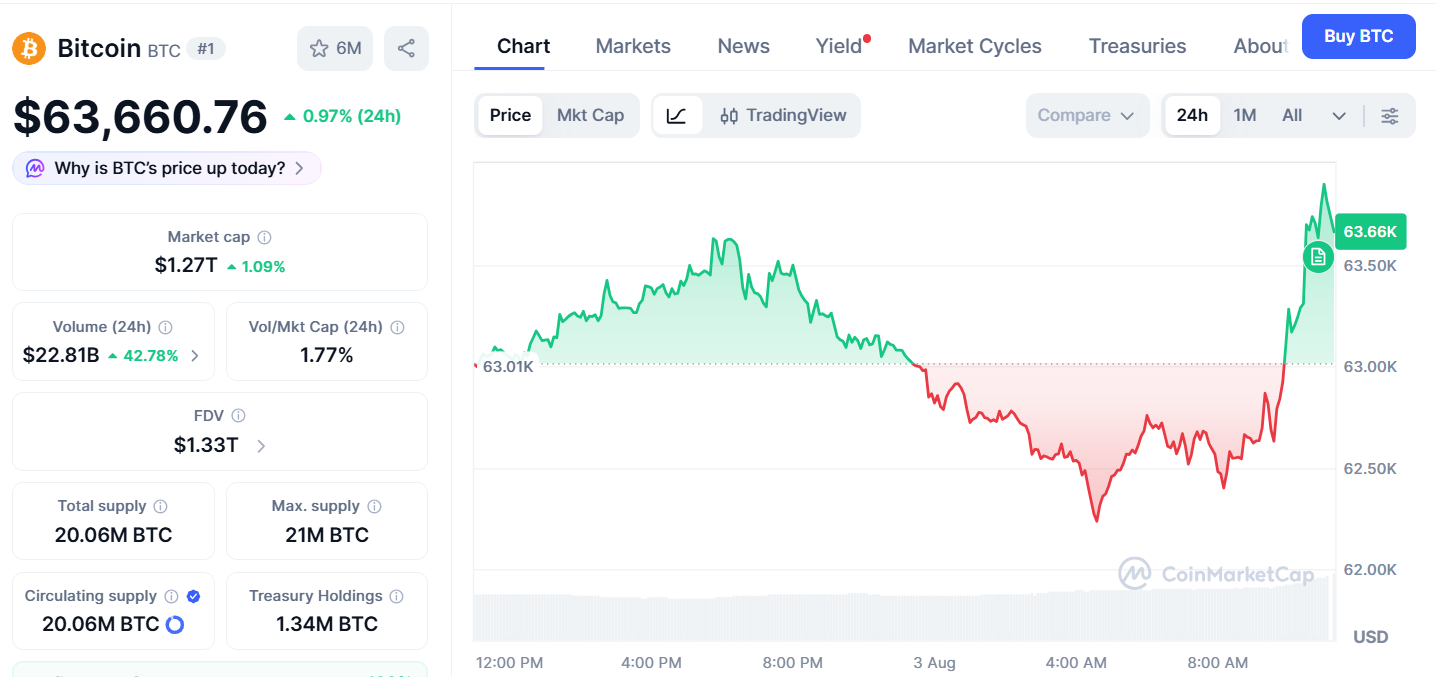
It is important to emphasize that this statistical divergence does not imply that Bitcoin has suddenly transformed into a traditional safe-haven asset, nor does it guarantee that systemic stress originating in the bond market will remain permanently insulated from the crypto economy. Rather, it highlights a temporary disconnect in market participant psychology. Traders operating within the sovereign debt market are aggressively positioning themselves for structural instability, while options traders in the digital asset space foresee a period of relative consolidation and range-bound stability.
Chronology and Market Timeline
The unfolding of this unusual financial phenomenon can be traced through a distinct sequence of macroeconomic data releases and market reactions:
Early in the week, the MOVE index sat relatively subdued near the 80 threshold, reflecting standard macroeconomic apprehension but lacking acute panic. As the week progressed, incoming data regarding persistent inflationary pressures and energy sector pricing sparked renewed skepticism regarding the Federal Reserve’s future monetary easing path.
Concurrently, the U.S. 10-year Treasury yield surged toward the 5.2% resistance level, triggering immediate defensive positioning among fixed-income portfolio managers. This upward pressure on yields caused the MOVE index to break out sharply, eventually touching 104—its loftiest position since March.
As yields climbed, Bitcoin’s recent upward price momentum stalled, with spot prices consolidating rather than plunging. Despite the broader market hesitation, the BVIV index remained pinned near 37, refusing to scale higher alongside its fixed-income counterpart. This structural divergence solidified as derivatives desks noted a lack of aggressive hedging for downside tail risk in Bitcoin options, contrasting sharply with the heavy demand for protection seen in interest rate options.
Expert Analysis and Institutional Perspectives
Financial analysts and market structure experts have weighed in on what this unusual volatility inversion means for the broader financial ecosystem. Institutional desks note that the calmness in Bitcoin options may reflect a maturing market structure. As more sophisticated institutional participants, exchange-traded fund (ETF) inflows, and corporate balance-sheet allocators integrate into the cryptocurrency market, the underlying liquidity profile and trading behaviors have undergone a structural shift.
Furthermore, some macro strategists suggest that the elevated volatility in Treasuries is a localized reaction to fiscal policy concerns and sovereign debt issuance dynamics unique to the United States. In contrast, Bitcoin trades on a global, 24/7 decentralized ledger, meaning its price discovery mechanism is influenced by a diverse mix of international liquidity flows that do not always react in lockstep with U.S. domestic debt auctions.
Nevertheless, risk management professionals urge caution. Prolonged stress in the global bond market—particularly if it results in a systemic credit crunch or disorderly liquidity contractions—rarely leaves risk assets entirely unscathed over an extended horizon. If sovereign yields remain elevated for an extended period, the sheer cost of capital could eventually force a broader reassessment of valuations across all risk-on sectors, including digital assets.
Broader Impact and What Lies Ahead
For years, Bitcoin held an unchallenged reputation as the ultimate volatility trade, routinely generating price swings that dwarfed those of traditional equities, commodities, and fixed-income instruments. While the asset has not relinquished its long-term tendency for high beta price action, the current landscape offers a humbling reminder that traditional financial foundations are not immune to profound turbulence.
As the financial world navigates an era defined by shifting monetary policies, heavy government borrowing, and geopolitical unpredictability, the traditional safe havens are proving to be anything but quiet. Whether Bitcoin’s current tranquility represents the calm before a renewed directional breakout or evidence of a maturing asset class decoupling from macro-induced panic remains one of the most compelling questions for modern market participants. For the moment, however, the primary nerves in global finance are visibly concentrated in the Treasury pits, leaving the world’s most prominent cryptocurrency trading in a remarkably serene pocket of the broader financial storm.