Polish Parliament Fails to Override Second Presidential Veto on Crypto Bill, Deepening Legislative Rift

Once again, Poland’s Parliament has failed to override the presidential veto of a controversial piece of cryptocurrency legislation, deepening tensions between the country’s legislative branch and its head of state and casting a shadow of uncertainty over the nation’s digital asset market. The legislative impasse marks a significant setback for the ruling coalition’s efforts to align Poland’s regulatory framework with the European Union’s comprehensive Markets in Crypto-Assets (MiCA) regulation, leaving investors and businesses operating within a less defined legal landscape.
A Second Legislative Defeat Against Presidential Prerogative
The latest attempt by members of the Sejm, the lower house of the Polish Parliament, to pass the Crypto Asset Market Act was decisively thwarted on Friday following President Karol Narcowski’s second consecutive veto of the measure. According to reports from local media outlets, including TVP World, lawmakers failed to muster the constitutionally mandated three-fifths majority (263 votes out of 460) required to overturn a presidential veto. The vote saw 191 Members of Parliament (MPs) voting in favor of overriding the veto, while 243 dissented, a clear indication that the government’s efforts fell short of the necessary threshold. This outcome not only underscores the significant constitutional power vested in the Polish presidency but also highlights the deep political divisions that currently characterize Polish governance, particularly when the head of state and the parliamentary majority belong to opposing political camps.
President Narcowski initially vetoed the cryptocurrency regulation bill in December 2025, citing concerns over what he described as "overregulation, ambiguity, and an increased regulatory burden on small businesses." His argument then, and reiterated in February 2026 for the second veto, centered on the belief that the proposed digital asset regulation "threatens the freedom of Poles, their property, and the stability of the state." This strong stance from the President emphasizes a philosophical difference regarding the role of the state in regulating emerging technologies and economic sectors, prioritizing individual liberty and economic flexibility over what he perceives as burdensome state oversight.
Chronology of a Legislative Stalemate
The current legislative gridlock is the culmination of several months of back-and-forth between the executive and legislative branches, reflecting a protracted struggle over the future of cryptocurrency regulation in Poland:
- Late 2025: The Crypto Asset Market Act is initially drafted and passed by the Polish Parliament. This legislative push, spearheaded by Prime Minister Donald Tusk’s government, aimed to bring Poland’s digital asset regulations into conformity with the broader European Union’s MiCA framework, a key step towards harmonizing crypto laws across the bloc.
- December 2025: President Karol Narcowski issues his first veto of the bill. His rationale, as publicly stated, centered on the potential for excessive regulation to stifle innovation, create undue burdens for smaller enterprises, and infringe upon the economic freedoms of Polish citizens.
- Early 2026: Following the initial veto, Polish lawmakers, determined to enact the legislation, attempt to override the President’s decision. This initial attempt, however, also fails to secure the required supermajority in the Sejm, leaving the bill in legislative limbo.
- February 2026: Undeterred, the government reintroduces and passes the "same measure," or a substantially similar version, of the Crypto Asset Market Act through Parliament. This move signaled the ruling coalition’s firm commitment to implementing a comprehensive regulatory framework for digital assets.
- February 2026: President Narcowski once again exercises his veto power, reiterating his previous objections regarding overregulation, ambiguity, and the potential negative impact on small businesses and individual freedoms.
- March 2026: The Sejm holds a crucial vote to override the President’s second veto. This final attempt, as detailed, falls short, definitively halting the passage of the Crypto Asset Market Act in its current form and prolonging the regulatory uncertainty for Poland’s crypto sector.
This sequence of events illustrates a clear pattern of legislative ambition meeting presidential resistance, creating a significant hurdle for the government’s policy agenda in the digital economy.
The Imperative of MiCA Alignment and Its Broader EU Context
The Crypto Asset Market Act was specifically designed to align Poland’s national legislation with the European Union’s landmark Markets in Crypto-Assets (MiCA) regulation. MiCA is a comprehensive regulatory framework established by the EU to create a harmonized and robust legal environment for crypto-assets across all member states. Its primary objectives include:
- Investor Protection: Safeguarding consumers from market manipulation, fraud, and the inherent risks associated with volatile crypto assets.
- Market Integrity: Ensuring fair and orderly trading, preventing market abuse, and enhancing transparency.
- Financial Stability: Mitigating risks that crypto-assets could pose to the broader financial system.
- Innovation: Fostering the development of crypto technologies and services within a clear and secure regulatory framework, preventing regulatory arbitrage.
MiCA is set to be implemented in phases, with rules concerning stablecoins coming into effect in mid-2024 and broader regulations for other crypto-assets and service providers expected by early 2025. For an EU member state like Poland, aligning with MiCA is not merely a matter of compliance but a strategic imperative. Failure to adopt national legislation that mirrors MiCA’s provisions could lead to:
- Regulatory Fragmentation: Poland’s crypto market might operate under different rules than its EU counterparts, creating complexities for businesses looking to operate across borders and potentially deterring foreign investment.
- Reduced Investor Confidence: A lack of clear, EU-harmonized regulations can make Poland a less attractive destination for both domestic and international investors, who seek legal certainty and strong consumer protections.
- Competitive Disadvantage: Other EU countries that successfully implement MiCA will offer a more stable and predictable environment for crypto innovation and business growth, potentially drawing talent and capital away from Poland.
- Enforcement Challenges: Without a clear national framework, the enforcement of EU-level regulations could become more challenging, leading to inconsistencies and potential loopholes.
The President’s veto, therefore, places Poland in a precarious position regarding its commitment to EU-wide financial regulatory harmonization, signaling a divergence that could have long-term implications for its digital economy.
Ministerial Reactions and Investor Protection Concerns
Following Friday’s failed override attempt, several key figures within the Polish government voiced strong criticism of President Narcowski’s actions, emphasizing the perceived risks of a prolonged regulatory void.
Finance Minister Andrzej Domański was particularly outspoken, strongly criticizing the presidential veto. He asserted that the absence of updated regulations "compromised the integrity of the Polish digital asset market," effectively creating an "environment of fraudsters" that directly threatens the protection of investors and legitimate entrepreneurs. Domański’s concerns are rooted in the very real dangers posed by unregulated crypto markets, including:
- Scams and Fraud: Without robust regulatory oversight, Ponzi schemes, rug pulls, and other fraudulent activities can flourish, leading to significant financial losses for unsuspecting individuals.
- Market Manipulation: Lack of regulation can facilitate pump-and-dump schemes and other manipulative practices that distort market prices and harm legitimate traders.
- Operational Risks: Unregulated exchanges and service providers may lack adequate cybersecurity measures, capital requirements, or internal controls, exposing users to risks of hacks, insolvency, or mismanagement.
- Lack of Redress: Victims of fraud or malpractice in an unregulated environment often have limited legal avenues for recourse, making recovery of assets extremely difficult.
From the government’s perspective, a clear regulatory framework is not merely about control but about fostering a secure and trustworthy ecosystem where innovation can thrive responsibly, protecting both individual investors and the broader financial system. The lack of such a framework, they argue, leaves Poland’s crypto community vulnerable.
The Zondacrypto Controversy: Allegations of Russian Influence
Adding another layer of complexity and political drama to the regulatory debate are the explosive allegations made by Prime Minister Donald Tusk concerning Zondacrypto, one of Poland’s largest cryptocurrency exchanges. Tusk claimed that Zondacrypto, which has actively lobbied against the Crypto Asset Market Act, was established by elements linked to the "Russian mafia" and "resources linked to Russian intelligence agencies."

These are extraordinarily serious accusations that, if substantiated, would have profound implications for national security, financial integrity, and the public’s trust in Poland’s digital asset sector. Tusk further fueled the controversy by questioning the exchange’s involvement in Polish politics, citing unspecified reports from security agencies that Zondacrypto’s CEO, Przemysław Kral, has made donations to opposition candidates.
Interior Minister Marcin Kierwiński explicitly linked the government’s determined push for the Crypto Asset Market Act to these grave concerns, stating: "The plan is to keep addressing this until we succeed, until the awareness of the threats and these strange interests connecting certain right-wing politicians with this [cryptocurrency] exchange finally reaches the president."
This statement suggests several things:
- Government’s Resolve: It underscores the government’s unwavering commitment to passing the legislation, indicating they view it as a critical tool to address these alleged national security threats.
- Strategic Pressure: The government may be attempting to exert public and political pressure on President Narcowski by framing the crypto bill as a matter of national security, hoping to shift his stance.
- Implied Connection: It directly implies a link between "strange interests" (presumably those associated with Zondacrypto and its alleged Russian ties) and "certain right-wing politicians" (likely those in the opposition who align with the President’s position or have received donations), suggesting a concerted effort to undermine the bill for nefarious purposes.
The Zondacrypto allegations introduce a highly charged geopolitical dimension to what might otherwise be a purely economic regulatory debate. While specific evidence supporting these claims has not been publicly detailed, the fact that they are being made by the Prime Minister and Interior Minister indicates a deep level of concern within the government and suggests potential future investigations or actions. Such accusations, regardless of their immediate substantiation, can severely damage the reputation of the implicated exchange and cast a pall of suspicion over the entire Polish crypto industry, potentially impacting foreign investment and user trust.
Economic Implications and the Path Forward
The prolonged regulatory uncertainty resulting from the presidential veto carries significant economic implications for Poland’s burgeoning digital asset sector. Without a clear, MiCA-aligned framework:
- Stifled Innovation: Startups and entrepreneurs may hesitate to launch new crypto ventures in Poland due to the lack of legal clarity, potentially choosing more regulated and predictable jurisdictions within the EU.
- Capital Flight: Both domestic and international investors might divert capital away from Poland’s crypto market, seeking environments with greater regulatory certainty and investor protection.
- Competitive Disadvantage: Poland risks falling behind other EU member states that are successfully integrating MiCA, losing out on the economic benefits of a thriving and well-regulated digital economy.
- Reduced Public Trust: The ongoing political disputes and serious allegations surrounding exchanges can erode public trust in cryptocurrencies, slowing down adoption and mainstream integration.
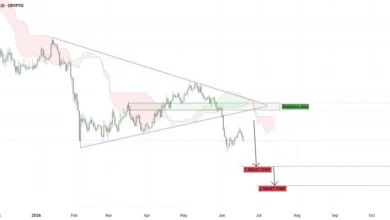
The global cryptocurrency market, valued at approximately $2.52 trillion on the daily chart at the time of reporting (as per the Tradingview.com chart data cited), represents a significant and growing segment of the global financial landscape. For a country like Poland, participating effectively in this market requires a stable and predictable regulatory environment that fosters both innovation and security.
Looking ahead, the path forward remains unclear. The government has several options:
- Draft a Revised Bill: They could attempt to draft a new version of the Crypto Asset Market Act that addresses President Narcowski’s specific concerns regarding overregulation and burden on small businesses, while still achieving MiCA alignment. This would require negotiation and compromise between the executive and legislative branches.
- Seek Negotiation and Compromise: Direct dialogue between the Prime Minister’s office and the President’s chancellery could be initiated to find common ground and overcome the current impasse.
- Continue Public Pressure: The government may continue its strategy of public statements and allegations, attempting to sway public opinion and indirectly pressure the President into a more favorable position.
- Await Political Shifts: In the long term, a resolution might only come with a shift in the political landscape, perhaps following future elections that could result in a President and Parliament more aligned in their regulatory philosophies.
The current situation represents a significant test for Poland’s political system and its ability to adapt to the rapidly evolving digital economy. The ongoing legislative gridlock not only impacts the future of cryptocurrency in Poland but also highlights the broader challenges of governance when the executive and legislative branches are at loggerheads over fundamental policy directions. The stakes are high, encompassing investor protection, economic competitiveness, and potentially, national security, making a swift and effective resolution critical for Poland’s digital future.