Google And Industry Partners Dismantle Massive XCPE Botnet Ensnaring 1.3 Million Android TV Set-Top Boxes

Google, operating in close coordination with a coalition of cybersecurity firms and industry partners, has successfully disrupted a massive, highly sophisticated botnet comprising more than 1.3 million Android TV set-top boxes. These consumer-grade streaming devices were shipped pre-installed with malicious firmware designed to secretly monetize unsuspecting users’ broadband connections by routing stranger traffic through their residential networks, alongside engaging in widespread advertising fraud. Security researchers and threat intelligence analysts involved in the coordinated takedown warn that this enforcement action likely severs the botnet’s secondary access channels to more than 10 million additional compromised systems globally, including various Internet of Things (IoT) hardware such as karaoke machines, telehealth appliances, and digital signage displays.
The operation highlights an alarming and growing vector in cybercrime: the weaponization of domestic hardware at the manufacturing stage. By embedding malicious code directly into the foundational firmware of consumer electronics destined for living rooms worldwide, bad actors created an infrastructure where everyday entertainment devices double as covert relays for malicious operations.
Anatomy of the XCPE Botnet and Manufacturer Complicity
According to a comprehensive technical report published by the Google Threat Intelligence Group (GTIG), Google has officially severed all business ties with Videostrong Technology Co., a prominent TV box manufacturer based in China. GTIG and allied cybersecurity researchers concluded that Videostrong was directly responsible for engineering and distributing the malware that enrolled millions of set-top boxes into the criminal framework, dubbed the "XCPE" botnet after one of its core code components.
The XCPE malware performed a dual function upon initial device boot-up. First, it transformed the host internet connection into an accessible node for residential proxy services. Residential proxies allow commercial clients to route their web traffic through legitimate residential IP addresses, a practice often utilized legitimately for market research or web testing, but frequently abused by threat actors to conceal their digital footprints during account takeover attacks, credential stuffing campaigns, mass data scraping for artificial intelligence model training, and ad fraud.
Second, Videostrong leveraged the backdoor access to distribute modular payloads from criminal affiliates. "Videostrong monetized the backdoor by selling access to criminal affiliates and loading those affiliates’ malware modules onto infected devices," the GTIG report detailed. Google responded by executing legal maneuvers to seize control of and take down the various domain names and command-and-control servers utilized by Videostrong to maintain the botnet architecture.
"A device manufacturer intentionally infecting their users with malware is an unacceptable breach of trust, and represents a serious risk to those users," GTIG emphasized in its disclosure. "Without users’ knowledge or consent, infected devices were offered as a distribution mechanism for a wide array of criminal actors."
While Android TV boxes formed the core of the XCPE botnet, security audits revealed that the infection vector extended across diverse manufacturing lines. Identical XCPE components were identified within telehealth monitoring units, commercial karaoke systems, and specialized digital signage hardware running derivative Android operating systems.
The Role of Residential Proxy Providers and Ecosystem Links

The GTIG report cast a wide net, calling out several major residential proxy platforms whose software development kits (SDKs) were frequently downloaded, integrated, or abused by devices ensnared within the XCPE network. Among those named was AppSalt, also known as Honeygain, a prominent proxy platform developed by Oxylabs, a Vilnius, Lithuania-based enterprise. Oxylabs and Honeygain underwent structural reorganization into independent platforms under a parent umbrella entity named Source, following a substantial $130 million funding round led by private equity firm Warburg Pincus, which reportedly valued the business at $3.6 billion.
Another prominent entity linked by investigators to hardware-level botnets is NetNut, a residential proxy network operated by the publicly traded Israeli enterprise Alarum Technologies. The disruption of XCPE follows a major federal operation in July 2026, wherein the Federal Bureau of Investigation (FBI) collaborated with private sector partners to seize hundreds of domains associated with NetNut. Law enforcement asserted that NetNut operated a distinct botnet framework named "Popa," which similarly weaponized streaming TV boxes as covert proxy exit nodes.
Additional proxy services flagged in the Google Threat Intelligence Group report include EarnFM, Traffmonetizer, Jaguar, LINKFOG, BMW/IPWeb, and GaGaNode. These ecosystems rely on distributing SDKs that developers embed into applications; however, in the case of hardware botnets, these components were forcefully injected into the system partitions of devices prior to retail distribution.
A Chronology of Detection and Industry Collaboration
The dismantling of the XCPE botnet represents the culmination of months of intensive, cross-industry intelligence gathering and technical research. The timeline of discovery highlights how startup agility combined with tech giant resources to neutralize systemic IoT vulnerabilities:
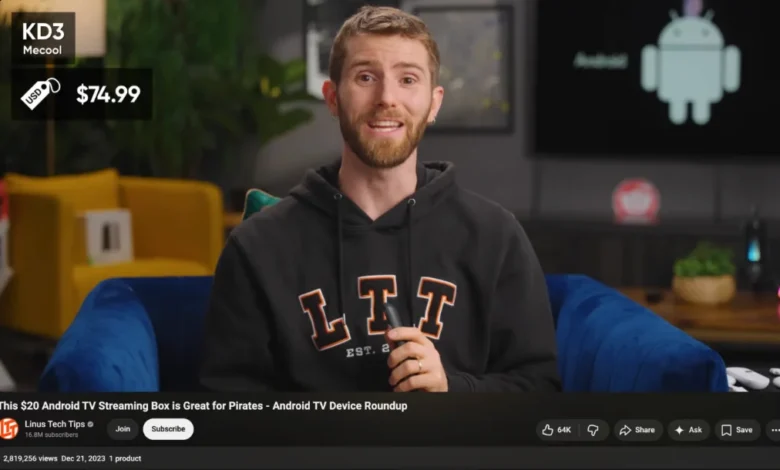
- Late 2023: The YouTube channel Linus Tech Tips features popular MECOOL Android streaming boxes—manufactured by China-based Skyworth Technology—to an audience of nearly 17 million subscribers, unintentionally driving massive retail adoption of devices pre-loaded with malicious backdoors. (Linus Tech Tips later updated the video to frame the product as a scam and removed affiliate links).
- October 2025: Security researchers observe widespread DDoS attacks orchestrated by newly discovered botnets, prompting deeper analysis into domestic streaming hardware vulnerabilities.
- November 2025: Censys researchers discover that popular Superbox streaming devices bundle residential proxy software without user awareness, prompting public scrutiny regarding pirated pay-TV boxes and proxy monetization.
- January 2026: Security startup Synthient publishes groundbreaking research documenting the explosive spread of the Kimwolf botnet, which leveraged vulnerabilities in residential proxy networks to compromise secondary Android devices across local home networks. This research forced proxy providers to patch vulnerabilities, fracturing Kimwolf’s operational scale.
- July 2026: The FBI seizes hundreds of domains linked to NetNut over its involvement in the Popa TV box botnet.
- October 2026: Oxylabs and Honeygain reorganize under the Source entity following a $3.6 billion valuation funding round.
- November 2026: Google, Synthient, and allied security entities publish synchronized reports detailing the full scope of the Videostrong-backed XCPE botnet, leading to Google’s legal takedown actions and the severing of ties with Videostrong.
The Supply Chain Vulnerability and Marketing Mechanisms
Google mandates that all certified Android device manufacturers submit their hardware to rigorous compatibility and security evaluations prior to market release. Despite these safeguards, hardware vendors such as Videostrong and Skyworth Technology discovered methods to inject malicious packages directly into the device’s storage architecture, causing the malware to deploy immediately upon a user’s initial boot sequence. Google has since updated its compliance validation frameworks to close this specific loophole.
The distribution model for these compromised devices relies heavily on digital marketing loopholes and social media influence. As documented by security analysts, brands like Superbox and MECOOL achieved explosive sales volumes by leveraging influencers on platforms like TikTok and YouTube. These creators marketed the devices as economical alternatives to traditional cable packages, offering access to hundreds of premium, pirated pay-TV channels for a single upfront fee. Consumers purchasing these devices for cheap entertainment unknowingly invited hostile networking equipment into their domestic local area networks.
Ben Brundage, founder of Synthient, noted that Videostrong’s malicious infrastructure also facilitated the distribution of software for other proxy services, including Grass. When confronted by researchers regarding similar findings on Superbox devices, representatives for Grass consistently denied any direct affiliation with the hardware manufacturers.
Corporate Responses and Accountability

Following the public release of the GTIG and Synthient findings, impacted companies issued formal statements regarding their supply chain due diligence and moderation practices.
In an official statement released shortly after the disclosures, representatives for Oxylabs addressed the presence of its SDK within unauthorized builds. Oxylabs explained that its architectural design mandates explicit verification signals indicating user consent before a device can function as a proxy exit node; however, the malicious developers successfully spoofed these authorization signals.
"We have been conducting regular audits of the applications provided by our partners," the Oxylabs statement read. "However, following this incident, we will improve the application and application’s build fingerprinting logic to better detect cases where the SDK is running on an unapproved build of an originally authorized application."
Oxylabs further clarified that it maintained no direct corporate record of Videostrong Technology Co., though investigators identified the domain com.abc[.]nexus—cited in Google’s report as an external malware loader—among its supplier listings. "As soon as we saw that, we suspended the relationship and sent them a formal legal inquiry. This supplier accounts for less than 1% of our IP address pool. We had a signed contract with them, they assured our QA team that users had given consent, and we saw the consent flow ourselves."
Implications and Future Outlook for IoT Security
While Google and its partners have successfully neutralized the primary command-and-control architecture of the XCPE botnet, cybersecurity experts emphasize that the threat is far from eradicated. Because various criminal affiliates utilized diversified distribution channels independent of the core XCPE framework, millions of individual hardware units remain physically capable of acting as proxy nodes if their underlying software partitions are not thoroughly scrubbed or replaced.
Ben Brundage characterized the confirmed figure of 1.3 million infected units as "highly conservative."
"The scale of affected devices is likely way higher," Brundage stated, summarizing the operation as the single largest coordinated strike against backdoored streaming hardware recorded to date.
The incident underscores deep structural vulnerabilities within the global electronics supply chain, where white-label manufacturing and minimal regulatory oversight allow malicious actors to compromise hardware before it ever reaches retail shelves. For consumers, the episode serves as a stark warning regarding unverified, deeply discounted streaming hardware sourced from unregulated online marketplaces. Security analysts advise users to rely exclusively on mainstream, verified platforms for smart television operating systems and to monitor home network traffic for unusual outbound connections linked to foreign IP addresses or known proxy infrastructures.
Related posts: