Navigating Market Turbulence: S&P 500 and Nasdaq-100 Grapple with AI Valuation Concerns and Fed Policy Shifts

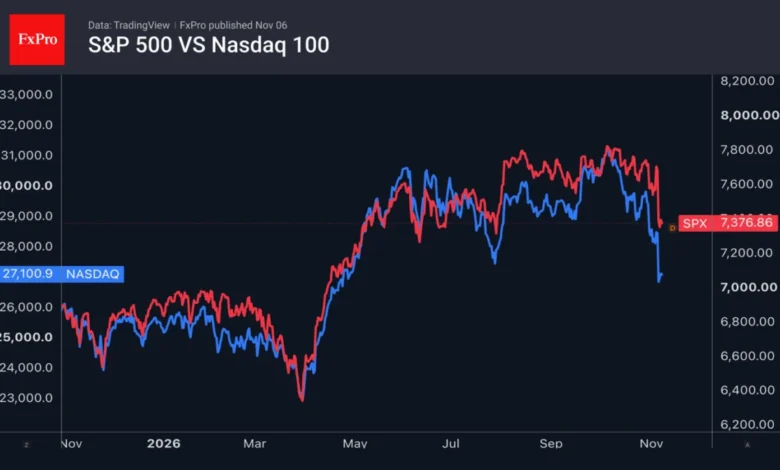
Financial markets have entered a complex and highly scrutinized phase as major US equity indices stabilize near three-month lows. Despite robust labor market data that should theoretically bolster investor confidence, and reassuring signals that artificial intelligence integration is not triggering widespread job losses, the broader stock market remains fragile. The central dilemma confronting Wall Street is whether the sharp sell-off experienced on Black Thursday—specifically noted on November 5—was merely a temporary market correction or the early warning sign of a sustained downward trend for high-flying artificial intelligence stocks. As investors weigh conflicting economic indicators, institutional voices, and potential monetary policy interventions, the market appears to be shifting into a lower, more cautious gear.
Anatomy of the Correction: The Black Thursday Shock and Index Stabilization
The recent trajectory of the S&P 500 and the Nasdaq-100 has been characterized by heightened volatility, culminating in a significant pullback from earlier record highs. For much of the year, equity markets rallied on the boundless enthusiasm surrounding generative artificial intelligence, automation, and the massive capital expenditure required to build out the necessary digital infrastructure. However, a sudden realization of valuation risks triggered a sharp correction, capturing the attention of global traders.
This downturn reached a critical inflection point on November 5, colloquially referred to by market participants as Black Thursday. On this trading session, steep losses across major technology bellwethers dragged the broader indices down, raising fears that the AI boom had crossed into overvalued bubble territory. While subsequent sessions have seen the S&P 500 and Nasdaq-100 stabilize, they remain anchored near three-month lows. Analysts note that this stabilization lacks the aggressive upward momentum seen earlier in the year, suggesting that market participants are adopting a wait-and-see approach as they reassess the fundamental value of tech-heavy portfolios.
Conflicting Perspectives: Bullish Resilience Versus Structural Caution
Amid the ongoing market uncertainty, a sharp philosophical divide has emerged between staunch market bulls and more cautious institutional strategists. Adhering to the timeless trading principle that disciplined rules should dictate decisions rather than reactive media headlines, many investors have chosen to view the recent slump as a classic buying opportunity.
Prominent financial institutions have stepped forward to calm frayed nerves. Morgan Stanley, for instance, has actively urged investors to selectively add risk back into their portfolios over a two-to-three-week horizon, betting that the broader economic foundation remains sound. Similarly, Yardeni Research has maintained that the much-discussed AI bubble has not burst; rather, it has merely experienced a controlled deflation of excess air. Proponents of this view argue that no fundamental economic catastrophe is visible on the macroeconomic horizon, making the recent dip an attractive entry point for long-term equity accumulation.
However, this optimism is tempered by underlying shifts in market mechanics. Beneath the headline index declines, market breadth and strength indicators have quietly demonstrated steady improvement since the beginning of October. This divergence suggests that capital is rotating rather than completely fleeing the market, moving away from overextended mega-cap technology stocks toward broader sectors that offer more defensive characteristics and attractive valuations.
Corporate Profitability and Macroeconomic Fundamentals
To fully understand the current market environment, one must examine the robust state of corporate health. According to data compiled by FactSet, second-quarter corporate profitability reached an all-time high, underscoring the remarkable resilience of American enterprises in the face of elevated interest rates and sticky inflation.
This milestone reflects a multi-decade structural evolution in the US economy. For approximately fifty years leading up to the 1990s, corporate profits consistently accounted for roughly 6% of the nation’s Gross Domestic Product (GDP). By 2026, however, that share had effectively doubled, driven by technological efficiencies, globalization, and margin expansion among dominant market players. This exceptional profitability provides a formidable cushion against economic shocks, offering a fundamental justification for why equity valuations, while high, are supported by genuine cash generation rather than mere speculation.
At the same time, the broader macroeconomic landscape is being shaped by political developments. The outcome of recent elections, resulting in a Democratic victory, introduces specific policy implications—particularly regarding infrastructure development. Observers note that regulatory shifts under the current administration could lead to a deceleration in the pace at which new data centers are constructed and commissioned. While this policy environment will not halt the expansion of digital infrastructure entirely, it is expected to moderate the hyper-growth trajectory previously priced into the sector. Consequently, chip manufacturers, hardware suppliers, and auxiliary industries may experience more moderate financial results in the near term, which in turn impacts the broader economic growth narrative.
The Evolving Monetary Policy Landscape and the Return of the Fed Put
Monetary policy remains a critical pillar for equity market stability. As the Federal Reserve navigates the delicate balance between subduing inflation and preventing economic stagnation, market participants are closely monitoring central bank rhetoric for clues regarding future interest rate adjustments.
A key development in this context involves evolving perspectives within the central bank. Federal Reserve Chair Kevin Warsh has previously articulated the view that financial markets should occasionally bear some of the burden of tightening or easing conditions for the central bank. Under this framework, a deepening sell-off in stock indices naturally translates into tighter financial conditions. If equity markets correct sufficiently, the Federal Reserve may find it unnecessary to pursue the aggressive monetary tightening path currently priced into derivatives markets.
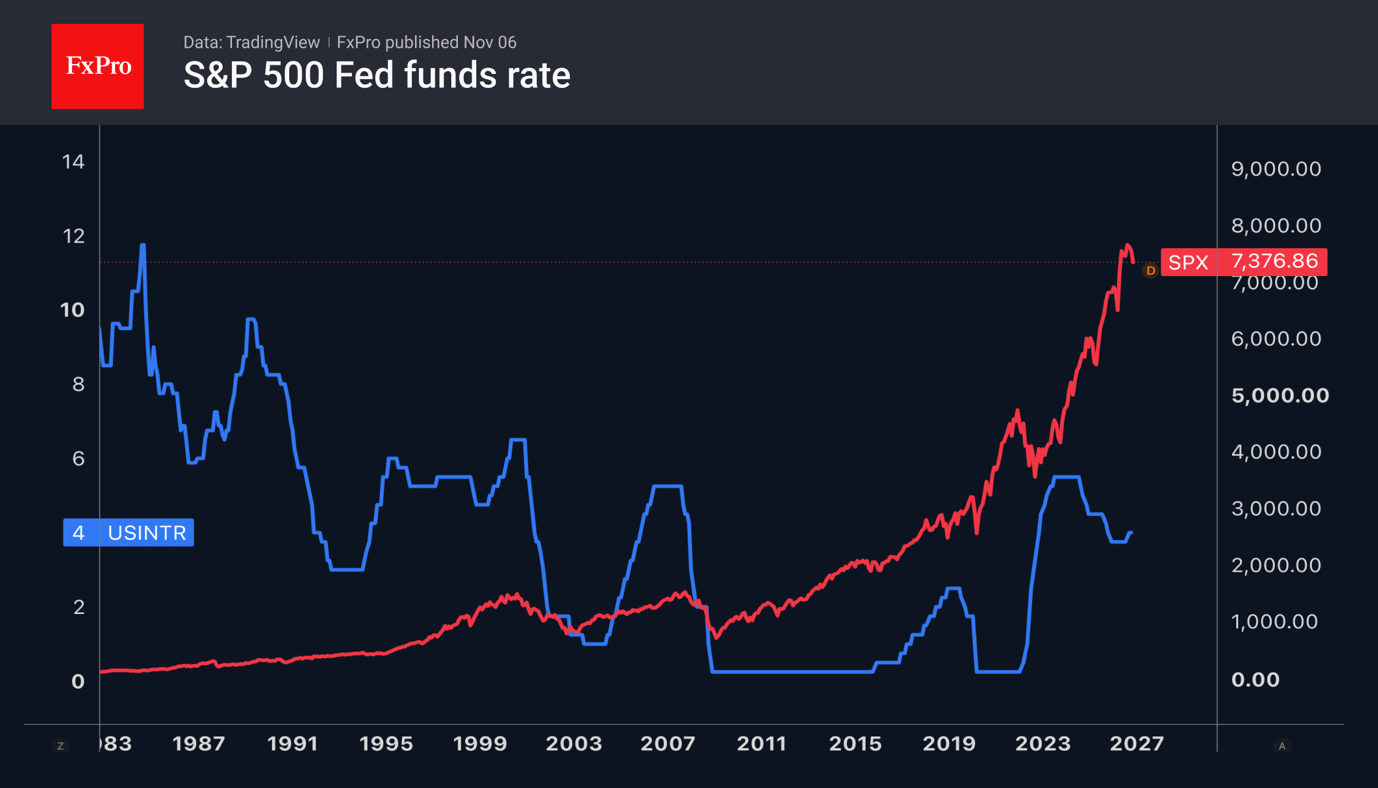
This dynamic raises the prospect of a familiar market phenomenon: the return of the "Fed put." For years, investors relied on the assumption that the central bank would intervene to rescue markets from severe downturns. While recent years saw debates shift toward alternative catalysts—such as fiscal interventions—a deepening equity correction combined with cooling inflation could compel the Fed to adopt a more accommodative stance. Provided that US inflation does not resume an accelerated upward trajectory, the central bank’s policy posture could provide a vital safety net for the S&P 500 over the medium term, helping to establish a floor under asset prices.
Implications for Investors and Outlook
As the financial markets digest these multifaceted developments, the overarching outlook remains one of transition. The era of unchecked, frictionless rallies driven solely by artificial intelligence narrative momentum has given way to a more disciplined, selective market environment.
For institutional and retail investors alike, the immediate path forward requires navigating a lower gear of market performance. Sustained stabilization of corporate financial results, combined with clarity on data center development timelines and monetary policy trajectories, will ultimately dictate when the S&P 500 can resume a sustained upward trend. Until those pieces fall firmly into place, market participants must balance the undeniable strength of corporate balance sheets and profitability against the ongoing risks of valuation compression and macroeconomic headwinds.
Related posts: