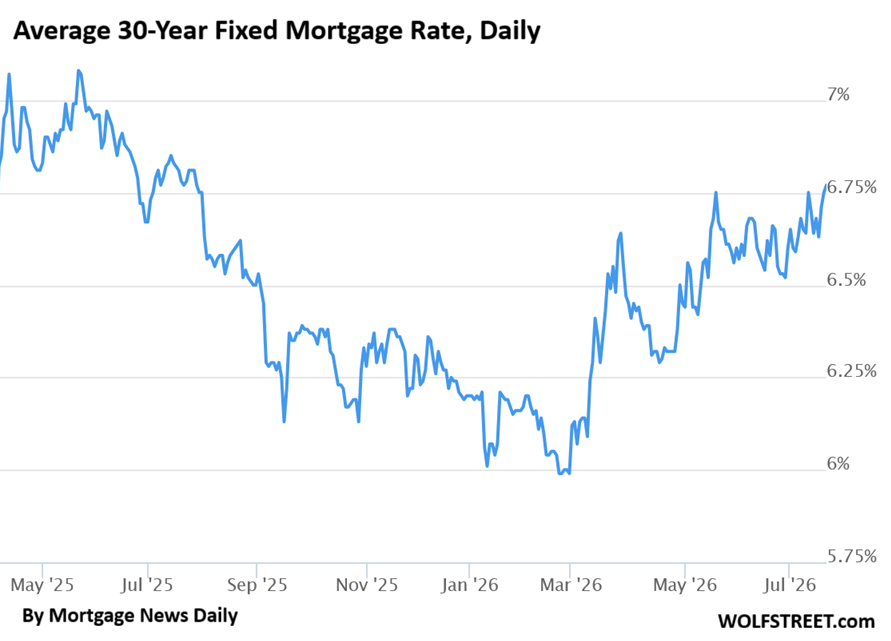
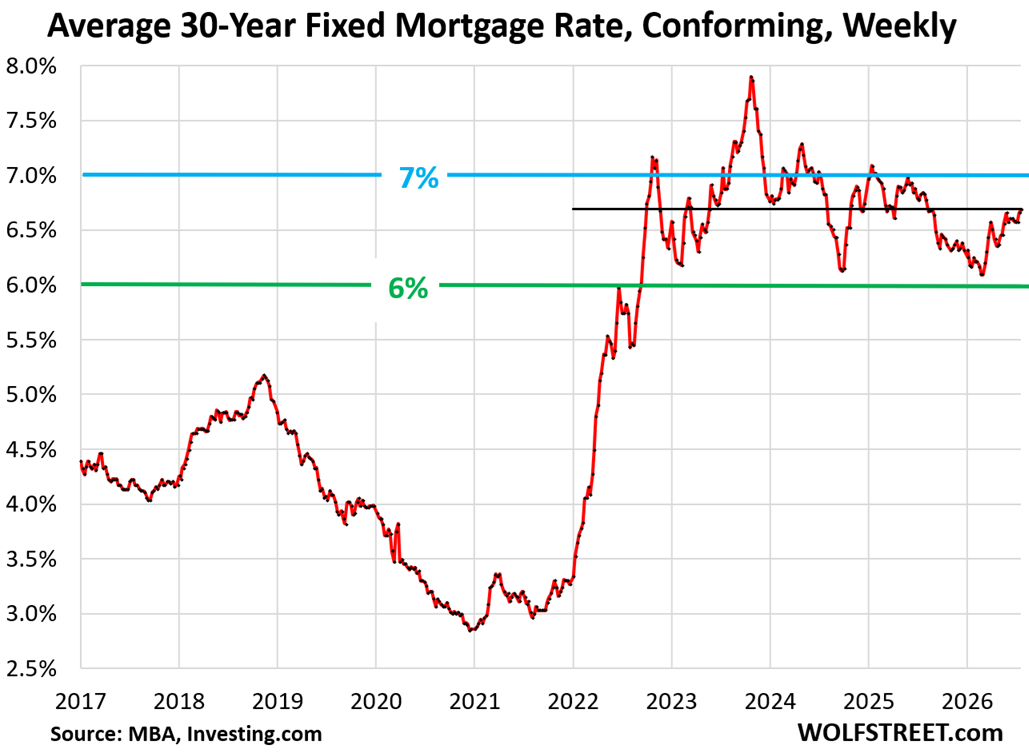
Mortgage Rates Rise to 6.77%, Highest in a Year, Driven by Bond Market Fears of Inflation & the Ballooning Debt

This shift in the lending environment has effectively dismantled the narrative that gained traction last autumn, which suggested that the spring and summer of 2026 would see mortgage rates retreat below the 5% threshold. Proponents of that theory argued that such a drop would release "pent-up demand," triggering a surge in home sales and a revitalization of the broader market. Instead, the reality of persistent inflation and volatile bond yields has forced a recalibration of expectations. As existing home sales continue to "scrape along the bottom," the industry is grappling with a landscape where nominal rates remain high while "real" rates—those adjusted for inflation—tell a more complex story of economic imbalance.
The Disconnect Between Policy and Market Reality
The divergence between the Federal Reserve’s policy intentions and the actual cost of borrowing for consumers has become a central theme of the current housing crisis. While the Federal Reserve manages short-term policy rates, the 30-year fixed mortgage rate traditionally tracks long-term Treasury yields, particularly the 10-year Treasury. The spread between these two figures—the difference in yield—has become increasingly volatile, driven by institutional fears regarding the long-term purchasing power of the dollar.
Historical data suggests that mortgage rates do not always move in lockstep with the Fed. A poignant example occurred in the fall of 2024, when the Federal Reserve implemented a 100-basis-point cut to its policy rates. Rather than lowering the cost of home loans, this move signaled to the bond market that the central bank might allow inflation to run "hotter" for a longer period. In response, long-term Treasury yields surged as investors demanded higher returns to compensate for inflation risk. Consequently, mortgage rates jumped by 100 basis points, and the spread between the Fed’s policy rate and mortgage rates widened by a staggering 200 basis points.
This "evil surprise," as some market analysts have termed it, underscores the difficulty of cooling the housing market without first stabilizing inflation. For mortgage rates to experience a sustained decline, three specific conditions must generally be met: the Federal Reserve must maintain a hawkish stance against rising prices, inflation must be demonstrably low, and it must show signs of remaining low for the foreseeable future. Currently, none of these conditions are being satisfied.
Analyzing the "Real" Cost of Borrowing
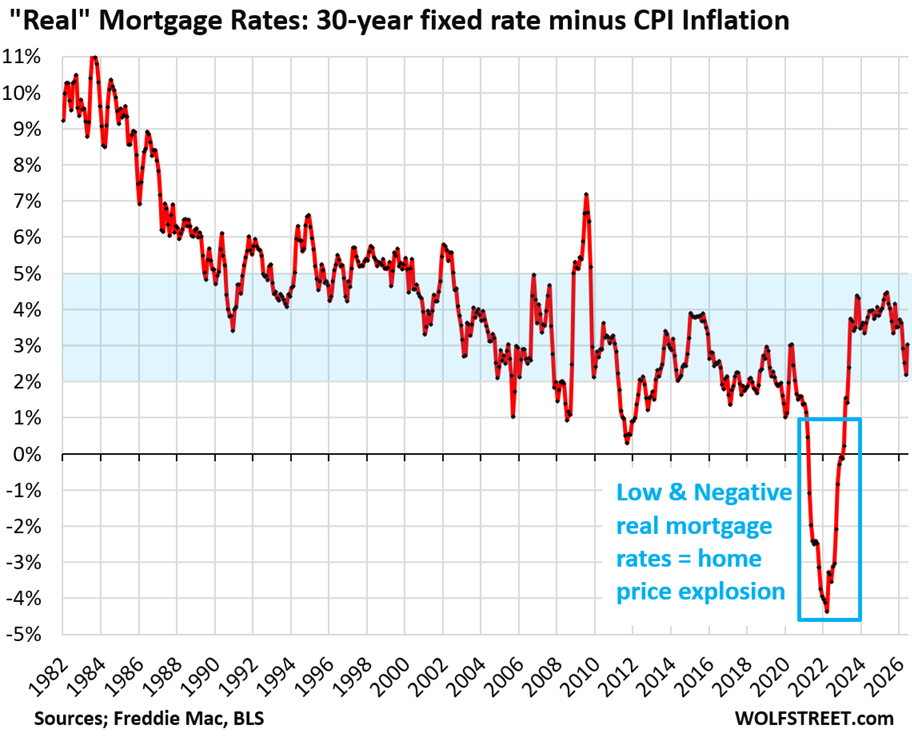
A critical component of the current economic debate is the distinction between nominal and real interest rates. While a 6.77% mortgage rate appears daunting to prospective buyers accustomed to the ultra-low rates of the previous decade, the "real" rate—the nominal rate minus the rate of inflation—paints a different picture.
With current inflation hovering between 3.5% and 4%, the real 30-year fixed mortgage rate sits at approximately 3%. In a historical context, this is relatively low. Prior to the 2009 financial crisis and the subsequent era of Quantitative Easing (QE), real rates were frequently higher. During the QE era, the Federal Reserve suppressed long-term interest rates by purchasing trillions of dollars in Treasury securities and Mortgage-Backed Securities (MBS).
The most extreme distortion occurred in 2021, when the Fed’s intervention kept nominal mortgage rates below 3% even as inflation began to spike. This resulted in deeply negative real mortgage rates, which acted as a catalyst for what many economists describe as the most aggressive home-price explosion in American history. The current "morose" state of the market is, in many ways, a hangover from that period. Buyers are not just contending with "normal-ish" mortgage rates; they are struggling with home prices that were inflated by years of artificial rate suppression.
Mortgage Applications and the Demand Vacuum
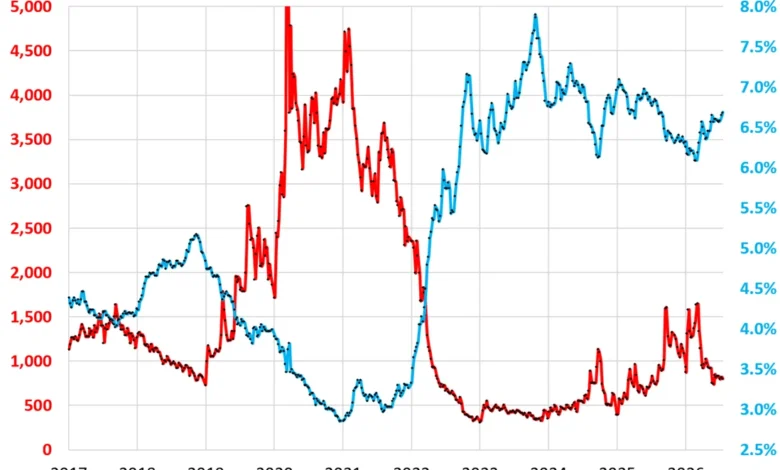
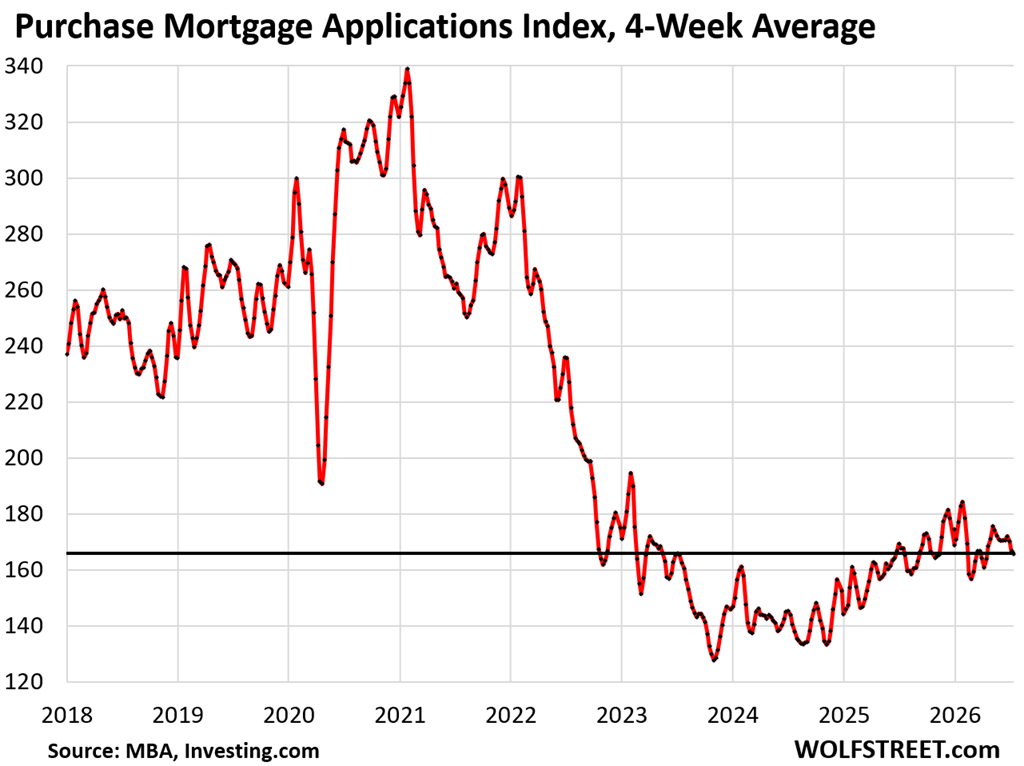
The impact of these fluctuating rates is most visible in the volume of mortgage applications, a reliable forward-looking indicator of future home sales. According to data released by the Mortgage Bankers Association (MBA), applications for mortgages to purchase a home have remained at historically low levels throughout the year. While the most recent weekly data showed a slight uptick, the four-week moving average—which smooths out short-term volatility—fell for the third consecutive week.
When compared to pre-pandemic levels, the decline is stark. Current purchase application volumes are down approximately 36% from the same period in 2019. This suggests that the "pent-up demand" often cited by real estate optimists may be more of a theoretical concept than a market reality. High prices, combined with the loss of purchasing power due to inflation, have priced a significant portion of the population out of the market entirely.
The refinance market has fared even worse. Refinance applications share an inverse relationship with mortgage rates; as rates rise, the incentive to refinance vanishes. In the latest reporting week, refinance applications were down 55% compared to 2019 and a massive 75% lower than the peak seen in 2021.
The Fallacy of "Date the Rate, Marry the House"
During the price surges of 2022 and 2023, a popular mantra among real estate agents was "Date the rate, marry the house." The logic suggested that buyers should purchase homes at high prices now and simply refinance later when rates inevitably dropped. However, this strategy has proven disastrous for many recent homeowners.
Those who "married the house" at peak prices are now finding themselves "married to the rate" as well. With rates remaining sticky and home prices beginning to soften in many regions, the opportunity to refinance into a lower-cost loan has failed to materialize. Furthermore, those who bought with low down payments may now find themselves with little to no equity, making refinancing impossible even if rates were to dip.
While traditional refinances have stalled, there has been a notable shift toward Home Equity Lines of Credit (HELOCs). Homeowners who are locked into low-rate first mortgages (often 3% or lower) are unwilling to touch those loans but still require liquidity. As a result, the use of HELOCs has surged as a way for consumers to tap into their home equity without sacrificing their primary low-interest rate.
Regional Variations and Price Corrections
The national averages often obscure the significant regional shifts occurring across the United States. A recent analysis of 33 major, high-cost American cities reveals a market in transition. In June, 25 of those 33 cities saw year-over-year declines in home prices. Only two cities in the study managed to reach new all-time highs.
This trend indicates that the "lock-in effect"—where homeowners refuse to sell because they do not want to trade a 3% mortgage for a 7% mortgage—is finally being countered by the reality of decreased buyer demand. In expensive coastal markets and former pandemic "boomtowns," the gap between what sellers want and what buyers can afford is widening. This has led to an increase in days-on-market and a gradual accumulation of inventory, even if total listing numbers remain low by historical standards.
Broader Economic Implications and Outlook
The housing market does not exist in a vacuum. The persistence of high mortgage rates is intrinsically linked to the broader fiscal health of the United States. Long-term Treasury yields are being pushed upward not just by inflation fears, but by the massive supply of new government debt required to fund ballooning federal deficits. As the Treasury issues more bonds to cover these deficits, it must offer higher yields to attract investors, which in turn keeps mortgage rates elevated.
For the remainder of the summer and into the fall, the outlook for the housing market remains subdued. The combination of high nominal rates, high home prices, and a volatile bond market suggests that sales volume will continue to "scrape the bottom."
Economists warn that a true recovery will likely require a meaningful correction in home prices to align with current borrowing costs, rather than waiting for a return to the artificially low interest rates of the past decade. Until inflation is decisively brought under control and the "spread" between Treasuries and mortgages narrows, the "morose summer" in real estate is likely to extend well into the future. The era of "easy money" in housing has ended, replaced by a period of painful but perhaps necessary price discovery.