Quest Diagnostics Integrates Artificial Intelligence Across Laboratory Workflows and Customer Operations to Drive Efficiency and Scale

Operating at a massive scale across the United States, healthcare diagnostics giant Quest Diagnostics processed approximately 244 million test requisitions and reported $11 billion in net revenues. Serving roughly one in three American adults annually and partnering with approximately half of the nation’s physicians and hospitals, the company handles an extraordinary volume of medical data and biological specimens. In such a high-throughput environment, even fractional efficiency gains in laboratory operations and administrative workflows can yield profound operational and financial impacts. To manage rising overhead costs, persistent labor shortages, and wage inflation—estimated by executives to exert at least $120 million in annual cost pressures—Quest has leaned heavily into its company-wide Invigorate productivity program. Powered increasingly by automation and artificial intelligence, the Invigorate initiative successfully met its target of 3% annual cost savings and efficiency improvements. As part of this broader modernization strategy, Quest has deployed transformative AI tools across two critical operational domains: high-volume cervical cancer screening and enterprise customer service operations.
The Evolution of Diagnostic AI: A Chronology of Strategic Implementation
Quest Diagnostics’ integration of advanced technologies did not happen overnight; it represents a methodical multi-year scaling of digital pathology, cloud computing, and automated support systems. The journey toward an AI-driven laboratory began in earnest with foundational automation in areas like microbiology, where the company successfully streamlined multi-step culturing processes, reducing turnaround times for negative cultures by 40% while simultaneously cutting required full-time staffing by 40%. Building upon these operational efficiencies, Quest accelerated its digital pathology capabilities in June 2024 by completing the acquisition of select PathAI Diagnostics laboratory assets. This strategic move was designed to fast-track the adoption of artificial intelligence and digital workflows, directly addressing the mounting analytical burdens placed on clinical pathologists.
The momentum continued into March 2025, when Quest announced a far-reaching collaboration with Google Cloud. This partnership aimed to overhaul enterprise data analytics and explore generative artificial intelligence applications across three distinct verticals: clinical research, patient and client customer experience, and day-to-day laboratory operations. Parallel to these tech partnerships, Quest began aggressively rolling out AI-assisted cytology tools, such as the Hologic Genius Digital Diagnostics System, installing the platform across approximately half a dozen sites over a twelve-year window, with further installations continuing through mid-2026. By systematically identifying bottlenecks where specialist human review is traditionally required, Quest has mapped out a calculated blueprint for deploying algorithms precisely where labor shortages pose the greatest threat to diagnostic turnaround times.
Alleviating Pathology Shortages Through AI-Assisted Digital Cytology
One of the most pressing challenges facing modern diagnostic laboratories is the severe shortage of qualified cytologists and pathologists. Cervical cancer screening, specifically the review of Papanicolaou (Pap) test slides, has traditionally relied heavily on the manual inspection of microscopic slides by trained specialists. However, demographic shifts and demanding certification requirements have created enduring staffing deficits. Data published by the American Society for Clinical Pathology (ASCP) in its 2024 vacancy survey revealed that while cytology department vacancy rates eased slightly from 13.2% in 2022 to 11.6% in 2024, filling these vital staff positions historically required healthcare institutions to spend more than 12 months searching for qualified candidates.
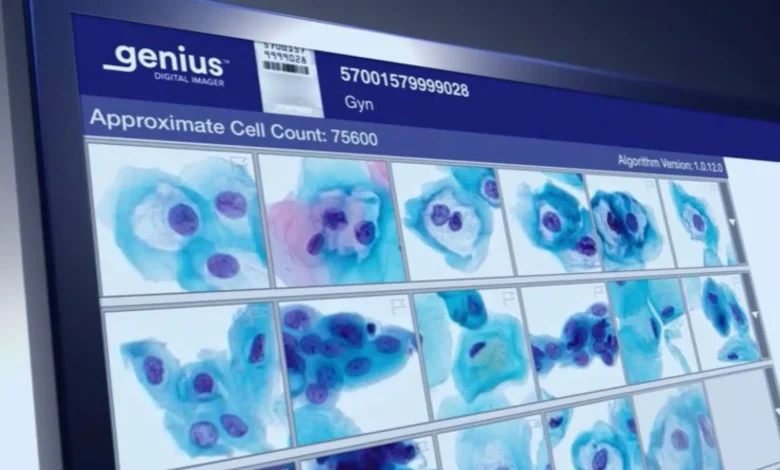
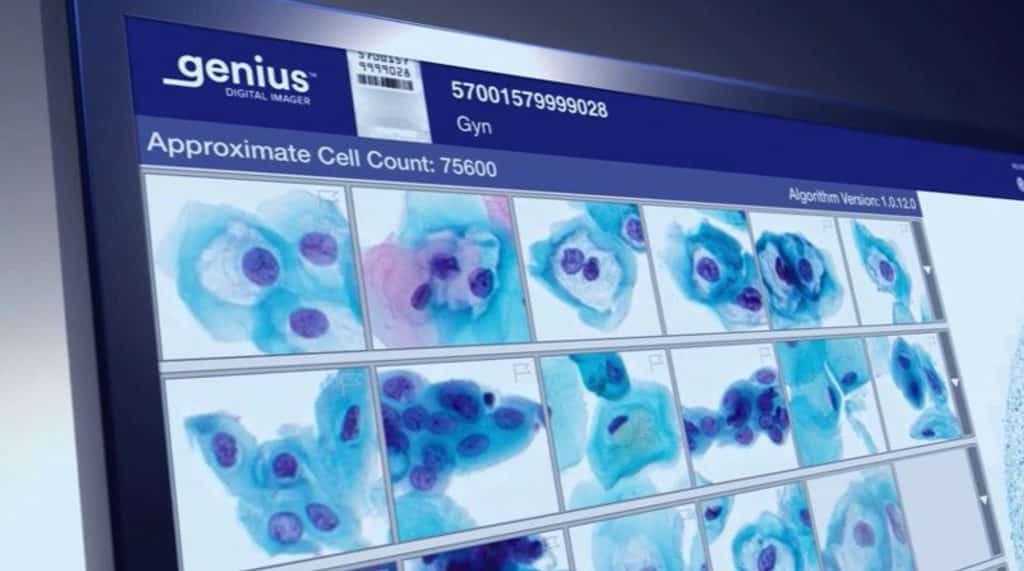
In response to these persistent human resource constraints, Quest Diagnostics has integrated the Hologic Genius Digital Diagnostics System into its cervical cancer screening workflows. Speaking on an earnings call in April 2026, Quest CEO Jim Davis noted that roughly 60% to 70% of the company’s ongoing AI and automation initiatives are purposefully concentrated inside its laboratories. By converting what specialists historically reviewed under a physical microscope into high-resolution digital images, Quest enables advanced algorithms to pre-screen slides, isolating cells and cell clusters that exhibit atypical features. According to regulatory reviews conducted by the U.S. Food and Drug Administration (FDA), the system operates through a streamlined three-step digital framework that flags high-risk abnormalities for human pathologist review while filtering out clear negatives.
Clinical data underscores both the efficacy and the nuanced trade-offs inherent in this digital transition. A multi-site clinical evaluation comprising 1,960 evaluable slides demonstrated that the Genius system achieved a sensitivity rate of 81.5% for detecting high-grade lesions or worse, outperforming manual review, which registered a sensitivity of 74.0%. However, this heightened sensitivity was accompanied by a measurable shift in specificity, which dropped from 97.2% under manual review to 94.8% with the digital system. While the algorithm successfully detects a higher volume of genuine abnormalities, it also flags a marginally higher number of benign slides, necessitating secondary human verification to confirm diagnoses.
Real-world laboratory data further illustrates the throughput benefits of this technology. A retrospective study conducted at ProPath, a prominent pathology laboratory in Dallas, evaluated Pap test workflows before and after the introduction of the Genius platform. Although daily review volumes remained steady, the average number of cases reviewed per cytologist each day rose sharply from 74.5 to 94.7, while the necessary daily staffing footprint of cytologists decreased from 10.4 to 8.1. Furthermore, total turnaround times from initial specimen accession to final clinical sign-out dropped across multiple diagnostic categories. Building on these promising operational markers, Quest projected during its 2025 Investor Day that widespread implementation of the Genius system would ultimately drive resource productivity gains exceeding 40%.
Transforming High-Volume Customer Service and Enterprise Logistics with AI
Beyond the clinical laboratory, Quest Diagnostics manages an enormous administrative and logistical apparatus designed to connect patients, hospitals, and physician offices with testing facilities and courier networks. The scale of this communication challenge is immense. Quest contact centers managed 13.2 million interactions in 2024—an increase from 12.2 million the prior year—with traditional phone calls accounting for 71% of all engagement volume. Routine, highly repeatable administrative tasks, such as physician offices calling a central dispatch line to schedule specimen pickups, consume significant human resources. To insulate its operations against projected wage inflation rates of 3% to 4%, Quest has deployed conversational artificial intelligence and intelligent workflow routing tools to modernize its contact centers.
The integration of artificial intelligence into customer service and logistics has manifested across three distinct operational layers: advanced call routing, virtual conversational agents, and automated email triage tools for customer service representatives. By implementing these digital solutions, Quest has maintained downward pressure on contact volume metrics, holding calls per 100 requisitions stable at 5.5 through 2023 and 2024—representing an 11% efficiency improvement compared to a 2022 baseline of 6.2 calls per requisition.
The productivity impacts reported by executive leadership highlight the transformative potential of these tools. CEO Jim Davis reported that the deployment of virtual AI agents successfully reduced routine logistics-related phone calls by "up to" 50% under optimal operating conditions. Additionally, internal metrics from early 2026 indicated a 40% productivity gain among customer service agents who leveraged generative email-triage tools to parse, categorize, and draft responses to incoming client inquiries. These operational advancements provide a vital financial buffer, helping Quest absorb escalating labor overhead without compromising service quality or expanding customer support headcounts.
Broader Industry Implications and Strategic Lessons for Enterprise Leaders
The systematic integration of artificial intelligence by Quest Diagnostics offers a clear roadmap for other large-scale healthcare enterprises and diagnostic networks navigating similar economic headwalls. By pairing clinical AI tools—such as digital pathology algorithms—with administrative automation in contact centers, Quest demonstrates that enterprise-wide AI adoption must be targeted at specific, measurable operational friction points rather than implemented as a generalized corporate experiment.
Several critical lessons emerge from Quest’s ongoing digital transformation. First, technology deployment must directly target areas constrained by chronic labor shortages. By deploying AI to pre-screen cytology slides and triage routine logistics calls, Quest effectively decouples volume growth from linear staffing increases, mitigating the operational risks posed by prolonged talent deficits. Second, operational leaders must carefully balance clinical performance metrics, accepting the trade-offs inherent in algorithmic screening—such as managing lower specificity in exchange for higher sensitivity—by retaining human experts for final validation. Finally, disciplined execution of internal productivity initiatives, such as the Invigorate program, proves that technology-driven efficiencies can successfully counteract macroeconomic pressures like wage inflation, protecting profit margins while preserving core service delivery standards. As diagnostic volumes continue to expand nationwide, Quest’s multi-pronged deployment of artificial intelligence establishes a powerful benchmark for digital maturity in modern healthcare operations.