NATO Summit in Ankara Highlights Defense Spending Surge and European Industry Ambitions


Leaders of all 32 NATO member states convened in Ankara, Turkey, for a critical summit that underscored a significant shift in European defense policy, marked by increased spending commitments and a growing desire for greater strategic autonomy. While the gathering aimed to present a united front against evolving geopolitical threats, it also illuminated the complex dynamics shaping the continent’s defense industrial landscape. The summit, held against a backdrop of ongoing global instability, saw President Donald Trump of the United States reiterate his long-standing criticisms regarding insufficient European contributions to collective security, particularly in the context of perceived obligations related to the protracted conflict involving Iran. Allies, in response, emphasized a renewed commitment to solidarity and accelerated plans to meet and exceed defense spending benchmarks.
Shifting Sands of Defense Spending: The 5% GDP Target
A central, and for European defense manufacturers such as Rheinmetall, pivotal question emerging from the Ankara summit revolves around the timeline for achieving the ambitious target of allocating 5% of Gross Domestic Product (GDP) to defense spending. This goal, a significant escalation from the previously agreed-upon 2% benchmark, has been a subject of intense discussion and negotiation. The immediate aftermath of heightened geopolitical tensions had initially spurred a surge of interest in defense stocks, reflecting investor optimism about increased procurement. However, this enthusiasm has recently encountered complexities, as demonstrated by the volatile performance of major players in the sector.
A stark example of these challenges materialized at the end of June when the German government, in a move that surprised many in the defense industry, officially canceled Rheinmetall’s largest pending contract: the F126 frigate program. Valued at over eighteen billion euros, this cancellation sent shockwaves through the market, triggering an immediate and significant stock market drop for Rheinmetall, exceeding 20%. This event underscored the inherent risks and political sensitivities that can impact even the most substantial defense procurement projects, highlighting the intricate interplay between government policy, economic considerations, and industrial capacity.
Glimmers of Opportunity Amidst Market Volatility
Despite the significant setback with the F126 frigate program, the Ankara summit did bring some encouraging news for Rheinmetall. The German defense giant secured a preliminary agreement with American aerospace and defense leader Lockheed Martin. This accord outlines plans for the joint production of ATACMS (Army Tactical Missile System) missiles within Germany. The strategic significance of this partnership lies not only in the technological collaboration but also in its potential to bolster Germany’s indigenous missile production capabilities. Furthermore, the German government’s forward-looking fiscal plans include record defense expenditure of up to 109 billion euros for the upcoming fiscal year. Given this substantial commitment, it is a reasonable assumption that Berlin will increasingly favor domestic manufacturers, such as Rheinmetall, for a wide range of procurement projects, thereby potentially mitigating the impact of past contract cancellations.
However, the broader market perspective for Rheinmetall remains cautious. The company’s shares are currently trading approximately 45% below their record high achieved last year. Reversing this downward trend and restoring investor confidence will necessitate a sustained effort to secure further strategic contract wins and demonstrate consistent execution capabilities. The ATACMS missile agreement, while positive, represents a single step in a longer journey to regain market momentum.
Saab’s Ascendancy: A Model of Diversification and Strategic Partnerships
In contrast to Rheinmetall’s recent challenges, Sweden’s Saab AB appears to be navigating the evolving defense market with greater success. The company has recently inked several significant contracts, signaling strong demand for its diverse product portfolio. Key among these is a deal for sixteen Gripen E fighter jets destined for Ukraine, valued at approximately 2.2 billion euros. This contract not only underscores the growing need for advanced aerial capabilities in Eastern Europe but also positions Saab as a critical supplier in a region facing persistent security threats.
Further bolstering Saab’s order book is an agreement for its GlobalEye airborne early warning and control (AEW&C) aircraft, worth around 4.5 billion dollars. These advanced platforms are slated to replace aging American AWACS (Airborne Warning and Control System) aircraft, a development that exemplifies a broader trend within NATO. Allies are increasingly seeking to diversify their defense procurement strategies and reduce reliance on American-made equipment by investing in homegrown alternatives. Saab, with its comprehensive product range encompassing fighter jets, surveillance aircraft, and advanced radar systems, is exceptionally well-positioned to capitalize on this burgeoning demand for European-manufactured defense solutions.
The Strategic Imperative of European Defense Independence
The contracts secured by Saab offer a compelling illustration of a strategic shift occurring across the Atlantic alliance. There is a discernible and growing appetite among European nations to foster greater self-sufficiency in critical defense capabilities. This pursuit of independence is particularly evident in key areas such as fighter jet technology and advanced missile systems, domains historically dominated by the United States. While the potential for growth in these sectors is substantial, it is concurrently being constrained by limitations in production capacity and intricate supply chain challenges. These hurdles are not unique to Saab but represent a critical bottleneck for the entire European defense industry, impacting its ability to meet escalating demand.
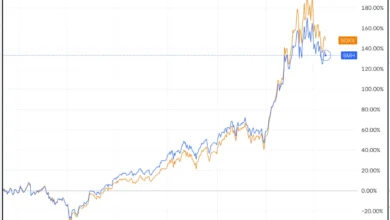
The contrasting stock performance of Saab and Rheinmetall reflects these differing market dynamics. Saab’s shares have experienced modest gains since the beginning of the year, a positive trajectory that stands in stark relief to Rheinmetall’s significant decline. This divergence highlights the market’s assessment of each company’s current strategic positioning and its ability to translate order intake into tangible revenue and profit.
A Long-Term Vision for European Security
The increasing defense budgets and the gradual pivot towards greater independence from the United States are not ephemeral trends but rather represent the bedrock of contemporary European security policy. These strategic imperatives are poised to shape defense planning and industrial development for years to come, irrespective of the specific trajectory of the conflict in Ukraine. The commitment to bolstering collective defense capabilities was solidified at last year’s Hague summit, where NATO allies formally agreed to progressively raise their defense spending to 5% of GDP by 2035. This commitment signifies a profound and long-term recalibration of the alliance’s defense posture.
For European defense companies, the immediate future is characterized by a set of clear priorities: efficient contract execution, the ability to scale production rapidly, and the optimization of profit margins. While the pipeline of future orders appears robust, driven by heightened geopolitical awareness and increased national defense budgets, the true measure of success will lie in the companies’ capacity to convert these commitments into tangible financial returns. The challenges of supply chain resilience, skilled labor availability, and manufacturing capacity will be critical determinants of their ability to meet the growing demands of their respective national defense forces and their NATO allies.
The Geopolitical Context: A Reshaped Security Landscape
The Ankara summit occurred at a time of significant global flux. The protracted war in Ukraine has fundamentally altered the European security environment, exposing vulnerabilities and prompting a reevaluation of defense postures. Russia’s aggressive actions have served as a stark reminder of the persistent threat posed by revisionist powers and have galvanized NATO members to bolster their collective defense. Simultaneously, the complex geopolitical landscape in the Middle East, particularly the ongoing tensions involving Iran, has added another layer of complexity to the alliance’s security calculus.
President Trump’s reiteration of concerns about burden-sharing reflects a long-standing American perspective on the equitable distribution of defense responsibilities within NATO. While the US remains the alliance’s preeminent military power, there has been a consistent push for European allies to assume a greater share of the financial and operational commitments necessary for collective security. The Ankara summit served as a platform for these discussions to continue, with European leaders signaling their intent to invest more heavily in their own defense capabilities, thereby potentially easing some of the perceived imbalances.
Analysis of Implications: A Dual Trajectory for European Defense
The outcomes of the Ankara summit suggest a dual trajectory for European defense. On one hand, there is a clear and accelerating trend towards increased defense spending, driven by the perceived threat environment and a desire for greater strategic autonomy. This will undoubtedly benefit European defense manufacturers, creating opportunities for growth and innovation. The German government’s commitment to record defense expenditure, for instance, signals a substantial influx of capital into the sector, with domestic firms likely to be primary beneficiaries.
On the other hand, the industry faces significant challenges in translating this increased demand into sustained growth. Production capacity limitations, supply chain disruptions, and the need for significant investment in research and development will test the agility and resilience of European defense firms. The ability of companies like Rheinmetall and Saab to navigate these complexities will be crucial in determining their long-term success. The pursuit of indigenous capabilities, while strategically important, requires a robust industrial base capable of meeting demanding production schedules and maintaining high-quality standards.
The growing emphasis on European defense independence, as exemplified by Saab’s success with platforms that can serve as alternatives to American systems, is a strategic development with far-reaching implications. It suggests a future where NATO operates with a more diversified set of suppliers and a greater distribution of technological expertise. This could lead to a more robust and resilient alliance, less susceptible to the vulnerabilities associated with over-reliance on a single provider. However, it also necessitates careful coordination and interoperability to ensure that national defense initiatives align with collective alliance objectives. The coming years will be a critical period for the European defense industry as it seeks to capitalize on increased budgets while addressing the inherent challenges of scaling production and securing critical supply chains. The ultimate success will hinge on its ability to execute contracts efficiently, innovate rapidly, and adapt to the evolving demands of a complex global security environment.
Related posts: