The Misconception of Frugality: Why Early Retirees and FIRE Practitioners Are Actually Among Society’s Biggest Spenders

The prevailing cultural narrative surrounding the Financial Independence, Retire Early (FIRE) movement often conjures images of extreme austerity. Critics frequently characterize adherents as penny-pinching minimalists who subsist on basic staples, clip discount coupons, and maintain decades-old automobiles, all in an obsessive pursuit of capital accumulation. According to this popular stereotype, every conceivable luxury is abandoned to achieve total freedom from the traditional workforce as rapidly as possible, leading outsiders to argue that these individuals are merely being cheap rather than truly enjoying the fruits of their labor.
While it is statistically true that achieving early retirement requires an extended period of aggressive saving—typically spanning a decade or two of dedicating 50 percent or more of one’s income to investments—the underlying lifestyle reality is far more nuanced. Frugal behaviors developed during the accumulation phase frequently morph into long-term habits, but a closer examination of actual post-retirement expenditure reveals that the stereotype of the universally cheap FIRE practitioner is fundamentally flawed. When factoring in the massive opportunity costs of leaving the workforce and the discretionary lifestyle choices made after achieving financial independence, these individuals often emerge as some of the most significant spenders in modern society.
The True Magnitude of Opportunity Costs in Early Retirement
To understand the financial footprint of the FIRE community, one must first analyze the monumental opportunity cost associated with exiting the traditional labor market prematurely. When a high-earning professional chooses to walk away from a corporate career in their thirties, forties, or fifties, they are not merely stepping down to a modest lifestyle; they are permanently forgoing hundreds of thousands—or even millions—of dollars in annual compensation.
From an economic perspective, this choice represents a massive ongoing expenditure. By voluntarily leaving the workforce, early retirees are effectively paying an exorbitant price to reclaim their time, choosing to trade peak earning years for autonomy, leisure, and personal pursuits. Consequently, the notion that early retirees are inherently cheap disintegrates upon realizing the sheer volume of capital they forfeit. For example, a senior corporate executive walking away from a $250,000 base salary and discretionary performance bonuses ranging up to $500,000 is effectively investing millions of dollars in deferred compensation over a decade-long horizon just to escape corporate politics, extensive business travel, and demanding client pressures.
Furthermore, this financial sacrifice is compounded by the immediate loss of employer-subsidized benefits. Chief among these is healthcare coverage. While traditional employees take heavily subsidized medical insurance for granted, independent early retirees must shoulder the full cost of private health insurance plans out of pocket. For a standard family of four living in a major metropolitan area, unsubsidized comprehensive healthcare coverage can easily surpass $3,000 per month, totaling upwards of $36,000 annually. Choosing not to participate in the traditional labor market is, by all financial metrics, one of the most expensive decisions an individual can make.
Unpacking Discretionary Spending: Housing and Family Expenses

Beyond the baseline cost of survival and the staggering opportunity cost of lost wages, FIRE practitioners frequently allocate substantial capital toward discretionary lifestyle enhancements. Rather than living in cramped, minimalist quarters, many financially independent individuals opt for real estate investments that far exceed basic shelter requirements.
A prime example of this counter-intuitive spending is found in housing choices. While a modest studio or a compact two-bedroom apartment would technically suffice for a couple or a small family, many retirees in the FIRE community intentionally upgrade their living situations to optimize their quality of life. Acquiring a primary residence in a high-demand coastal city—complete with premium property taxes, elevated homeowners association fees, ongoing maintenance costs, and specialized architectural features—can easily inflate annual housing expenditures by $50,000 or more compared to baseline living arrangements. Financial analysts note that while such expenditures appear contradictory to strict minimalism, they align with a broader philosophy of optimizing comfort during peak family-raising years before considering future downsizing.
Similarly, the financial realities of raising children within the FIRE framework challenge the austerity myth. While a segment of the personal finance community advocates for child-free living to accelerate capital accumulation, many early retirees choose to embrace parenthood, accepting the immense financial obligations that accompany it. Raising a child from birth through college graduation in an expensive urban center frequently totals between $1 million and $1.4 million per child when factoring in housing, nutrition, apparel, extracurricular activities, and higher education tuition.
Independent Educational Investments and Time-Saving Conveniences
Delving deeper into specific lifestyle allocations reveals that FIRE practitioners regularly direct significant capital toward specialized services designed to buy back personal time and enrich their families’ experiences. These choices often defy conventional definitions of frugality.
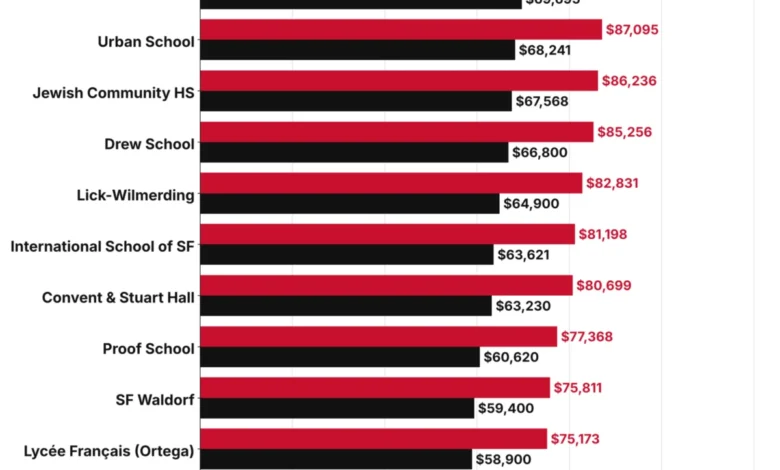
One prominent area of expenditure is independent grade-school tuition. While public education systems remain accessible and free of charge, many financially independent parents choose private educational institutions—such as specialized language immersion academies—to provide their children with specific academic advantages. Annual tuition rates at independent primary and secondary schools in major metropolitan hubs frequently range from $45,000 to $50,000 per child. For a family with two children, this commitment translates to an annual educational expenditure approaching $100,000, dwarfing the spending habits associated with traditional frugality.
Additionally, early retirees frequently leverage commercial conveniences to reclaim hours that would otherwise be spent on domestic chores. Utilizing frequent food delivery services, outsourcing household maintenance, and patronizing professional service providers are common practices among those who prioritize time autonomy over manual labor. While preparing every meal from scratch at home represents the textbook definition of budgetary thrift, spending upwards of $1,000 per month on restaurant dining and food delivery services reflects a willingness to pay a premium for efficiency and lifestyle convenience.
Quantitative Breakdown of Modern FIRE Discretionary Spending
A comprehensive financial audit of a typical urban FIRE household often reveals a stark divergence between public perception and actual ledger entries. While visible symbols of frugality—such as driving an older vehicle or flying in economy class—frequently dominate external observations, discretionary spending in major categories remains robust:
- Upgraded Housing and Associated Property Expenses: Approximately $50,000 annually.
- Independent Private School Tuition (Two Children): Approximately $92,000 annually.
- Child-Centric Expenses (Activities, Healthcare, Apparel, Travel): Approximately $16,000 annually.
- Commercial Food Delivery and Dining Services: Approximately $12,000 annually.
- Total Estimated Discretionary Expenditure: Approximately $170,000 annually.
When combined with the hundreds of thousands of dollars in forgone annual wages, the total financial footprint of an early retiree easily exceeds traditional benchmarks of high-net-worth consumption. Yet, because these expenditures are directed toward personal values—such as uninterrupted family time, localized convenience, and educational enrichment—rather than conspicuous luxury goods like high-end sports cars or first-class international airline tickets, the outward illusion of extreme cheapness persists.
Implications and the Evolution of Financial Independence
The broader implication of this financial reality is that the traditional stereotype of the ascetic, deprived early retiree requires a fundamental re-evaluation. Financial independence is not necessarily about living on the absolute margins of society; rather, it is about resource allocation and intentionality.
By strategically choosing where to spend and where to cut back, FIRE practitioners demonstrate that financial independence provides the ultimate luxury: the freedom to allocate capital in alignment with personal priorities rather than societal expectations. Driving an eleven-year-old car to avoid the stress of parking lot dings does not equate to a generalized life of deprivation when juxtaposed against six-figure educational investments and premium housing choices.
Ultimately, those who successfully navigate the transition out of the traditional workforce are not society’s most stringent misers. Instead, they represent a distinct demographic of consumers who have calculated the immense cost of their time and decided that purchasing autonomy is the most valuable investment of all.
Related posts: