The Evolution of Venture Capital Access and the Financial Implications of the Fundrise Innovation Fund NYSE Listing


The landscape of retail investing underwent a significant transformation on March 19, 2026, when the Fundrise Innovation Fund, trading under the ticker VCX, officially listed on the New York Stock Exchange (NYSE). This event marked a pivotal moment in the democratization of venture capital, transitioning a traditionally opaque and exclusive asset class into a publicly tradable security. For the first time, a broad spectrum of investors, ranging from institutional players to individual contributors, gained the ability to observe the real-time valuation of a portfolio comprising some of the world’s most prominent private technology companies. However, the listing also brought to the forefront the complex financial and psychological dynamics of the "lockup period," a standard but often misunderstood mechanism in the lifecycle of an initial public offering (IPO).
The Path to Public Listing: A Decade of Democratization
The listing of VCX was the culmination of a strategy initiated over a decade ago by Fundrise, a firm originally known for disrupting the commercial real estate market. Founded in 2012 by Ben Miller, Fundrise initially focused on providing retail investors access to private real estate deals through Regulation A+ offerings. By 2022, the firm managed over $3 billion in assets and began pivoting toward the technology sector.
The Fundrise Innovation Fund was conceived during the height of the COVID-19 pandemic as a vehicle to bridge the gap between private Silicon Valley valuations and the public markets. At the time, venture capital was largely reserved for accredited investors capable of meeting high minimum investment requirements and enduring long-term illiquidity. The 2026 listing on the NYSE represented the final stage of "liquidity transformation," allowing shares that were once private to be bought and sold with the ease of a standard equity.
Chronology of Key Milestones
- 2012: Fundrise founded, pioneering the "eREIT" model for retail real estate investment.
- 2016–2021: Expansion into residential and industrial real estate, building a platform with over 300,000 active investors.
- Late 2022: Launch of the Fundrise Innovation Fund as a private vehicle, targeting high-growth sectors such as Artificial Intelligence (AI), machine learning, and space exploration.
- 2023–2025: Significant capital deployment into "late-stage" private companies, including Anthropic, OpenAI, SpaceX, and Anduril.
- March 19, 2026: VCX lists on the NYSE with an initial Net Asset Value (NAV) of approximately $18.97 per share.
- April–May 2026: Extreme market volatility sees the share price rocket to over $400 before stabilizing in the $50 to $60 range.
- September 19, 2026: Expected expiration of the initial six-month lockup period for early investors and partners.
The Mechanics and Psychology of the IPO Lockup
A critical component of the VCX listing is the six-month lockup period. In the world of corporate finance, a lockup is a contractual caveat that prevents insiders, employees, and early-stage investors from selling their shares for a specified duration following an IPO—typically 90 to 180 days. The primary purpose is to prevent the market from being flooded with excess supply, which could lead to a precipitous drop in the share price.
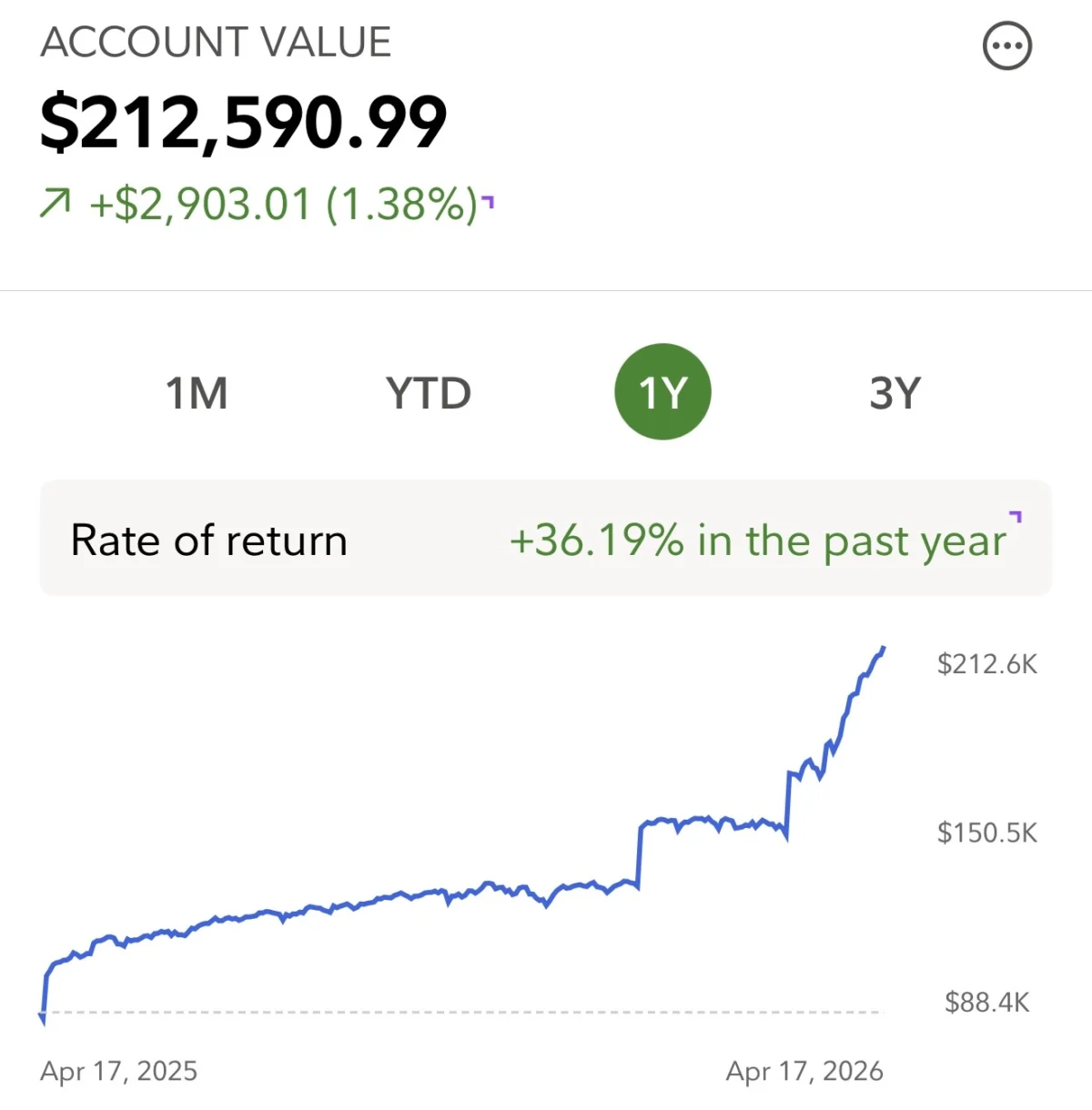
For participants in the VCX ecosystem, including affiliate partners and long-term investors, the lockup period has served as a laboratory for investor psychology. Financial analysts, including Sam Dogen, founder of the prominent finance platform Financial Samurai, have noted that the lockup creates a "parallel universe" of wealth. On paper, the value of the holdings may fluctuate wildly based on market sentiment and retail "mania," but the assets remain inaccessible.
During the initial weeks of the VCX listing, the stock experienced a "gamma-squeeze" style surge, reaching a peak that far exceeded its underlying Net Asset Value. For those under lockup, this period was characterized by a phenomenon known as "paper wealth euphoria," where investors mentally allocate gains toward long-term goals—such as real estate acquisitions, debt liquidation, or education funds—only to watch those gains evaporate as the price corrects toward its fundamental value.
Analyzing the Portfolio: AI and the NAV Disconnect
The valuation of VCX is driven by its underlying holdings, which represent a "Who’s Who" of the current technological revolution. The fund’s largest holding, Anthropic, an AI safety and research company, recently underwent a significant markup following a funding round that valued the company at approximately $965 billion. Other key assets in the portfolio include:
- OpenAI: The creator of ChatGPT, which continues to dominate the generative AI sector.
- SpaceX: Elon Musk’s aerospace manufacturer, which has seen its private valuation climb steadily due to its Starlink satellite constellation.
- Anduril Industries: A defense technology company focused on autonomous systems, benefiting from increased global defense spending.
Market analysts use a three-step framework to estimate the true value of VCX shares. First is the Net Asset Value (NAV), which is the total value of the fund’s assets minus its liabilities. Second is the Market Premium, the amount investors are willing to pay above the NAV due to the fund’s unique access to private companies. Third is the Future Growth Potential, accounting for anticipated IPOs of the fund’s underlying holdings.
As of mid-2026, while the listing NAV was $18.97, internal projections and recent private funding rounds suggest a "fair value" NAV closer to $31 per share. However, the public market price has consistently traded at a premium, reflecting high retail demand for AI-adjacent assets. This gap between the "rumor of money" (the share price) and the "reality of money" (the NAV) remains the primary source of volatility for the fund.
Institutional and Participant Reactions
The reaction to the VCX listing has been a mix of institutional skepticism and retail enthusiasm. Traditional venture capital firms have long argued that the "long-tail" of retail investors lacks the stomach for the volatility and "funding winters" associated with private equity. Conversely, proponents of the Fundrise model argue that democratization is an inevitable evolution of the capital markets.
Ben Miller, CEO of Fundrise, has consistently maintained that the goal is to provide a "public venture product" that offers the same upside as Silicon Valley insiders without the traditional barriers to entry. In various industry statements, Miller has highlighted that the NYSE listing is a tool for transparency, allowing investors to see how their capital is performing in real-time rather than waiting for quarterly or annual reports.
Industry observers have also noted the "loyalty factor" among Fundrise’s long-term partners. Many investors who entered the fund during its private phase have expressed a commitment to the "Dumbbell Investing Method." This strategy involves maintaining a core of safe, liquid assets while allocating a portion of capital to high-risk, high-reward ventures like VCX. By the time the lockup expires in late 2026, these investors will face the "Marshmallow Test" of finance: whether to sell and lock in gains or continue holding in anticipation of further NAV growth in 2027 and 2028.
Broader Economic Implications and Future Outlook
The success or failure of the VCX experiment will likely dictate the future of "Retail VC." Already, Fundrise has filed documentation with the Securities and Exchange Commission (SEC) to launch a successor vehicle, tentatively titled VCX 2. This suggests that the firm sees a permanent appetite for publicly traded private equity funds.
The broader implications for the labor market and the economy are also significant. As AI and automation continue to disrupt traditional career paths, many investors view holdings in companies like Anthropic and OpenAI as a "hedge" against future employment uncertainty. If the labor market tightens due to technological advances, the capital appreciation from the very companies driving that change could provide a necessary financial buffer for the next generation.
Furthermore, the listing highlights a shift in how companies approach the IPO process. With vehicles like VCX, companies can remain private for longer while still providing a form of liquidity to their employees and early backers via the secondary market. This "hybrid" model of ownership is expected to become more prevalent as the lines between private and public markets continue to blur.
Conclusion: The Discipline of the Long View
As the September 19, 2026, lockup expiration approaches, the financial community will be watching closely to see how the market absorbs the potential influx of shares. For those currently "strapped to the mast" of the lockup, the experience has served as a masterclass in market discipline. The lessons learned—avoiding the temptation to spend unvested gains, maintaining a diverse portfolio, and focusing on the underlying NAV rather than short-term price spikes—are applicable to all forms of investing.
While the "mania" of the initial listing has subsided, the fundamental thesis of the Fundrise Innovation Fund remains intact. Whether VCX trades at $50, $80, or returns to its NAV, it has undeniably succeeded in its primary mission: opening the gates of the "startup capital of the world" to the global investing public. The transition from private "funny money" to real-world assets is a journey fraught with anxiety, but for those who navigate the lockup with a clear head, it represents a new frontier in wealth creation.