
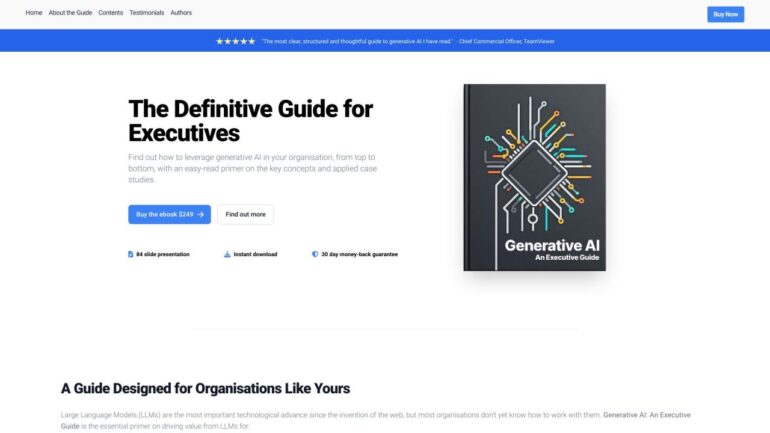
The power of generative AI experts guide illuminates the transformative potential of this burgeoning field. Generative AI, with its ability to create novel content, is revolutionizing industries from art to medicine. This guide delves into the expertise required to navigate the complexities of generative AI, from understanding its technical underpinnings to ensuring responsible development and deployment. We’ll explore the essential skills, ethical considerations, and practical applications of generative AI, providing a roadmap for building robust, ethical AI systems and deploying them effectively.
This comprehensive guide offers a detailed exploration of generative AI, highlighting the crucial role of experts in shaping its future. It provides insights into the technical skills, ethical considerations, and practical applications of generative AI, along with a forward-looking perspective on its evolving landscape and potential impact. Discover how experts are leading the charge in driving innovation across diverse sectors, and how to build and deploy these transformative systems safely and effectively.
Introduction to Generative AI Expertise
Generative AI is rapidly transforming industries, from creative content generation to drug discovery. At its core, generative AI models learn patterns from vast datasets and use this knowledge to create new, original content. This includes text, images, audio, and even code. Think of it as a sophisticated form of pattern recognition and replication, capable of producing outputs that mimic human creativity.
This powerful capability, however, comes with complex challenges, requiring a specialized understanding to guide its development and deployment effectively.Experts in generative AI are essential for navigating these complexities. They understand the technical intricacies of these models, including the algorithms, data requirements, and potential biases within the training data. Moreover, they possess the crucial insight to consider the broader societal implications of generative AI, ensuring responsible development and deployment that benefits humanity as a whole.
This expertise is critical in anticipating potential issues and mitigating risks, while simultaneously maximizing the positive applications of this powerful technology.
Generative AI Model Types and Expertise Needs
Understanding the various types of generative AI models and their unique needs is vital for effective expert guidance. Different models require different levels of expertise depending on the complexity of their architecture and the nature of the data they process.
| Model Type | Core Capabilities | Expertise Needs |
|---|---|---|
| Text-based models (e.g., GPT-3, Bard) | Generating human-quality text, translating languages, answering questions, summarizing information. | Expertise in natural language processing (NLP), large language model architecture, data preprocessing, bias detection and mitigation, ethical considerations regarding language and information generation. |
| Image generation models (e.g., Stable Diffusion, DALL-E 2) | Creating realistic and imaginative images from textual descriptions. | Expertise in computer vision, deep learning architectures for image generation, dataset curation, understanding potential biases in image generation, ensuring artistic integrity and intellectual property rights. |
| Audio generation models (e.g., Jukebox) | Generating music, sound effects, and other audio formats. | Expertise in audio signal processing, deep learning architectures for audio generation, music theory, copyright considerations for audio generation, and potentially, user experience in the audio domain. |
| Code generation models (e.g., Codex) | Creating functional code from natural language descriptions or prompts. | Expertise in software engineering, programming languages, understanding code complexity, potential for generating vulnerabilities, ethical considerations regarding code generation. |
Different generative AI models necessitate a diverse skillset to effectively manage their development, implementation, and ethical considerations. The table illustrates the range of expertise required for each model type, highlighting the need for a multidisciplinary approach in the field.
Expert Skills and Knowledge
Generative AI is rapidly transforming industries, demanding a new breed of experts capable of harnessing its power responsibly. Beyond technical proficiency, these experts need a deep understanding of the ethical implications and societal impact of their work. This section delves into the crucial skills and knowledge required for navigating this complex landscape.A generative AI expert must possess a blend of technical skills, ethical awareness, and the ability to bridge the gap between technology and societal needs.
The field requires not only a deep understanding of algorithms, but also the capacity to anticipate potential issues and formulate solutions that align with ethical principles.
Technical Skills for Generative AI Experts
A solid foundation in machine learning, deep learning, and computer vision is essential. This includes proficiency in programming languages like Python, familiarity with frameworks like TensorFlow and PyTorch, and experience with data manipulation and preprocessing techniques. Generative AI experts need to be comfortable with large datasets and the computational resources required for training complex models. Understanding various generative models, such as GANs, VAEs, and transformers, is also crucial for designing and implementing effective systems.
The ability to evaluate model performance and adapt algorithms to specific tasks is a key differentiator.
Ethical Considerations in Generative AI
Ethical considerations are paramount in the development and deployment of generative AI systems. Experts must be mindful of potential biases in training data, which can perpetuate and amplify existing societal inequalities. Concerns about misinformation, copyright infringement, and the potential for malicious use are critical areas requiring careful attention. Understanding the legal and regulatory frameworks surrounding generative AI is also essential for responsible development.
A thorough understanding of the societal impact of these systems is paramount.
Approaches to Developing Ethically Sound AI Systems
Several approaches can be adopted to ensure that generative AI systems are developed with strong ethical grounding. One approach is to employ diverse and representative datasets during training to mitigate bias. Another involves incorporating fairness-aware algorithms into the model design. Active auditing and monitoring throughout the lifecycle of the system is crucial to identify and address potential ethical risks.
A robust framework for evaluating the societal impact of the system is also important. Regular review and adaptation of the system are essential to ensure alignment with ethical principles.
Comparing AI Development Methodologies and Ethical Implications
| Methodology | Ethical Considerations | Strengths | Weaknesses |
|---|---|---|---|
| Traditional Machine Learning | Potentially biased if training data isn’t diverse. Limited ability to adapt to evolving ethical standards. | Relatively well-understood and established. | Can struggle with complex tasks and large datasets. |
| Deep Learning | Significant risk of bias amplification from large datasets. Difficult to interpret decision-making processes. | Exceptional performance on complex tasks. | Susceptibility to adversarial attacks and lack of transparency. |
| Reinforcement Learning | Potential for unintended consequences due to complex interactions with the environment. | Adaptability and learning from experience. | Difficulty in defining and enforcing ethical guidelines in dynamic environments. |
This table provides a comparative overview of different AI development methodologies and their corresponding ethical considerations. Each methodology presents unique advantages and drawbacks that need careful consideration in light of ethical principles. A balanced approach incorporating elements from multiple methodologies, combined with proactive ethical review, is vital for responsible development.
Practical Applications of Generative AI Expertise
Generative AI is rapidly transforming various industries, and experts are at the forefront of driving this innovation. Their understanding of the underlying algorithms, combined with domain-specific knowledge, enables the development of powerful tools with wide-ranging applications. From creating stunning art to revolutionizing healthcare, the potential impact of generative AI is immense.Experts are leveraging generative AI models to develop novel solutions in fields ranging from art and design to medicine and finance.
This is achieved through rigorous experimentation, fine-tuning, and iterative improvement of these models. The focus is on creating tools that not only produce creative outputs but also provide tangible benefits.
Generative AI experts are revolutionizing how we approach marketing strategies. Their insights are crucial for navigating the evolving landscape of B2B marketing, especially the shift towards account-based marketing (ABM). Understanding how to leverage AI for targeted campaigns, as detailed in a new guide, is essential for success in today’s market. For a deeper dive into the nuances of B2B moving toward account based marketing ABM, check out this insightful article: b2b moving toward account based marketing abm.
This guide will equip you with the knowledge to maximize the power of AI and drive impactful results in your business.
Generative AI in Art and Design
Generative AI is rapidly changing the landscape of art and design. Experts are using these tools to create unique and original works, from paintings and sculptures to architectural designs and fashion. This is achieved by feeding vast datasets of existing art and design into AI models. The models then learn the underlying patterns and styles to generate new, creative outputs.
Generative AI in Medicine
Generative AI is proving to be a valuable tool in medical research and treatment. Experts are utilizing it to create realistic simulations of human organs, tissues, and diseases. These simulations allow for more effective drug discovery, personalized medicine, and surgical training. Generative models can also synthesize images from medical scans for more accurate diagnostics.
Generative AI in Finance
The financial sector is experiencing a transformation thanks to generative AI. Experts are using these models for tasks such as fraud detection, risk assessment, and algorithmic trading. Generative AI can analyze massive datasets of financial transactions to identify patterns and anomalies, leading to improved risk management and faster, more accurate decision-making. It can also be used to generate realistic financial scenarios for stress testing and model validation.
Generative AI in Other Sectors
Generative AI is not limited to the previously mentioned fields. Its applications span across a multitude of industries, including:
- Customer Service: Generative AI can create automated responses to customer inquiries, handling common questions and requests effectively.
- Education: AI-powered tools can create personalized learning experiences, adapting to individual student needs and generating practice materials.
- Content Creation: Generating various forms of content like articles, scripts, and marketing materials can boost efficiency.
Potential Impact Across Sectors
The table below illustrates the potential impact of generative AI across various sectors, highlighting the transformative power of this technology.
| Sector | Potential Impact |
|---|---|
| Art & Design | Increased creativity, new artistic expressions, and personalized design solutions. |
| Medicine | Improved drug discovery, personalized treatments, and more accurate diagnostics. |
| Finance | Enhanced fraud detection, improved risk management, and more efficient trading strategies. |
| Customer Service | Faster and more effective customer support, reduced response times. |
| Education | Personalized learning experiences, adaptive educational materials. |
| Content Creation | Increased efficiency and speed in content creation, cost reduction. |
The Future of Generative AI Expertise: The Power Of Generative Ai Experts Guide
The landscape of generative AI is rapidly evolving, demanding a continuous adaptation in expertise. This dynamic field requires professionals to stay ahead of the curve, understanding not just the tools but also the ethical considerations and societal implications of this transformative technology. The future of generative AI expertise is intertwined with the ever-shifting needs of industries and the public.The emerging trends in generative AI are pushing the boundaries of what’s possible, and this evolution will inevitably reshape the skills needed to effectively utilize and manage these powerful tools.
From sophisticated large language models to specialized image generators, the capabilities are expanding, requiring expertise to adapt to this changing environment.
Emerging Trends in Generative AI
Generative AI is moving beyond simple text and image generation. New models are emerging that can create complex code, design intricate products, and even compose music. This broadening capability necessitates a broader range of expertise to handle the intricacies of these models and their potential applications. Specialized skills in domain-specific knowledge, such as medicine, law, or engineering, are becoming increasingly crucial in directing generative AI tools towards impactful outcomes.
Understanding the limitations and potential biases within these models is also vital to ensure responsible development and deployment.
Diving deep into the power of generative AI experts’ guide is crucial, especially when understanding how search engines like Google operate. Recent updates to Google’s documentation on their news crawler, google clarifies googlebot news crawler documentation , highlight the importance of ethical and effective content creation for SEO. This understanding is critical for anyone using generative AI to create content and ultimately leverage its power.
Evolution of Generative AI Tools and Skills
The evolution of generative AI tools is driven by advancements in machine learning algorithms and increasing amounts of training data. Tools are becoming more sophisticated, demanding greater technical expertise. The focus is shifting from simply using these tools to understanding their underlying mechanisms and how to fine-tune them for specific purposes. This requires a blend of technical skills in machine learning, deep learning, and data science, alongside domain-specific knowledge.
Critical thinking, problem-solving, and the ability to identify and mitigate biases are also becoming paramount.
Potential Future Roles of Generative AI Experts
Generative AI experts will play a critical role in shaping the future of various industries. These professionals will not only develop and implement these tools but also guide their use to create new value propositions and solutions. The ability to bridge the gap between technical expertise and real-world applications will be key to success. The need for generative AI experts is not limited to large tech companies but extends to various sectors, from healthcare to finance to education.
Evolving Job Market for Generative AI Experts
The job market for generative AI experts is undergoing significant transformation, leading to the emergence of new roles and responsibilities.
| Current Role | Potential Evolving Role | Description |
|---|---|---|
| Data Scientist | Generative AI Data Engineer | Focuses on collecting, preparing, and optimizing data for generative AI models. Involves understanding the data’s biases and limitations to improve model performance. |
| Software Engineer | Generative AI Architect | Designs, develops, and implements the infrastructure and frameworks necessary for generative AI models to function effectively. |
| Machine Learning Engineer | Generative AI Model Specialist | Focuses on the development and fine-tuning of generative AI models for specific applications. |
| Domain Experts (e.g., Medical Professionals, Engineers) | Generative AI Application Developer | Applies generative AI models to specific domains, integrating them with existing workflows and processes. |
Expert Guidance on Building AI Systems
Building robust and reliable generative AI systems requires a meticulous approach. It’s not just about the technology; it’s about understanding the intricacies of data, the potential pitfalls of bias, and the crucial need for responsible risk management. This section dives into the practical steps involved in developing a generative AI system that not only performs well but also operates ethically and safely.
Steps in Building a Robust Generative AI System
Developing a generative AI system involves a series of well-defined steps, each contributing to the overall success of the project. A clear understanding of these stages ensures a smooth and effective development process.
- Data Collection and Preprocessing: Gathering relevant data is fundamental. The quality and quantity of data directly impact the model’s performance. This step includes cleaning, transforming, and preparing the data for model training. Data should be representative of the target application domain and free from obvious errors. Ensuring data quality from the outset is crucial for the reliability of the final AI system.
Unlocking the potential of generative AI is key, and experts’ guidance can make a real difference. Learning how to leverage these tools effectively is crucial for boosting your small business’s marketing strategies, like understanding Salesforce Marketing Cloud growth for small businesses here. This knowledge, combined with the right tools, empowers you to reach a wider audience and drive significant growth, ultimately solidifying the power of generative AI experts’ insights.
- Model Selection and Training: Choosing the right generative model architecture is essential. Consider the specific task and the available computational resources. The training process requires careful monitoring, adjustment of hyperparameters, and evaluation metrics to ensure the model is learning effectively and converging towards a desired output.
- Evaluation and Validation: Rigorous evaluation is critical to assess the model’s performance. Metrics like perplexity, BLEU score, or FID (Fréchet Inception Distance) are used to quantify the quality of generated outputs. Testing the model on diverse and representative data sets is essential to identify potential weaknesses and limitations. Validation against real-world scenarios is paramount to ensure practical applicability.
- Deployment and Monitoring: Deploying the trained model into a production environment involves careful consideration of infrastructure, scalability, and maintainability. Continuous monitoring is crucial to detect and address potential issues in real-time and adapt the model to changing needs. Regular performance evaluation and user feedback are critical for ongoing improvement.
Importance of Addressing Data Bias
Generative AI models learn from the data they are trained on. If the data contains biases, the model will likely perpetuate and amplify these biases in its outputs. Understanding and mitigating biases in data is crucial for fairness and ethical AI development.
- Identifying Bias in Datasets: Data bias can manifest in various ways, from skewed representation of certain demographics to the presence of stereotypes or prejudices. Careful analysis of the data is required to identify these biases. Statistical analysis tools can help pinpoint patterns and anomalies in the data that indicate bias.
- Mitigation Strategies: Strategies for mitigating bias include data augmentation with underrepresented groups, re-weighting data points, and the use of fairness-aware algorithms. It’s also essential to actively consider the potential societal impact of the AI system and ensure that it does not perpetuate or amplify existing inequalities.
Managing and Mitigating AI System Risks
Developing AI systems involves acknowledging and addressing potential risks. These risks span from technical failures to ethical concerns. Effective risk management is essential for the responsible development and deployment of generative AI systems.
- Technical Risks: Technical risks include model instability, unexpected outputs, and potential vulnerabilities. Robust testing and validation procedures can help minimize these risks. Regular audits and security assessments are necessary to identify and address potential vulnerabilities.
- Ethical Risks: Ethical risks involve the potential for AI systems to perpetuate or exacerbate societal biases, create misinformation, or be used for malicious purposes. Addressing these concerns requires careful consideration of the intended use of the AI system and the potential impact on different stakeholders. Ethical guidelines and frameworks can help in making informed decisions throughout the development process.
Structured Steps for Generative AI System Development
A structured approach to generative AI system development is critical. The following table provides a roadmap for a successful development process.
| Step | Description |
|---|---|
| Data Collection & Preprocessing | Gather and prepare relevant data, ensuring quality and representativeness. |
| Model Selection & Training | Choose appropriate model architecture and train it effectively. |
| Evaluation & Validation | Rigorously evaluate performance and validate results against real-world scenarios. |
| Deployment & Monitoring | Deploy the model, continuously monitor performance, and adapt to changing needs. |
| Bias Identification & Mitigation | Identify and mitigate potential biases in the data and model outputs. |
| Risk Assessment & Mitigation | Assess and mitigate potential technical and ethical risks throughout the development lifecycle. |
Best Practices for Generative AI Implementation

Deploying generative AI systems safely and effectively requires careful consideration of various factors. A well-defined implementation strategy ensures the system’s integration with existing processes and avoids unforeseen issues. Proper monitoring and evaluation mechanisms are essential to identify and address potential biases or errors. This section Artikels crucial steps for a secure and efficient deployment process.
Safe and Effective Deployment
A successful generative AI deployment hinges on careful planning and execution. This involves more than simply selecting and installing the system; it encompasses a comprehensive approach to integration, testing, and ongoing maintenance. Thorough planning reduces risks and maximizes the system’s value.
Ongoing Monitoring and Evaluation
Continuous monitoring and evaluation are critical for maintaining the quality and effectiveness of generative AI systems. Monitoring helps detect unexpected behavior, biases, or errors in real-time, allowing for prompt adjustments and corrections. Regular evaluation assesses the system’s performance metrics and ensures alignment with intended goals.

Integrating Generative AI into Existing Workflows
Integrating generative AI into existing workflows is a crucial aspect of successful implementation. This requires a careful understanding of current processes and identifying areas where the AI can provide value without disrupting established procedures. Careful mapping of the workflow ensures seamless integration and minimal disruption.
Step-by-Step Procedure for Safe AI Deployment, The power of generative ai experts guide
A structured approach to deployment is essential for minimizing risks and maximizing benefits. A step-by-step procedure ensures that each stage is executed meticulously and addresses potential issues proactively. This procedure Artikels the essential steps for a safe AI deployment.
- Define Clear Objectives and Scope: Clearly define the system’s intended purpose and limitations. Identify specific tasks the AI will perform and Artikel the data it will use. This ensures the system meets its intended purpose and does not exceed its limitations.
- Data Preparation and Quality Assurance: Thoroughly prepare the training data, ensuring its quality and relevance. Identify and address potential biases or inaccuracies. This step guarantees high-quality data for the AI, leading to more accurate and reliable outputs.
- Model Selection and Customization: Carefully select a suitable generative AI model and customize it to the specific needs of the project. Evaluate different models based on their performance metrics and suitability for the intended tasks. This step focuses on finding the optimal model for the task.
- Pilot Testing and Validation: Implement a pilot program with a small subset of the target data. Thoroughly evaluate the results and identify areas for improvement. This allows for early identification of potential problems before full deployment. Regular testing is crucial for validation.
- System Integration and Workflow Mapping: Integrate the AI system into the existing workflows, minimizing disruption and maximizing efficiency. Map out the specific steps and processes where the AI will be integrated. This step focuses on seamless integration.
- User Training and Support: Provide comprehensive training to users on how to effectively interact with the AI system. Establish clear support channels for addressing any issues or questions. This crucial step ensures users can effectively use the AI system.
- Monitoring and Evaluation Setup: Implement robust monitoring mechanisms to track the system’s performance and identify potential issues. Establish a clear evaluation framework to assess the AI’s impact on various metrics. This step ensures the system’s continuous improvement.
- Security and Privacy Measures: Implement appropriate security measures to protect sensitive data used by the AI system. Adhere to all relevant privacy regulations. This is a critical step for protecting sensitive data.
- Continuous Improvement and Adaptation: Establish a process for continuous monitoring, evaluation, and adaptation of the AI system to changing needs. Regularly update the model and integrate new data. This step ensures the AI system remains relevant and effective.
Case Studies and Examples of Generative AI Expertise
Generative AI is rapidly transforming industries, and its impact is becoming increasingly evident in diverse sectors. Real-world applications demonstrate the potential of generative AI to solve complex problems and create innovative solutions. Experts in this field are crucial to navigating the opportunities and challenges associated with this technology.Generative AI is not just a theoretical concept; it’s a powerful tool with tangible results.
These case studies highlight how generative AI expertise has been successfully applied to various challenges, showcasing the practical implications and demonstrating the real-world impact of this technology. The ability to understand and leverage generative AI’s capabilities is essential for businesses and organizations seeking to optimize their operations and innovate.
Successful Use Cases in Different Sectors
Generative AI is proving valuable in various sectors, from healthcare and manufacturing to creative industries and beyond. These diverse applications illustrate the adaptability and broad impact of this technology.
- Healthcare: Generative AI can accelerate drug discovery by creating novel molecules and simulating their interactions with biological systems. This can significantly reduce the time and cost of developing new drugs. Experts in this field are pivotal in determining the efficacy and safety of these generated molecules before clinical trials.
- Manufacturing: Generative AI can optimize manufacturing processes by generating designs for new products, predicting equipment failures, and streamlining supply chains. This leads to greater efficiency and reduced downtime in manufacturing operations. Experts in this field are essential to ensuring the practicality and cost-effectiveness of generated solutions.
- Creative Industries: Generative AI is revolutionizing creative fields like music, art, and design. Artists and designers can use these tools to create new content, explore different aesthetics, and generate unique ideas. Generative AI expertise is vital for evaluating the artistic merit and potential of generated content.
- Finance: Generative AI can create financial models, analyze market trends, and detect fraudulent activities. This can lead to more efficient risk management and accurate financial predictions. Experts in this field are crucial for developing robust and reliable financial models and systems that integrate generative AI.
Illustrative Examples of Generative AI Problem Solving
These examples demonstrate the diverse applications of generative AI and highlight the expertise needed to successfully implement and utilize this technology.
- Personalized Education: Generative AI can tailor educational content to individual student needs, providing personalized learning experiences. This can significantly improve learning outcomes and engagement. Experts in this field are crucial to ensuring the generated content is accurate, relevant, and aligns with educational standards.
- Automated Content Creation: Generative AI can automatically generate articles, reports, and other types of written content, freeing up human writers to focus on higher-level tasks. This is particularly valuable in industries with high content demands. Experts are needed to ensure the generated content maintains quality and accuracy, while avoiding bias or misinformation.
- Improving Customer Service: Generative AI can create chatbots that respond to customer inquiries and provide support 24/7. This leads to improved customer satisfaction and reduced operational costs. Generative AI experts ensure the chatbots are empathetic, helpful, and efficient.
List of Successful Generative AI Projects
These projects showcase the diverse applications of generative AI, emphasizing the importance of expert guidance in successful implementations.
Generative AI has been successfully applied in creating realistic human-like avatars for virtual environments, significantly enhancing user experience.
A major retail company utilized generative AI to predict consumer demand, leading to significant inventory optimization and reduced losses.
Generative AI is now used in designing new architectural models, accelerating the design process and enabling exploration of diverse architectural concepts.
A pharmaceutical company employed generative AI to discover new drug candidates, potentially accelerating the drug discovery process and reducing costs.
Generative AI is used to enhance the accessibility of educational content, generating alternative formats to suit various learning needs.
Resources for Generative AI Experts

Staying ahead in the rapidly evolving field of generative AI requires continuous learning and engagement with the wider community. This section Artikels crucial resources for experts seeking to deepen their knowledge and skills, connect with peers, and stay informed about the latest advancements. From academic research to practical tutorials and vibrant online forums, these resources provide a comprehensive support network.
Research Papers and Articles
A deep understanding of generative AI hinges on accessing the latest research. Publications in top-tier journals and conferences offer insights into cutting-edge techniques, theoretical frameworks, and practical applications. Staying abreast of these advancements is essential for informed decision-making and innovative contributions.
- arXiv: A vast repository of pre-prints and research papers across various disciplines, including AI. Searching for s like “generative adversarial networks,” “transformer models,” and “large language models” yields a wealth of information.
- Journal of Machine Learning Research (JMLR): A leading peer-reviewed journal in the machine learning field. JMLR publishes high-quality research papers on diverse aspects of machine learning, including generative models.
- Conference Proceedings (NeurIPS, ICML, ICLR): Conferences like NeurIPS (Neural Information Processing Systems), ICML (International Conference on Machine Learning), and ICLR (International Conference on Learning Representations) provide a platform for presenting cutting-edge research and discussing emerging trends. Examining conference proceedings from these and similar events can offer valuable insights.
Educational Materials and Tutorials
Numerous online platforms provide accessible educational resources for generative AI. These resources cater to varying skill levels, from introductory courses to advanced workshops.
- Online Courses (Coursera, edX, Udacity): Platforms like Coursera, edX, and Udacity offer a wide range of courses on machine learning, deep learning, and generative AI, covering fundamental concepts and practical applications. These courses often provide hands-on experience through assignments and projects.
- Blogs and Articles (Towards Data Science, Analytics Vidhya): Data science and machine learning blogs provide readily digestible summaries of research findings, technical explanations, and practical implementation guides. These resources can serve as concise summaries of recent advancements.
- GitHub Repositories: GitHub hosts numerous repositories containing code examples, datasets, and pre-trained models. Exploring these resources allows experts to gain hands-on experience and implement generative AI techniques.
Online Communities and Forums
Active online communities and forums facilitate knowledge sharing, collaboration, and networking among generative AI experts.
- Reddit (r/MachineLearning, r/AI): Reddit subreddits dedicated to machine learning and AI provide platforms for discussing research, asking questions, and sharing insights. These active communities offer a wealth of information.
- Stack Overflow: A comprehensive question-and-answer platform where experts can find solutions to technical problems and contribute to the community’s knowledge base.
- Discord Servers and Slack Channels: Specialized communities on Discord and Slack channels focused on generative AI offer focused discussions and collaboration opportunities. These platforms are excellent for real-time interaction and rapid knowledge exchange.
Comprehensive Resource Table
This table summarizes various resources for generative AI experts, categorized for easier navigation.
| Category | Resource | Description |
|---|---|---|
| Research Papers | arXiv | Pre-prints and research papers across various AI disciplines. |
| Research Papers | JMLR | Peer-reviewed journal for machine learning research, including generative models. |
| Research Papers | Conference Proceedings (NeurIPS, ICML, ICLR) | Presentations of cutting-edge research and discussion of trends. |
| Educational Materials | Online Courses (Coursera, edX, Udacity) | Structured learning paths on machine learning, deep learning, and generative AI. |
| Educational Materials | Blogs and Articles (Towards Data Science, Analytics Vidhya) | Digestible summaries of research findings, technical explanations, and practical implementation guides. |
| Educational Materials | GitHub Repositories | Code examples, datasets, and pre-trained models for hands-on experience. |
| Online Communities | Reddit (r/MachineLearning, r/AI) | Discussion forums for research, questions, and insights. |
| Online Communities | Stack Overflow | Question-and-answer platform for technical problem-solving. |
| Online Communities | Discord/Slack Channels | Specialized communities for real-time interaction and collaboration. |
Ultimate Conclusion
In conclusion, the power of generative AI experts guide has provided a comprehensive overview of the field, emphasizing the essential skills, ethical considerations, and practical applications of generative AI. We’ve explored the evolving landscape of generative AI, highlighting its potential to transform various industries. This guide empowers individuals to understand and leverage the power of generative AI, ultimately fostering responsible development and deployment of this revolutionary technology.
The future of generative AI is bright, and this guide equips you with the knowledge to navigate its complexities and contribute to its positive impact on the world.