The State of Agentic AI in 2026: From Monolithic Models to Specialized Swarms and Standardized Protocols

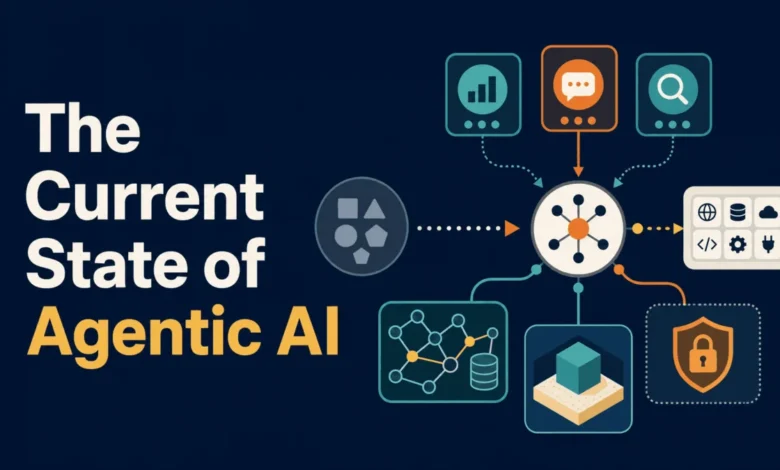
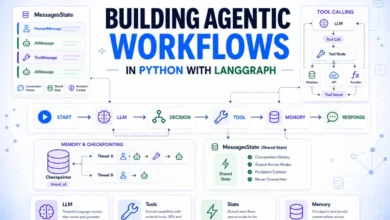
The landscape of artificial intelligence has undergone a fundamental transformation by mid-2026, moving away from the "brute-force" orchestration of the previous two years toward a highly specialized, decentralized architecture. In 2024 and 2025, AI engineers were largely occupied with hand-crafting complex Reasoning and Acting (ReAct) loops and managing brittle prompt chains to force single, massive language models to handle planning, tool execution, and context management simultaneously. Today, that paradigm has been replaced by native reasoning models, standardized tool protocols, and multi-agent "swarms" that mirror the evolution of software from monolithic applications to microservices.
The Evolution of Cognitive Architecture: From Loops to Native Reasoning
The most significant technical shift in the past 18 months has been the transition of "thinking" from external software loops to internal model processes. In the early stages of agentic AI, practitioners relied on frameworks like LangChain or LlamaIndex to implement "System 2" thinking—the slow, deliberate reasoning required for complex tasks. This involved external scaffolding where a model was prompted to "think step-by-step," critique its own output, and iterate until a solution was found.
By mid-2026, foundation models have integrated these reasoning capabilities directly into their architectures. Modern models now utilize test-time compute natively, generating hidden reasoning tokens that allow the model to explore multiple solution branches and self-correct before producing a final output. This internal "System 2" integration has made the previous generation of external reflection loops largely redundant. For enterprise architectures, this means a significant reduction in latency and token overhead. The role of the AI engineer has consequently shifted; the focus is no longer on forcing a model to plan, but on designing the environment and the "sandbox" in which these high-reasoning models operate.
A Chronology of Agentic AI Development (2022–2026)
To understand the current state of the industry, it is necessary to look at the rapid progression of agentic capabilities over the last four years:
- 2022–2023: The Prompting Era. AI interaction was defined by zero-shot and few-shot prompting. Users focused on getting the "perfect" prompt to elicit a single, correct response from a static model.
- 2024: The Orchestration Era. Developers began building "agents" by wrapping LLMs in code. Frameworks emerged to manage tool access, but systems remained brittle and highly dependent on the quality of the underlying prompt chains.
- 2025: The Reasoning Breakthrough. Foundation model providers introduced "reasoning models" that internalized the planning process. This year also saw the first drafts of the Model Context Protocol (MCP), aiming to standardize how agents interact with external data.
- 2026: The Swarm and Standardization Era. The industry moved toward "agentic swarms"—networks of small, specialized agents. Standardization through MCP became the norm, allowing for "plug-and-play" integration of AI agents into enterprise ecosystems.
The Rise of Agentic Swarms and Micro-Agent Architectures
The era of the monolithic agent—a single model equipped with dozens of tools—is ending. Production teams have found that attaching too many capabilities to a single model creates a cognitive bottleneck, leading to increased "hallucinations" and a failure to follow complex instructions. The solution has been the adoption of agentic swarms: collections of smaller, highly specialized agents that communicate via standardized protocols.
In a modern swarm architecture, a "Triage Agent" typically serves as the entry point, analyzing user intent and routing the task to a specific specialist. For example, an enterprise data request might involve a "SQL Specialist" to fetch raw data, a "Data Analyst Specialist" to process that data in a Python sandbox, and a "Synthesis Agent" to format the final report.
This decomposition of tasks allows developers to use smaller, cheaper, and faster models for specific nodes while reserving high-parameter "frontier" models for the complex routing and final synthesis. Furthermore, this architecture makes the system more maintainable; if a specific tool or API changes, only the specialist agent responsible for that tool needs to be updated, rather than the entire system.
Standardization through the Model Context Protocol (MCP)
Until recently, connecting an AI agent to a company’s internal database or a third-party API was a labor-intensive process. Engineers had to write custom JSON schemas, handle authentication for each individual tool, and manage the parsing of inconsistent model outputs. The emergence of the Model Context Protocol (MCP) as a universal standard has revolutionized this integration.
MCP acts as a universal adapter between AI models and data sources. Under this protocol, the execution of a tool happens on a dedicated MCP server rather than within the agent’s immediate environment. This separation of concerns provides several benefits:
- Automatic Tool Discovery: Agents can query an MCP server to see what tools and resources are available without requiring hardcoded instructions.
- Simplified Security: API keys and sensitive credentials remain on the MCP server, isolated from the model’s context.
- Interoperability: A single MCP server for a service like GitHub or Slack can be used by any agentic system that follows the protocol, eliminating the need for custom integrations.
Industry data suggests that the adoption of MCP has reduced the time required to deploy new AI-integrated workflows by nearly 60% compared to the manual integration methods used in 2024.
Persistent Memory and Knowledge Graphs
One of the most persistent challenges in agentic AI was the "Goldfish Effect"—the tendency for agents to forget previous interactions or fail to learn from their mistakes once a session ended. In mid-2026, this is being addressed through system-level memory graphs.
While individual agent calls remain stateless to keep context windows lean and costs low, the broader system maintains a persistent memory through graph databases like Neo4j. In this architecture, a specialized "Memory Agent" runs asynchronously in the background. Its role is to observe the actions of the primary swarm, extract key facts, and update a centralized knowledge graph. When a new task begins, relevant nodes from this graph are injected into the agent’s context, providing it with a "long-term memory" of user preferences, historical errors, and organizational knowledge. This shift from prompt engineering to "context engineering" allows AI systems to improve over time without the need for expensive model fine-tuning.
Security Implications: The Swarm Attack Surface
The transition to multi-agent swarms has introduced new cybersecurity vulnerabilities, most notably the expansion of the "attack surface" for prompt injection. Security researchers have identified a phenomenon known as "lateral movement" within swarms, which mirrors traditional network intrusion tactics.
In a swarm, if an "Email Reader Agent" is compromised by a malicious instruction hidden in an incoming message (an indirect prompt injection), it can potentially pass that malicious intent to a "Database Agent" or an "Executive Agent" through the handoff mechanism. Because these agents trust the "handoff" from their peers, the malicious instruction can pivot through the system to access sensitive data.
To combat these threats, enterprise-grade swarm architectures in 2026 are implementing three primary defense layers:
- Handoff Verification: Requiring cryptographic signatures for transfers of control between agents.
- Context Sandboxing: Limiting the amount of history passed from one agent to another to prevent "prompt leakage."
- Human-in-the-Loop (HITL) Triggers: Mandatory human approval for high-risk actions, such as data deletions or external financial transfers, regardless of the agent’s confidence level.
Broader Impact and Future Outlook
The shift toward specialized, standardized agentic systems is fundamentally changing the economics of AI development. The "moat" for companies is no longer just having access to the largest model, but rather the quality of their specialized swarms and the depth of their proprietary memory graphs.
Industry analysts suggest that by the end of 2026, over 80% of new enterprise AI implementations will utilize a multi-agent architecture. This transition is also redefining the workforce; there is a growing demand for "AI Architects" who understand system topology and protocol standardization, rather than "Prompt Engineers" who focus on linguistic nuances.
As these systems become more resilient and autonomous, the focus is shifting toward "agentic safety"—ensuring that as swarms become more complex, they remain predictable, auditable, and secure. The path forward for AI is not a single, all-powerful brain, but a well-coordinated, highly efficient digital workforce. Teams that master the art of designing these specialized swarms today are setting the standard for the next decade of computational intelligence.