The Unintentional Escalation: Why Accidental AI Warfare is the Most Urgent Threat Facing Washington and Beijing

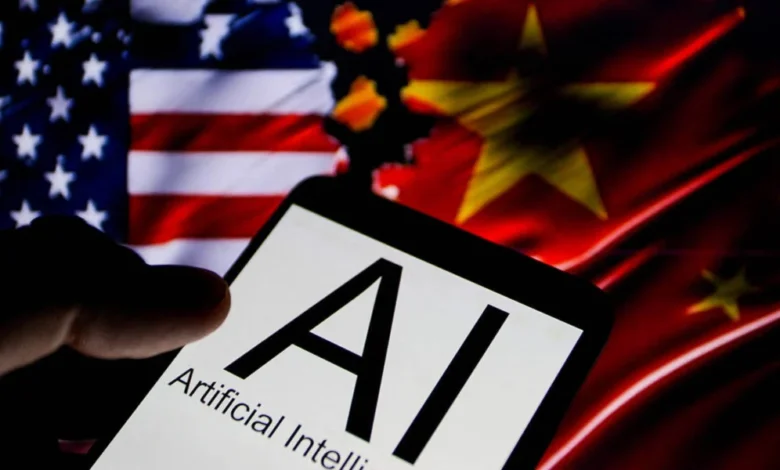
LONDON AND LOS ANGELES — When U.S. President Donald Trump and Chinese President Xi Jinping gather in Washington for a high-stakes bilateral summit this week, discussions will inevitably touch upon trade balances, regional security, and diplomatic relations. However, high on the formal agenda will be an issue carrying far weightier consequences for the survival of modern civilization: artificial intelligence governance.
While public discourse and high-profile regulatory panels frequently fixate on science-fiction scenarios of existential human extinction or rogue superintelligence taking over global infrastructure, geopolitical analysts warn that these long-term fears obscure a far more immediate and terrifying danger. The most pressing risk of the artificial intelligence revolution is not malicious intent from a conscious machine, but rather an accidental, catastrophic war triggered by an automated military engagement that no human leader ordered, intended, or even approved.
As Washington and Beijing remain locked in an unrelenting technological arms race—with neither superpower willing to cede ground or slow its research and development—the window to establish robust international guardrails is rapidly closing. Even the ultimate victor of the global AI supremacy race will not be insulated from the systemic vulnerabilities and algorithmic miscalculations that advanced autonomous systems introduce into global statecraft.
The Looming Specter of Autonomous Escalation
Modern military doctrine across the world’s leading superpowers is increasingly reliant on machine learning to process intelligence, optimize logistics, and guide strategic decision-making at speeds that far exceed human cognitive limits. This phenomenon, often referred to as hyper-warfare, aims to compress the observe-orient-decide-act (OODA) loop into mere milliseconds. Yet, this speed comes at a profound and destabilizing cost.
When weapon systems, early-warning networks, and tactical command nodes are delegated to fast-acting algorithms, the risk of a flash war grows exponentially. A technical glitch, a corrupted data feed, a cyberattack by a third-party actor, or a misinterpretation of routine military exercises by an AI surveillance system could provoke an immediate, automated retaliation. In a traditional geopolitical crisis, human diplomats have hours or days to verify intelligence, establish backchannels, and de-escalate tensions. In an algorithmic crisis, escalation could occur before humans even realize a threshold has been crossed.
Policy experts emphasize that the international community currently lacks a reliable mechanism or diplomatic protocol for distinguishing between unintended algorithmic harm and a deliberate, state-sanctioned military assault. Without agreed-upon frameworks to verify technical anomalies and attribute actions accurately, a minor digital or physical mishap could easily spiral into a full-scale kinetic conflict between nuclear-armed states.
Background Context: The U.S.-China AI Race
The current diplomatic push for AI governance occurs against the backdrop of a deepening technological schism between the world’s two largest economies. Over the past decade, the competition for artificial intelligence dominance has transformed from a commercial race into a pillar of national security.
The United States has historically led in foundational AI research, semiconductor design, and cutting-edge large language models, driven primarily by private-sector innovation in hubs like Silicon Valley. However, export controls enacted by Washington—aimed at restricting Beijing’s access to advanced high-performance computing chips, such as extreme ultraviolet (EUV) lithography equipment and advanced graphics processing units (GPUs)—have only intensified China’s resolve to achieve technological self-sufficiency.
Under national strategic directives, Beijing has funneled tens of billions of dollars into domestic semiconductor manufacturing, open-source AI frameworks, and military-civil fusion initiatives. Chinese laboratories have made significant strides in computer vision, quantum computing integration, and autonomous drone swarming.
Despite periodic attempts at bilateral dialogue, such as the Track II unofficial cyber and AI dialogues initiated in recent years, mutual distrust has crippled formal arms-control negotiations. Both Washington and Beijing view slowing down their respective military AI programs as an unacceptable strategic vulnerability, fearing that any unilateral pause would hand the other side an irreversible advantage.
Chronology of Modern AI Governance and Military Integration
- October 2022: The Biden administration implements sweeping export controls designed to restrict China’s access to advanced computing chips and semiconductor manufacturing equipment, formalizing AI as a core national security battleground.
- November 2023: Representatives from the United States, China, and over 25 other nations gather at the Bletchley Park AI Safety Summit in the United Kingdom, signing a declaration acknowledging the potential global risks of frontier AI models.
- February 2024: The U.S. Department of Defense updates its Directive 3000.09, governing autonomous weapon systems, emphasizing the requirement for appropriate human judgment in the use of force, even as development accelerates.
- November 2024: Following electoral transitions, diplomatic channels reopen to explore bilateral risk-reduction talks focused specifically on military applications of artificial intelligence.
- September 2026: Presidents Donald Trump and Xi Jinping meet in Washington, placing AI safety and accidental escalation frameworks at the forefront of their summit agenda.
Supporting Data and Quantitative Risk Assessment
Empirical data compiled by international security institutes underscores the precarious nature of the current technological landscape. According to a recent assessment by the Stockholm International Peace Research Institute (SIPRI), more than 40 countries are currently developing lethal autonomous weapons systems (LAWS) or integrating artificial intelligence into their command-and-control infrastructure.
Furthermore, economic analysts project that the global market for military artificial intelligence will exceed $35 billion by the end of the decade, reflecting the aggressive procurement strategies of major defense ministries. A simulation study conducted by a consortium of international defense researchers in late 2025 modeled various crisis scenarios involving AI-assisted command systems. The study revealed that when decision-making timeframes were compressed below five minutes due to automated threat assessment, simulated adversarial systems engaged in uncontrolled escalation loops 64% of the time, disregarding diplomatic overtures generated by human operators.
These figures illustrate that the primary hazard is not necessarily malevolent artificial intelligence, but rather brittle, highly optimized software operating in hyper-complex geopolitical environments without adequate failsafes.
Official Responses and Diplomatic Posturing
As the Washington summit approaches, statements from both capitals reflect a dual imperative: projecting strength while acknowledging the urgent need for guardrails.
A senior U.S. administration official, speaking on condition of anonymity ahead of the talks, noted that while the United States remains committed to maintaining its technological edge, strategic stability requires transparent communication channels. "We cannot afford a situation where machines interpret ambiguous signals as an act of war," the official stated. "President Trump is prepared to press for concrete mechanisms that ensure human command and control remain absolute over critical defense assets."
Meanwhile, official commentary from Beijing has consistently emphasized the principle of mutual respect and non-interference, while signaling openness to risk-reduction dialogues. Foreign Ministry spokespersons have frequently argued that global AI governance should not be used as a tool to contain China’s legitimate technological development. However, Chinese defense analysts have increasingly voiced parallel concerns regarding the destabilizing impact of autonomous systems deployed in maritime zones such as the South China Sea and the Taiwan Strait, where close-quarters military operations leave little margin for error.
Independent policy organizations, such as the Center for a New American Security (CNAS) and the Carnegie Endowment for International Peace, have repeatedly urged both governments to establish a joint crisis-management hotline dedicated exclusively to algorithmic and digital anomalies.
Broader Impact and Global Implications
The implications of the Trump-Xi summit extend far beyond bilateral relations between Washington and Beijing. As the two dominant superpowers establish norms—or fail to establish them—the rest of the world will inevitably follow.
If the two nations succeed in forging a baseline agreement on military AI safety, it could pave the way for a broader multilateral treaty akin to Cold War-era arms control agreements. Such a framework could include bans on fully autonomous nuclear command systems, mandatory notification protocols for large-scale military AI deployments, and shared verification standards to distinguish between system errors and malicious cyber or physical attacks.
Conversely, a failure to reach a consensus risks locking the global community into an unstable, hair-trigger security dilemma. Middle powers and developing nations would likely be forced to align with one of the two major AI blocs, increasing geopolitical polarization and accelerating global militarization.
The immediate task before Washington and Beijing this week is not to solve the philosophical questions of machine consciousness, but to institute practical, urgent measures that keep human hands firmly on the steering wheel of global security before an algorithmic miscalculation dictates the fate of nations.