9/11’s Long Shadow: A Quarter-Century Assessment of America’s Response and Global Transformation

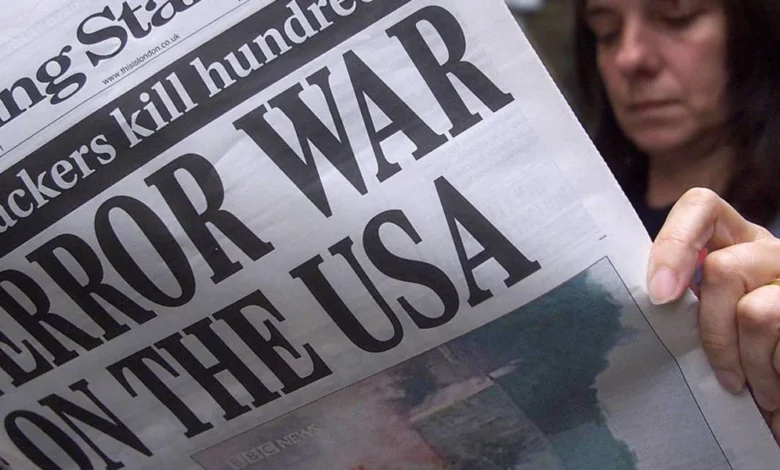
As the world marks the twenty-fifth anniversary of the tragic events of September 11, 2001, analysts, historians, and policymakers continue to grapple with a central historical question: While the terrorist attacks themselves were an unprecedented catastrophe, was it the subsequent American response that fundamentally reshaped the trajectory of the twenty-first century? Two and a half decades later, the consensus among many political scientists is that while the attacks by al-Qaeda inflicted profound human and physical trauma on the United States, the strategic, geopolitical, and domestic reactions executed by Washington in the years that followed caused deeper, more enduring fractures in the global order.
At the close of the Cold War, the prevailing geopolitical narrative promised an era defined by the expansion of liberal democracy, international cooperation, open markets, and the rule of law. The collapse of the Soviet Union left the United States as the unrivaled global hegemon, seemingly positioned to anchor a peaceful and prosperous world order. However, the sudden and devastating assault on the World Trade Center and the Pentagon shattered this optimism. In the wake of the tragedy, the United States pivoted away from the multilateral, values-driven principles that were supposed to define the post-Cold War era, entering instead into a prolonged period characterized by unilateral intervention, the erosion of civil liberties, widespread political polarization, and protracted military engagements across the Middle East and Central Asia.
The Anatomy of a Crisis: The Events of September 11, 2001
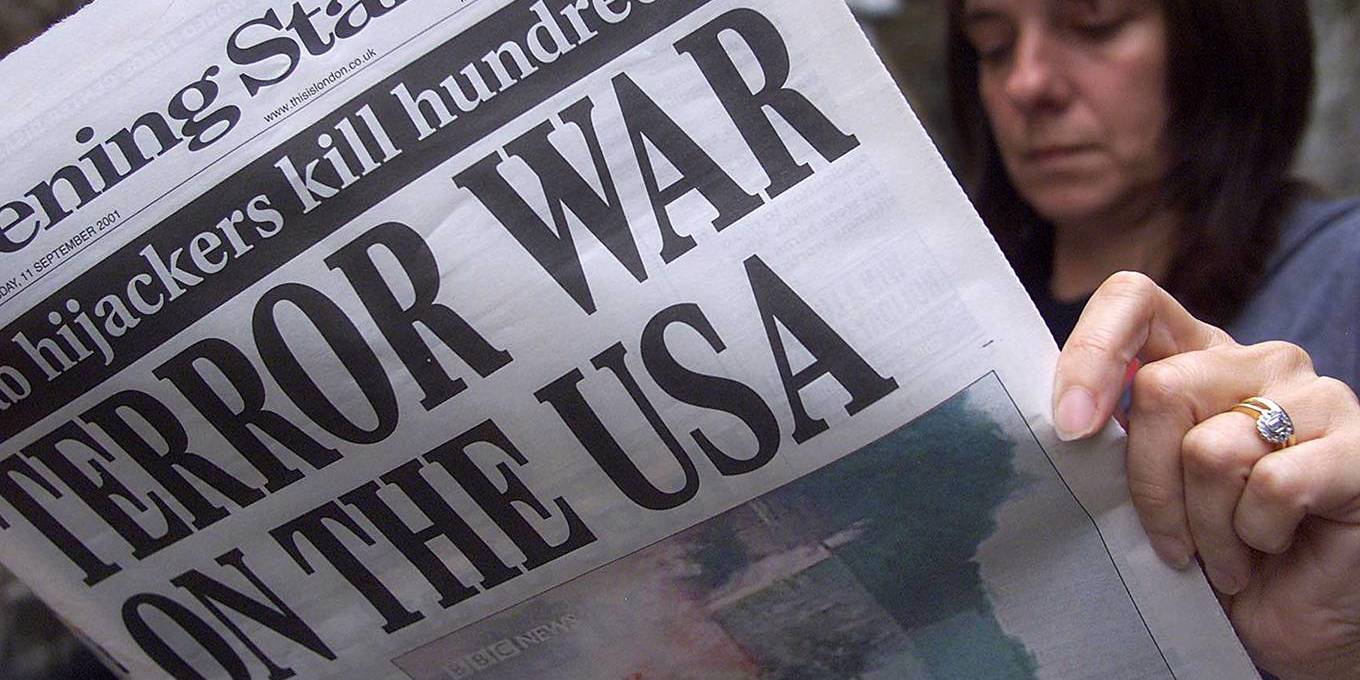
The morning of September 11, 2001, began as a clear Tuesday, but it quickly unfolded into the deadliest act of foreign terrorism on American soil in the nation’s history. Nineteen militants associated with the extremist group al-Qaeda, led by Osama bin Laden, hijacked four commercial airliners simultaneously.
Two of the aircraft, American Airlines Flight 11 and United Airlines Flight 175, were intentionally flown into the Twin Towers of the World Trade Center in New York City, resulting in the catastrophic structural collapse of both skyscrapers and destroying the surrounding complex. A third hijacked plane, American Airlines Flight 77, struck the Pentagon in Arlington, Virginia, causing extensive damage and partial collapse to the western facade of the U.S. military headquarters. The fourth plane, United Airlines Flight 93, crashed in a field in Shanksville, Pennsylvania, after passengers and crew revolted against the hijackers, preventing the aircraft from reaching its intended target in Washington, D.C., which is widely believed to have been the United States Capitol or the White House.
The immediate human toll was staggering. A total of 2,977 victims lost their lives, not including the 19 hijackers. The fatalities included citizens from more than 90 countries, transforming a domestic tragedy into a global catastrophe. First responders bore a heavy burden; 343 firefighters and 71 law enforcement officers perished in New York City alone as they rushed into the burning towers to save trapped civilians. In the days and weeks that followed, rescue efforts transitioned into a massive recovery operation, while the nation entered a state of profound shock and mourning.

Chronology of a Paradigm Shift: Key Milestones from 2001 to the Present
To understand how the post-Cold War promise deteriorated, it is necessary to examine the chronological sequence of policy decisions and geopolitical milestones that followed the attacks:
- September 2001: President George W. Bush declares a "War on Terror," signaling a departure from traditional law enforcement approaches to international terrorism in favor of a full-scale military campaign. Congress passes the Authorization for Use of Military Force (AUMF), granting the executive branch sweeping powers to target those responsible for the attacks and those who harbored them.
- October 2001: Operation Enduring Freedom begins with the U.S. invasion of Afghanistan, aimed at dismantling al-Qaeda and removing the ruling Taliban regime that provided sanctuary to the terrorist network.
- October 2001: The USA PATRIOT Act is introduced and rapidly passed by Congress, significantly expanding the surveillance powers of domestic law enforcement and intelligence agencies while reducing judicial oversight on wiretapping, data collection, and the detention of suspected terrorists.
- January 2002: The United States opens the Guantanamo Bay detention camp in Cuba, establishing an offshore legal limbo where foreign terrorism suspects are held outside the jurisdiction of U.S. federal courts and standard constitutional protections.
- March 2003: Operation Iraqi Freedom begins as a U.S.-led coalition invades Iraq, based on contested intelligence asserting that Saddam Hussein possessed weapons of mass destruction (WMDs) and maintained ties to al-Qaeda—claims that were later proven unfounded.
- December 2003: Former Iraqi President Saddam Hussein is captured by U.S. forces near Tikrit, though the country quickly descends into a brutal sectarian insurgency and civil war.
- May 2011: U.S. Navy SEALs conduct a clandestine raid on a compound in Abbottabad, Pakistan, resulting in the death of al-Qaeda leader Osama bin Laden, a symbolic milestone in the war on terror.
- August 2021: The United States completes its chaotic and controversial military withdrawal from Afghanistan, culminating in the rapid collapse of the Western-backed Afghan government and the return of the Taliban to power, effectively ending America’s longest war.
- September 2026: Twenty-five years after the initial attacks, scholars and international observers assess the long-term legacy of 9/11, noting that the architecture of national security constructed in its wake remains deeply embedded in Western governance, even as global priorities shift toward great-power competition.
Quantitative Impact: The Economic and Human Cost of the Post-9/11 Era
The scope of America’s response to September 11 can also be measured through economic data and human casualties. According to studies by institutions such as Brown University’s Costs of War Project, the post-9/11 wars in Afghanistan, Iraq, Pakistan, Syria, and Yemen have cost the U.S. federal government upwards of $8 trillion when factoring in direct military expenditures, veterans’ care, interest on war-related debt, and homeland security enhancements.
The human cost outside the United States has been equally profound. Reliable estimates indicate that direct war-related violence has resulted in the deaths of over 900,000 people, including civilians, national military and police personnel, and opposition fighters. Furthermore, the conflicts displaced an estimated 38 million people, creating one of the worst refugee crises in modern history and destabilizing entire regions across the Middle East and North Africa.

Within the United States military, more than 7,000 service members lost their lives in post-9/11 operations, and hundreds of thousands more returned home with severe physical injuries, traumatic brain injuries (TBIs), and invisible wounds such as post-traumatic stress disorder (PTSD). The systemic strain on the Department of Veterans Affairs highlighted long-term institutional challenges in providing adequate healthcare and support for returning veterans.
Domestic Transformation: Security, Surveillance, and Polarization
Domestically, the aftermath of 9/11 fundamentally altered the relationship between the American citizen and the state. The rapid implementation of the PATRIOT Act and the subsequent creation of the Department of Homeland Security in 2002 centralized federal intelligence operations on an unprecedented scale.
While proponents argued that these measures were essential to prevent subsequent attacks and successfully disrupted numerous high-profile plots, critics and civil liberties organizations raised alarms over government overreach. Revelations in 2013 by former National Security Agency contractor Edward Snowden exposed vast, warrantless surveillance programs targeting domestic and international telecommunications, sparking an intense global debate over the balance between national security and personal privacy.

Moreover, the securitization of public life reshaped American culture and infrastructure. Enhanced security protocols became standard at airports, federal buildings, and public venues through the creation of the Transportation Security Administration (TSA). At the same time, the national unity that momentarily characterized the post-9/11 period gradually gave way to deep partisan polarization. The protracted and inconclusive nature of the wars in Iraq and Afghanistan eroded public trust in federal institutions, the intelligence community, and political leadership, setting the stage for the populist and nationalist political dynamics that would dominate the following decades.
International Repercussions and the Shifting Global Order
On the global stage, America’s post-9/11 strategy significantly altered international norms and diplomatic alliances. The unilateral decision to invade Iraq in 2003 without explicit United Nations Security Council authorization strained traditional transatlantic partnerships, particularly with European allies like France and Germany, and weakened multilateral institutions.
The precedent of preventive war and the rhetoric of regime change also provided tacit justification for other authoritarian powers to pursue aggressive geopolitical ambitions in their own neighborhoods. Furthermore, the prolonged focus of the United States on counterinsurgency and nation-building in the Middle East arguably distracted Washington from recognizing and preparing for the strategic rise of peer competitors, most notably China, as well as the resurgence of Russian assertiveness in Eastern Europe.

By prioritizing asymmetric warfare against non-state terrorist networks, American foreign policy expended vast resources and diplomatic capital on regional conflicts, leaving the nation ill-prepared for the twenty-first-century realities of great-power competition, cyber warfare, and global health crises.
Conclusion: Lessons from a Quarter-Century in Retrospect
As the twenty-fifth anniversary of September 11 is observed, the legacy of that fateful Tuesday remains complex and sobering. The physical scars in New York, Washington, and Pennsylvania have long been healed by memorials and rebuilding efforts, but the institutional, political, and psychological consequences of the American response continue to reverberate across the globe.
The historical verdict on the post-9/11 era suggests that while defending a nation against catastrophic terrorism is an imperative duty, the strategies chosen—characterized by sweeping militarization, the erosion of international norms, and the abandonment of foundational domestic principles—can ultimately inflict damage more enduring than the initial blow. As policymakers navigate an increasingly complex international landscape, the primary lesson of the last twenty-five years is that a nation’s true strength lies not merely in its capacity to project military might, but in its unwavering commitment to the democratic values and legal frameworks it seeks to protect.