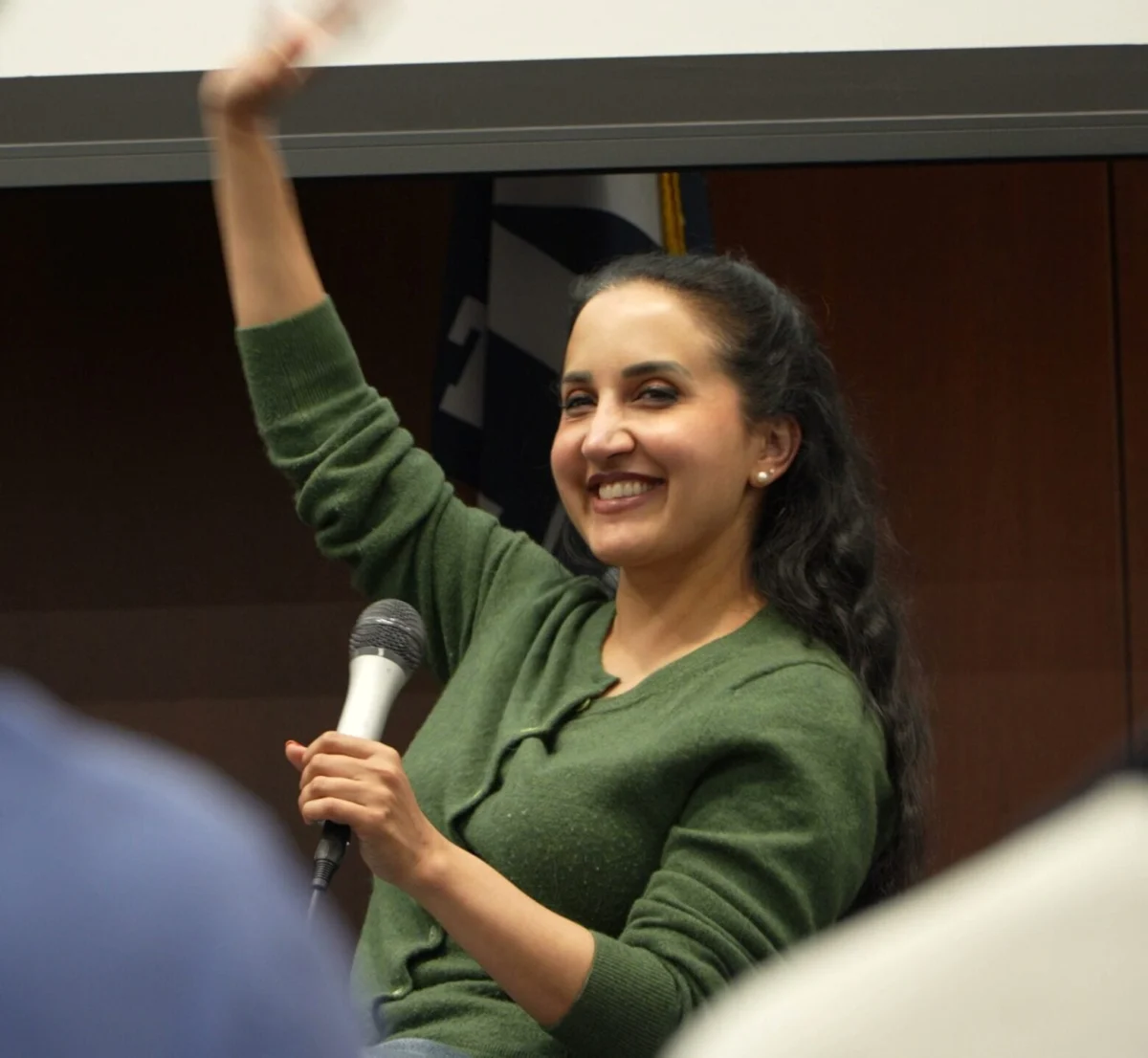
The Afford Anything podcast, a prominent platform in the financial independence and personal finance sphere, recently hosted a live town-hall-style recording at the campus of Texas A&M University-Texarkana. This special event featured podcast hosts Paula Pant and Joe Saul-Sehy, who were joined by Jay Davis, the Executive Director of Financial and Entrepreneurship Engagement at the university. The session was designed to bridge the gap between academic theory and the practical financial realities facing the modern college graduate. As the cost of higher education continues to rise and the economic landscape for young professionals becomes increasingly complex, this collaborative effort aimed to provide actionable intelligence for students navigating the transition from the classroom to the workforce.
Contextualizing the Financial Landscape for Modern Graduates
The event at Texas A&M Texarkana arrives at a critical juncture for American higher education. According to data from the Federal Reserve, total student loan debt in the United States exceeds $1.7 trillion, with the average graduate carrying approximately $30,000 in debt. Against this backdrop, the live recording focused on the psychological and mechanical aspects of money management. Jay Davis, representing the university’s commitment to financial literacy, emphasized that the goal of the engagement was not merely to discuss numbers, but to foster "entrepreneurial engagement"—a mindset that treats one’s career and personal finances as a managed enterprise.
The audience, comprised primarily of students from diverse majors ranging from psychology to business, presented inquiries that reflect the unique anxieties of Generation Z. These concerns center on the tension between pursuing a fulfilling career and achieving the financial stability required to survive in an inflationary environment.
Chronology of the Live Event and Discussion Framework
The event was structured as an interactive Q&A session, preceded by an abridged live performance that set the stage for the thematic discussions. The timeline of the recording followed a logical progression, starting with the philosophical questions of career choice and concluding with the technical skills required for long-term wealth building.
The Career Dilemma: Passion vs. Compensation
The session opened with a query from Hannah, a psychology major, who addressed the quintessential struggle of the early 20s: the trade-off between passion, a paycheck, and peace of mind. This segment explored the "Happiness Curve," a sociological concept suggesting that life satisfaction often dips in mid-life but is highly volatile in the early 20s due to the pressure of making "correct" long-term decisions.
Paula Pant introduced the concept of the "Bravery Fund" during this discussion. Unlike a standard emergency fund, which is designed for survival in the event of job loss, a Bravery Fund is specifically earmarked to provide the financial runway necessary to quit a soul-crushing job or pivot to a new industry. The hosts argued that in one’s 20s, the primary asset is not capital, but time and flexibility. By maintaining a low cost of living and building a modest cash reserve, graduates can afford to take risks that would be prohibitive later in life.
Mitigating Lifestyle Creep in the Professional Transition
A second student, also named Hannah, raised the issue of "lifestyle creep"—the phenomenon where an individual’s discretionary spending increases in tandem with their income. For many new graduates, the jump from a student budget to a professional salary represents the largest percentage increase in income they will ever experience.
The panel provided a data-backed analysis of why this transition is a "danger zone" for wealth accumulation. If a graduate can maintain their student-level spending for even two years while earning a professional salary, they can front-load their retirement accounts, taking advantage of decades of compound interest. The discussion highlighted that the standard of living established in the first 24 months of a career often sets the baseline for the rest of one’s life, making it the most critical period for disciplined budgeting.
Balancing Present Enjoyment with Future Security
Gabriel, another student participant, questioned the balance between being responsible for "Future Me" and enjoying the present. This touched on the "Hedonic Treadmill" and the psychological struggle of delayed gratification.
The hosts and Jay Davis analyzed this through the lens of "intentional spending." The consensus was that financial responsibility does not require total deprivation. Instead, it requires a clear-headed assessment of what truly brings value. Data from consumer psychology suggests that spending on experiences—such as travel or social engagement—typically yields higher long-term satisfaction than spending on material goods. The panel advised students to automate their savings first, thereby "paying themselves" and ensuring the "Future Me" is cared for before the "Present Me" spends the remainder of the paycheck.
The Debt vs. Investment Matrix
Stephano brought forward a technical concern regarding the prioritization of student loan repayment versus entering the stock market. This is a perennial debate in personal finance, often framed as "math vs. behavior."
From a mathematical standpoint, the panel noted that if the interest rate on a student loan is lower than the expected return on a diversified index fund (historically around 7-10% annually), it may be more advantageous to invest. However, the psychological "drag" of debt cannot be ignored. The panel suggested a hybrid approach: contributing enough to a 401(k) to receive a full employer match (which represents a 100% return on investment) while aggressively tackling high-interest debt. This provides a balanced framework that addresses both wealth building and debt reduction simultaneously.
Foundation Building: Credit and Marketable Skills
The final segments of the event focused on the infrastructure of financial life. Valarie asked about building a credit score without falling into the trap of high-interest credit card debt. The response emphasized that credit is a tool for the responsible, noting that the length of credit history is a significant factor in FICO scores. Students were advised to use credit cards only for fixed expenses they can pay off in full every month, thereby building a "reputation" with lenders without accruing interest.
Thomas concluded the student inquiries by asking about "marketable skills." In an era where Artificial Intelligence and automation are reshaping the labor market, the panel pointed to the World Economic Forum’s "Future of Jobs Report," which highlights soft skills—such as critical thinking, emotional intelligence, and financial literacy—as being more durable than specific technical proficiencies. The ability to manage personal finances was framed as a "meta-skill" that provides the stability required to learn and adapt to new professional demands.
Broader Implications for Higher Education and Financial Literacy
The collaboration between "Afford Anything" and Texas A&M Texarkana serves as a model for how universities can address the "real-world" needs of their student bodies. For decades, the focus of higher education has been primarily on vocational training. However, as the economic burden of adulthood shifts more heavily onto the individual, the need for integrated financial education has become undeniable.
The insights shared during this live recording suggest that financial security is not solely a product of a high salary, but of the systems and mindsets established at the start of a career. By addressing lifestyle creep, debt management, and the "Bravery Fund" early, students at Texas A&M Texarkana and listeners abroad are better equipped to handle the volatility of the modern economy.
Official Responses and Educational Impact
Following the event, representatives from the university noted the high level of engagement from the student body, suggesting a significant appetite for non-traditional financial education. Jay Davis’s role in the discussion underscored the university’s proactive stance on "Entrepreneurship Engagement," signaling a shift toward preparing students for the "gig economy" and the reality of frequent career pivots.
The broader impact of this episode lies in its democratization of financial advice. By bringing high-level financial concepts to a campus setting, the podcast helps strip away the intimidation factor often associated with investing and debt management. The event concluded with a call to action for students to view their first post-graduation paycheck not as a license to spend, but as a tool for long-term liberation.
Summary of Key Takeaways for New Professionals
- The Bravery Fund: Establishing a cash reserve specifically for career transitions provides the psychological freedom to leave suboptimal employment.
- The Two-Year Rule: Maintaining a student lifestyle for the first two years of professional employment can significantly accelerate long-term wealth through early investment.
- Automated Responsibility: Balancing the present and the future is best achieved through automated savings, ensuring that "Future Me" is funded before discretionary spending occurs.
- Strategic Credit Use: Building a credit score is a long-term project that requires discipline and an understanding of credit as a reputational tool rather than a source of spending power.
- Meta-Skill Development: Financial literacy and emotional intelligence are among the most marketable skills in a rapidly changing technological landscape.
This live session at Texas A&M Texarkana highlights a growing movement toward practical, actionable financial education that acknowledges the systemic challenges faced by the current generation of graduates while empowering them with the tools to navigate those challenges successfully.