Hyperliquid Strategies Targets Direct CFTC Oversight in Bold Vertical Integration Push for HIP-3 Markets


The landscape of decentralized finance and regulated American derivatives trading is undergoing a profound structural evolution, marked by an aggressive push toward institutional vertical integration. Nasdaq-listed Hyperliquid Strategies, a prominent corporate treasury firm trading under the ticker PURR, officially disclosed on November 5, 2026, that it has formally submitted an application to the Commodity Futures Trading Commission (CFTC). The filing requests registration as a futures commission merchant (FCM), a critical regulatory designation that would allow the company to directly manage customer accounts and handle client trades within regulated futures markets.
This strategic maneuver, unveiled within the company’s third-quarter financial results release, represents a major pivot from standard corporate treasury operations. If approved by federal regulators, Hyperliquid Strategies would bypass the traditional requirement of relying on third-party intermediaries to carry United States client accounts. Instead, the firm would independently service US-based participants engaging with Hyperliquid’s specialized HIP-3 permissioned markets, effectively bringing the regulated plumbing of derivatives clearing in-house.
The regulatory filing highlights an escalating race among traditional and digital asset institutions to capture compliant pathways for onshore perpetual futures trading. As institutional capital demands increasingly stringent compliance frameworks, corporate entities are actively seeking ways to bridge the gap between decentralized liquidity pools and strict US regulatory mandates.
The Mechanics of an FCM and the HIP-3 Architecture
To fully understand the weight of Hyperliquid Strategies’ regulatory filing, one must examine the critical function of a futures commission merchant within the United States financial ecosystem. An FCM acts as the primary gatekeeper and custodian for derivatives market participants. It holds customer segregated funds, executes trade orders, and manages the clearing and settlement risks associated with leveraged futures and perpetual contracts. Historically, this layer of market infrastructure has been dominated by legacy Wall Street clearinghouses and specialized broker-dealers.
By seeking FCM status, Hyperliquid Strategies is positioning itself to absorb these operational responsibilities specifically for the HIP-3 ecosystem. Hyperliquid’s HIP-3 framework, which officially went live on mainnet on October 13, 2025, was designed to introduce advanced deployer functionalities to the protocol’s underlying on-chain infrastructure. These optional features enable independent operators to build and launch permissioned markets directly on top of Hyperliquid. Crucially, while these independent operators can run their custom markets in a fully compliant and localized manner, the underlying blockchain infrastructure remains a neutral, decentralized settlement and execution layer.
Under the proposed model, if the CFTC grants the registration, Hyperliquid Strategies would directly onboard and clear US clients participating in these permissioned environments. This stands in stark contrast to the standard agency model, where treasury firms and digital asset companies must outsource client clearing and account custody to external, legacy-adjacent FCMs. By cutting out the middleman, Hyperliquid Strategies aims to capture greater operational margins while establishing a deeply entrenched position within the regulated permissioned market stack.
A Crowded Fortnight for Onshore Perpetual Futures
The timing of Hyperliquid Strategies’ regulatory disclosure is far from isolated; it arrives amid a fiercely competitive two-week window that has reshaped the narrative around US access to Hyperliquid perpetual contracts. The market is currently witnessing a rapid influx of traditional financial giants and institutional crypto infrastructure providers racing to establish compliant onshore gateways.
In late October 2026, Payward, the parent company of major cryptocurrency exchange Kraken, broke ground by becoming the first CFTC-regulated deployer on the HIP-3 framework. Payward’s strategy involves deploying permissioned markets through its Bitnomial subsidiary, utilizing NinjaTrader Clearing to act as the designated FCM under a strict allowlist model. This configuration established the initial blueprint for how institutional volume could legally access decentralized liquidity pools from within the United States.
Just days after Payward’s announcement, Intercontinental Exchange (ICE)—the corporate parent of the prestigious New York Stock Exchange—announced a landmark partnership with TradeXYZ. This agreement was structured to bring Hyperliquid-based perpetual futures directly to domestic US traders. Under the ICE-TradeXYZ partnership, ICE provides the core exchange and clearing infrastructure, while TradeXYZ handles the market design and front-end user experience.
For industry analysts and institutional traders closely monitoring the first real-world stress tests of the CFTC’s emerging onshore perpetual futures pathway, Hyperliquid Strategies’ FCM filing introduces yet another distinct routing mechanism. While the Payward and ICE models rely on established external clearing partners or legacy exchange frameworks, Hyperliquid Strategies’ application represents a purer, vertically integrated play. It seeks to combine corporate balance sheet exposure to the ecosystem with the direct operational control of a regulated broker.
Quantifying the Prize: The Economic Scale of HIP-3
The aggressive regulatory maneuvers by Hyperliquid Strategies, Payward, and ICE are driven by a singular, highly lucrative economic reality: the immense trading volume migrating through permissioned liquidity channels. Since its mainnet deployment in October 2025, the HIP-3 architecture has evolved from an experimental feature into a core engine of protocol-wide liquidity generation.
Recent market data underscores the massive scale of this segment. Over the thirty-day period leading up to the November 2026 disclosure, approximately 26.7% of the staggering $64.7 billion in total trading volume executed across the broader Hyperliquid ecosystem originated within HIP-3 permissioned markets. It is important to note that these volume metrics are derived from on-chain telemetry and have not been formally confirmed by a centralized exchange authority, yet they clearly illustrate a massive migration of institutional and specialized flow into permissioned environments.
The barrier to entry for launching a dedicated HIP-3 market is intentionally steep, requiring deployers to stake or hold a minimum of 500,000 HYPE tokens. This high threshold ensures that only well-capitalized entities can establish these specialized pools, aligning the interests of market operators directly with the long-term health and valuation of the native token ecosystem.
Financial Performance and Treasury Health
The tangible benefits of this robust trading activity are clearly reflected in Hyperliquid Strategies’ corporate financial disclosures for the third quarter ending September 30, 2026. The firm reported quarterly revenue of $13.3 million, comfortably outperforming consensus Wall Street analyst estimates, which had projected revenues ranging conservatively between $10.6 million and $12 million, depending on the independent financial data provider.
However, the headline figure of the company’s financial report was its staggering net income of $620.6 million for the quarter. This extraordinary profitability was overwhelmingly propelled by $803 million in unrealized capital gains accrued on the company’s substantial corporate treasury holdings of HYPE tokens. This massive gain was partially offset by a $172.3 million corporate income tax provision, underscoring the complex accounting realities faced by publicly traded companies holding large digital asset treasuries under modern regulatory regimes.
The company’s ability to generate exceptional top-line revenue alongside massive balance sheet expansion demonstrates the viability of treasury strategies tied directly to high-utility decentralized finance protocols. Yet, it also binds the corporate valuation of Hyperliquid Strategies tightly to the market price performance of the underlying asset.
Regulatory Hurdles and Market Reactions
Despite the immense strategic upside of securing direct CFTC registration, corporate leadership remains acutely aware of the regulatory friction inherent in bridging decentralized infrastructure with federal oversight. The approval process for a new futures commission merchant is notoriously rigorous, requiring exhaustive audits, strict capitalization compliance, robust anti-money laundering protocols, and intensive scrutiny of operational risk management systems.
In its official third-quarter earnings release, Hyperliquid Strategies exercised measured caution regarding its regulatory ambitions. The company explicitly noted to its shareholders and the broader market that “there can be no assurance as to the timing or outcome of the application or regulatory approval of permissioned HIP-3 markets.” The federal oversight apparatus moves deliberately, and the timeline for securing an independent FCM license remains entirely at the discretion of the CFTC.
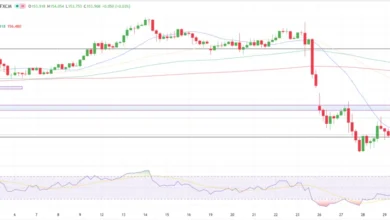
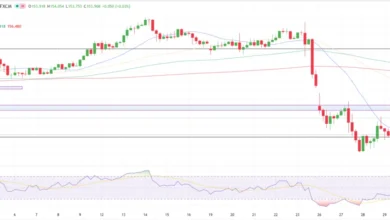
The public markets reacted swiftly to the dual realities of regulatory uncertainty and broader macroeconomic pressures within the digital asset sector. On November 5, 2026—the same day the FCM application and financial results were made public—the HYPE token experienced a downward price correction, falling 7.28% in active trading. Market participants often price in regulatory delays or immediate dilution risks when treasury firms attempt heavy capital expenditures or structural expansions into highly regulated operational domains.
Broader Implications for the Digital Asset Ecosystem
The ongoing scramble to establish compliant US access points for Hyperliquid perpetual futures marks a defining chapter in the maturation of decentralized finance. For years, decentralized protocols operated entirely outside the perimeter of traditional regulatory frameworks, creating a chasm between on-chain liquidity and institutional capital trapped within regulated mandates.
The emergence of the CFTC’s onshore perpetual futures pathway, as demonstrated by the sequential moves from ICE, Payward, and now Hyperliquid Strategies, signals a paradigm shift. Decentralized liquidity is no longer attempting to evade traditional regulatory structures; rather, sophisticated market participants are actively building legally compliant bridges to ingest institutional capital directly into decentralized order books.
If Hyperliquid Strategies successfully navigates the regulatory labyrinth and secures its FCM license, it could establish a powerful new precedent for digital asset treasury firms. Instead of merely acting as passive holders of governance and utility tokens, treasury entities may increasingly evolve into vertically integrated financial institutions—controlling everything from protocol-level staking and market deployment to the direct clearing and custody of institutional client accounts.
Conversely, should regulatory roadblocks stall the application, it will serve as a stark reminder of the regulatory gravity that continues to pull against the speed of crypto-native innovation. As the CFTC evaluates these competing onshore pathways throughout late 2026 and into 2027, the outcome of Hyperliquid Strategies’ pioneering application will profoundly influence how decentralized protocols interface with the global financial system for years to come.
Related posts: