Google Faces Strategic Crossroads After Massive Earnings Drop Spark Debate Over AI Competitiveness


Alphabet Inc. found itself at the center of intensive market scrutiny following a turbulent earnings report that triggered a 12 percent single-day collapse in its share prices. The steep market sell-off underscored mounting investor anxiety over the technology giant’s surging capital expenditures, negative free cash flows, and its perceived lag in the highly competitive artificial intelligence sector. Despite commanding a historic head start in foundational AI research and maintaining an expansive digital ecosystem, the company faces growing pressure to justify hundreds of billions in infrastructure spending amid rising competition from nimble, well-capitalized rivals.
Main Facts and Financial Fallout
The recent quarterly financial disclosures revealed a stark fiscal reality for Alphabet, highlighted by a staggering $200 billion capital expenditure (CAPEX) projection dedicated largely to artificial intelligence infrastructure, data centers, and advanced chip development. This aggressive spending trajectory resulted in a negative free cash flow of $9 billion for the quarter, a rare occurrence for a firm historically characterized by robust cash generation.
Market reaction was swift and unforgiving. The 12 percent correction wiped out substantial market capitalization, prompting institutional and retail shareholders alike to reevaluate Alphabet’s financial discipline. While legendary holding firms like Berkshire Hathaway have periodically disclosed substantial equity stakes—notably investing $10 billion at a $350-per-share valuation threshold during previous quarters—market confidence has been severely tested by the sheer velocity of cash deployment relative to tangible near-term returns in AI market share.
Chronology of an AI Lead Lost
To understand Alphabet’s current predicament, industry analysts frequently point to a timeline of missed momentum and strategic missteps. Google held a commanding, foundational advantage in the generative AI landscape. In 2017, Google researchers published the landmark academic paper introducing the transformer architecture—the fundamental technology underpinning modern large language models, denoted by the "T" in ChatGPT. Furthermore, the company acquired DeepMind, designed proprietary Tensor Processing Units (TPUs), and established unparalleled distribution channels spanning Android, Gmail, YouTube, Chrome, and its dominant search engine.
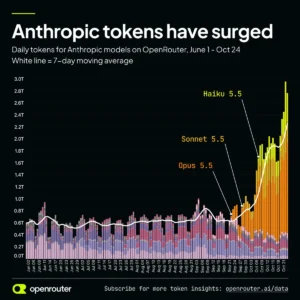
Despite this decade-long positioning, the commercialization phase saw external competitors capture developer mindshare. OpenAI, bolstered by strategic partnerships with Microsoft, and Anthropic, backed by Amazon, rapidly scaled developer ecosystems centered around coding assistants and conversational interfaces like Claude. Consequently, despite pioneering the core technology, Alphabet found its Gemini ecosystem fighting for market positioning behind early industry frontrunners, raising fundamental questions regarding execution speed and product deployment within corporate hierarchies.
Supporting Data and Industry Ecosystem

The broader search and digital advertising ecosystem has also experienced profound structural shifts, complicating Alphabet’s strategic maneuvering. For over two decades, Google operated as the central gateway of the internet, directing significant organic traffic to independent publishers, bloggers, and media outlets in exchange for indexed content.
However, the rollout of features such as featured snippets, vertical-specific search widgets, and more recently, generative AI Overviews, fundamentally altered this dynamic. By summarizing third-party content directly on the search results page, Alphabet minimized outbound referral traffic to content creators. This shift has drawn regulatory scrutiny and widespread criticism from digital publishers who argue that the search engine has transitioned from an aggregator to a direct competitor, retaining user engagement at the expense of the broader digital publishing economy.
Internal Culture and Corporate Restructuring
Beyond external competitive pressures, internal dynamics within Silicon Valley have increasingly focused on corporate efficiency and workforce deployment. Technology sector observers have long noted the cultural dichotomy within mega-cap firms, where highly compensated engineering talent can occasionally experience periods of reduced operational urgency during macroeconomic expansions.
Following the earnings contraction, institutional investors and market analysts have increasingly called for operational streamlining, stricter return-to-office mandates, and rigorous alignment of engineering talent with core corporate directives. With major enterprise transformations underway—such as specialized research units exploring advanced computing loops and algorithmic optimization—leadership faces the imperative of transforming deep technical bench strength into commercially dominant products.
Broader Impact and Market Implications
The wider market implications of Alphabet’s recent financial results extend far beyond a single earnings cycle. The company’s massive capital outlay signals a broader structural shift across the technology sector, where maintaining competitiveness in artificial intelligence requires capital commitments comparable to the sovereign gross domestic product of mid-sized nations.
For the broader technology landscape, Alphabet’s experience demonstrates that historical monopolies, vast cash reserves, and early technological discoveries do not guarantee perpetual market dominance in periods of rapid paradigm shifts. As regulatory bodies monitor search consolidation and competitors scale frontier models with specialized agility, Alphabet’s strategic pivot in the coming quarters will likely serve as a defining case study in corporate reinvention, capital allocation, and the management of technological privilege in the digital age.