Oracle’s recent transition from aggressive stock repurchases to significant equity issuance has cast a harsh spotlight on corporate capital allocation strategies, coinciding with a turbulent period for broader financial markets following political shifts and evolving macroeconomic data. Between 2019 and 2022, Oracle aggressively bought back approximately $92 billion of its own stock, retiring shares at a weighted average of roughly 21 times trailing earnings. However, as capital demands shifted—exacerbated by the $28 billion acquisition of Cerner and heavy investments in artificial intelligence infrastructure—the tide turned dramatically. Rather than preserving capital, the software giant is now issuing billions in equity at valuations considerably lower than those at which it bought back shares, illustrating the fundamental pitfalls of mistiming share repurchases.
This strategic reversal underscores timeless valuation principles. As Warren Buffett famously noted, corporate share repurchases are only justifiable when a company maintains ample operational liquidity and its stock trades at a material discount to its conservatively calculated intrinsic value. By purchasing high-quality earnings at 21 times trailing earnings and later issuing shares at lower multiples—roughly 15 to 19 times trailing earnings—Oracle has diluted its shareholder value. Furthermore, this heavy reliance on equity issuance to fund aggressive AI investments, coupled with credit ratings hovering near potential downgrades to junk status, highlights the precarious long-term position companies face when short-term stock price boosting takes precedence over disciplined balance-sheet management.

The Broader Market Shockwave and Midterm Aftermath
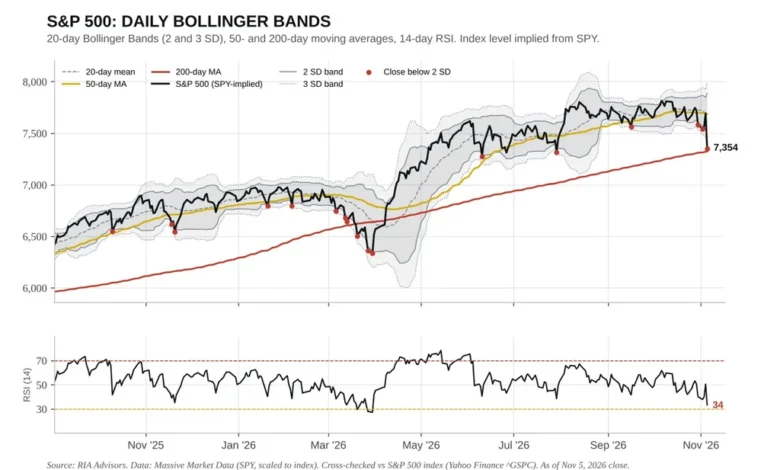
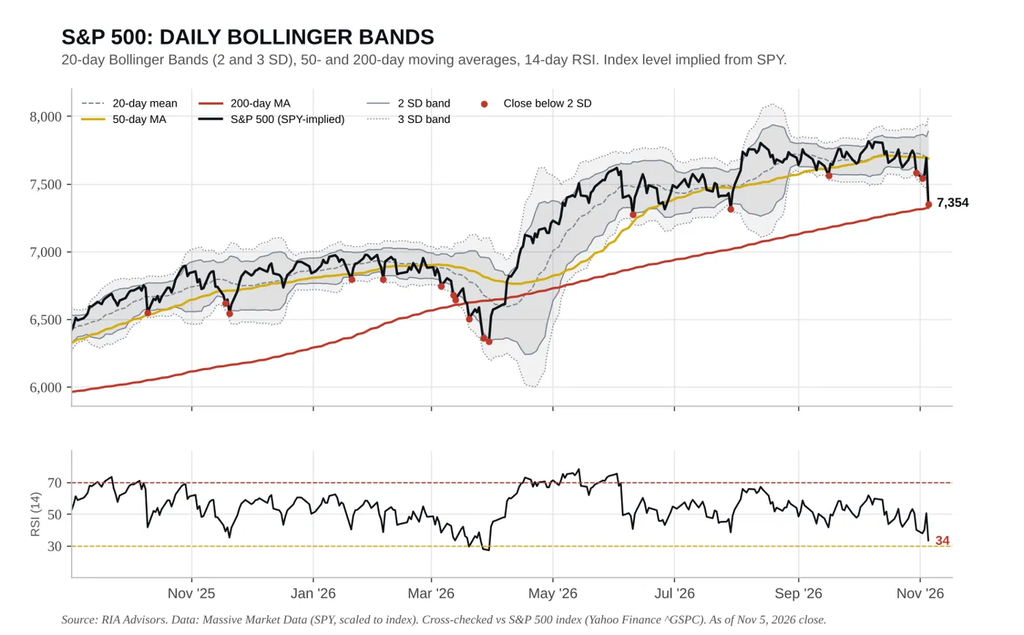
While corporate governance missteps at individual tech giants capture attention, the broader macroeconomic and equity landscape has faced unprecedented volatility. Following the recent midterm elections, which resulted in a sweeping victory for the Democratic Party, U.S. financial markets experienced a historic shock. On a Thursday following the election, the S&P 500 suffered a sharp 4.4% drop to close at 7,354, representing a rare and severe single-session decline. Concurrently, the Nasdaq 100 plunged 6.5%, and the semiconductor-focused exchange-traded fund (SMH) collapsed by 11%, led by steep losses in memory chipmakers and major AI infrastructure suppliers.
Market analysts attribute this sudden sell-off to political catalysts, specifically investor anxieties regarding potential legislative crackdowns on massive data center buildouts. Proposed legislative measures, such as the AI Data Center Moratorium Act, have fueled concerns that heightened regulatory scrutiny could stall the capital expenditure boom driving the technology sector. Although industry experts emphasize that passing a moratorium into law requires overcoming significant legislative hurdles—including presidential approval and bipartisan opposition to halting technological competition—the immediate impact was a rapid compression of valuation multiples rather than a fundamental downgrade of 2027 corporate earnings projections.

De-Risking, Leverage, and Forced Unwinds
Beneath the headline indices, market mechanics played a critical role in exacerbating the downturn. Prime brokerage data from major financial institutions revealed that both fundamental and systematic hedge funds experienced substantial losses, prompting widespread de-risking. Rather than expressing long-term bearish conviction, institutional managers accelerated the liquidation of existing long positions to reduce gross leverage, which has hovered near historical highs of approximately 310%.
When highly leveraged, crowded trades face sudden headwinds, risk-management protocols often mandate forced selling regardless of individual company fundamentals. This dynamic echoes historical market stress events, demonstrating how structural positioning can amplify political and sector-specific headlines into systemic, short-term liquidity contractions.
Historical Context and Oversold Technical Conditions
Analyzing the statistical rarity of the post-midterm market action provides essential context. Historical tracking of midterm election cycles dating back to 1950 reveals that the sequence of a post-election rally followed by a severe second-day drop of over 4% is virtually unprecedented outside of crisis periods, such as the financial turmoil of 2008.
Despite the alarming velocity of the sell-off, technical indicators suggest the market has entered deeply oversold territory. The S&P 500 recently closed more than three standard deviations below its 20-day moving average while remaining just above its crucial 200-year trendline near the 7,320 level. Meanwhile, the Nasdaq 100 officially entered correction territory, sitting roughly 15% below its October peak, and semiconductor equities entered a formal bear market down 33% from prior highs.

Historical market data indicates that extreme oversold readings occurring while long-term upward trends remain intact have predominantly functioned as medium-term buying opportunities rather than the inception of prolonged bear markets. Over the past seven decades, instances where the S&P 500 reached comparable technical extremes while holding above its 200-day average saw the index post positive median gains one and three months later in the vast majority of historical occurrences.
Macroeconomic Realities: Hiking into Disinflation
Concurrently, the macroeconomic backdrop is undergoing a subtle shift that complicates monetary policy deliberations. Federal Reserve officials continue to weigh path-forward interest rate decisions against persistent inflation metrics. However, recent developments demonstrate that the primary drivers of recent price pressures—namely geopolitical crude oil fluctuations and technology capital expenditure-driven cost increases—largely operate outside the direct control of central bank monetary tools.
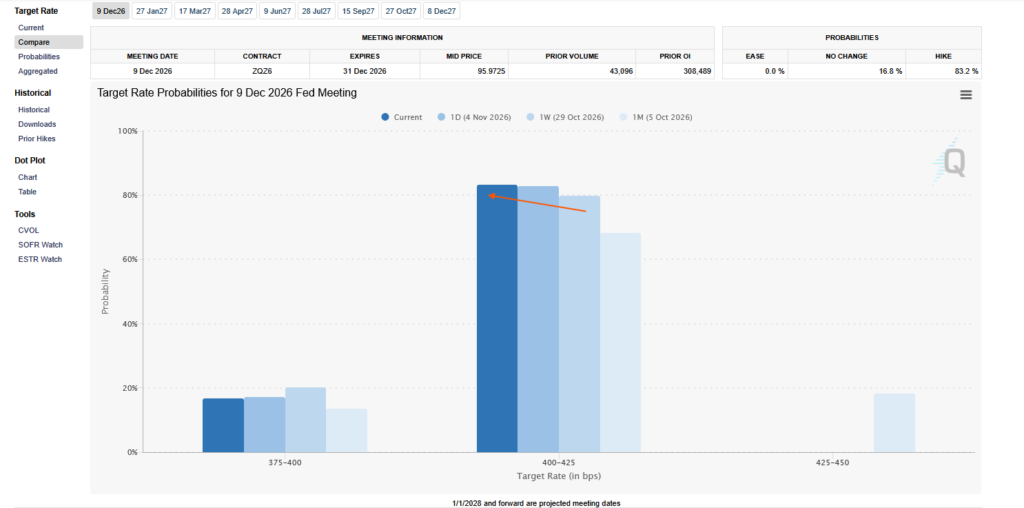
Crude oil prices recently retreated from multi-month peaks approaching $104 down below $90 per barrel, driven by diplomatic signals and shifting expectations regarding Middle Eastern supply dynamics. Similarly, while components of the core Consumer Price Index, such as software, computer imports, and memory hardware, have experienced cost inflations linked to the rapid deployment of artificial intelligence infrastructure, the broader disinflationary momentum in commodity markets challenges the necessity of aggressive monetary tightening.
Financial market participants continue to debate whether the Federal Reserve risks a policy error by implementing rate hikes to combat supply-side and sector-specific price pressures that monetary policy cannot effectively remedy. As economic releases unfold—including upcoming nonfarm payroll reports, unemployment statistics, and consumer sentiment indices—policymakers must navigate these conflicting signals carefully.
Strategic Implications and Investor Outlook

The intersection of corporate capital misallocation, political regulatory fears, and technical market corrections highlights the necessity of disciplined risk management. For corporate entities like Oracle, the shift from aggressive buybacks to dilutive equity issuance serves as a cautionary tale regarding the dangers of prioritizing short-term valuation optics over long-term balance sheet resilience.
For institutional and retail investors alike, navigating current market dynamics requires distinguishing between temporary structural de-risking and permanent impairment of fundamental earnings power. While extreme oversold conditions frequently create tactical entry points for high-quality assets, maintaining patience, respecting technical thresholds such as the 200-day moving average, and avoiding emotional reactions to crowded trades remain essential tenets of successful portfolio management.