Global Leaders Must Fund the Africa-Led Ebola Response Immediately to Prevent a Continental Catastrophe

The exponential trajectory of the latest Ebola outbreak is an urgent reminder that infectious diseases do not wait for ideal geopolitical alignments or balanced budgets. Global leaders must fund the Africa-led regional response today, or risk paying an immeasurably higher price in human lives and economic devastation tomorrow.
NAIROBI—A catastrophic public health emergency is unfolding in the heart of the African continent. The Democratic Republic of the Congo (DRC) is currently battling the deadliest and fastest-moving Ebola virus disease (EVD) outbreak in its recorded history. What began as isolated flare-ups in remote forested regions has metastasized into a sprawling crisis that threatens regional stability, cross-border commerce, and global health security.
In mid-May, the World Health Organization (WHO) and the Africa Centres for Disease Control and Prevention (Africa CDC) jointly declared the escalation a public health emergency of international concern and continental security. As epidemiological data continues to update, the situation remains dire. As of October 27, 2026, cumulative figures released by health surveillance authorities record 10,193 confirmed and probable cases, alongside a staggering 4,960 deaths, yielding a case fatality rate that continues to strain local triage systems and isolate communities.
Chronology of an Escalating Crisis
To understand the severity of the current epidemic, public health historians and epidemiologists point to the rapid acceleration observed over the last several months. While sporadic cases of Ebola are historically endemic to the DRC—a country that has faced more than a dozen outbreaks since the virus was first discovered near the Ebola River in 1976—the dynamics of this latest transmission cycle have defied previous epidemiological models.
In early spring, localized surveillance teams in the eastern provinces noted an unusual clustering of hemorrhagic fever symptoms. By April, transmission chains had breached urban centers and transit hubs, complicating contact tracing efforts. The inability to rapidly isolate patients due to infrastructural deficits and localized community mistrust catalyzed exponential spread.
By mid-May, the velocity of the outbreak prompted the WHO and Africa CDC to elevate their status alerts, moving from regional monitoring to a coordinated international emergency response. Throughout June and July, transmission rates surged as seasonal migration patterns and porous borders facilitated the movement of potentially infected individuals into neighboring provinces and adjacent nations.
By late August, health facilities in the hardest-hit regions were operating well beyond capacity, facing severe shortages of personal protective equipment (PPE), cold-chain storage for experimental vaccines, and therapeutic treatments. Despite the heroic efforts of local healthcare workers, supply chain bottlenecks and delayed international disbursements hampered the initial containment strategy. By October 27, the milestone of over 10,000 cases underscored the inadequacy of piecemeal funding mechanisms and the urgent need for a fully capitalized, Africa-led intervention strategy.
Supporting Data and Epidemiological Realities
The sheer scale of the 2026 outbreak separates it from previous historic occurrences, such as the 2018–2020 Kivu outbreak or the devastating West African epidemic of 2014–2016. Epidemiological data compiled by the Africa CDC and partner organizations highlight several alarming metrics:
- Mortality and Fatality Rates: With nearly 5,000 deaths out of roughly 10,193 cases, the overall case fatality rate hovers near 48%. This figure fluctuates higher in remote areas where patients present late in the course of the disease, long after multi-organ failure has begun.
- Geographic Spread: Unlike previous localized outbreaks confined to dense tropical forests, this strain has successfully navigated major transportation corridors, increasing the risk of urban amplification and international exportation.
- Healthcare Worker Vulnerability: A disproportionate percentage of early casualties comprise frontline doctors, nurses, and community health volunteers who lack consistent access to advanced infection prevention and control (IPC) resources.
- Logistical Constraints: The delivery of medical countermeasures requires complex cold-chain logistics, particularly for advanced monoclonal antibody treatments and refrigeration-dependent vaccines. Transporting these materials across rugged terrain without reliable road infrastructure or stable electrical grids remains a monumental challenge.
Official Responses and Institutional Calls to Action
In response to the deteriorating metrics, international and continental bodies have ramped up their rhetorical commitments, yet structural funding gaps persist. Dr. Jean Kaseya, Director-General of the Africa CDC, along with public health experts Tom Achoki and Nebiyu Dereje, have repeatedly emphasized that the architecture of global health security must shift from reactive benevolence to proactive, localized empowerment.
During recent briefings in Nairobi and Geneva, health leaders stressed that the traditional model—where funding trickles in months after an epidemic has achieved international panic status—is fundamentally broken. Africa-led institutions, equipped with localized intelligence, cultural fluency, and rapid-deployment mechanisms, are proven to be the most effective agents of containment. However, their operational capacity is chronically constrained by delayed donor pledges and bureaucratic friction.
"We cannot fight a pathogen that doubles its footprint every few weeks using nineteenth-century financial bureaucracy," noted a senior epidemiologist close to the response coordination. "The resources promised by G7 nations and multilateral development banks must be disbursed immediately, directly into the hands of regional health authorities and community-based organizations."
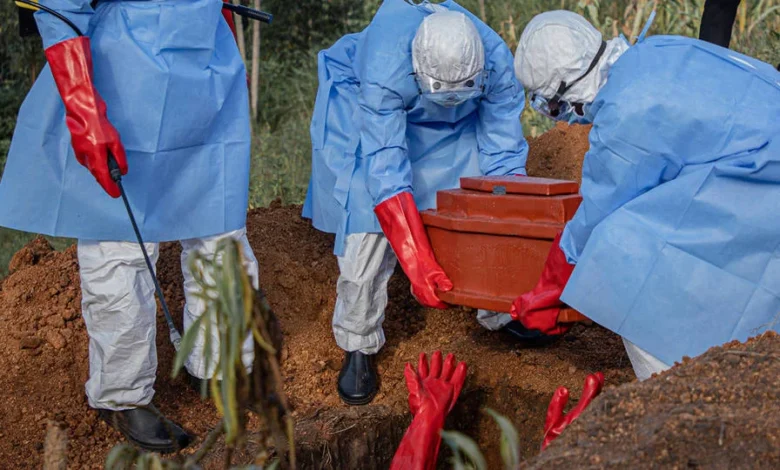
Pharmaceutical manufacturers and global vaccine alliances have also faced pressure to scale up production of investigational therapeutics and pre-qualified vaccines. While stockpiles exist, deploying them to the precise epicenters of transmission requires robust operational funding to support community engagement, safe burial practices, and decentralized treatment centers.
Broader Socio-Economic Implications and Global Security
The repercussions of the unfolding crisis extend far beyond the immediate humanitarian toll within the Democratic Republic of the Congo. Pandemics of this magnitude trigger secondary effects that can destabilize entire sub-regions.
Economically, the crisis threatens to devastate local markets, agricultural production, and cross-border trade. Quarantines, travel restrictions, and fear of contagion disrupt supply chains, leading to food insecurity and hyper-inflation in vulnerable populations. Furthermore, the diversion of domestic health budgets toward emergency Ebola response inevitably depresses routine healthcare delivery, leading to preventable spikes in malaria, measles, and maternal mortality.
On a geopolitical level, infectious disease experts warn that complacency in Central Africa poses a direct threat to global security. In an interconnected world characterized by high-volume international travel, localized pathogens are only ever a flight away from becoming global crises. The failure to contain Ebola at its source shifts the financial and logistical burden exponentially upward, transforming what could be a contained regional investment into a multi-billion-dollar global rescue effort later.
The Path Forward: Funding the Frontlines
As the international community looks toward the close of 2026, the trajectory of the Ebola outbreak in the DRC hangs in the balance. The technical expertise, the operational blueprints, and the institutional leadership required to defeat the virus already exist within Africa. What remains missing is the requisite political will from wealthy donor nations to fully underwrite the Africa-led response plan without delay.
Public health advocates maintain that every day of hesitation multiplies the human and economic cost. By channeling immediate, flexible financing to the Africa CDC, the WHO, and the frontline ministries of health in the DRC and surrounding nations, global leaders can halt the exponential curve. The alternative—waiting for ideal geopolitical alignments while communities suffer—is a catastrophic gamble that the international community can no longer afford to take.
Related posts: