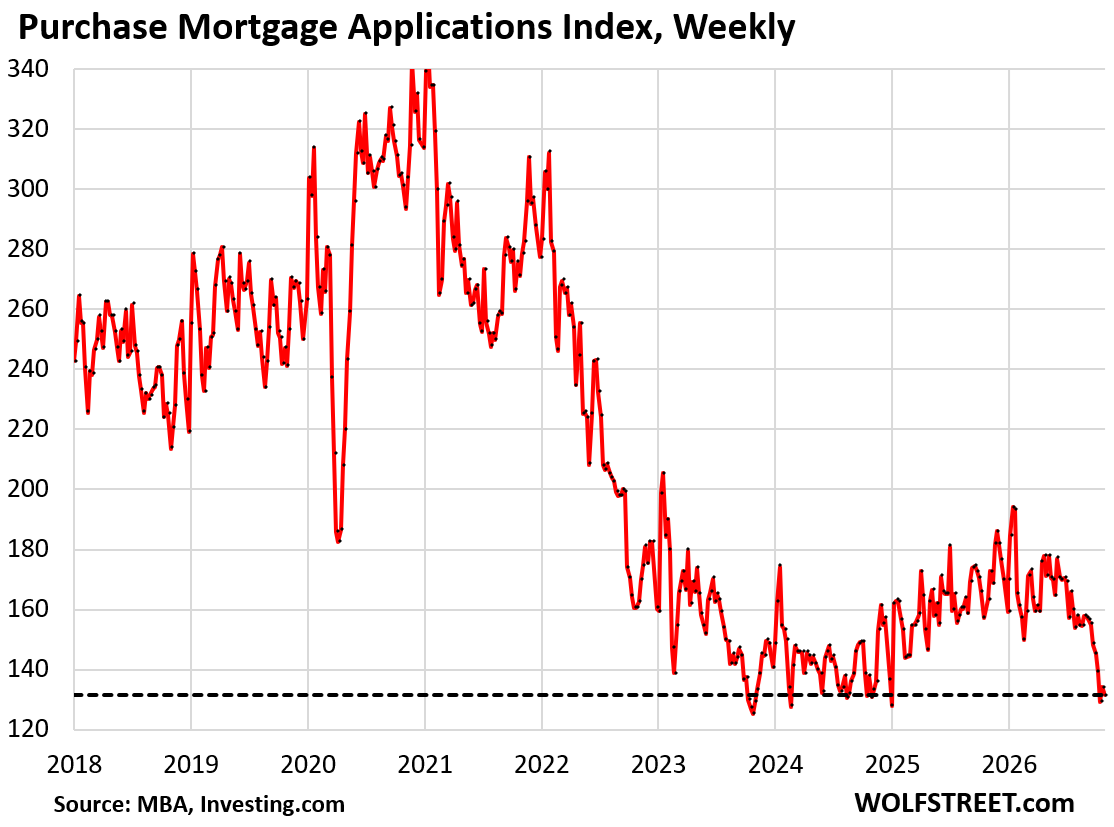
The American housing market remains trapped in a state of suspended animation as prospective homebuyers continue to retreat from the purchase market. According to the latest data released by the Mortgage Bankers Association (MBA) for the week ending October 30, 2026, demand for purchase mortgages has once again declined, hovering at historical lows. This persistent weakness, characterized by a 20% drop compared to the already depressed levels of a year ago and a staggering 45% decline from the same period in 2019, signals a deepening stagnation in residential real estate.
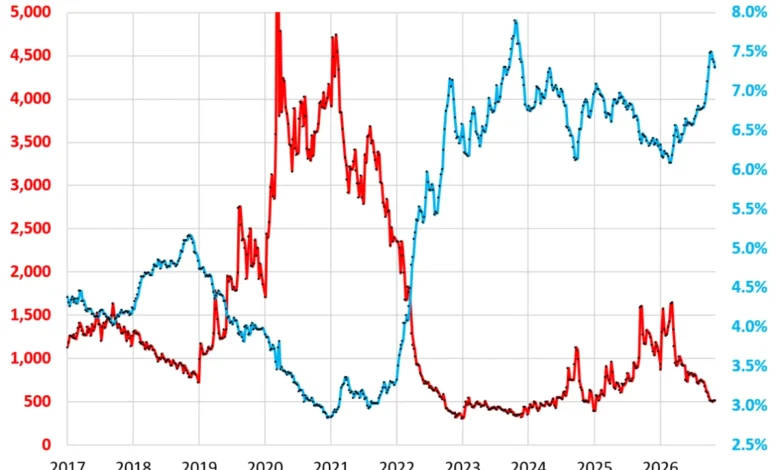
Despite a marginal softening in financing costs—with the average 30-year fixed mortgage rate receding for the third consecutive week to 7.30%—the market has failed to show any signs of a resurgence. The data suggests that for the average American household, the 7% threshold represents a psychological and economic "no-go zone," where the cost of borrowing renders homeownership financially untenable relative to current property valuations.
A Chronology of Housing Stagnation
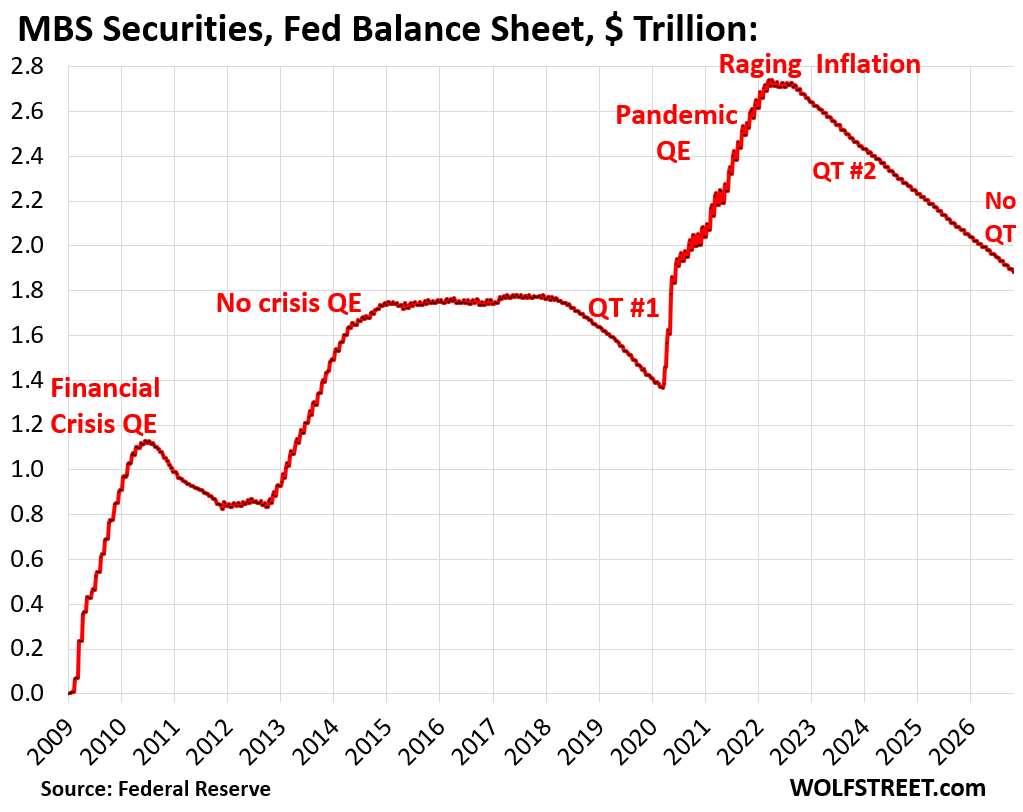
The current environment is the culmination of years of volatility, beginning with the pandemic-era stimulus policies and transitioning into the high-interest-rate regime of the mid-2020s. Following the Federal Reserve’s massive quantitative easing (QE) programs initiated in 2008 and accelerated during 2020, mortgage rates were artificially suppressed to historic lows, briefly dipping below 3%. This period fueled an unprecedented explosion in home prices that far outpaced wage growth.
By early 2022, the Federal Reserve began its pivot toward monetary tightening to combat persistent inflation. As the Fed halted its mortgage-backed security (MBS) purchases and began the process of balance sheet reduction, the floor fell out from under the housing market. Since the peak of its MBS holdings at $2.74 trillion in 2022, the Fed has shed roughly $866 billion in assets. As of November 2026, the central bank’s remaining balance sits at approximately $1.88 trillion, with a continued strategy of allowing securities to roll off the balance sheet while replacing maturing long-term assets with short-term Treasury bills.
The Disconnect Between Policy and Mortgage Yields
A common misconception in the housing sector is that the Federal Reserve’s federal funds rate directly dictates mortgage rates. In reality, the Fed’s policy rate—currently held at a range of 3.75% to 4.0% following the most recent FOMC meeting—primarily influences short-term lending and repo market conditions. Mortgage rates, conversely, are tied to the yields of long-term mortgage-backed securities and the 10-year Treasury note.
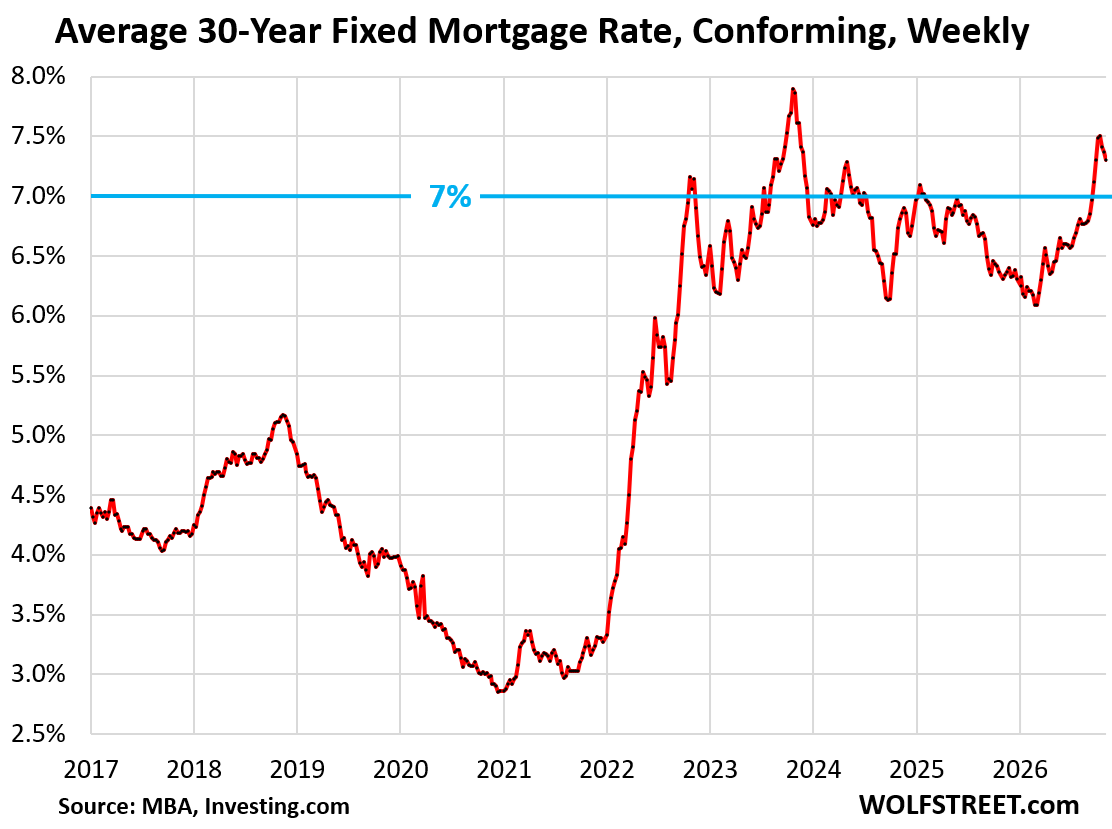
The spread between these long-term instruments and the Fed’s policy rate has been unusually volatile, reflecting market uncertainty regarding inflation and the long-term trajectory of the Fed’s balance sheet. Because the Fed is no longer acting as the "buyer of last resort" for MBS, the private market is now forced to price in the risk of holding these assets without the buffer of central bank intervention. This structural shift has kept mortgage rates in the 6% to 8% range for over four years, a period that stands in stark contrast to the era of ultra-low rates that preceded it.
Economic Implications: The Burden of High Carrying Costs
The core issue facing the real estate market is the fundamental misalignment between home prices and the cost of debt. Even as some regional markets report price corrections—with some high-end residential areas seeing declines of 11% to 26%—the aggregate cost of homeownership remains elevated. Beyond the mortgage payment, prospective buyers are grappling with a "triple threat" of rising costs: homeowners’ insurance premiums, escalating property taxes, and increasing Homeowners Association (HOA) fees.
This shift has significantly altered the calculus for housing demand. In many urban and suburban centers, renting has become the more economically rational choice on a monthly basis. The rise of purpose-built single-family rental (SFR) communities has provided a new avenue for households that would have traditionally sought to purchase, effectively diverting demand away from the stagnant for-sale market. Consequently, pending home sales have plummeted to record lows, a trend that suggests the "closed sales" data for the final quarter of 2026 and the beginning of 2027 will likely remain dismal.
Refinance Activity and the Refinance Drought
If the purchase market is struggling, the refinance market has essentially evaporated. MBA data shows that refinance applications remain pinned at rock-bottom levels, down 60% year-over-year and 75% lower than in 2019. In a functional market, a dip in mortgage rates would typically trigger a wave of refinancing as homeowners seek to lower their monthly debt service.
However, the current lack of response to the recent three-week decline in rates highlights the "lock-in" effect. The vast majority of existing homeowners secured their mortgages during the 2020–2021 window at rates between 2.5% and 3.5%. For these individuals, refinancing at 7.30% would be mathematically disastrous. As long as mortgage rates remain significantly above the historical lows enjoyed by current homeowners, the supply of existing homes for sale will likely remain constrained, further complicating the market’s path to equilibrium.
Institutional Perspective and Market Forecasts
While official responses from the Federal Reserve regarding the housing market have been muted, the consensus among economists is that the central bank is prioritizing long-term price stability over short-term support for the housing sector. The Fed’s stated goal of continuing to normalize its balance sheet suggests that the upward pressure on long-term yields—and by extension, mortgage rates—will not abate through easy monetary policy in the near term.

Industry analysts suggest that the housing market is currently in a "wait-and-see" phase. Buyers are waiting for a meaningful decline in prices or interest rates, while sellers, particularly those who do not have an urgent need to relocate, are choosing to remain in their current homes rather than trade a low-interest-rate mortgage for a new one at current market rates.
Broader Economic Impact
The implications of this housing malaise extend well beyond the real estate industry. The construction sector, a significant driver of U.S. GDP, is beginning to feel the impact of the lack of new homebuyer demand. Furthermore, the decline in transaction volume suppresses ancillary economic activity, such as mortgage origination services, title insurance, home inspections, and the retail spending associated with moving and home furnishing.
As we look toward the close of 2026, the housing market faces a precarious winter. The data confirms that the "no-go zone" of 7%-plus mortgage rates is effectively throttling the market, and without a substantial shift in either inflation data or the Fed’s approach to its remaining MBS holdings, a rapid recovery remains unlikely. The sector is currently undergoing a painful repricing period, where the excesses of the pandemic era are being corrected through a combination of stagnant prices, diminished transaction volume, and the slow, deliberate reduction of the central bank’s influence on the mortgage bond market.