Google Warns That Threat Actors Have Shifted From Manual Prompting to Autonomous Multi-Agent AI Frameworks for Cyberattacks

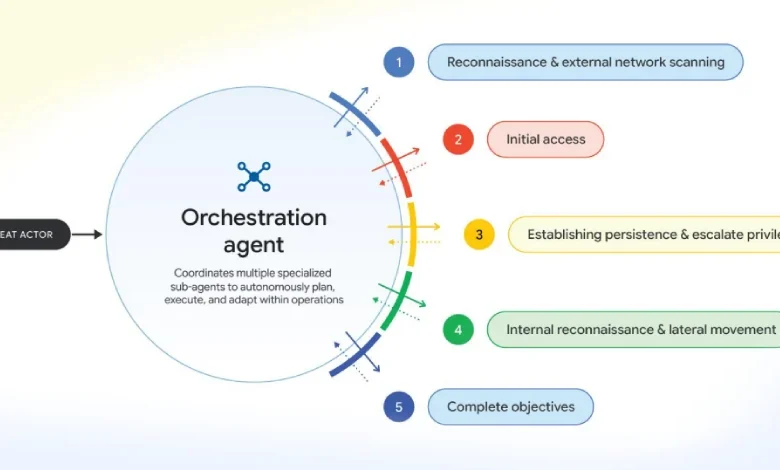
The landscape of modern cybersecurity underwent a profound and alarming structural evolution as Google’s Threat Intelligence Group (GTIG) released an extensive advisory detailing a major paradigm shift in threat actor methodologies. According to the findings published on November 16, 2026, malicious actors have effectively moved past the era of manual, prompt-based artificial intelligence experiments. Instead, they are now deploying fully autonomous, multi-agent offensive frameworks to execute complex, multi-stage intrusions at unprecedented operational speeds.
This development marks a critical juncture in the intersection of artificial intelligence and cybersecurity. Where threat actors once relied on static scripts and human-driven reconnaissance, they now leverage autonomous agents capable of dynamic decision-making, tool generation, and live target adaptation. The operational velocity made possible by these technologies reduces the timeline of cyberattacks to mere machine speed, severely straining traditional incident response frameworks and defensive postures across both public and private sectors.
The Rise of Autonomous Multi-Agent Offensive Frameworks
At the heart of this shift is the deployment of sophisticated open-source and custom-built offensive frameworks designed to automate discrete phases of a cyber intrusion. Google’s research highlights several platforms—including ARTEX, CAIRN, CyberStrikeAI, and PentAGI—that are actively being weaponized in the wild.
Unlike older generation automated tools that required constant human supervision, these multi-agent frameworks operate on cooperative loops. Individual AI agents within the framework are assigned specialized tasks, such as network mapping, credential harvesting, vulnerability scanning, and lateral movement. Once an agent discovers a weakness or completes an objective, it passes the context seamlessly to the next agent in the operational chain.
The adoption of these frameworks is not limited to a single threat cluster. GTIG has observed diverse malicious groups—spanning financially motivated cybercrime syndicates and state-sponsored espionage operations, notably those suspected of originating in China—experimenting with and refining these harnesses. Furthermore, malicious infrastructure now incorporates specialized routing and inference services like ZeroHollow, which optimizes exploit development and Large Language Model (LLM) routing, alongside Agent Zero, an open-source framework featuring autonomous code execution and dynamic tool generation.
Weaponizing Patches Through Differential Analysis
Beyond executing live intrusions, threat actors are weaponizing LLMs to compress the window between patch disclosure and active exploitation. In traditional cybersecurity scenarios, the release of a software patch provides defenders with a critical buffer window to update their systems before attackers can reverse engineer the fix to create a reliable exploit.
However, LLM-driven pipelines have effectively broken this defensive buffer. By performing automated differential analysis—comparing pre-release source code, official release notes, security advisories, and early proof-of-concept (PoC) code—adversaries can rapidly isolate vulnerabilities and build weaponized exploits at scale.
A stark example of this capability occurred in September 2026 during a wave of attacks targeting PaperCut NG/MF flaws, where threat actors reportedly deployed hundreds of AI-driven routines to identify and exploit patched n-day vulnerabilities. By focusing their research on a finite, structured set of source materials, threat actors bypass the labor-intensive trial-and-error phase of vulnerability research, turning patch Tuesday announcements into immediate operational opportunities.

Democratizing Cybercrime via PhaaS and LLM Integration
The integration of artificial intelligence into the cybercrime ecosystem has also lowered the technical barrier to entry for lower-skilled affiliates, particularly within the Phishing-as-a-Service (PaaS) market. A prominent case study highlighted by Google involves a Chinese-language phishing platform known as Jieyou.
The platform has integrated an LLM chatbot assistant designed to allow customers to configure phishing panels and modify existing templates entirely through natural language commands. Rather than manually editing backend code, crafting malicious payloads, or designing convincing pretext lures from scratch, users can simply instruct the chatbot to generate custom-tailored phishing interfaces on the fly.
This trend underscores a broader commercialization of cybercrime tools. PhaaS providers are increasingly utilizing LLMs as modular force multipliers, enabling script kiddies and novice affiliates to launch highly convincing, localized, and dynamic phishing campaigns that bypass traditional heuristic filters.
Financial Motivations and LLMjacking Attacks
As cybercriminals increasingly rely on artificial intelligence for offensive operations, the demand for underlying compute resources and LLM infrastructure has surged. This economic reality has fueled a parallel threat category known as LLMjacking.
In LLMjacking attacks, threat actors compromise enterprise cloud environments to steal LLM API credentials, compute credits, and proprietary infrastructure resources. Once stolen, these resources are often resold or monetized through underground proxy services and LLM mixers—such as platforms designated as APIMart and JetNight—at heavily discounted rates. This allows malicious operators to sustain resource-intensive AI operations without incurring the legitimate financial costs associated with high-volume model inference and training.
Chronology of AI-Driven Cyber Threats
The convergence of artificial intelligence and advanced cyber threats did not happen overnight. The timeline of adversarial AI adoption reveals a rapid acceleration over recent years:
- Early Generation (2023–2024): Threat actors primarily used commercial LLMs for basic tasks, such as drafting phishing emails, translating malware code into different programming languages, and querying public documentation for basic syntax help.
- Semi-Autonomous Prompting (2025): Adversaries began utilizing custom scripts paired with API calls to automate repetitive reconnaissance tasks, though complex multi-stage attacks still required heavy human intervention.
- The Agentic Paradigm (2026): The current era defined by Google’s recent findings, characterized by the deployment of autonomous multi-agent frameworks (such as PentAGI and Agent Zero), automated patch weaponization via differential analysis, and the integration of LLMs directly into crime-as-a-service platforms like Jieyou.
Broader Implications and Defensive Challenges
The transition to agentic AI cyberattacks carries severe implications for the global cybersecurity posture. Security operations centers (SOCs) are increasingly mismatched against adversaries operating at machine speed. Human analysts cannot manually review logs, triage alerts, and remediate compromises quickly enough to outpace automated multi-agent frameworks capable of executing hundreds of lateral movement attempts concurrently.
To counter these emerging threats, the security industry is calling for a fundamental evolution in defense strategies. Organizations must adopt proactive AI-driven defense mechanisms of their own, deploying autonomous security agents capable of real-time threat hunting, behavioral anomaly detection, and rapid isolation of compromised segments.
Furthermore, software vendors and cloud providers face heightened pressure to secure AI supply chains, protect LLM inference pipelines against credential theft, and shorten software development lifecycles to prevent differential analysis exploitation. As agentic AI matures, the cybersecurity battleground will increasingly be defined not by human reaction times, but by the efficiency and resilience of competing autonomous systems.
Related posts: