Inflation Refuses to Go Back into the Bottle: PCE Price Index Worst YoY since 2023, on Services, Electronics, Energy


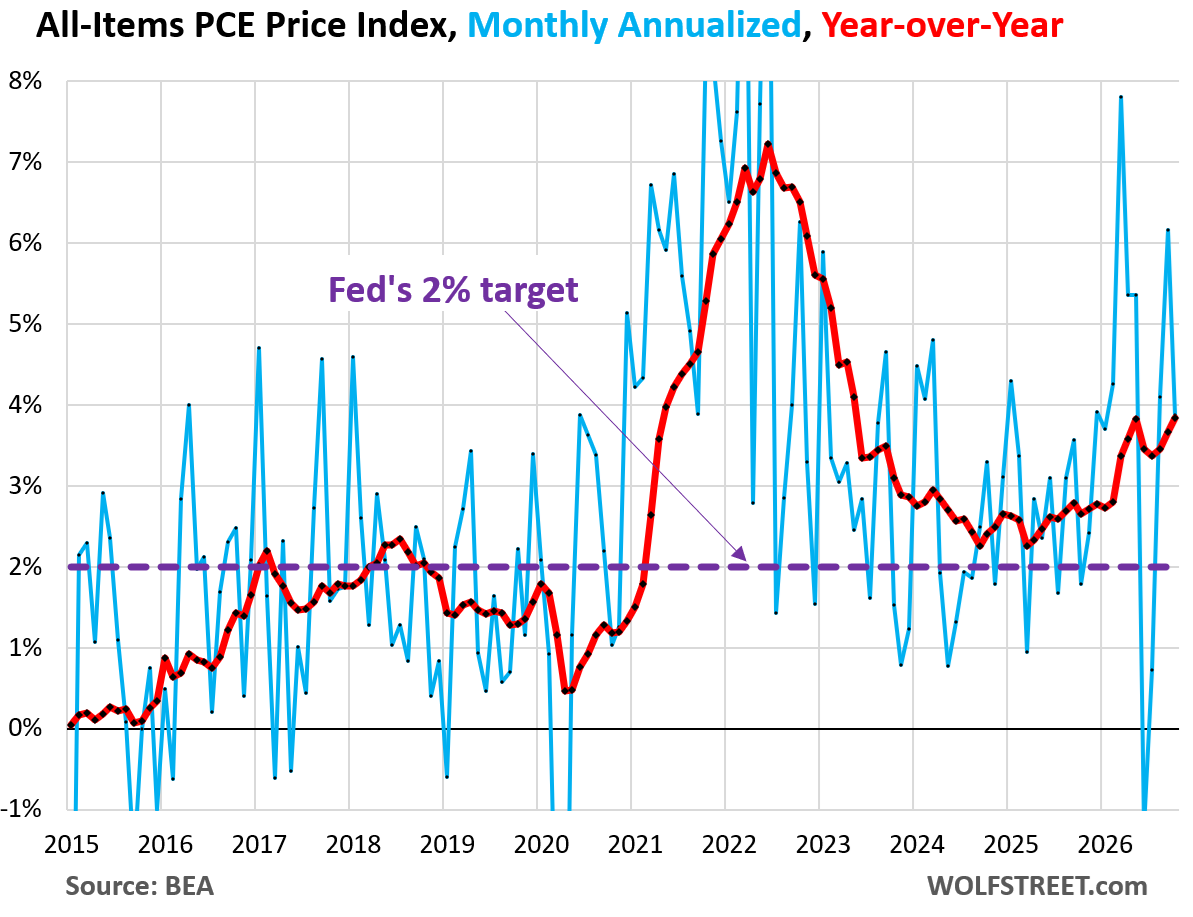
The latest economic data release from the Bureau of Economic Analysis (BEA) has sent a clear signal to policymakers at the Federal Reserve: inflationary pressures are not only persistent but are actively accelerating, moving further away from the central bank’s long-standing 2% mandate. The Personal Consumption Expenditures (PCE) price index, which serves as the Federal Reserve’s preferred gauge for measuring inflation, surged to 3.8% in October. This figure represents the most significant acceleration since May 2023, underscoring a difficult environment for monetary policy as the year draws to a close.
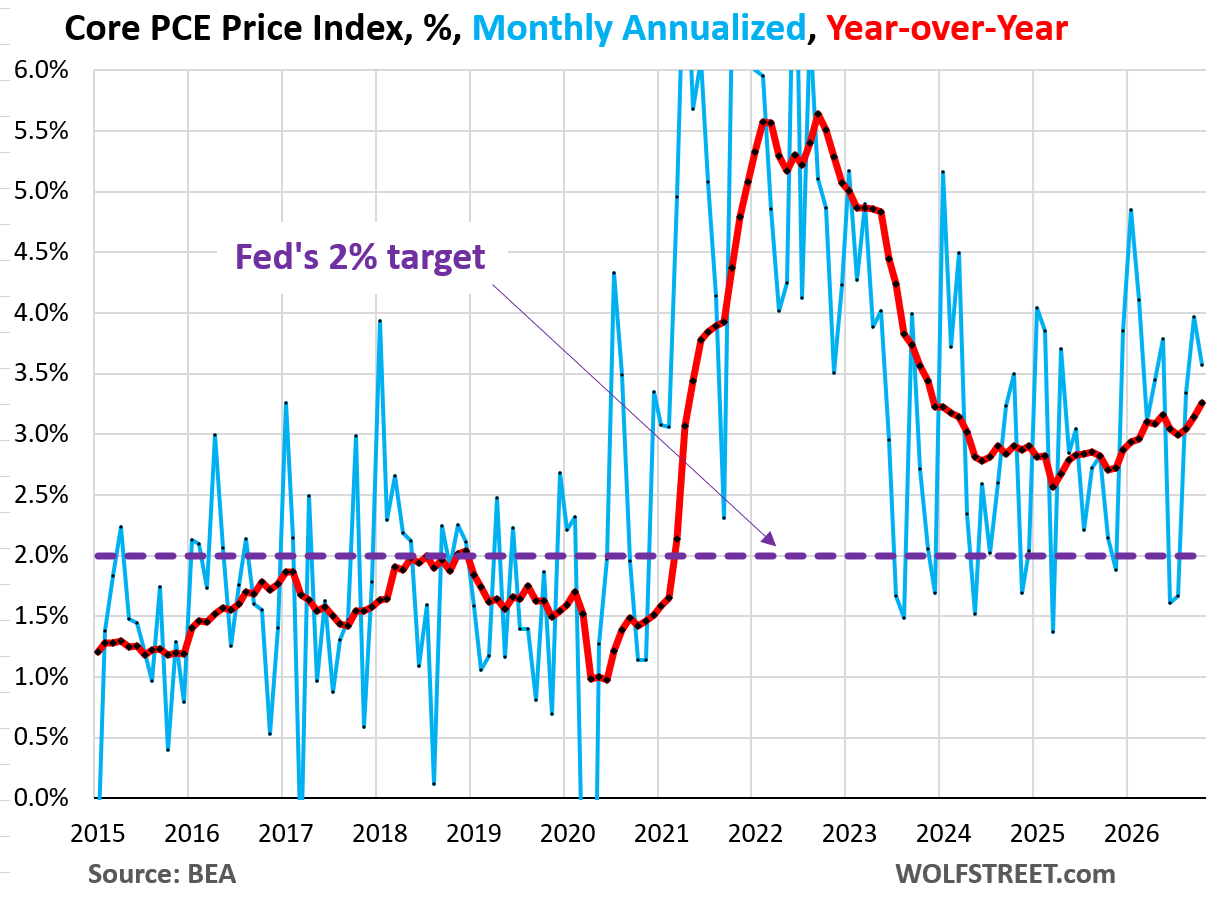
The core PCE price index—a closely watched metric that strips out volatile food and energy costs to provide a clearer picture of underlying price trends—also showed signs of distress, climbing to 3.3%. This is the highest reading for core inflation since November 2023. With both headline and core measures currently trending in the wrong direction, the Federal Open Market Committee (FOMC) faces mounting pressure to consider an interest rate hike during their upcoming December meeting to prevent inflation from becoming further entrenched in the economy.
A Chronology of the Inflationary Resurgence
To understand the current predicament, one must look at the trajectory of the post-2021 inflation cycle. Since the spring of 2021, the U.S. economy has struggled to bring PCE inflation back to the 2% target. Following the initial pandemic-era supply chain shocks and the subsequent energy price volatility, the headline PCE rate saw a brief period of respite in 2023 and 2024 as gasoline prices stabilized from their historic peaks.
However, the narrative shifted significantly at the beginning of 2025. The relief provided by lower energy costs began to dissipate as gasoline prices stopped their descent and eventually entered a period of relative stability. By the spring of 2026, a new, concerning spike in gasoline prices began to exert upward pressure on the headline index. Simultaneously, inflation shifted from being driven primarily by goods to becoming deeply rooted in the services sector, which has proven significantly more difficult to control. Since the start of 2025, the gap between the actual inflation rate and the 2% target has widened, creating a structural challenge for the Federal Reserve.
Deep Dive into the Components of Inflation
The composition of the latest PCE report reveals a broad-based inflationary trend. The headline PCE rose 0.32% in October alone, translating to a 3.9% annualized rate. When looking at the core PCE—which excludes food and energy—the monthly increase was 0.29%, or 3.6% on an annualized basis.
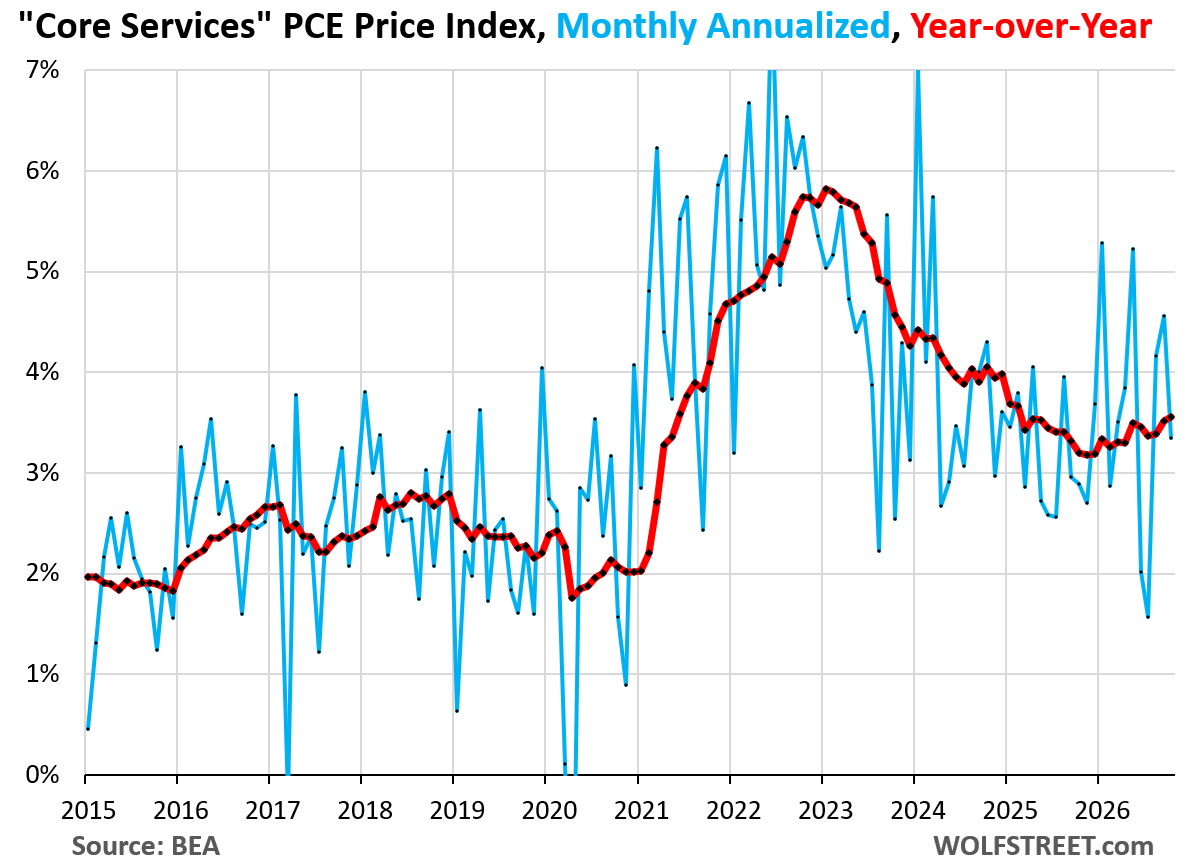
The most critical component of this inflationary surge is the "core services" category, which accounts for over 60% of total consumer spending. In October, the core services PCE price index rose 0.27%, with the year-over-year rate accelerating to 3.6%. This is a worrying development because core services include essential expenses such as housing, healthcare, insurance, and financial services. Unlike manufactured goods, where global competition and supply chain efficiencies can force price stability, the services sector is often characterized by high barriers to entry, limited competition, and a lack of price transparency for the consumer. When prices rise in sectors like healthcare or auto maintenance, consumers are often left with little choice but to absorb the increased costs, allowing providers to maintain or even increase their profit margins without fear of losing market share.
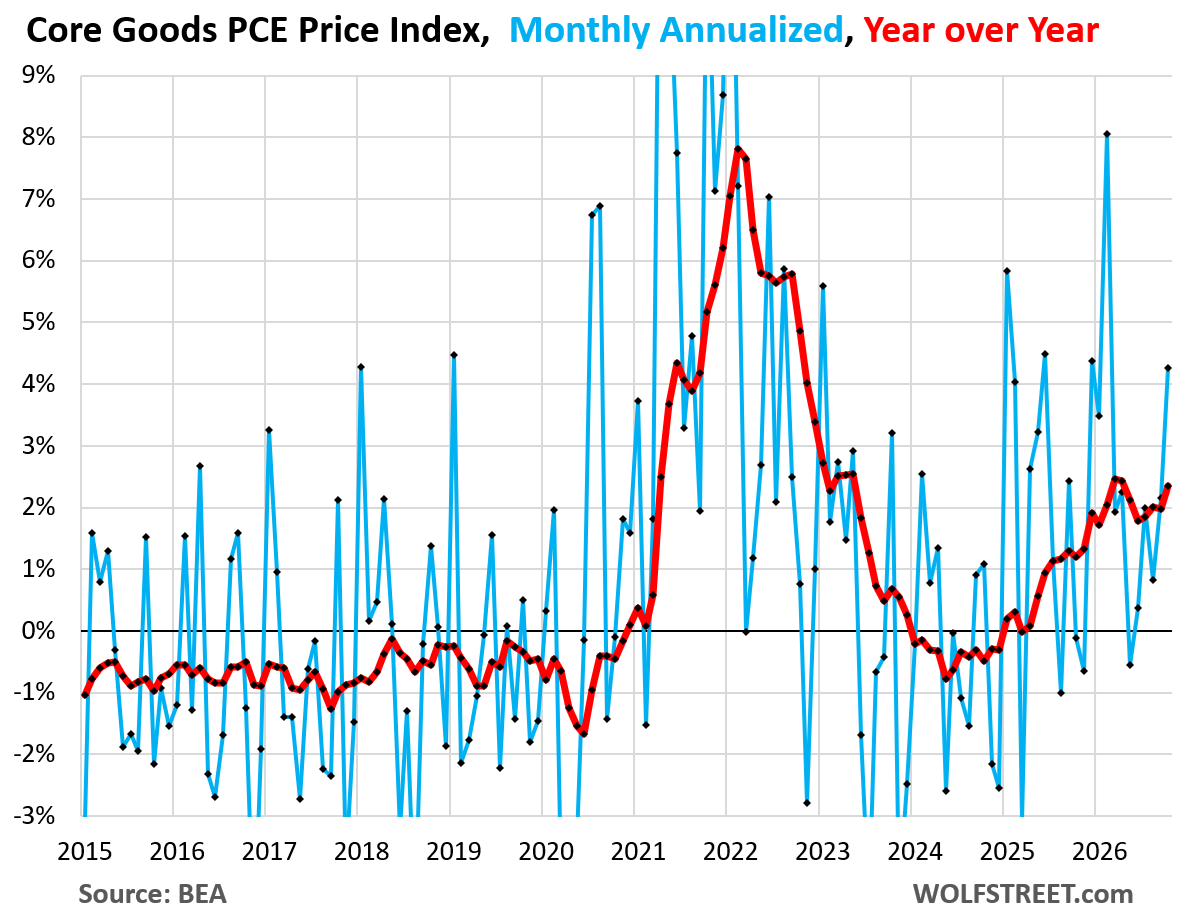
Furthermore, the "core goods" category, which had previously provided some disinflationary relief, showed signs of reheating, rising 0.35% in October—an annualized rate of 4.3%. A significant contributor to this increase was the category of information processing equipment, including computers and software, which saw a 14.6% year-over-year jump. Analysts suggest this is a direct byproduct of the massive capital investment currently flowing into the artificial intelligence sector, as corporations scramble to acquire the necessary hardware and software infrastructure.

Food and Energy: The Volatile Variables
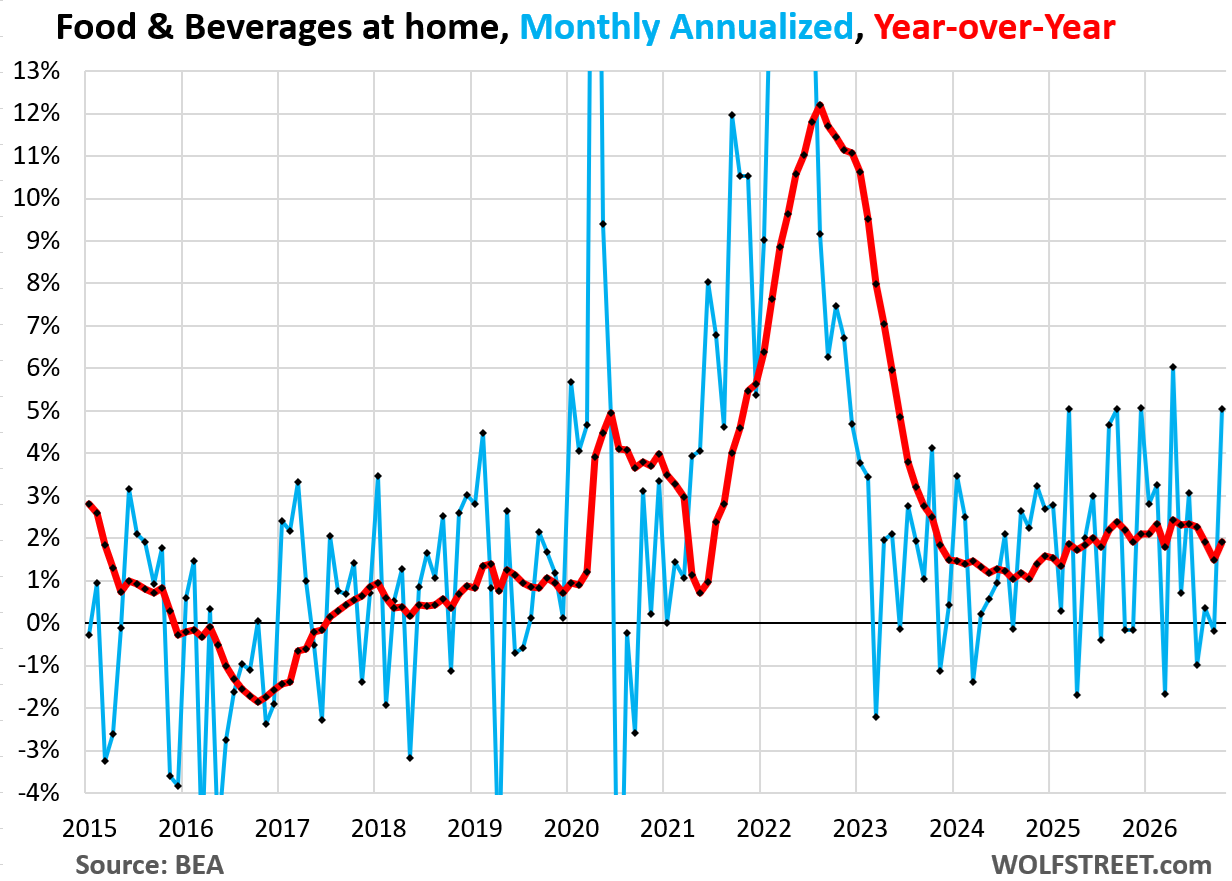
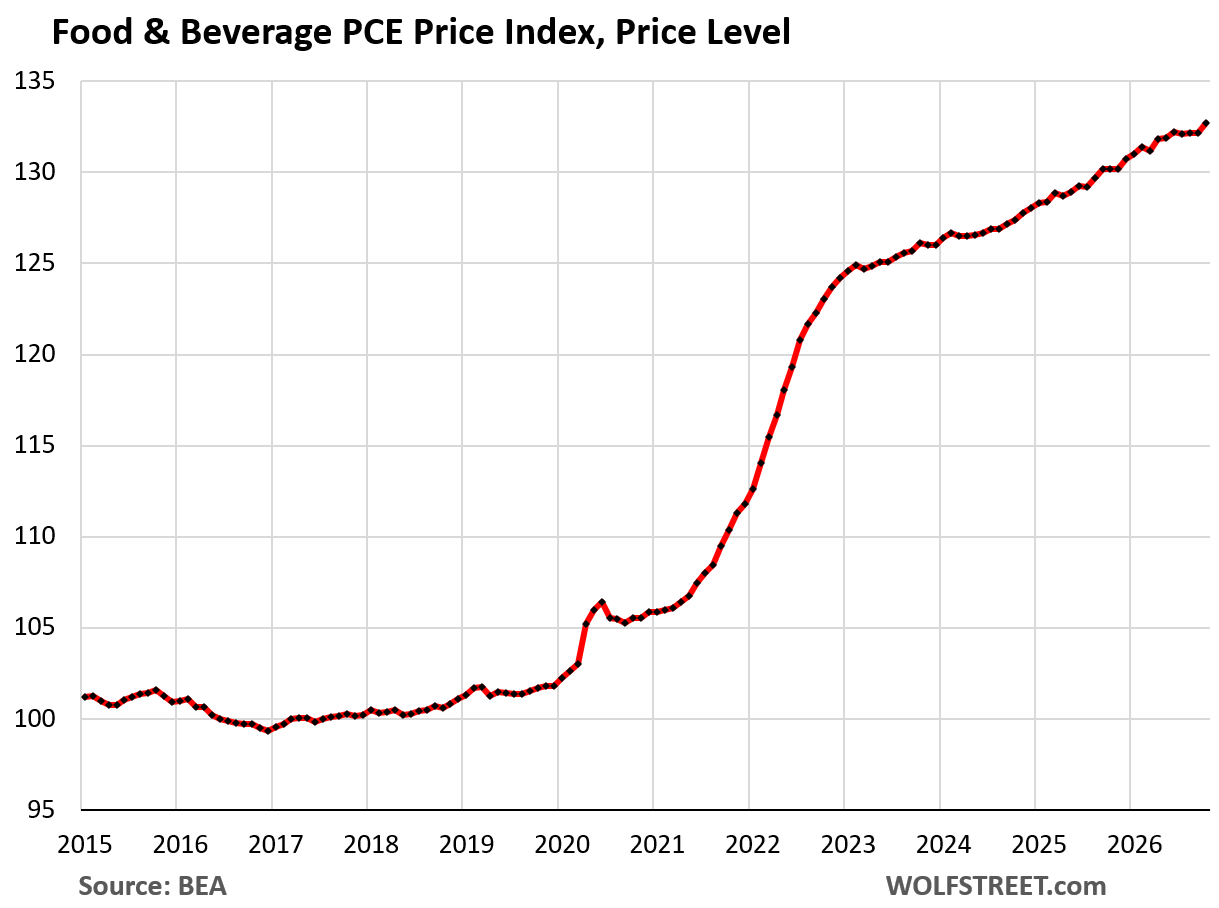
While core inflation captures the structural trends, food and energy prices continue to dictate the cost of living for the average American household. The food and beverage index for at-home consumption jumped 0.41% in October, representing a 5.0% annualized rate. While the year-over-year increase sits at 1.9%, this figure masks the reality that the baseline price level is significantly higher than it was prior to 2021. Consumers are not just seeing a rate of change; they are struggling with a sustained, high-price plateau that shows no signs of returning to pre-inflationary levels.
Energy prices, always the most unpredictable element of the PCE basket, rose 0.7% in October, contributing to a massive 22.5% year-over-year spike. This energy inflation acts as a "hidden tax" on consumers, reducing their discretionary income and leaving them with less capital to spend in other areas of the economy, thereby complicating the Fed’s efforts to engineer a "soft landing."
Implications for Federal Reserve Policy
The Federal Reserve has historically operated on the principle that interest rates should be used to cool demand when inflation runs hot. With the PCE index now running at nearly double the 2% target, the argument for keeping interest rates "higher for longer" or even increasing them further has gained substantial traction among market observers.
The implications of a December rate hike are significant. Higher borrowing costs would further increase the burden on consumers holding variable-rate debt, such as credit cards and home equity lines of credit. Additionally, corporations facing higher interest expenses may be forced to slow down capital expenditure, potentially impacting the very AI-driven growth currently propping up the technology sector.
However, the risk of inaction is arguably higher. If the Fed allows inflation to remain persistently above 3%, it risks "de-anchoring" inflation expectations, where businesses and consumers begin to build future price hikes into their planning as a matter of course. This psychological shift can turn a transitory spike into a long-term economic cycle that is notoriously painful to break.
Broader Economic Context
The current economic environment is characterized by a paradox: robust demand for services and continued investment in technology are fueling growth, but this very momentum is preventing the cooling required to bring inflation down. While the labor market remains relatively tight, wage growth has struggled to keep pace with the combined effects of service-sector inflation and energy costs.
As the Federal Open Market Committee prepares for its final meeting of the year, the data released by the BEA serves as a stark reminder that the battle against inflation is far from over. The path forward remains narrow; the Fed must weigh the necessity of curbing inflation against the risk of triggering a contraction in the broader economy. With the PCE index drifting further from the target, the pressure on the FOMC to act with resolve has reached a critical threshold. Whether the central bank chooses to tighten credit conditions further or maintain the current restrictive stance, the decisions made in December will likely define the economic trajectory for the first half of the following year.