Union Must Step Aside and Let the E3 Negotiate Peace with Russia
ATHENS — For months, European capitals have quietly grappled with a realization that was once considered a diplomatic taboo: the continent’s leadership must eventually open direct channels of communication with Moscow. As the protracted war in Ukraine strains Western financial reserves and shifts geopolitical dynamics, policymakers in Brussels, Berlin, and Paris face a stark reality. Europe must either engage directly in shaping a diplomatic resolution or risk being sidelined entirely, forced to accept a peace agreement brokered over its head by external powers or face the exhaustion of its financial lifelines to Kyiv.
Yet, as this diplomatic imperative crystallizes, the European Union finds itself paralyzed by its own institutional design. The EU’s chronic inability to select a single, cohesive representative to spearhead negotiations with Russia is not merely a consequence of a talent shortage or poor timing. Rather, it is the direct manifestation of a deep structural failure embedded in the bloc’s foreign policy architecture.
In light of this systemic incapacity, prominent analysts and political figures, including former Greek Finance Minister Yanis Varoufakis, argue that the EU must bravely step aside. Instead of engaging in protracted, internal power struggles to appoint an envoy—a process routinely paralyzed by the requirement of unanimous consent among member states—Brussels should delegate the authority to select a chief diplomatic envoy to the United Kingdom, France, and Germany. This trio, historically known as the E3, possesses the geopolitical weight, diplomatic apparatus, and historical precedent required to navigate high-stakes negotiations with the Kremlin.
The Structural Dilemma of EU Foreign Policy
To understand why the EU cannot effectively choose a peace envoy for negotiations with Russia, one must examine the fundamental mechanics of the bloc’s Common Foreign and Security Policy (CFSP). While the European External Action Service (EEAS) and various high representatives have successfully managed technical trade agreements and routine diplomatic relations, high-stakes geopolitical crises routinely expose the limits of EU integration.
The core issue lies in the governance structure of the Union. Foreign policy decisions, particularly those involving war, peace, and national security, generally require unanimous agreement among all 27 member states. In practice, this creates a lowest-common-denominator approach to diplomacy. Member states with sharply divergent historical relationships with Russia—ranging from the deeply apprehensive frontline states of the Baltics and Poland to more economically pragmatic or distant nations in Western and Southern Europe—frequently find themselves deadlocked.
When attempting to appoint a high-profile envoy to negotiate with an adversary like Russia, these internal divisions become insurmountable. A candidate acceptable to Berlin and Paris might be viewed with deep suspicion in Warsaw or Tallinn, while a consensus candidate often lacks the political gravitas, independence, and decisiveness required to handle complex, adversarial negotiations. Consequently, the EU defaults to institutional paralysis, leaving a dangerous vacuum on the European continent’s most critical strategic frontier.
Historical Precedent: The E3 as Europe’s Diplomatic Engine
Delegating the selection of a chief negotiator to the E3—the United Kingdom, France, and Germany—offers a pragmatic workaround to the EU’s institutional gridlock. The concept is not without precedent. Long before the current conflict in Ukraine, the E3 operated as an informal yet highly effective direct-action diplomatic directorate for European security matters.
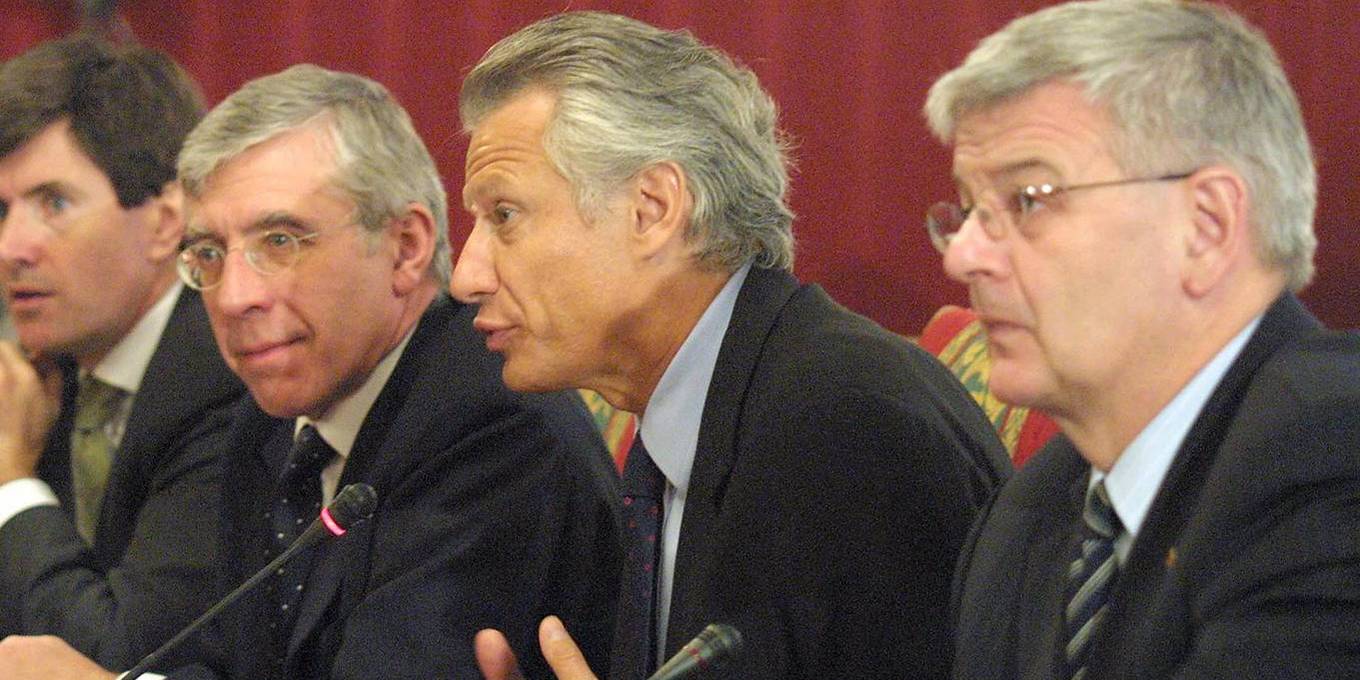
A prime historical parallel occurred in the early 2000s, when the foreign ministers of the United Kingdom, France, and Germany took the lead in negotiating with Iran over its nuclear program. Operating outside the cumbersome machinery of the broader European Union framework, the E3-led initiative demonstrated that smaller, highly focused coalitions of capable states could act swiftly and decisively on behalf of broader European security interests.
Proponents of this approach argue that reviving a similar E3-led mechanism for potential peace talks with Russia would bypass the paralyzing consensus requirement of the 27-member bloc. France and Germany, as the twin engines of the European Union, bring continental weight and integration legitimacy, while the United Kingdom—despite its exit from the EU via Brexit—retains immense diplomatic clout, a permanent seat on the United Nations Security Council, and formidable intelligence capabilities. Together, these three nations command the military, economic, and diplomatic resources necessary to present a credible, unified front in any future negotiations with Moscow.
The Financial and Strategic Imperatives
The urgency behind rethinking Europe’s diplomatic representation is driven by rapidly shifting economic and geopolitical fundamentals. Throughout the conflict, the European Union and its member states have provided unprecedented financial, humanitarian, and military assistance to Ukraine, totaling tens of billions of euros.
However, recent economic analyses and reports from major international policy institutions indicate that sustaining this level of support indefinitely is becoming increasingly difficult. Domestic political pressures, inflation, fiscal constraints within major eurozone economies, and competing public spending priorities are straining national budgets. Concurrently, experts from organizations such as the Carnegie Endowment for International Peace and the German Marshall Fund have warned that without a clear diplomatic strategy, Europe faces a grim binary outcome: either finance a costly, endless war of attrition or accept a settlement negotiated entirely by external actors, such as the United States and Russia, which may ignore vital European security concerns.
If a negotiated settlement becomes an unavoidable necessity to prevent the complete depletion of European financial resources, Europe cannot afford to arrive at the negotiating table fractured and leaderless. A unified envoy backed by the E3 would ensure that European security architecture, territorial integrity principles, and post-war reconstruction frameworks remain central to any diplomatic accord.
Reactions and Geopolitical Implications
The proposal for the EU to cede diplomatic ground to the E3 is bound to generate intense debate within European capitals. Proponents of deeper European integration will likely view the delegation of authority to a mini-multilateral coalition as a step backward—a retreat from the long-term goal of a fully unified European foreign policy and a dilution of the European Commission’s institutional authority.
Conversely, realists within the foreign policy community argue that institutional purism is a luxury Europe can no longer afford. In moments of existential crisis, functional efficiency must supersede institutional symmetry. By stepping aside, the EU leadership in Brussels would acknowledge its structural limitations while empowering the continent’s most capable military and diplomatic powers to act in the collective interest.
Furthermore, reactions from international partners, including the United States and Ukraine, will be critical. Washington has historically favored dealing with a single, cohesive European interlocutor, yet it has frequently grown frustrated by the slow pace of EU consensus-building. A streamlined E3 negotiating team could offer Washington a more agile and decisive partner for transatlantic coordination on security and peace architecture.
As the conflict in Ukraine enters its most complex phase, the question of how Europe organizes its diplomacy is no longer a theoretical exercise. It is an urgent test of statecraft. Whether the European Union can summon the institutional maturity to step aside and let capable nations lead may ultimately determine whether Europe plays a decisive role in shaping its own future, or remains a passive bystander in the history of its own continent.
Related posts: