BlackRock Launches Asia-Pacific’s First Tokenized Money Market Fund in Hong Kong, Bridging Traditional Debt with Regulated Stablecoins

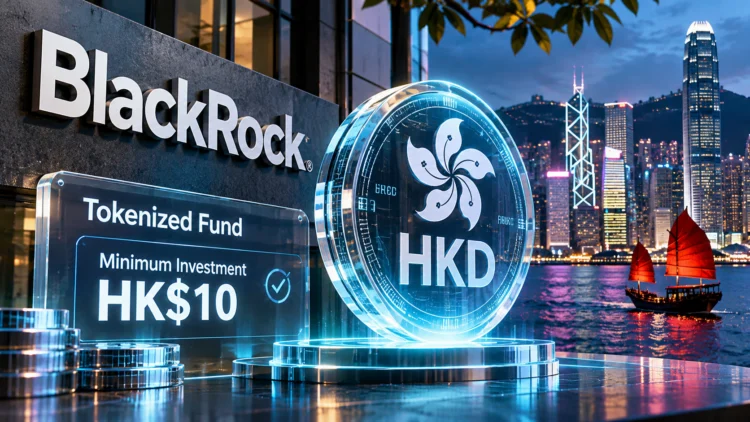
Global asset management giant BlackRock has officially marked a major milestone in the intersection of traditional finance and distributed ledger technology by launching its first tokenized money market fund in the Asia-Pacific region. Headquartered in New York, the firm has introduced the HKD Digital Liquidity Fund in Hong Kong, a product designed to seamlessly bridge conventional capital markets with blockchain-based financial architecture. This strategic rollout provides institutional and eligible professional investors with a novel mechanism to transition capital between legacy investments and digital assets, utilizing local tokenized currency infrastructure to streamline liquidity management.
The launch of the HKD Digital Liquidity Fund represents a structural evolution for regional financial markets, arriving on the heels of extensive regulatory groundwork laid by Hong Kong authorities. By supporting both conventional and tokenized investment units, the fund creates a functioning ecosystem for HKDAP—the Hong Kong dollar-denominated stablecoin issued by Anchorpoint Financial, a joint venture led by Standard Chartered, Animoca Brands, and HKT. This integration allows market participants to bypass friction points typically associated with foreign exchange, cross-border settlement, and manual account reconciliation, offering a glimpse into a fully digitized future for institutional treasury operations.
Regulatory Chronology and Product Evolution
The path to the commercial debut of BlackRock’s HKD Digital Liquidity Fund followed a precise regulatory and administrative timeline. The foundational steps for the initiative gained formal momentum in April, when Anchorpoint Financial secured its official stablecoin issuer license from the Hong Kong Monetary Authority (HKMA). This regulatory clearance established the legal framework necessary for issuing compliant, fiat-backed digital currency in the region.
Subsequent milestones unfolded rapidly through the autumn months:
- September 10: BlackRock formally announced that it had received regulatory authorization from Hong Kong authorities to establish the tokenized liquidity fund.
- Late October: Anchorpoint Financial announced plans to expand the native utility of its HKDAP stablecoin to high-performance blockchains such as Solana, significantly broadening the access routes for Hong Kong dollar-backed digital assets.
- November 16: The official inception date of the fund, as recorded in BlackRock’s baseline product disclosures and regulatory filings.
- November 24: The commercial launch of the HKD Digital Liquidity Fund was publicly reported, bringing the product to the active marketplace and opening subscription channels for eligible participants.
This structured timeline highlights the deliberate, compliance-first approach taken by both BlackRock and regional regulators. Rather than rushing experimental products to market through decentralized platforms, the stakeholders coordinated closely with financial watchdogs to ensure legal certainty and operational stability before accepting capital.
Fund Mechanics: Yield Generation Meets Tokenization
Unlike many speculative investment vehicles found within the decentralized finance (DeFi) ecosystem, BlackRock’s HKD Digital Liquidity Fund does not rely on volatile cryptocurrency lending, algorithmic liquidity pools, or speculative token incentives to generate returns. The underlying economic engine of the fund remains anchored in traditional, low-risk financial instruments.
The portfolio strategy is built around short-term debt instruments, including high-grade government-backed securities, short-dated commercial paper, and secure bank deposits. These assets provide predictable, steady yields tied to prevailing interest rates in the Hong Kong monetary system. Investors gain exposure to these traditional instruments through fund units, where blockchain technology is utilized primarily as an efficient register for tracking ownership and transaction histories.
Despite the modernization of the registry, the economic fundamentals of the fund remain strictly traditional. According to official product disclosures released by BlackRock, the D OnChain share class carries a management fee of 0.31% and features daily income distributions. The introduction of this class aims to reduce administrative barriers, featuring a remarkably low minimum initial investment threshold of just HK$10.
For comparative context, the fund’s conventional institutional share class—designated as the I class—requires a minimum initial investment of HK$10 million. While this stark contrast in capital requirements suggests a democratization of financial products, industry analysts note that access remains strictly gated. The lower monetary threshold does not translate to unrestricted public availability; investors must still meet rigorous compliance, know-your-customer (KYC), and professional investor criteria depending on the distribution channel utilized.
The Expanded Utility of Regulated Stablecoins
One of the most consequential aspects of BlackRock’s new fund is the practical application it provides for the HKDAP stablecoin. Prior to this launch, discussions surrounding regulated Hong Kong dollar stablecoins were largely confined to basic payment processing, cross-border remittances, and general liquidity transfers within wholesale banking networks.
The integration with BlackRock’s liquidity fund transforms HKDAP from a simple medium of exchange into a productive asset. According to BlackRock’s product specifications, eligible institutional and professional investors are permitted to use HKDAP directly to subscribe to and redeem investments from the fund.
Consider the operational utility for a multinational corporation or a digital-native enterprise holding surplus capital in Hong Kong dollars. Traditionally, treasury managers maintaining operational funds in stablecoins would face a tradeoff: leave the capital idle in digital wallets to maintain liquidity, or endure the administrative friction of converting stablecoins back to fiat currency to deposit them into conventional money market instruments.
With the HKDAP integration, a corporate treasury can seamlessly shift idle stablecoin balances into the BlackRock tokenized fund. This allows the capital to generate daily returns derived from short-term government debt while remaining denominated in digital cash. When operational expenses arise, the fund units can be redeemed back into HKDAP swiftly, minimizing cash drag without requiring cumbersome wire transfers or exposing the firm to settlement delays.
Financial analysts emphasize that the stablecoin itself does not generate the investment yield; rather, the underlying government-backed securities and bank deposits fulfill that function. However, the ability to use digital cash as a native subscription currency provides stablecoin issuers with a powerful value proposition that extends far beyond speculative cryptocurrency trading pairs.
Bridging the Gap: Blockchain Speed Versus Institutional Realities
While the integration of distributed ledger technology introduces unprecedented efficiency, the launch also highlights the ongoing tension between the 24/7 nature of blockchain networks and the operational boundaries of traditional financial institutions.
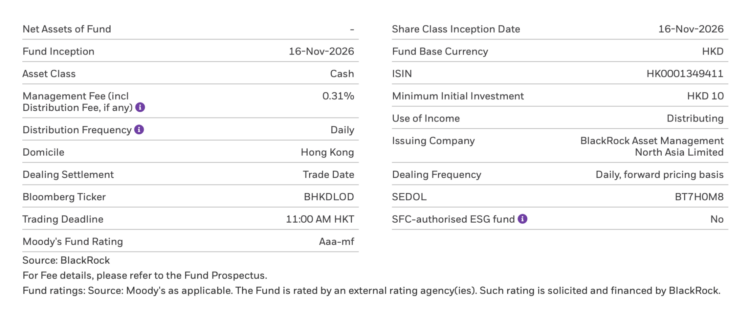
In decentralized finance, smart contracts execute transactions continuously, unfettered by banking holidays or administrative closing times. Conversely, BlackRock’s D OnChain share class operates under a traditional dealing schedule. Product disclosures outline a strict daily dealing deadline—set at 11:00 AM Hong Kong time—with settlement executed on the trade date.
This operational structure demonstrates that tokenizing a traditional fund does not automatically alter its legal obligations, valuation windows, or liquidity arrangements. BlackRock’s disclosures explicitly warn investors that potential technology failures, compromised private keys, and disruptions involving third-party blockchain service providers could temporarily interfere with an investor’s ability to access or redeem their holdings. Furthermore, under severe market stress, standard institutional safeguards and redemption gates may apply, ensuring that the fund complies with overarching regulatory mandates.
These limitations underscore that the deployment of smart contracts is an administrative upgrade rather than a systemic reinvention. Institutional investors remain bound by rigorous accounting, custody, and compliance frameworks that necessitate human oversight and scheduled operational windows. Consequently, while the settlement layer is modernized, users must still navigate many of the same institutional guardrails found in legacy finance.
Broader Implications for Hong Kong’s Financial Ecosystem
The debut of the HKD Digital Liquidity Fund arrives amidst a broader, coordinated push by Hong Kong regulators to establish the jurisdiction as a premier hub for tokenized financial infrastructure. Earlier in November, the Hong Kong Monetary Authority expanded its EnsembleTX settlement initiative to support continuous, multi-party settlement using tokenized central bank digital currencies and commercial bank money.
BlackRock is an active participant in these wider ecosystem trials, which seek to connect previously siloed segments of the financial markets. The convergence of regulated digital currencies, tokenized investment products, and institutional settlement rails creates a comprehensive framework for the future of capital markets.
Despite this impressive infrastructure buildup, financial researchers caution against measuring the success of tokenization solely by the number of products deployed on-chain. The true metric of adoption will depend on macroeconomic factors: the total volume of capital flowing into these funds via digital cash, the velocity of movement between traditional and tokenized assets, and the tangible reduction in operational costs for corporate treasuries.
As total asset values and yield metrics for the HKD Digital Liquidity Fund become clearer through subsequent reporting cycles, the industry will watch closely to determine whether institutional tokenization can successfully scale beyond elite professional circles. For now, Hong Kong has successfully assembled the necessary technological and regulatory components. The ongoing challenge for market participants will be bridging the gap between innovative infrastructure and widespread commercial utility.