Jensen Huang Returns as Nvidia CEO in Stunning Reversal as Markets Weigh Key-Man Risk and Broader Correction Dynamics

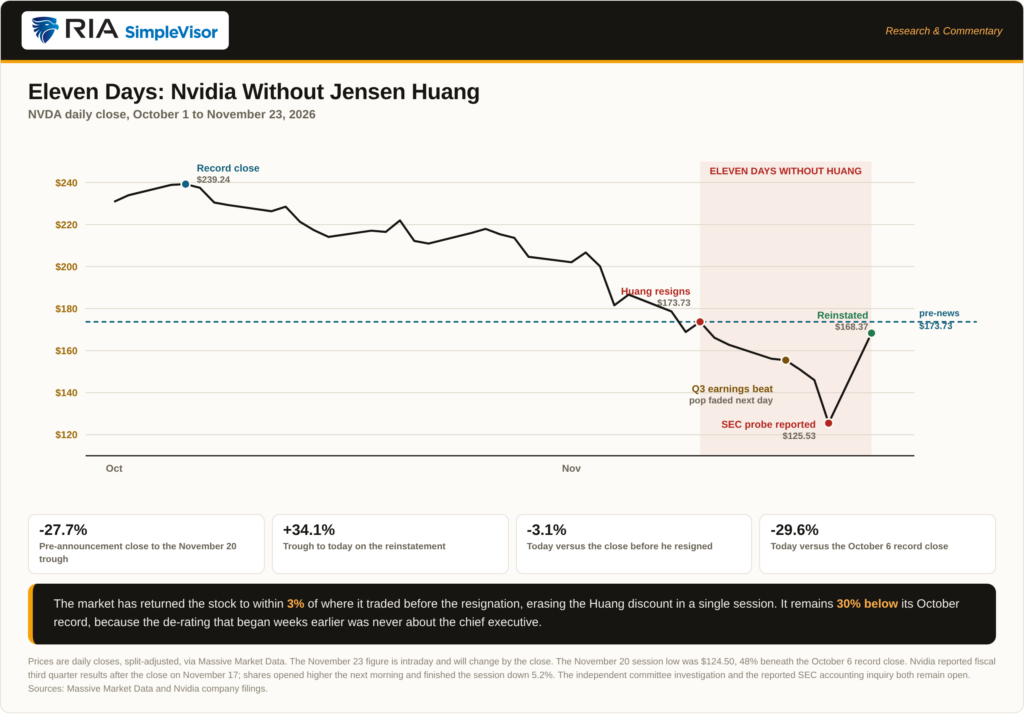
Nvidia Corporation stunned global financial markets by unanimously reinstating Jensen Huang as its President and Chief Executive Officer, reversing an abrupt departure that had rattled investor confidence and wiped out tens of billions in market value. The board of directors announced the decision following extensive consultations with senior levels of the United States government, concluding that Huang’s reinstatement posed no national security risk. The announcement triggered an immediate and aggressive market reaction, sending Nvidia shares surging more than 30% in a single trading session and recovering virtually all the ground lost since the initial disclosures regarding a personal and geopolitical controversy surrounding the executive.

While shareholders and Wall Street desks expressed palpable relief at the return of one of the technology sector’s most prominent leaders, institutional analysts emphasize that the underlying complications surrounding the company and the broader macroeconomic landscape remain unresolved. The rapid sequence of events highlights an extreme manifestation of key-man risk at a multi-trillion-dollar scale, forcing market participants to reassess the vulnerability of dominant equities to executive-level governance shocks.
Chronology of an Executive Crisis and Swift Reversal
The dramatic upheaval began weeks prior when Nvidia shares slid sharply following reports of Huang’s sudden exit, initially managed by Co-Chief Executive or interim leadership configurations while the board scrambled to stabilize corporate operations. The departure coincided with dual regulatory and investigative pressures. Last week, the Securities and Exchange Commission (SEC) reportedly opened an inquiry into accounting irregularities at the semiconductor giant. Simultaneously, an independent corporate committee was commissioned to investigate the matters that initially precipitated Huang’s resignation.

Despite the ongoing independent investigation—which has yet to formally conclude or publish definitive findings—the board fast-tracked Huang’s return after receiving informal clearances from Washington insiders. Analysts note that Huang’s unique stature within the geopolitical landscape has long functioned as a critical corporate asset. His direct access to policymakers, trade negotiators, and foreign leaders has been instrumental in navigating complex semiconductor export controls and international supply chain dependencies. The board’s decision to prioritize his reinstatement before concluding its internal review underscores the irreplaceable nature of his political capital.
Market Rebound and Historical Parallels
Nvidia’s dramatic single-day recovery catalyzed a broader relief rally across equity markets, which had been suffering through a punishing autumn correction. The S&P 500 had recently slipped more than 10% from its record highs, falling decisively below its crucial 200-day moving average amid escalating valuation pressures, tightening liquidity, and rising volatility indices like the VIX, which climbed past levels not seen in years.
Market historians immediately drew comparisons to previous market corrections, most notably the chaotic fourth-quarter selloff of 2018. During that period, plunging equity prices and short gamma dynamics left trading desks struggling to explain sudden downward spirals. Current market metrics show striking technical similarities to late 2018, leading quantitative strategists to model potential downside targets should historical patterns repeat.
However, veteran analysts caution against relying solely on historical templates. While the price action in late 2026 mirrors the trajectory of past corrections, many of the underlying macroeconomic triggers that drove previous bear market lows—such as systemic credit events, severe corporate earnings contractions, or aggressive Federal Reserve tightening cycles—manifest differently in the current economic cycle.
Examining Relief Rallies and the 200-Day Moving Average
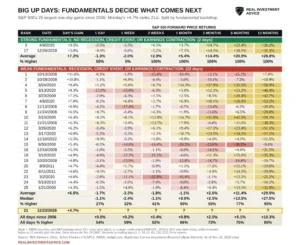
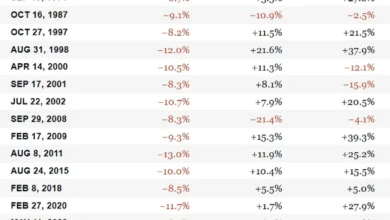
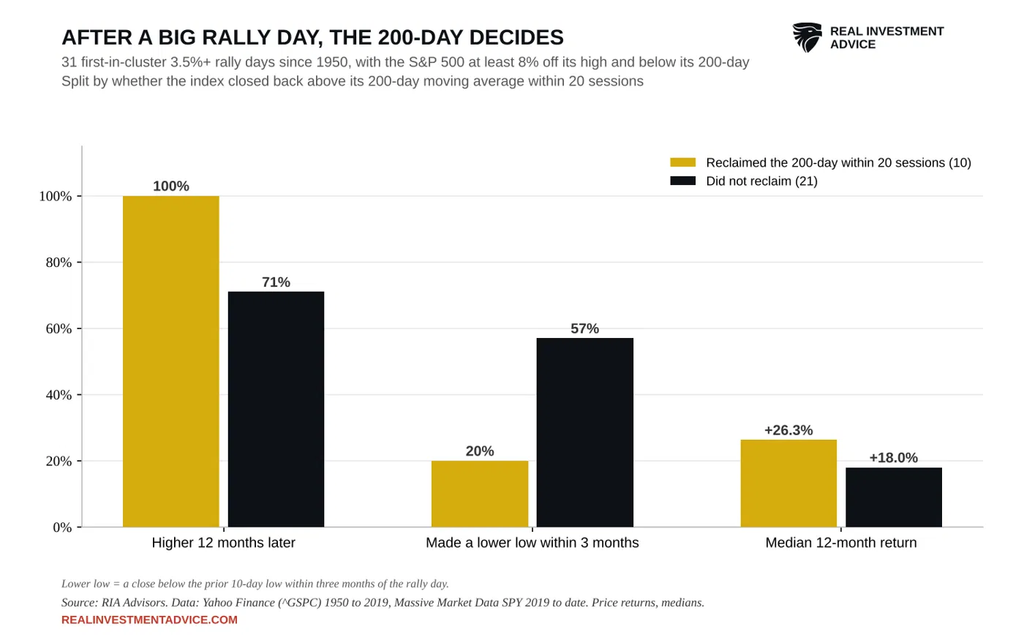
A comprehensive review of market history compiled by institutional research desks indicates that sharp, single-day rebounds following a 10% correction do not automatically signal a definitive market bottom. Historical data tracking S&P 500 performance after crossing the 10% drawdown threshold since 1928 reveals that while intense relief rallies are common, the subsequent path of the market depends heavily on fundamental economic backdrops rather than headline-driven catalysts.
In historical instances where major selloffs occurred in the absence of an underlying recession, credit crunch, or corporate earnings recession, markets typically resolved higher over a twelve-month horizon. Conversely, when structural economic vulnerabilities were present, sharp relief rallies frequently acted as temporary "reflexive rebounds"—the classic second stage of a bear market described by veteran market theorist Bob Farrell—before prices eventually broke to lower lows.

Technical indicators suggest that the decisive factor separating a false bounce from a durable market bottom is reclaiming key moving averages. Statistical analysis shows that when a major market rally is reinforced by a sustained close back above the 200-day moving average within a span of one month, the probability of positive returns one year later rises significantly. Without that technical confirmation, indices face a heightened risk of entering a deeper corrective phase.
Sector Divergence, Growth, and Value Dynamics
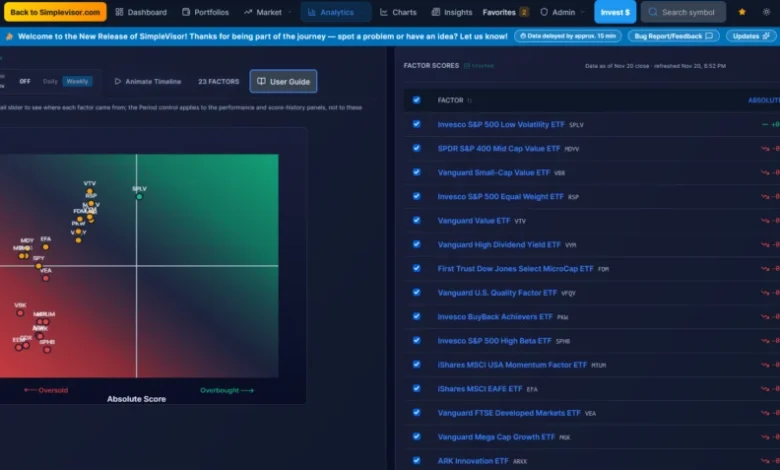
Beneath the headline-grabbing volatility of mega-cap technology stocks, internal market breadth reveals deep structural divergences between value and growth factors. Quantitative quadrant analysis heading into the winter months indicates that nearly all major market sectors were trading in oversold territory relative to their historical baselines, with defensive sectors like consumer staples remaining among the few exceptions holding relative ground.

At the same time, relative performance metrics show that value-oriented segments have retained broader control over the market structure, while growth factors—particularly technology—have experienced sharp mean-reversion pullbacks. Although technology stocks remain comparatively overbought relative to the broader S&P 500 over longer time horizons, the recent selloff has compressed valuations significantly.
Market strategists suggest that while growth-related equities could stage a recovery into the year-end closing bell, idiosyncratic risks surrounding artificial intelligence sector leaders and regulatory headlines will continue to dictate short-term sentiment. Portfolio managers are being urged to enforce strict risk management protocols, rebalancing allocations to ensure holdings remain aligned with long-term strategic targets rather than reacting purely to emotional market swings.
Broader Implications and Strategic Outlook
The reinstatement of Jensen Huang resolves a major company-specific overhang for Nvidia, removing immediate fears of prolonged executive paralysis at the apex of the global artificial intelligence hardware boom. However, financial advisors emphasize that headline-driven relief cannot fully neutralize broader macroeconomic headwinds, including persistent valuation compression, regulatory scrutiny, and tighter monetary conditions.
As institutional investors navigate the final weeks of the fiscal year, the focus remains firmly on capital preservation, disciplined adherence to risk-management rules, and close observation of technical confirmation levels such as the 200-day moving average. The events surrounding Nvidia serve as a stark reminder of the outsized influence held by key corporate leaders in modern equity markets, where the departure—and sudden return—of a single chief executive can instantly move billions of dollars in global wealth.
Related posts: