The Geopolitics of Volatility: Why African Financial Institutions Must Reassess Fossil Fuel Exposure Amid Global Conflict

The escalating conflict involving Iran has served as a stark, unavoidable reminder of the structural instability inherent in global fossil-fuel prices, prompting a critical re-evaluation of investment strategies among African trustees, directors, and asset managers. For these fiduciaries, the prevailing geopolitical climate has shifted the conversation from a theoretical debate over capital repositioning to an urgent practical necessity. The central question now facing the continent’s financial leadership is not whether they should move away from oil and gas exposure, but whether they possess the institutional foresight to act before market events and economic shocks compel them to do so under duress.
In financial centers from Cape Town to Nairobi, the global fallout from regional instability in the Middle East is being analyzed not merely as a temporary disruption, but as a confirmation that fossil fuels represent a permanent geopolitical liability. Because oil and gas are structurally unstable commodities, supply disruptions in a single geography—such as the Strait of Hormuz or the Persian Gulf—can trigger immediate economic shocks that reverberate across the globe. As oil remains the linchpin of the current global energy system, this volatility transmits rapidly through the financial system, affecting everything from transport costs to the valuation of industrial assets.
The Economic Impact on African Currencies and Fiscal Stability
The consequences of this volatility are particularly acute for African economies, which often lack the fiscal buffers to absorb sudden price spikes. Whenever global oil prices surge due to conflict or the threat of sanctions, African currencies face immediate and intense downward pressure. Every additional dollar added to the price of a barrel of Brent crude translates directly into increased import costs, which in turn tightens foreign-exchange constraints and fuels domestic inflation.
The South African rand, the Kenyan shilling, and the Ugandan shilling have historically borne the brunt of these shocks. When energy costs rise, the demand for US dollars to pay for fuel imports increases, leading to a depreciation of local currencies. This creates a vicious cycle: as the currency weakens, the cost of importing fuel rises even further in local terms, necessitating higher interest rates to curb inflation, which then slows down domestic economic growth. For institutional investors, this means that fossil-fuel exposure is not just a sectoral risk but a systemic one that undermines the stability of the entire macroeconomic environment in which they operate.
A Chronology of Structural Instability
To understand the current urgency, one must look at the timeline of energy-related economic shocks over the past several years. The pattern suggests that volatility is not an anomaly but a core feature of the fossil-fuel era:
- 2020: The Pandemic Collapse: Oil prices briefly turned negative as global demand vanished, demonstrating that the downside risk of fossil-fuel assets is as unpredictable as the upside.
- 2022: The Russia-Ukraine Conflict: The invasion of Ukraine caused a massive spike in natural gas and oil prices, forcing European and African nations alike to scramble for alternatives and causing a global inflationary surge.
- 2023-2024: Middle East Escalation: The widening conflict involving Iran and its regional proxies has placed a "war premium" on oil prices. Attacks on shipping lanes in the Red Sea have further complicated logistics, increasing insurance premiums and transit times for energy deliveries to African ports.
This chronology demonstrates that investors who rely on stable energy markets are essentially betting on continued global geopolitical calm—a bet that has become increasingly difficult to justify. For fiduciaries, relying on such a volatile foundation is increasingly viewed as a departure from the principle of prudent risk management.
The Re-evaluation of Fiduciary Duty
The implications for fiduciaries—trustees, directors, and asset managers—are profound. Traditionally, fiduciary duty was interpreted narrowly as the obligation to maximize short-term financial returns. However, modern legal and financial standards have evolved. Today, fiduciaries are required to manage risk proactively and protect long-term value, which involves building portfolios capable of withstanding both geopolitical shocks and structural economic shifts.
Fossil-fuel exposure is increasingly coming into conflict with this obligation. If an asset class is known to be prone to sudden, uncontrollable price swings that can devalue an entire portfolio, a responsible manager must account for that risk. In the context of the current Iran conflict, ignoring the "geopolitical liability" of oil is becoming a legal and professional risk. Regulators and beneficiaries are beginning to ask whether directors who ignore these structural risks are fulfilling their duty of care.
The Growing Risk of Stranded Assets
A significant concern for African investors is the acceleration of "asset stranding." While this was once viewed as a long-term risk associated with the 2050 net-zero targets, recent events suggest the timeline has moved forward. Stranding occurs in two primary forms:
Economic Stranding
When oil prices skyrocketed in early 2024, many African economies reached a breaking point where they simply could not afford the imports. When the cost of fuel exceeds the ability of utilities and consumers to pay, fossil-fuel infrastructure becomes economically stranded. If a gas-fired power plant cannot procure fuel at a price that allows it to sell electricity profitably, that asset stops delivering returns today, regardless of its technical lifespan.
Financial Stranding
Financial stranding is driven by the policies of capital providers. Major African financial institutions, including Standard Bank Group, Nedbank Group, and FirstRand Limited, have already begun implementing strict limits on coal and oil exposure, with many policies set to tighten significantly by 2026. As climate regulations become more stringent and international lending policies favor green energy, investors in new fossil-fuel projects may find themselves "trapped." With fewer buyers and lenders willing to touch these assets, the secondary market for fossil-fuel investments is becoming increasingly illiquid.
According to data from Africa Energy Risk Signals, fossil-fuel investments on the continent have already fallen by more than 50% over the last decade. This trend is not merely a result of environmental activism but a calculated move by capital to avoid assets that are becoming difficult to exit.
Supporting Data: The Shift Toward Renewables
The argument for a capital shift is supported by the diverging performance and risk profiles of fossil fuels versus renewable energy. Data from the International Renewable Energy Agency (IRENA) and various African market trackers highlight several key trends:
- Cost Predictability: Unlike oil, the "fuel" for solar and wind (sunlight and wind) is free. Once the initial capital expenditure is covered, the operating costs are highly predictable.
- Currency Hedging: For African nations, renewable energy is a natural hedge against US dollar volatility. Since the energy is generated locally using domestic resources, it reduces the need for foreign exchange to pay for fuel imports.
- Investment Flows: While fossil-fuel funding is shrinking, investment in African renewable energy projects—though still below potential—is seeing a rise in interest from multilateral development banks and private equity firms looking for ESG-compliant assets.
Responses from the Financial Sector
While some industry players remain hesitant, the consensus among leading African banks is shifting. Statements from major banking groups suggest a growing recognition that their balance sheets must be "future-proofed."
- Standard Bank has noted in its climate policy that it seeks to balance the continent’s immediate energy needs with a long-term transition, but it has clearly set "caps" on its exposure to the most carbon-intensive sectors.
- Nedbank has been even more proactive, committing to ending the financing of new coal-fired power mines and thermal coal mines, signaling to the market that the era of "easy money" for fossil fuels is over.
- Shareholder Activism: Organizations like Just Share in South Africa have been instrumental in pushing for greater transparency. Shareholder resolutions demanding detailed disclosures of climate-related financial risks are now common at annual general meetings, forcing boards to justify their continued reliance on volatile commodities.
Broader Impact and Strategic Implications
The choice facing African financial institutions is a strategic crossroads. On one path lies the continued defense of fossil-fuel exposure, which carries the risk of breaching fiduciary duties as assets lose value and volatility disrupts portfolios. On the other path is the acceleration of capital reallocation toward energy systems that strengthen economic resilience.
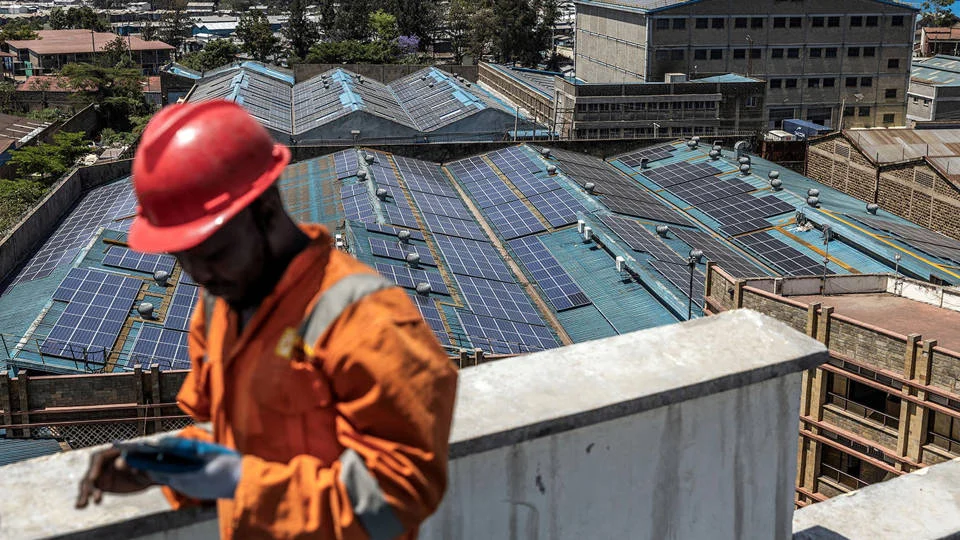
Investing in renewable energy is no longer an "alternative" strategy; it is increasingly the primary strategy for ensuring stability. Renewable assets, supported by long-term power-purchase agreements (PPAs), provide the stable and reliable cash flows that institutional portfolios—such as pension funds—require to meet their long-term obligations to beneficiaries.
Furthermore, the expansion of transmission and grid infrastructure, along with distributed energy markets, offers a way to expand electricity access to the millions of Africans currently without it. This transition does more than just lower carbon footprints; it de-risks the entire African economy by reducing its subservience to the whims of global oil markets.
Conclusion
The current conflict involving Iran is not a localized event with temporary effects; it is a structural signal. It highlights the fact that the fossil-fuel system’s turbulence is a permanent feature that cannot be managed away through traditional hedging. For African fiduciaries, the duty of care now demands a clear distinction between manageable risks and those that are fundamentally unjustifiable.
The transition of capital is already underway, driven by the harsh realities of currency devaluation, asset stranding, and a shifting legal landscape. African banks and institutional investors must now decide whether they will lead this transition—aligning their portfolios with the continent’s long-term infrastructure needs—or whether they will wait until the next geopolitical crisis forces a more painful and chaotic exit from the fossil-fuel era. Prudence, and the interests of their beneficiaries, suggests that the time for action is now.