Car & Truck Inflation in America: Cost of Vehicle Ownership Soared by 36% since 2020

The Multi-Phase Inflationary Cycle
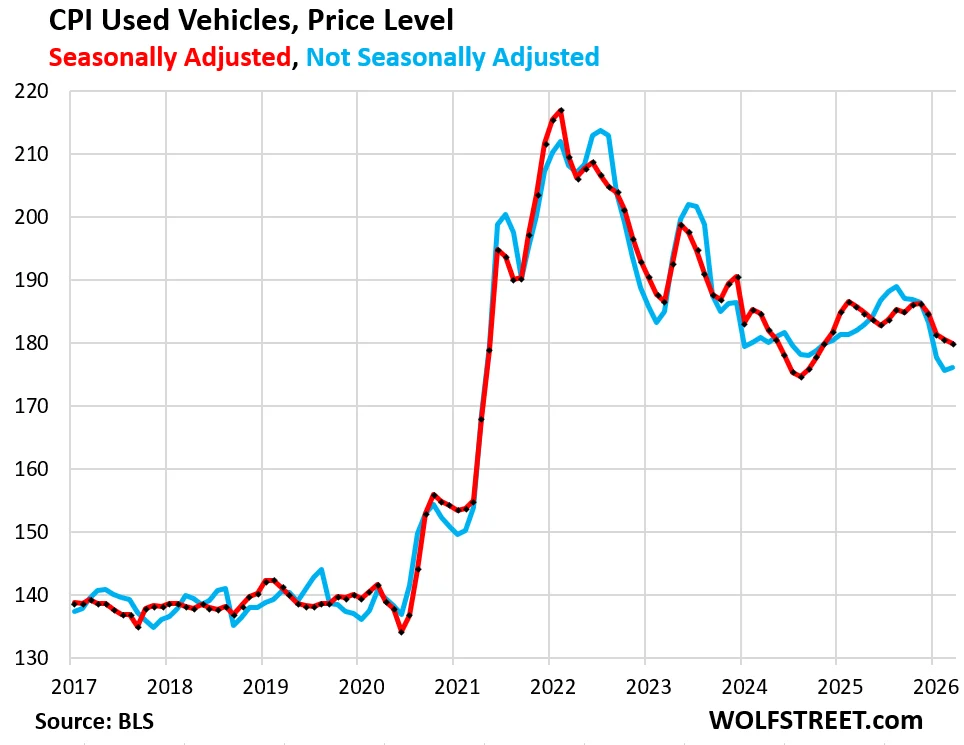
The trajectory of automotive inflation over the past six years has not been a singular, uniform rise but rather a series of staggered explosions across different sectors. This lack of lockstep movement has forced consumers to adjust to shifting financial pressures. The first phase, occurring between mid-2020 and mid-2022, was defined by the unprecedented explosion in the prices of new and used vehicles. Supply chain disruptions and semiconductor shortages drove inventory to record lows, allowing prices to hit a temporary ceiling that remained largely impenetrable until late 2023.
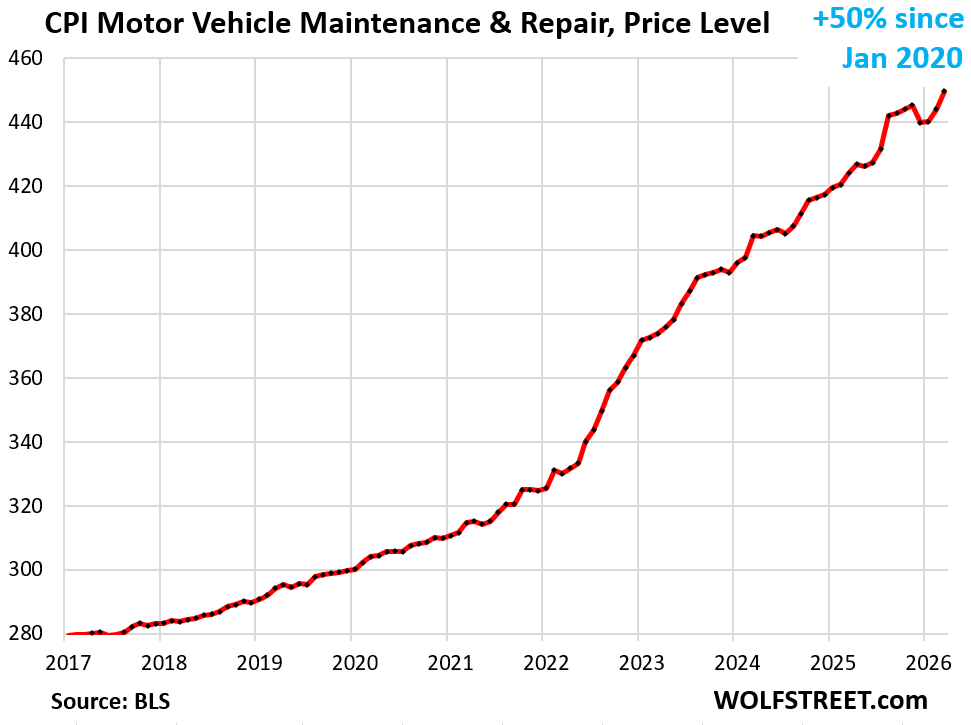
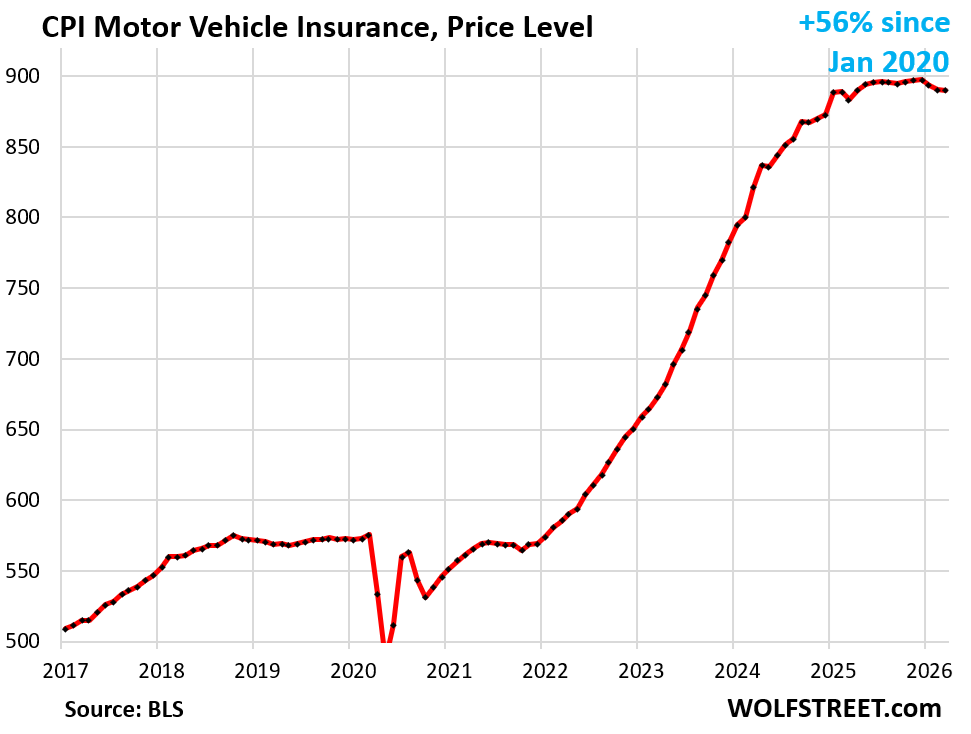
As vehicle prices stabilized, a second phase of inflation emerged in the service sector. Maintenance and repair costs began a steady ascent in 2021 before accelerating into a full-scale surge that continues to dominate the headlines. Simultaneously, the insurance industry underwent its own radical adjustment. Between 2022 and 2024, auto insurance premiums skyrocketed as providers scrambled to compensate for the higher replacement values of vehicles and the rising costs of repairs. While insurance inflation has recently stalled, it has done so at a historically high plateau. The final and most volatile element, motor fuel, followed a pattern of extreme peaks and valleys, culminating in the current 2026 spike driven by global energy speculation and regional conflicts.
The Crisis in Maintenance and Repair Services
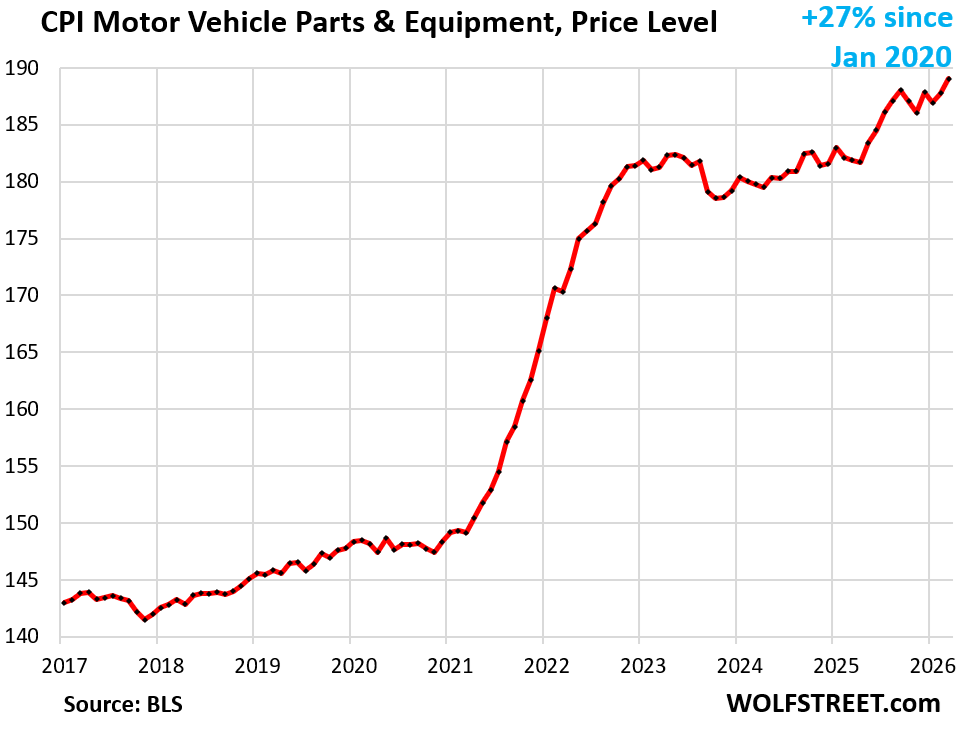
The Consumer Price Index for motor vehicle maintenance and repairs recorded a significant jump of 1.25% in March 2026 compared to the previous month. On a year-over-year basis, these costs have risen by 6.1%. However, the most startling metric is the long-term trend: since January 2020, the price of automotive services has exploded by 50%. This category is distinct from parts and equipment, focusing instead on the labor-intensive reality of keeping modern, technologically complex vehicles on the road.
Industry analysts attribute this 50% surge to two primary drivers: labor costs and profit margins. The automotive technician shortage has reached a critical stage, forcing service centers to raise wages significantly to retain skilled labor capable of servicing electric vehicles (EVs) and advanced driver-assistance systems (ADAS). These increased overheads are being passed directly to the consumer. Furthermore, many dealership service departments and independent shops have reported record-high profit margins, capitalizing on the necessity of vehicle upkeep in an era where many consumers are opting to keep their older cars longer rather than facing the high interest rates associated with new car loans.
The Insurance Plateau: High Costs as the New Normal
Auto insurance has become a primary pain point for the American middle class. While the CPI for motor vehicle insurance was essentially flat in March 2026—rising only 0.8% from a year ago—the context of this stability is crucial. The index has spiked by a staggering 56% since January 2020. The current "stall" in insurance inflation does not indicate a return to affordability; rather, it suggests that insurers have finally adjusted their premiums to account for the catastrophic increases in replacement costs and repair expenses witnessed over the previous four years.
Actuarial data suggests that the lag between rising repair costs and premium adjustments is approximately 12 to 18 months. Consequently, the massive premium hikes of 2023 and 2024 were the industry’s response to the 2021-2022 vehicle price explosion. While there is little active inflation in auto insurance at the moment, the service has become "hugely expensive," consuming a larger share of disposable income than at any point in the last three decades.
The Stagnation of the New Vehicle Market
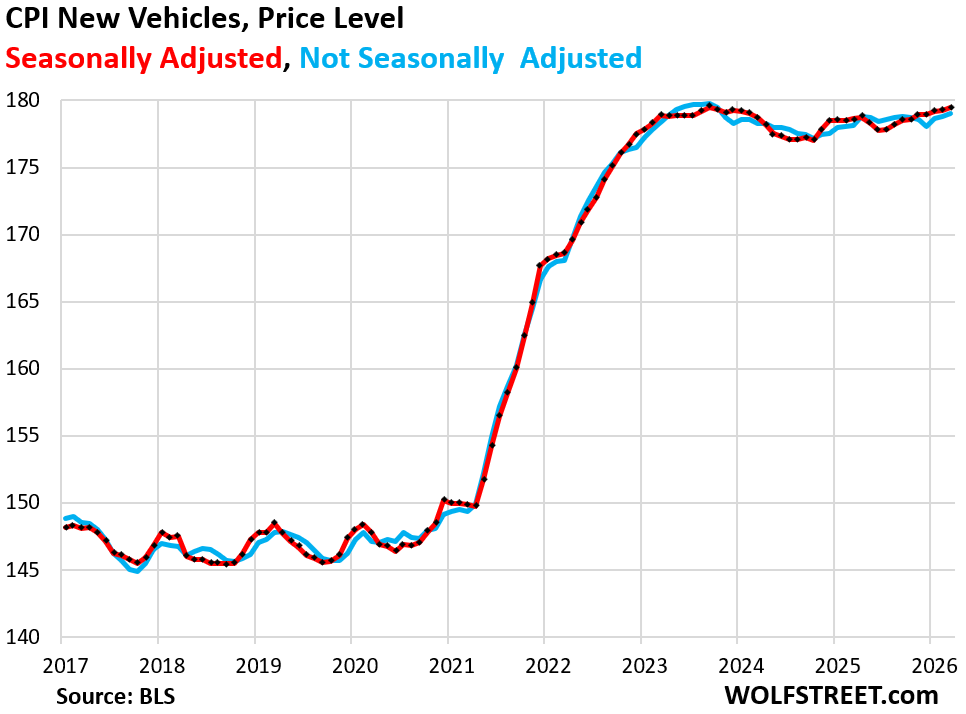
The market for new vehicles has reached a state of equilibrium characterized by low demand and high prices. In March 2026, the CPI for new vehicles inched up a mere 0.1% from the previous month. Year-over-year, the increase was less than half a percentage point (0.47%), placing current prices below the peak seen in mid-2023. After a 21% surge in pricing between 2020 and 2023, the industry appears to have hit a definitive ceiling.
Manufacturers and dealers are finding that the consumer’s appetite for $50,000+ vehicles has diminished in the face of sustained high interest rates. To move inventory, the industry has turned back to aggressive discounts and incentives, which have effectively offset any attempts by manufacturers to raise MSRPs further. Perhaps most telling is the volume of sales. New vehicle sales in 2025 were barely higher than they were in 1986, nearly 40 years ago. This stagnation suggests a fundamental shift in the market, where the high cost of entry is barring millions of potential buyers from the new car segment.
Used Vehicles and the Wholesale Speculation
The used vehicle market remains one of the most volatile sectors of the economy. After exploding by 54% in the early 2020s, prices plunged through mid-2024. However, the market has recently shown signs of renewed activity. While used vehicle CPI was down 3.2% year-over-year in March 2026, it remains 29% higher than pre-pandemic levels.
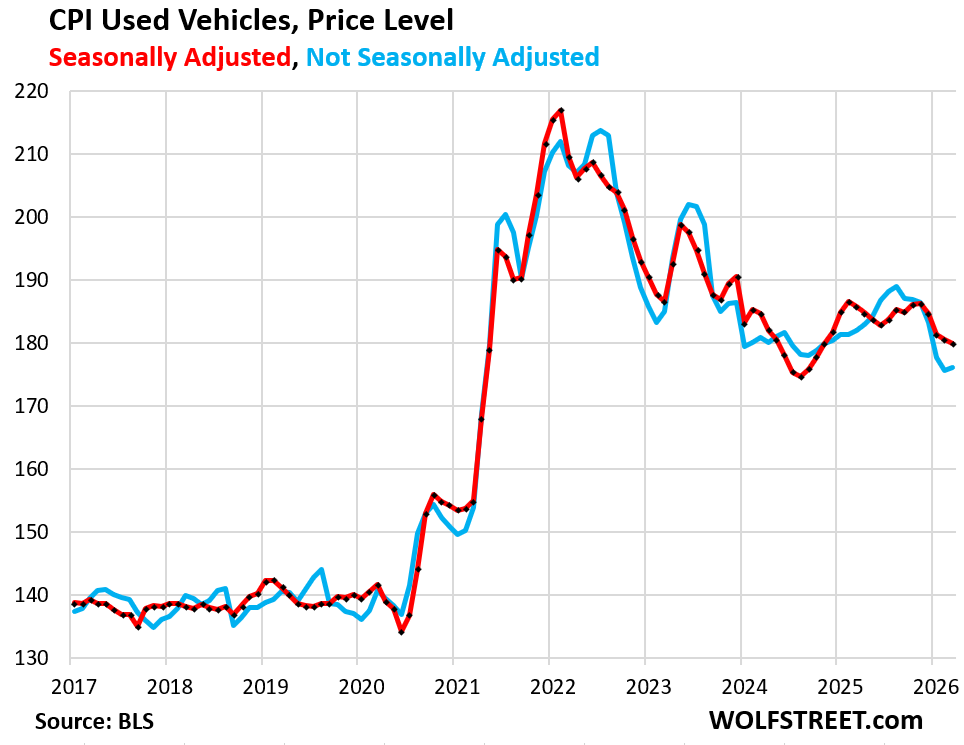
There is growing evidence that dealers are preparing for a spring surge in demand, traditionally fueled by consumer tax refunds. Wholesale auction prices have begun to tick upward as dealers bid aggressively for inventory. This "bidding up" at the wholesale level is often a precursor to broader retail inflation. If consumers use their refunds to compete for a limited supply of quality used cars, the downward trend in pricing seen over the last year may be abruptly reversed.
Energy Speculation and the Gasoline Re-Spike
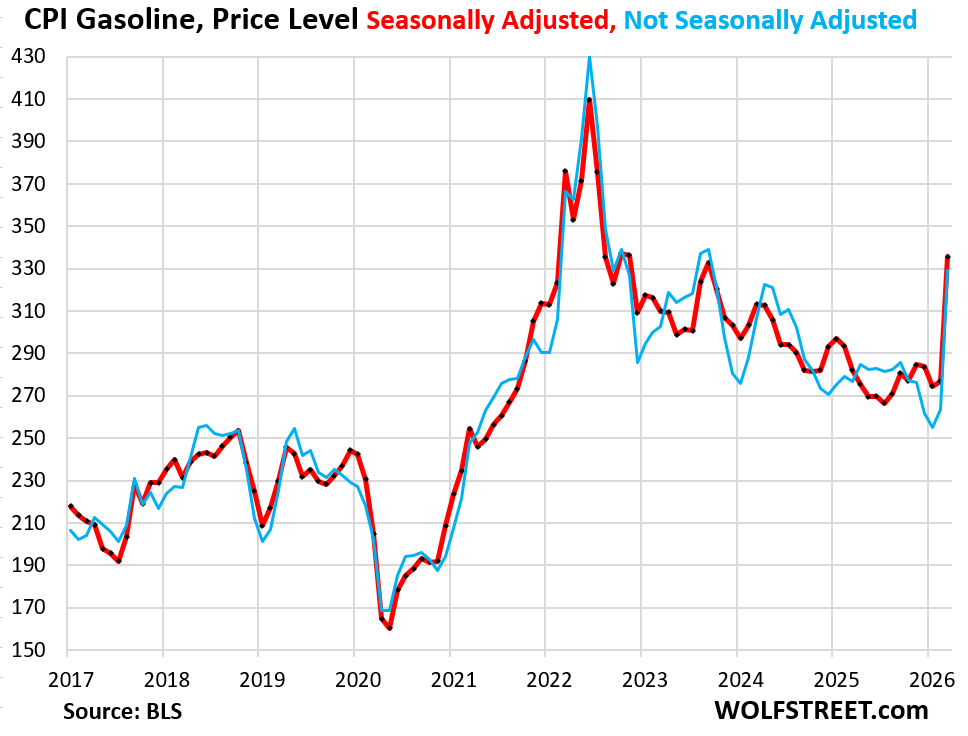
The most immediate shock to the consumer in March 2026 has been the "brutal re-spike" in gasoline prices. The CPI for gasoline surged by 21% on a seasonally adjusted basis in just one month. Year-over-year, the index is up 18.9%. This spike occurred despite the United States maintaining a significant trade surplus in petroleum products and having a supply chain that is largely independent of the Strait of Hormuz.
The cause of this increase is rooted in global energy speculation and a dramatic expansion of profit margins for refiners and retailers. The "crack spread"—the difference between the price of crude oil and the petroleum products extracted from it—surged in the first half of March. While geopolitical tensions involving Iran served as the catalyst for speculative trading, the gasoline being sold at the pump had been refined weeks prior. Consumers are essentially paying a premium driven by instant global speculation and the profit-seeking behavior of the energy sector.
Broader Economic Impact and the "Private Transportation" Record
When these various categories—new and used cars, fuel, insurance, maintenance, parts, and fees—are combined into the "Private Transportation" index, the result is a new record high. This composite index spiked by 4.6% in March 2026 alone, finally surpassing the previous record set in June 2022. The 36% increase in the total cost of ownership since 2020 represents a significant structural change in the American economy.
For the Federal Reserve, these figures present a daunting challenge. While some sectors of the economy show signs of cooling, the essential nature of transportation means that consumers cannot easily "opt out" of these rising costs. Maintenance cannot be deferred indefinitely, and insurance is a legal requirement in nearly every state. The high cost of vehicle ownership is acting as a persistent "inflationary floor," preventing the broader CPI from returning to the Fed’s 2% target.
As we move deeper into 2026, the car culture of America is facing a reckoning. The combined weight of expensive financing, record-high insurance premiums, and volatile fuel prices is forcing a re-evaluation of household budgets. Whether this leads to a long-term shift toward public transit, smaller vehicles, or a continued reduction in new car sales remains to be seen. What is certain, however, is that the era of affordable vehicle ownership has been replaced by a high-cost environment that shows no signs of meaningful retreat.