U.S. Bank Forges Landmark Amazon Partnership to Expand Small Business Banking Reach and Accelerate Fee-Based Growth

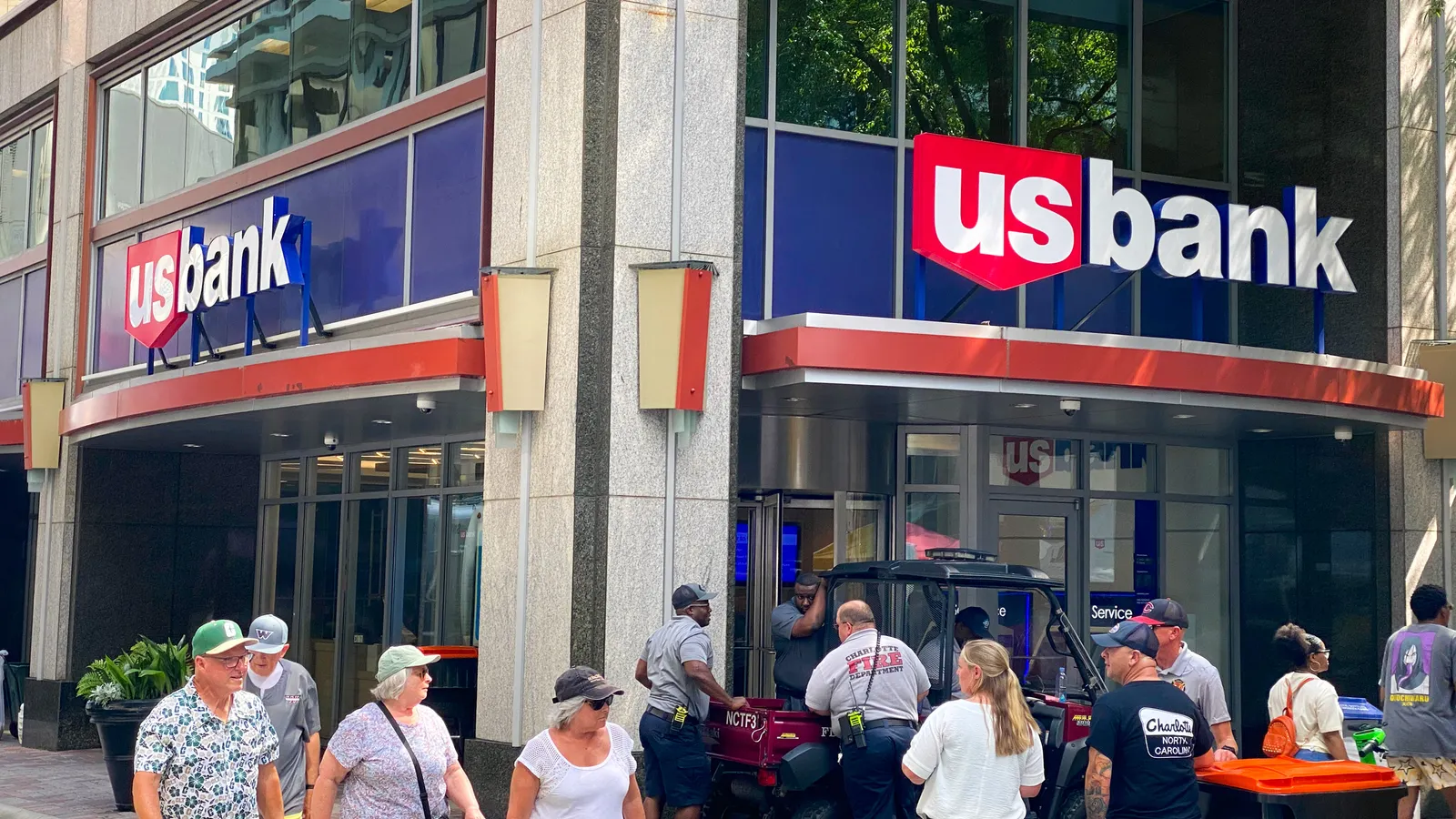
U.S. Bank has embarked on a pivotal strategic initiative, entering into a significant partnership with e-commerce giant Amazon to issue two new co-branded credit cards specifically tailored for small-business owners. This collaboration, which sees U.S. Bank replacing American Express as Amazon’s card issuer, is designed to be a crucial gateway for the super-regional lender to introduce its comprehensive suite of banking services to an estimated 700,000 small-business owners who will gain exposure through the new credit card offerings. The move, announced following the bank’s first-quarter earnings call on April 16, 2026, underscores U.S. Bank’s aggressive pursuit of fee-based revenue growth and its commitment to expanding its presence within the vital small and medium-sized business (SMB) segment.
Strategic Imperative: Fueling Growth Beyond Traditional Banking
The partnership with Amazon represents a bold stride in U.S. Bank’s overarching strategy, championed by CEO Kedia, who took the helm approximately a year prior to this announcement. Kedia has consistently emphasized a pivot towards bolstering the bank’s payments capabilities and driving fee-based income, aiming to reduce reliance on traditional interest-based revenue streams that are often susceptible to fluctuating interest rate environments and intense competition for deposits. During the recent earnings call, Kedia articulated the vision behind the Amazon deal, stating, "It’s a pathway to a very different type of growth that doesn’t need to come with deposit pricing erosion, or any of the usual ways banks grow their business." This statement highlights a strategic shift within the banking sector, where lenders are increasingly seeking innovative avenues for customer acquisition and revenue generation that are less capital-intensive and more resilient to market pressures.
The small business sector is a cornerstone of the American economy, comprising over 33 million businesses that employ nearly half of the nation’s private workforce and contribute significantly to the Gross Domestic Product. Despite their economic importance, many small businesses often face challenges in accessing tailored financial services, particularly from larger traditional banks. The Amazon partnership positions U.S. Bank to directly address this market, offering not just credit, but a potential ecosystem of banking solutions designed to support the operational needs and growth aspirations of these entrepreneurs. By embedding its services within the widely used Amazon platform, U.S. Bank aims to capture a segment of the market that might otherwise be difficult or costly to reach through conventional marketing and sales channels.
The Amazon Nexus: A Gateway to 700,000 New SMB Clients
At the heart of this strategic alliance is the immediate exposure U.S. Bank will gain to an estimated 700,000 small-business owners. These are businesses that are likely already engaged with Amazon’s vast ecosystem, either as sellers, buyers, or utilizing various Amazon services. For U.S. Bank, this represents a pre-qualified and highly engaged audience. The two new credit cards, yet to be fully detailed in terms of their specific benefits and rewards structures, are expected to be compelling enough to attract a significant portion of this demographic. The implicit trust and brand recognition associated with Amazon are critical assets that U.S. Bank can leverage to facilitate the onboarding of new clients, not just for credit cards but for a broader array of banking products such as checking accounts, savings accounts, lines of credit, and payment processing solutions.
The decision by Amazon to switch from American Express to U.S. Bank as its co-brand card issuer for small businesses signals a strategic alignment between the two entities. While the specific reasons for Amazon’s change were not explicitly detailed, industry analysts suggest it could be driven by U.S. Bank’s robust digital capabilities, its proven track record in co-brand partnerships, or a more favorable commercial agreement that aligns with Amazon’s long-term objectives for supporting its small business clientele. For Amazon, offering integrated financial tools helps solidify its relationship with its vast network of sellers and buyers, fostering loyalty and potentially driving more activity within its platforms.
Leveraging a Proven Digital Platform: From State Farm to Edward Jones to Amazon
A critical enabler of this ambitious expansion is U.S. Bank’s sophisticated digital platform, which has been incrementally developed and refined through prior co-brand partnerships. Kedia highlighted the evolutionary journey of this platform, noting its initial construction to serve co-brand card clients for the bank’s 2020 partnership with insurance provider State Farm. This initial iteration provided a framework for delivering banking services within a partner’s user experience. The platform was subsequently improved and expanded following U.S. Bank’s collaboration with investment firm Edward Jones. These earlier experiences provided invaluable lessons in seamless integration, customer experience design, and scalable infrastructure management.

Kedia underscored the attractiveness of this platform to potential partners, explaining, "It’s very attractive to partners, because you can provide a full range of service to your clients under your user experience." This white-label or embedded finance capability allows partners like Amazon to offer a comprehensive suite of financial services under their own brand, maintaining a consistent customer journey while U.S. Bank handles the underlying banking infrastructure and regulatory compliance. The Amazon deal, therefore, is not just a standalone agreement but a significant validation and expansion of this strategic technological asset. "The Amazon deal allows us to take that platform and then expand it to the small business side, at which point it becomes a very big asset to attract big co-brand mandates," Kedia elaborated, indicating a long-term vision where this platform will be a cornerstone of U.S. Bank’s future growth in co-branded partnerships across various industries and customer segments. This scalable model allows U.S. Bank to efficiently onboard new partners and rapidly deploy tailored financial solutions, significantly lowering the barrier to entry for expanding its client base.
Robust Financial Performance Underpins Growth Ambitions
The announcement of the Amazon partnership coincided with U.S. Bank’s release of its first-quarter 2026 earnings, which provided a glimpse into the bank’s financial health and the initial success of Kedia’s strategic initiatives. The earnings report indicated a healthy growth trajectory in key areas relevant to the new partnership. Credit card loans saw a substantial jump of 6.4% in the first quarter, reaching approximately $37 billion. This surge contributed to an overall 3.8% increase in total loans across the bank.
Furthermore, payment services net revenue, a direct reflection of the bank’s fee-based growth strategy, rose by 3.9% year over year, totaling $1.7 billion. While net income from payment services remained relatively stable at $231 million, the increase in revenue signals strong underlying activity and successful execution of the bank’s payments-centric strategy. These financial results demonstrate that U.S. Bank is already experiencing positive momentum in its payments segment, providing a solid foundation for the accelerated growth anticipated from the Amazon collaboration. The partnership is explicitly expected to "meaningfully accelerate credit card revenue growth by the end of the year," according to Kedia, underscoring the immediate and projected financial impact of this deal.
The Broader Landscape: Small Business Banking and Co-Brand Evolution

The small business banking sector is highly competitive, with traditional banks, credit unions, and a growing number of fintech companies vying for market share. Small businesses often require a nuanced approach, balancing sophisticated digital tools with personalized support. The Amazon partnership allows U.S. Bank to bypass some of the traditional customer acquisition costs by tapping directly into Amazon’s vast network. This strategy is particularly effective in a market where small businesses are increasingly relying on e-commerce platforms and digital tools for their operations.
The evolution of co-brand credit cards has seen them move beyond mere loyalty programs to become integral components of broader customer ecosystems. For banks, these partnerships offer an efficient way to expand their customer base, diversify their loan portfolios, and generate stable fee income. For partners like Amazon, co-branded cards enhance customer loyalty, provide additional revenue streams, and offer valuable data insights into customer spending patterns. The success of such partnerships hinges on the ability to deliver value to the end-user – the small business owner – through competitive rewards, robust financial tools, and seamless integration with their existing business operations.
Industry Implications and Expert Perspectives
Industry analysts have largely viewed the U.S. Bank-Amazon partnership as a significant win for U.S. Bank, positioning it favorably in the competitive landscape. Analysts suggest that this deal could serve as a blueprint for other banks looking to penetrate niche markets through strategic alliances. The emphasis on fee-based growth is particularly appealing to investors, as it represents a more stable and predictable revenue stream compared to interest income, which can be volatile.
Experts believe that the partnership will not only boost U.S. Bank’s credit card portfolio but also provide a strong funnel for cross-selling other high-margin banking products. The acquisition of 700,000 potential new clients without the heavy marketing expenditure typically associated with direct customer acquisition is a substantial advantage. However, challenges remain, including the effective integration of U.S. Bank’s services within the Amazon ecosystem, managing potential credit risks associated with a large influx of new small business clients, and ensuring a superior customer experience to retain these new customers long-term. The ability to convert cardholders into full banking clients will be the ultimate measure of the partnership’s success.
For Amazon, this partnership deepens its commitment to supporting its small business ecosystem. By providing accessible and integrated financial tools, Amazon can further solidify its position as an indispensable platform for small businesses, fostering growth and loyalty among its vast network of merchants and entrepreneurs. This move also aligns with a broader trend of technology companies venturing into financial services, often through partnerships with regulated financial institutions, to offer embedded finance solutions.
Future Outlook: A Blueprint for Accelerated Growth
Looking ahead, U.S. Bank’s strategy suggests a continued focus on leveraging its digital platform for additional co-brand mandates. Kedia’s optimism regarding Amazon’s ability to grow its small-business base is a key factor in the bank’s long-term outlook for this partnership. "Amazon’s ability to grow its small-business base and their aspirations around this segment give us optimism around our path forward," she noted. This indicates a symbiotic relationship where the growth of one partner directly fuels the other.
The Amazon deal is more than just a credit card partnership; it is a strategic investment in a scalable model for customer acquisition and revenue diversification. It signals U.S. Bank’s intent to be a leader in the evolving landscape of digital banking and embedded finance, where seamless integration and strategic alliances are becoming paramount. "Our goal here is to take our payments business to a more robust, long-term growth trajectory, and that’s what this platform helps us do," Kedia concluded, encapsulating the transformative potential of this landmark collaboration for U.S. Bank’s future growth and market position. The success of this venture could set a precedent for how traditional banks engage with large digital platforms to reach new customer segments and drive sustainable growth in an increasingly digital-first economy.