Massive Dark Web Breach Exposes Over 153 Million U.S. and Canadian Driver Licenses in Unprecedented Identity Theft Operation

A newly surfaced dark web service known as Nexus has thrown North American digital security into turmoil by offering digital scans of more than 153 million driver licenses belonging to citizens in the United States and Canada. The massive repository, which also houses millions of international identification cards, travel documents, medical cards, and marijuana dispensary verification records, appears to originate from a severe, long-term breach at a prominent third-party identity verification enterprise based in Louisiana. Federal law enforcement agencies have mobilized in response, and cybersecurity experts warn that the compromise threatens the foundational security assumptions underlying modern digital and physical authentication infrastructure.
The scale of the Nexus operation dwarfs many historical data breaches in terms of sensitive personal identifiable information (PII) depth. Beyond high-volume consumer records, investigative tracking reveals that the cache includes the identification files of prominent public figures, such as U.S. Defense Secretary Pete Hegseth, several high-ranking federal officials, and multiple national security personnel. The presence of such specialized data points to a systemic pipeline failure within private-sector identity collection pipelines rather than a localized or fragmented consumer-level malware infection.
Chronology and Discovery of the Nexus Breach

The incident first came to light on Monday, August 31, when a specialized security source alerted investigative journalist Brian Krebs to a newly advertised dark web service hosted on the Russian-language cybercrime forum Exploit. The threat actor, operating under an anonymous handle, claimed to aggregate North American identity documents totaling more than 170 million individual profiles. To substantiate the claim, the proprietor utilized the personal driver license of a prominent cybersecurity researcher as a public marketing sample.
Subsequent deep-dive technical evaluations of the Nexus portal confirmed the authenticity of its database. A blank administrative query returned roughly 11.5 million pages of search results, averaging 15 entries per page, aligning closely with the platform’s advertised metric of 153 million driver licenses and over 10 million additional identity cards. The vast majority of the files pertain to United States residents, though roughly 1.1 million records trace back to Canadian provinces, led heavily by Ontario with over 473,000 indexed entries.
The operational timeline of the exfiltration remains partially opaque, but threat actor communications on the Exploit forum indicate that data harvesting had been running continuously into a private database for over a year. Furthermore, the velocity of the platform demonstrated active, ongoing updates: within a single 24-hour window following its public launch, the repository’s driver license index expanded by nearly 400,000 records, highlighting a semi-automated ingestion pipeline capable of siphoning freshly collected identity verification logs in near-real-time.
Anatomy of a Compromised Record and the Trail to IDScan.net

Technical audits of individual records recovered from Nexus revealed an extraordinary level of forensic detail. Many profiles contained six distinct image files: front and back standard color scans, as well as specialized infrared and ultraviolet (UV) versions of the same documents. Each file carried precise date and time stamps.
Independent validation by multiple researchers, journalists, and federal employees whose documents were discovered within Nexus confirmed that the timestamps precisely matched moments when they handed over their physical licenses for verification. Cross-referencing travel itineraries, car rental agreements, and dispensary logs pointed investigators toward a centralized processing vector. Specifically, individuals whose data was compromised frequently shared a common operational touchpoint: they had transacted with businesses utilizing identity verification software provided by IDScan.net, a New Orleans-based identity verification corporation.
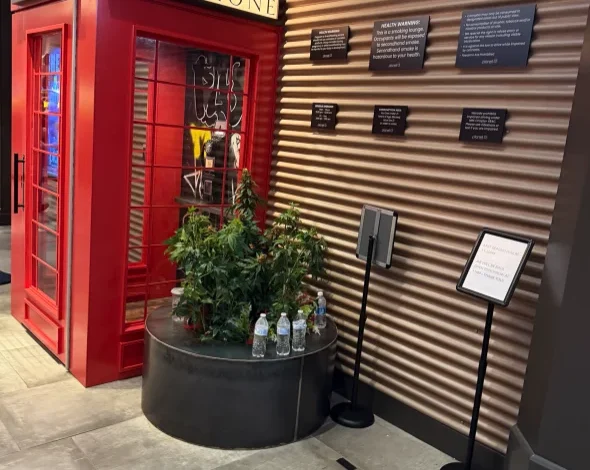
IDScan.net provides authentication and age-verification tech for more than 1,000 marijuana dispensaries across 19 U.S. states, alongside major corporate brands in hospitality, logistics, rental vehicles, and retail, including Hertz, Target, FedEx, Motorola Solutions, and Caesars Entertainment. The firm’s proprietary hardware and software systems utilize multi-spectral imaging—including infrared and ultraviolet scans—to authenticate physical security features on state-issued IDs. This specialized multi-spectral capture mechanism directly mirrors the distinct six-file structure discovered within the Nexus dark web repository.
Official Responses and Regulatory Fallout

As word of the breach spread through professional channels, federal authorities moved swiftly. On the afternoon of the initial disclosures, senior leadership within the Federal Bureau of Investigation’s cyber division confirmed that the FBI New Orleans field office had officially opened an inquiry into the security failure at IDScan.net. The urgency of the federal probe intensified after records belonging to high-ranking federal agency officials and national security personnel were identified among the items available for purchase.
Corporate partners named in historical promotional materials from IDScan.net moved quickly to distance themselves from the compromised infrastructure. A spokesperson for Caesars Entertainment stated that the corporation had ceased using VeriScan software in February 2025, maintained no active accounts at the time of the incident, and never authorized IDScan.net to retain consumer data.
On September 8, IDScan.net issued a formal data security incident notification acknowledging that an unauthorized third party may have accessed and copied customer information, including full names, driver license numbers, and other government-issued identification figures. The company began notifying affected individuals and offering identity monitoring and credit protection services. Shortly after public scrutiny peaked and news reports circulated, the Nexus dark web portal abruptly went offline, replacing its administrative login portal with a plain-text declaration stating that the service was no longer available.
Broader Implications for Identity Verification Systems

The rapid collapse and exposure of the Nexus service highlight deep structural vulnerabilities within the modern digital and physical security economy. Over the past decade, regulatory mandates, corporate compliance programs, age-restriction laws, and fraud-prevention frameworks have driven an explosion in third-party identity collection. Consumers are routinely required to surrender high-resolution scans of driver licenses to access retail storefronts, rent vehicles, check into hotels, or navigate online services.
Cybersecurity analysts emphasize that this paradigm concentrates hyper-sensitive personal data in the hands of private third-party vendors whose cybersecurity postures vary wildly and frequently lack rigorous federal oversight. Larry Baldwin, a principal intelligence researcher at Cybera, pointed out that state-issued driver licenses serve as primary authentication factors for opening financial credit lines, securing employment, and verifying legal standing.
Furthermore, the compromise of hundreds of millions of high-resolution biometric-linked identity documents poses an acute danger to vulnerable populations, including survivors of domestic violence and individuals sheltered under federal witness protection programs. Because facial geometry and identity documents cannot be easily modified, the unauthorized mass distribution of high-fidelity license scans undermines the integrity of identity verification systems that modern society increasingly relies upon.
As the FBI investigation continues and affected individuals navigate the fallout of potential long-term identity theft exposure, privacy advocates and security researchers argue that the incident must serve as a critical turning point. The breach underscores the urgent need for stricter legislative frameworks, data minimization principles, and rigorous independent oversight for private enterprises entrusted with collecting and storing biometric and state-issued identification data.