In the rapidly evolving landscape of artificial intelligence, the divide between predictive accuracy and explainability has become the defining challenge for data science teams. A model that achieves high precision is no longer sufficient for deployment in high-stakes environments. When a churn prediction model identifies a long-term, loyal customer as "high-risk," the inability to articulate the underlying reasoning behind that decision constitutes a critical failure. This is not merely a technical limitation; it is a significant liability in the face of emerging regulatory frameworks like the EU AI Act, which under Article 13 mandates that high-risk AI systems must provide sufficient transparency for deployers to interpret their outputs.
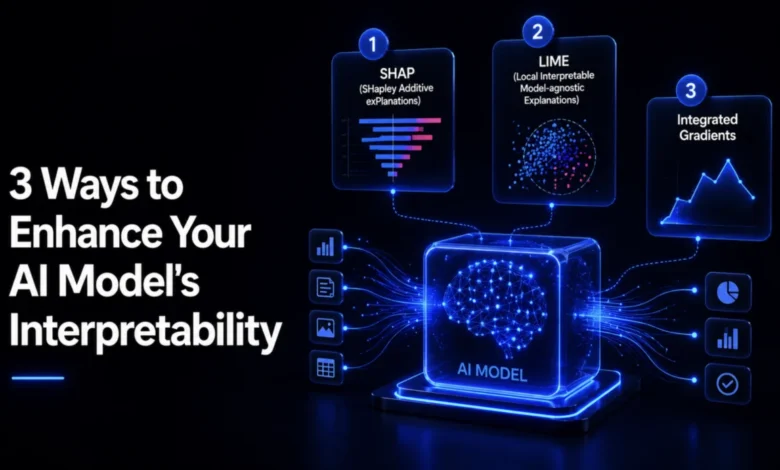
As organizations pivot from experimentation to production, interpretability has shifted from a theoretical research interest to a core deployment requirement. This article examines three sophisticated techniques—SHAP, LIME, and Integrated Gradients—that allow practitioners to deconstruct "black-box" models, providing actionable insights into why specific predictions occur.
The Evolution of Model Interpretability
Model interpretability is defined as the extent to which a human observer can ascertain the cause of a machine-generated decision. Historically, data scientists relied on simple, built-in attributes, such as the .feature_importances_ parameter in scikit-learn. While these metrics provide a convenient, one-line summary of global feature influence, they fail to provide the granularity needed to explain individual outcomes.
The limitation of traditional importance scores is twofold. First, they are strictly global, meaning they summarize the behavior of the entire dataset rather than the logic behind a single, unique prediction. Second, these scores are susceptible to bias, particularly toward high-cardinality features—variables with many categories that provide more opportunities for the model to "split" the data, regardless of their actual predictive power. Furthermore, this traditional approach is entirely unavailable for complex architectures, such as neural networks or opaque API-based models.
To illustrate the necessity of modern interpretability, consider a synthetic churn dataset containing 2,000 customer profiles. In this scenario, the "ground truth" for churn is driven by clear, quantifiable variables: shorter tenure, month-to-month contracts, and a high frequency of support tickets. By using a consistent dataset across all three methods—SHAP, LIME, and Integrated Gradients—we can compare how these tools extract the underlying truth from both tree-based models and neural networks.
Method 1: SHAP (SHapley Additive exPlanations)
SHAP, grounded in cooperative game theory, treats each feature as a player in a collaborative effort to produce a model’s output. By calculating the "marginal contribution" of each feature across every possible combination, SHAP provides a mathematically robust, consistent, and additive explanation for predictions.
The power of SHAP lies in its versatility. It offers both global importance metrics—which frequently correct the biases found in traditional methods—and local explanations for specific users. For instance, in our test case of a customer with 53 months of tenure but five recent support tickets, SHAP reveals that the support ticket volume (+2.81 in log-odds) drastically outweighs the protective effect of the customer’s long tenure (-0.58). This allows teams to provide a defensible, data-backed reason for a high-risk churn classification.
While TreeSHAP is highly optimized for tree-based models, the general version of SHAP can be computationally intensive, as it requires extensive evaluations of the model. Despite this cost, it remains the gold standard for production environments requiring high mathematical consistency.
Method 2: LIME (Local Interpretable Model-agnostic Explanations)
LIME addresses the "black-box" problem by focusing entirely on the local neighborhood of a single prediction. Rather than attempting to map the entire global model, LIME creates a set of perturbed data points around the input of interest, observes the model’s reaction, and fits a simple, interpretable linear surrogate model to those local points.
The primary advantage of LIME is its agnosticism; it does not require access to the internal architecture of the model. It is exceptionally fast and efficient for real-time systems with tight latency constraints. In our analysis, LIME confirms the findings of SHAP, identifying support tickets as the primary driver of the churn risk. However, LIME does come with a caveat: because it relies on sampling, it can exhibit slight instability. A single instance might yield marginally different explanations if the random seed changes, a trade-off that developers must weigh against the speed benefits.
Method 3: Integrated Gradients (IG)
Integrated Gradients represents the cutting edge of interpretability for differentiable architectures, specifically neural networks. Unlike SHAP and LIME, which treat the model as a black box, IG exploits the calculus of the model itself. By computing the gradient of the output with respect to the input along a path from a neutral baseline (such as an empty or "average" input) to the actual data point, IG provides an exact attribution of how much each feature contributed to the shift from the baseline to the final result.
In a neural network implementation, IG provides a "convergence delta," a diagnostic tool that validates the mathematical soundness of the attribution. When the delta approaches zero, it confirms that the explanation is not merely an approximation but a precise reflection of the model’s internal computation. This method provides the most technically rigorous explanation for deep learning models, where traditional surrogate models might fail to capture the high-dimensional complexity of the learned decision boundaries.
Strategic Selection: Which Tool to Use?
The choice between these methodologies is not a matter of which is superior, but which fits the specific constraints of the deployment:
- SHAP is the ideal choice for tree-based architectures (Random Forests, XGBoost) where both global understanding and high-precision local explanations are required. Its foundation in game theory makes it the most legally and ethically defensible in highly regulated sectors.
- LIME is the preferred solution for real-time inference scenarios where latency is critical. It is also the "go-to" for proprietary models where you have input/output access but no visibility into the model’s internal code or architecture.
- Integrated Gradients is the standard for deep learning and neural network applications. If your pipeline involves PyTorch or TensorFlow, IG leverages the gradient-based nature of these frameworks to deliver insights that other methods might miss.
Broader Implications and Future Outlook
The requirement for interpretability is accelerating as organizations face increased scrutiny from regulators and customers alike. The implementation of the EU AI Act serves as a harbinger of global trends, suggesting that "black-box" models will increasingly be viewed as non-compliant in critical industries such as finance, healthcare, and human resources.
The convergence of these three methods on the same result for our churn model demonstrates that while the underlying mechanisms differ, the truth of the model’s behavior is consistent. By adopting these practices, data teams can move beyond mere accuracy to achieve a state of "transparent AI." This transition not only mitigates legal risk but also builds institutional trust, allowing stakeholders to act on model insights with full confidence in the logic behind them. As the field matures, the ability to explain the "why" behind the "what" will remain the defining characteristic of elite data science operations.