OpenAI Launches GPT-5.6 Series Featuring Tiered Reasoning and Enhanced Code Review Capabilities

OpenAI has officially deployed its latest iteration of generative intelligence, GPT-5.6, marking a significant step forward in the evolution of the GPT-5 architecture. Released earlier this month, the model succeeds the widely adopted GPT-5.5 and introduces a refined hierarchy of model sizes and reasoning capabilities designed to address the growing demand for specialized artificial intelligence in software engineering and automated browser navigation. This release comes at a critical juncture in the AI sector, as competitors like Anthropic have recently updated their own frontier models, including Opus 4.8 and Fable 5, intensifying the race for dominance in the high-stakes "reasoning" category of large language models.
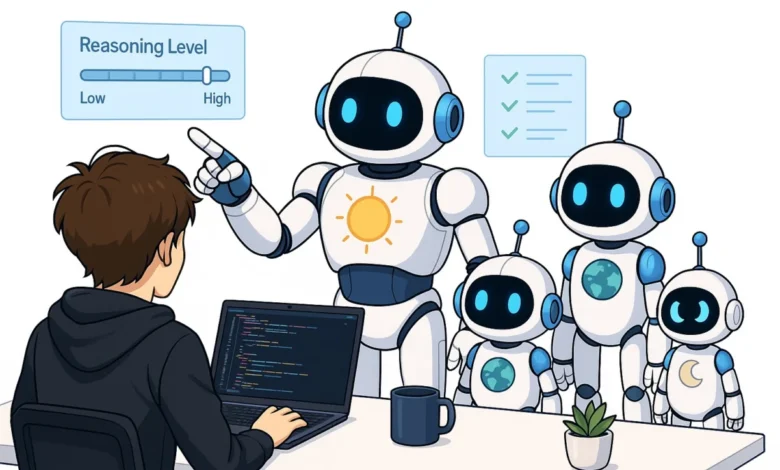
The launch of GPT-5.6 represents more than a simple incremental update. It introduces a new nomenclature for model scaling, categorized by celestial bodies to represent their respective computational power and intended use cases. The "Sol" model stands as the flagship frontier version, offering the highest parameter count and most sophisticated logic. "Terra" serves as a mid-tier balanced model, while "Luna" is the smaller, high-efficiency variant optimized for speed and lower-latency tasks. Central to this update is the "Reasoning Effort" toggle, which allows users to dictate how much "thinking time" the model should allocate to a prompt before generating a response. This feature formalizes the trade-off between temporal efficiency and output quality, a trend that has become increasingly prominent in the 2026 AI landscape.
Technical Architecture and Reasoning Levels
The defining characteristic of GPT-5.6 is its variable reasoning architecture. Unlike previous generations that largely relied on fixed-inference compute, GPT-5.6 allows for dynamic compute allocation. Users can select from several reasoning levels, ranging from "Medium" to "Extra High" and "Ultra." Technical documentation released by OpenAI suggests that the higher reasoning tiers utilize internal chain-of-thought processing and self-correction loops before delivering the final output to the user.
Early performance data indicates that when set to "Ultra" reasoning, the Sol model demonstrates a marked improvement in complex problem-solving. However, this comes at a substantial cost to both speed and resource consumption. In practical applications, testers have noted that "Ultra" reasoning can be significantly slower than previous models, making it less suitable for real-time chat but highly effective for asynchronous tasks such as architectural planning or deep code audits.
A notable development in the GPT-5.6 ecosystem is the refinement of the model’s precision and recall in technical tasks. Precision, the ability of the model to be correct when it identifies a bug, and recall, the ability to catch all existing bugs in a codebase, have both seen measurable increases over GPT-5.5. This improvement is particularly evident in the Sol model, which is being positioned by OpenAI as a primary tool for senior-level code review and complex system implementations.
Comparative Performance and Industry Benchmarks
The arrival of GPT-5.6 has prompted immediate comparisons with Anthropic’s current lineup. Industry analysts have closely monitored how the Sol model stacks up against Opus 4.8. Initial reports suggest that while the two models are largely on par for general-purpose tasks, GPT-5.6 holds a distinct advantage in specific technical domains.
For example, in head-to-head code review benchmarks, GPT-5.6 Sol has outperformed Opus 4.8 in identifying edge-case vulnerabilities and logic flaws in distributed systems. Conversely, some users report that Anthropic’s Fable 5 remains a preferred choice for initial project planning and creative brainstorming, leading to an emerging industry trend where developers "multi-model." This workflow involves using Fable 5 for high-level strategy and then transitioning to GPT-5.6 for the granular execution and final verification of code.
Another area of comparison is the "Terra" model size. While Sol is the undisputed leader in raw capability, early benchmarks suggest that the Terra model, when paired with a "High" reasoning setting, can occasionally match or exceed the performance of the Sol model on "Medium" reasoning for specific logical puzzles. This suggests a shifting paradigm where the amount of compute dedicated to "thinking" may be as important as the raw size of the underlying model.
Operational Constraints and Resource Management
Despite its technical prowess, GPT-5.6 introduces new challenges regarding usage limits and subscription management. The model’s high-reasoning modes are exceptionally resource-intensive, leading to rapid depletion of user quotas. Even on high-tier professional subscriptions, such as the $200-per-month "Pro" or "Team" plans, users have reported hitting weekly limits within days when utilizing "Ultra" reasoning for sustained development tasks.
In response to these constraints, OpenAI has implemented a "Banked Reset" system. Unlike traditional fixed-period resets, a banked reset allows users to manually trigger a quota refresh at a time of their choosing. This provides flexibility for engineers who may face periods of high-intensity work followed by lower usage. However, the system is not without its caveats; triggering a banked reset also pushes back the date of the next scheduled automatic reset, effectively extending the cycle.

To manage these limitations, a consensus has emerged among early adopters regarding "reasoning optimization." The prevailing strategy involves using "Extra High" reasoning exclusively for the initial planning phase of a project, where the model must analyze an entire repository and create a blueprint. Once the plan is established, users typically switch to "Medium" reasoning for the actual implementation, as the "thinking" required to execute a pre-defined plan is significantly lower than that required to formulate it.
Agentic Capabilities: Browser and Computer Use
One of the most significant functional upgrades in GPT-5.6 is its proficiency in "Computer Use" and browser navigation. Building on the foundations laid by its predecessors, the 5.6 model demonstrates enhanced reliability when interacting with web interfaces and local file systems. This capability is vital for end-to-end testing and automated workflows that require the AI to verify its own code in a live environment.
The model’s ability to navigate complex, JavaScript-heavy websites with minimal errors has been cited as a major improvement. When utilizing "Medium" reasoning, GPT-5.6 is capable of performing multi-step browser actions—such as navigating to a dashboard, extracting data, and performing an action in a separate SaaS tool—with high speed and accuracy. This places OpenAI in direct competition with specialized agentic AI startups, as GPT-5.6 provides a robust "out-of-the-box" solution for browser-based automation.
Furthermore, OpenAI has expanded its integration capabilities, offering connectors similar to Anthropic’s Model Context Protocol (MCP). This allows GPT-5.6 to access a wide array of third-party tools, including Gmail, Google Calendar, Slack, and various development environments. Experts emphasize that the model’s effectiveness is heavily dependent on these integrations; without full access to a user’s toolstack, the model’s ability to act as a comprehensive "AI engineer" is significantly curtailed.
Historical Context and Evolutionary Timeline
The release of GPT-5.6 follows a rapid succession of updates within the GPT-5 family. GPT-5.0 was originally launched as the first "true" frontier model of the mid-2020s, focusing on multimodal understanding. This was followed by GPT-5.5, which refined the model’s coding capabilities and reduced the "hallucination" rate for technical documentation.
The jump to 5.6 represents the move toward "System 2" thinking in AI—a psychological term referring to slow, deliberate, and logical thought processes. While GPT-4 and early versions of GPT-5 were criticized for being "reactive" (System 1 thinking), GPT-5.6 is designed to be "reflective." This timeline reflects a broader shift in the AI industry away from simply increasing parameter counts and toward optimizing the way those parameters are utilized during the inference phase.
Implications for the Professional AI Landscape
The introduction of GPT-5.6 is expected to have a profound impact on the software development lifecycle. With the model’s increased precision in code review, some industry leaders suggest that human-led peer reviews may soon become reserved only for the most critical infrastructure. For the vast majority of commercial software development, an AI-first review process using models like Sol 5.6 is becoming the new standard.
However, the high cost and slow speed of the most advanced reasoning modes suggest that a "tiered" approach to AI will remain necessary for the foreseeable future. Companies will likely continue to balance their usage between high-power models for strategy and lower-power, faster models for routine tasks.
As OpenAI continues to iterate on the GPT-5 architecture, the focus remains on reliability and tool integration. The success of GPT-5.6 will likely be measured not just by its benchmark scores, but by its ability to integrate seamlessly into existing professional workflows. For now, GPT-5.6 stands as a powerful, albeit resource-hungry, tool that reinforces OpenAI’s position at the forefront of the reasoning-capable AI market. Developers and enterprises are encouraged to test the various model sizes and reasoning levels to find the specific configuration that aligns with their operational needs and budget constraints.