U.S. Senate Fails to Advance Landmark Digital Asset Market Clarity Act Amid Partisan Impasse and Market Turbulence


The United States Senate delivered a decisive blow to the cryptocurrency industry on Tuesday, September 15, 2026, refusing to advance the highly anticipated Digital Asset Market Clarity Act. In a procedural vote that fell significantly short of the critical 60-vote threshold required to break a legislative filibuster, the motion to open formal floor debate collapsed. This legislative failure halts what was widely considered the most comprehensive and ambitious attempt in U.S. history to establish a statutory framework defining how federal regulators police digital assets, decentralized finance, and blockchain technologies.
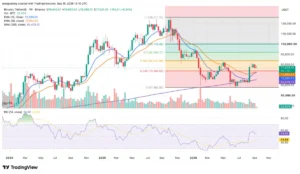
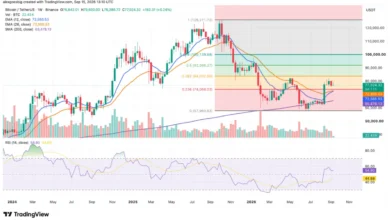
The dramatic floor defeat occurred merely hours after high-stakes negotiations broke down between Republican sponsors and Democratic leadership. GOP leaders abruptly rejected a late-stage Democratic counteroffer centered on stringent ethics reforms, conflict-of-interest prohibitions, and heightened retail consumer protections. The immediate fallout was swiftly registered across global financial markets. Bitcoin, the world’s largest cryptocurrency by market capitalization, experienced a volatile intraday swing, briefly slipping below the psychologically significant $75,000 threshold before staging a modest recovery back above $76,000. Meanwhile, the broader digital asset ecosystem sustained heavy losses, shedding approximately 4% of its total market capitalization during the tumultuous trading session.
Breakdown of the Cloture Vote: The Mathematics of Legislative Gridlock
Tuesday’s ballot was never intended as a final vote on the passage of the legislation itself. Instead, it was a cloture motion—a procedural mechanism explicitly designed to end debate on the motion to proceed, allowing the Senate to formally take up the bill, introduce amendments, and engage in open-floor deliberations. Clearing cloture would have moved the chamber toward a final vote, whereas failing it effectively freezes the legislative pipeline.
Because the Republican caucus holds 53 seats in the Senate, proponents of the Clarity Act required robust bipartisan backing to achieve the mandatory 60 votes. With full attendance, at least seven Democratic senators needed to cross party lines and vote in favor of the procedural motion. That necessary bipartisan support never materialized. When the roll call concluded, the count stalled near 40 "no" votes, cementing a hard legislative wall that completely thwarted the measure.
The failure is particularly stark given the bill’s lengthy and relatively successful trajectory through earlier congressional checkpoints. The legislation originally gained substantial momentum in the House of Representatives, where it passed on a remarkably strong bipartisan vote of 294 to 134 in July 2025. Following its transmission to the upper chamber, it navigated the committee process successfully, clearing the Senate Banking Committee by a 15 to 9 margin in May 2026. However, once the bill reached the highly polarized environment of the Senate floor, the fragile consensus shattered under the weight of competing ideological priorities.
Market Reaction and Asset Volatility
The legislative roadblock sent immediate shockwaves through cryptocurrency exchanges and trading desks worldwide. The sudden realization that comprehensive federal oversight would remain elusive triggered widespread de-risking behavior among institutional and retail investors alike.
According to market data captured during the session, major digital assets suffered sharp declines across the board:
| Asset | Price at Lows | 24-Hour Change | 7-Day Change |
|---|---|---|---|
| Bitcoin (BTC) | $75,175 | -5.17% | -4.02% |
| Ethereum (ETH) | $2,368 | -6.86% | -4.52% |
| XRP | $1.30 | -11.67% | -9.04% |
| Solana (SOL) | $96.54 | -6.91% | -7.00% |
| Total Market Cap | $2.58T | N/A | -4.06% |
Prior to the Senate’s historic vote, derivative markets had already begun signaling acute anxiety. Seven-day Bitcoin options experienced a notable skew, where the cost of purchasing downside protection significantly outpaced bullish upside bets. Sophisticated market participants were clearly positioning themselves for macroeconomic and legislative turbulence, anticipating that a failure on Capitol Hill could precipitate a sharp correction.
The Five Core Ethics Demands Rejected by Republican Leadership
The final hours leading up to the vote were characterized by intense, behind-the-scenes negotiations over ethics and investor safeguards. Democratic lawmakers introduced a comprehensive counteroffer aimed at tightening governance standards within the digital asset sector. Republican sponsors, however, ultimately turned down the package, arguing that the proposed restrictions were overly burdensome and would stifle industry innovation.
The rejected Democratic counterproposal focused heavily on five primary areas of contention:
- Strict Conflict-of-Interest Limits: Prohibiting public officials, lawmakers, and their immediate family members from holding, trading, or receiving preferential allocations of specific digital assets and tokens.
- Enhanced Retail Protection Mandates: Establishing mandatory disclosure frameworks and loss-mitigation reserves for centralized exchanges catering to everyday retail investors.
- Decentralized Finance (DeFi) Accountability: Imposing traditional know-your-customer (KYC) and anti-money laundering (AML) verification protocols directly onto foundational smart contract developers and decentralized liquidity pools.
- Stricter Environmental and Energy Disclosures: Requiring proof-of-work mining operations to publicly report their carbon footprints and energy consumption metrics on a quarterly basis.
- Expanded Enforcement Authority: Granting state-level regulators explicit legal standing to pursue bad actors alongside federal agencies without facing federal preemption challenges.
Senator Elizabeth Warren, the ranking Democrat on the Senate Banking Committee, sharply criticized the Republican rejection during a post-vote press conference, framing the legislative standoff as a fundamental battle over financial integrity and national security.
"I’d be happy to sit down with other Democrats, with the Republicans, and with the industry and hammer out a meaningful crypto bill that protects our national security, that protects our economy, and that dials back the corruption," Warren declared on Tuesday afternoon. The vast ideological distance between Warren’s regulatory vision and the text championed by GOP sponsors left both factions stranded with zero margin for error when the clock ran out.
A Fragmented Regulatory Landscape: Five Agencies Rule by Decree
Without the statutory clarity promised by the defeated act, federal oversight of the multi-trillion-dollar cryptocurrency industry defaults entirely to administrative agencies rather than explicit congressional law. This vacuum leaves the sector governed by an overlapping, often contradictory patchwork of rules promulgated by five distinct federal bodies: the Securities and Exchange Commission (SEC), the Commodity Futures Trading Commission (CFTC), the Office of the Comptroller of the Currency (OCC), the Department of the Treasury, and the Financial Accounting Standards Board (FASB).
Each of these agencies operates under its own statutory mandates, regularly issuing independent guidance and pursuing enforcement actions against digital asset firms on a case-by-case basis. The fundamental weakness of this regulatory-by-enforcement approach is its lack of durability. Frameworks constructed entirely through agency rulemaking and administrative guidance can be abruptly undone, rewritten, or completely reversed by a subsequent presidential administration.
To date, only a narrow sliver of the digital asset economy has been definitively fixed in federal statute: the GENIUS Act, which was signed into law in July 2025 specifically to govern payment stablecoins. Beyond stablecoins, however, the central jurisdictional question that the Clarity Act was explicitly designed to settle—namely, the precise legal threshold separating when a digital token falls under the jurisdiction of the SEC as a security versus when it falls under the CFTC as a commodity—remains entirely unresolved.
Chronology of the Digital Asset Market Clarity Act
The path of the Clarity Act has been marked by significant milestones, intense lobbying efforts, and severe political friction:
- July 2025: The House of Representatives passes the comprehensive digital asset bill by a decisive bipartisan vote of 294 to 134.
- July 2025: The GENIUS Act is signed into law, establishing independent statutory rules exclusively for payment stablecoins.
- May 2026: The Senate Banking Committee successfully clears the Clarity Act for floor consideration following a 15 to 9 bipartisan committee vote.
- August 8, 2026: Senate Majority Leader files formal cloture on the legislation to set up an end-of-summer floor showdown.
- September 14, 2026: The Senate officially reconvenes from its annual August recess, immediately thrusting the crypto bill to the center of the legislative agenda.
- September 15, 2026: The Senate cloture vote fails to reach the necessary 60-vote threshold, stalling the legislation indefinitely.
Broader Implications and the Looming Shadow of Future Elections
While a failed cloture vote does not technically kill a bill under parliamentary rules—and Senate Majority Leader John Thune has already signaled his explicit intention to bring the measure back to the floor—the political calendar heavily complicates any future attempts.
The immediate setback severely compresses the timeline ahead of the upcoming congressional elections. If the legislative stalemate persists past November 2026, the mathematical reality of the Senate and House could shift dramatically against crypto proponents. Should Democrats succeed in retaking control of the House of Representatives, the parliamentary outlook for industry-specific legislation darkens considerably. Lawmakers known for their deep skepticism toward digital assets, such as Senator Elizabeth Warren and Representative Maxine Waters, would be ideally positioned to assume powerful leadership roles as chairs of key financial oversight committees. A regulatory bill that once commanded significant bipartisan approval in the House could face a deeply hostile reception in a newly constituted Congress.
For the immediate future, however, the digital asset market’s trajectory will not be dictated by legislative developments in Washington, but rather by imminent macroeconomic catalysts. The Federal Reserve is scheduled to deliver its highly anticipated interest rate decision on Wednesday, just one day after the Senate vote, with market participants aggressively pricing in potential monetary policy shifts. Furthermore, the Bank of Japan is slated to release its own monetary update on Thursday, promising continued volatility across global liquidity channels as traders brace for further turbulence.
Related posts: