Microsoft Releases Record-Breaking Patch Tuesday Update Addressing Over 570 Vulnerabilities Accelerated by Artificial Intelligence

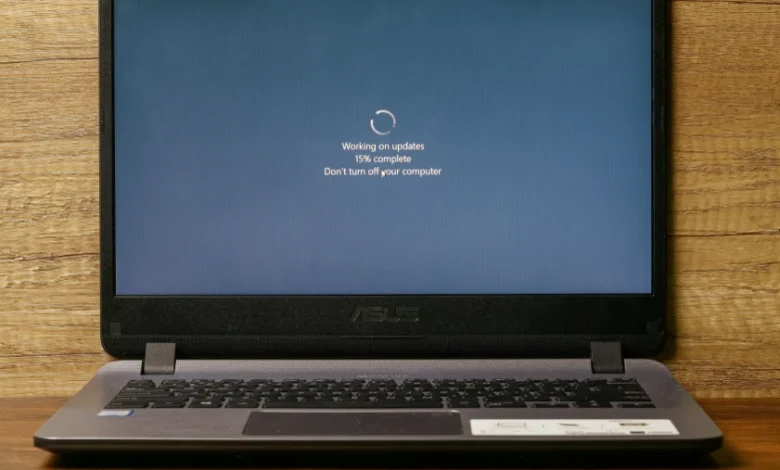
Microsoft Corp. rolled out its monthly security updates, issuing fixes for at least 570 security vulnerabilities across its extensive Windows operating system ecosystem and complementary software suite. This figure marks an unprecedented nearly threefold increase compared to the previous month’s record-smashing Patch Tuesday release. According to Redmond’s engineering teams, the dramatic surge in discovered security holes is directly attributable to the integration of advanced artificial intelligence systems designed to scour complex source codebases at machine speed.
The July security deployment includes nearly 60 vulnerabilities carrying a "critical" severity rating. Such designations indicate that malicious actors or automated malware variants could leverage the flaws to seize total remote control over an affected Windows device with minimal or zero user interaction. Furthermore, the update patches three high-profile zero-day flaws, at least two of which are actively being exploited in ongoing cyber attacks across the digital landscape.
Breakdown of Zero-Day and Critical Vulnerabilities
Among the critical updates are two distinct zero-day weaknesses that empower attackers to elevate their privilege levels on compromised Windows networks. These are accompanied by roughly 250 additional elevation-of-privilege (EoP) flaws patched during this cycle. Notable inclusions in this category are CVE-2026-56155, a high-risk security hole affecting Active Directory Federation Services, and CVE-2026-56164, a critical vulnerability residing within Microsoft SharePoint server installations.
In addition to the actively exploited privilege-escalation flaws, Microsoft addressed CVE-2026-50661, a sophisticated security feature bypass impacting Windows BitLocker. This specific vulnerability could theoretically allow unauthorized third parties to gain unhindered access to encrypted corporate or personal data, provided they possess direct physical access to the target machine. While Microsoft acknowledged that details concerning this vulnerability had been publicly circulated prior to the patch release, the company confirmed it has observed no evidence of active, malicious exploitation in the wild.
The shifting landscape of vulnerability discovery was formally addressed by Microsoft Executive Vice President Pavan Davuluri in a July 9 corporate blog post. Davuluri warned enterprise administrators and individual consumers alike that they should structurally prepare for a permanently altered paradigm in software maintenance.
"The pace of vulnerability discovery is changing with advances in AI making it possible to find more issues, faster, across more code, with new mechanisms that can accelerate both discovery and analysis," Davuluri wrote. He emphasized that Windows users will inevitably experience a consistently higher volume of security fixes included in every subsequent patching cycle.
The AI Factor and Emerging Threat Vectors
The integration of artificial intelligence is no longer an exclusive tool for defenders and software architects; malicious actors and security researchers alike are harnessing these capabilities to identify vulnerabilities and engineer working exploits at unprecedented velocities. A prime example highlighted during this month’s Patch Tuesday cycle is CVE-2026-48561, a severe remote code execution (RCE) flaw discovered in Microsoft Copilot.
Carrying a severe 9.6 score on the Common Vulnerability Scoring System (CVSS), CVE-2026-48561 permits an unauthorized attacker to execute arbitrary code directly over a network. According to technical advisories from Microsoft, threat actors could exploit this vulnerability by hosting a specially constructed malicious website designed to trick Microsoft Edge for Android into automatically transmitting crafted prompt injections to Copilot whenever an unsuspecting user navigates to the page.
Security researchers emphasize that the velocity enabled by machine-speed discovery fundamentally challenges traditional vulnerability management frameworks. Jack Bicer, director of vulnerability research at Action1, underscored the systemic risk posed by complex software components when subjected to automated analysis tools. As threat actors adopt parallel automated workflows to synthesize exploits from raw patch diffs or public disclosures, the traditional window of vulnerability—the time between a patch’s release and an attacker’s weaponization of the underlying bug—has shrunk to mere hours.
Flaws in the Exploitability Index and Industry Reactions
The unprecedented volume of patches has also exposed cracks in legacy risk-scoring mechanisms. For years, Microsoft has maintained an internal "exploitability index" intended to forecast the statistical likelihood that malicious actors will successfully devise reliable exploits for specific software flaws. However, industry experts argue that this index is fundamentally outdated because it relies on human analytical timelines rather than the automated capabilities of modern artificial intelligence.
Satnam Narang, senior staff research engineer at Tenable, pointed to recent real-world tests that demonstrate the fragility of human-centric risk metrics. Narang noted that security research teams, such as Anthropic’s Red Team using their Mythos Preview model, successfully generated functional proof-of-concept exploits for 13 out of 14 known vulnerabilities that Microsoft had originally categorized as "Exploitation Less Likely" or "Exploitation Unlikely."
This disparity was further illustrated by this month’s SharePoint zero-day. Despite Microsoft initially assigning the vulnerability a conservative exploitability rating of "less likely," the Cybersecurity and Infrastructure Security Agency (CISA) had already added the exact same flaw to its authoritative Known Exploited Vulnerabilities (KEV) catalog on July 1, days before the patch became publicly available.
"What this means is that our way of looking at Patch Tuesday has changed, because the exploitability index is centered around humans, not AI tools, and as these tools continue to improve, defense needs to improve alongside it," Narang observed.
Broader Software Industry Shift Toward Accelerated Patch Cadences
The massive wave of updates released by Microsoft is part of a broader, systemic transformation across the entire enterprise software sector. Chris Goettl, vice president of security product management at Ivanti, noted that multiple major technology conglomerates are fundamentally restructuring their release schedules to cope with the accelerating pace of vulnerability discoveries.
Concurrently with Microsoft’s announcement, Adobe revealed a permanent shift to a twice-monthly security bulletin schedule, publishing patches on the second and fourth Tuesday of every month—explicitly citing the acceleration driven by AI as the driving catalyst. Similarly, infrastructure and software giants such as Cisco, Mozilla, and Oracle are dispatching critical updates with increased frequency. Meanwhile, Google’s collective security patch batches for June alone accounted for more than 900 individual fixes across its product lines.
This macro-trend indicates that enterprise IT departments and managed service providers must transition from manual, reactive patching models to highly automated, continuous vulnerability management pipelines. Organizations that fail to adapt their operational workflows risk being overwhelmed by the sheer volume of monthly code modifications required to maintain a secure posture.
Recommendations for IT Administrators and End Users
Given the sheer scale and unprecedented complexity of the July 2026 security updates, cybersecurity analysts urge both enterprise administrators and individual consumers to exercise a balanced approach combining swift action with prudent risk mitigation.
Before applying critical operating system updates, standard industry best practices dictate that users and system administrators should perform comprehensive system backups and snapshotting to guard against unforeseen boot loops or software incompatibilities. Furthermore, given the record-breaking count of over 570 patches, home users running non-critical systems may benefit from waiting a brief grace period of 48 to 72 hours to ensure that no widespread installation failures or system stability regressions emerge.
However, organizations operating internet-facing services, particularly those utilizing Microsoft SharePoint or Active Directory Federation Services, cannot afford such delays. Because active exploits for zero-day vulnerabilities are already circulating in the wild, immediate prioritization of critical patches remains the single most effective defense against sophisticated, AI-accelerated cyber threats.