Why Large Language Models Fail at Quantitative Trading Research: A Structural Analysis


The intersection of artificial intelligence and financial market research has sparked widespread debate across the global quantitative trading community, fueled by recent academic findings that challenge prevailing assumptions about generative machine intelligence. While large language models (LLMs) have demonstrated exceptional utility in software engineering, data wrangling, and the automation of quantitative coding tasks, new scientific research indicates that fundamental architectural limitations render these systems structurally unsuited for the discovery of genuine trading edges.
Industry practitioners and academic researchers have increasingly raised concerns that the rapid proliferation of AI-generated backtesting tools is fostering a false sense of security among market participants. These concerns have moved beyond anecdotal observations, substantiated by recent empirical studies presented at major machine learning conferences, which demonstrate that the shortcomings of LLMs in financial forecasting are not temporary bugs destined to be resolved by larger context windows, but rather intrinsic features of neural network architectures.
Background and Evolution of the AI Quant Debate
The discourse surrounding automated quantitative research gained momentum following a series of industry critiques highlighting the conceptual gap between statistical pattern matching and genuine market insight. Traditional quantitative research hinges on a foundational question: who pays you and why? This inquiry demands an understanding of market participant constraints, structural liquidity dynamics, and economic mechanisms that compel other market participants to transfer wealth to a trading strategy.
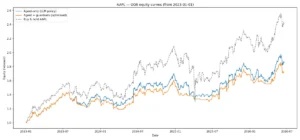
Historically, quantitative research required rigorous hypothesis generation, structural microeconomic analysis, and extensive data sanitation. However, the advent of commercially available LLMs dramatically lowered the barrier to entry for strategy development. Traders can now prompt an LLM to generate Python code for backtesting a moving average crossover, a pairs-trading cointegration strategy, or a momentum filter within seconds. This capability has led to an exponential increase in visually appealing equity curves that often mask profound statistical overfitting.
While initial arguments focused primarily on the contamination of training data—namely, that the public internet is saturated with mediocre, conventional financial advice—recent scientific literature points to deeper architectural vulnerabilities. These vulnerabilities fall into distinct categories that prevent LLMs from functioning as independent research engines.
The Three Structural Problems of LLM-Driven Research
Academic research published in 2025 has systematically dissected the cognitive and operational limits of transformer-based models, providing empirical backing for what veteran quants have long observed in practice.
Problem One centers on training data pollution. Because LLMs absorb vast quantities of web-scraped text, they internalize the dominant paradigm of online retail trading: the misconception that backtesting historical data is synonymous with research. Concepts such as RSI indicators, paper trading mandates, and standard stop-loss rules are heavily overrepresented in training corpora. Conversely, rigorous discussions regarding structural market friction, adverse selection, and economic rent extraction reside in the statistical tails of the distribution. Consequently, models reproduce conventional wisdom with high confidence while marginalizing genuine insights.
Problem Two addresses temporal tracking and working memory limitations. A study titled Unable to Forget: Proactive Interference Reveals Working Memory Limits in LLMs Beyond Context Length, authored by Wang and Sun (2025), evaluated the capability of over 35 leading proprietary and open-source models to track sequentially updated values over time. The researchers demonstrated that accuracy declined log-linearly toward zero as the number of prior updates for a given variable increased.
This phenomenon, known as proactive interference, means that historical information actively corrupts the retrieval of current information. Prompt engineering, instruction tuning, and expanded context windows failed to mitigate this decline. In financial markets—where volatility regimes shift, macroeconomic correlations break down, and liquidity conditions fluctuate dynamically—an architecture incapable of reliably tracking sequential updates cannot maintain a coherent, up-to-date state of the market environment.
Problem Three highlights the emergence of an artificial hivemind through mode convergence. Research presented at the NeurIPS 2025 conference, titled Artificial Hivemind: The Open-Ended Homogeneity of Language Models, investigated the diversity of outputs generated by more than 25 independent models across 100 open-ended queries. The findings revealed striking inter-model homogeneity, with pairwise similarity scores between different institutional architectures frequently exceeding 80%. When prompted to generate creative metaphors or open-ended analytical frameworks, distinct models consistently converged on identical, highly probable outputs.
In the context of financial research, this mode collapse means that independent market participants utilizing different AI models will inevitably converge on the same homogenized, conventional-wisdom-flavoured strategies. Rather than discovering unique alpha, automated systems amplify herd behavior, creating what industry observers term the Stepford Quants—a populace of algorithmic traders running identical, overfitted strategies derived from the most common statistical noise on the internet.
Contrasting Domains: Coding Versus Trading
The dichotomy between the utility of LLMs in software engineering versus financial research illuminates why structural limitations manifest so differently across disciplines.
In software engineering, mode convergence represents a powerful advantage. The training corpora derived from platforms like GitHub and technical documentation are self-correcting; inefficient code is replaced by standardized best practices, and algorithmic syntax has deterministic right answers. When an LLM optimizes code by suggesting a dictionary lookup for O(1) complexity or implementing a standardized error-handling block, convergence supports operational efficiency.
In contrast, financial markets are adversarial, adaptive, and non-stationary. Mode convergence in trading yields consensus strategies that have already been arbitraged away by existing market participants. Furthermore, while proactive interference minimally impacts static programming tasks where the codebase remains fixed during a debugging session, it proves fatal in dynamic environments requiring the continuous updating of complex risk and valuation parameters.
Implications for the Future of Quantitative Finance
The consensus emerging from quantitative research circles suggests a clear division of labor in the era of artificial intelligence. LLMs serve as exceptional implementation tools—handling data wrangling, parsing unstructured documents, writing execution scripts, and generating boilerplate code. However, they remain fundamentally inadequate for the formulation of trading hypotheses.
Financial institutions and independent researchers are thus forced to confront a methodological reality: outsourcing the cognitive heavy lifting of strategy ideation to a machine architecture plagued by proactive interference and mode collapse introduces systemic vulnerability. The human element—grounded in economic intuition, microeconomic mechanism design, and the rigorous interrogation of risk transfer—remains irreplaceable.
As the quantitative finance industry continues to integrate advanced computational tools, the distinction between operational acceleration and actual research generation will likely dictate performance outcomes. Market participants who mistake technological fluency for genuine edge generation risk falling into an automated cycle of curve-fitted conformity, validating the timeless observation that tools can enhance execution, but they cannot manufacture understanding.