Senate Rejection of CLARITY Act Triggers $571 Million Crypto Liquidation Wave as Bitcoin Plummets Toward $75,000

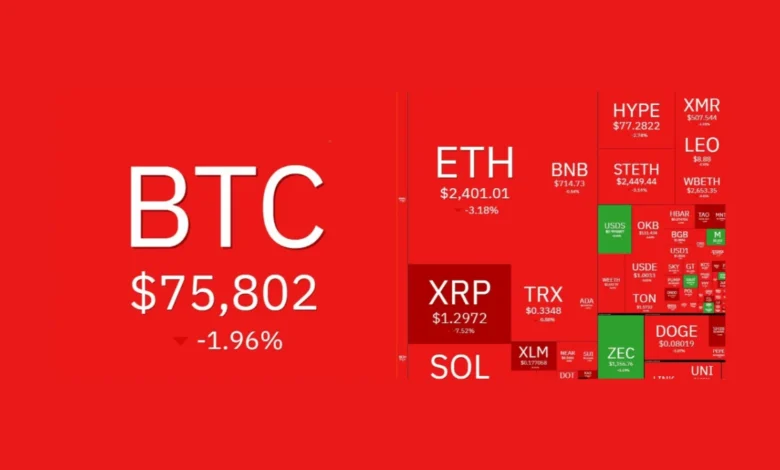
The cryptocurrency market suffered a severe shock as leveraged bullish positions unraveled following a decisive legislative defeat in Washington. Approximately $571 million in long positions were liquidated across global derivatives exchanges in a 24-hour window, dealing a heavy blow to traders who had heavily anticipated the advancement of the much-debated CLARITY Act. The sudden reversal abruptly ended a weekly bullish trend that had briefly propelled Bitcoin to nearly the $80,000 threshold, underscoring the profound sensitivity of digital asset valuations to regulatory developments in the United States.
According to comprehensive market data compiled by CoinGlass, the scale of the liquidation event dwarfed short-position losses, which stood at a modest $100 million over the same period. This massive imbalance highlighted the extent to which market participants had loaded up on leveraged upside exposure ahead of the Senate procedure. The total volume of long liquidations marked the largest single-day wipeout for bullish speculators since August 22, 2026, catching many retail and institutional portfolios off guard as cascading margin calls swept through the ecosystem.
Legislative Breakdown and the Senate Vote
The catalyst for the market turmoil was a procedural vote in the U.S. Senate that effectively blocked the CLARITY Act from moving forward. Designed to establish a comprehensive federal regulatory framework for digital assets, the legislation aimed to demarcate clear operational boundaries and jurisdictional authority between the Securities and Exchange Commission (SEC) and the Commodity Futures Trading Commission (CFTC). Proponents of the bill had argued that statutory clarity was desperately needed to foster institutional adoption and provide legal certainty for blockchain enterprises operating within the United States.
When the final tally was cast, the procedural motion achieved a 50-49 majority in favor of advancing the bill, falling squarely short of the formidable 60-vote threshold required to overcome legislative hurdles in the upper chamber of Congress. Political observers and market analysts quickly noted the partisan contours of the vote, with reports indicating unified opposition from Democratic senators that ultimately sealed the fate of the bipartisan-crafted measure.
The failure of the vote not only shelved a critical policy milestone but also triggered immediate panic selling across spot and derivatives markets. Bitcoin, which had enjoyed a robust rally earlier in the week—climbing from a steady base of around $77,000 on Monday to near $80,000—experienced a swift and violent correction. Following the announcement of the vote, the pioneer cryptocurrency plummeted to trade near $75,700. Publicly traded crypto-adjacent equities absorbed similar collateral damage; financial heavyweights such as Coinbase and Circle experienced sharp single-session declines, with shares of both entities plunging roughly 9% in Tuesday trading, according to reports from Reuters.
Chronology of the Market Rally and Reversal
To understand the magnitude of the recent liquidation wave, market historians must examine the buildup of expectations that preceded the vote. Over the preceding weeks, digital asset markets had increasingly priced in a favorable outcome for the CLARITY Act, treating the upcoming legislative test as a major bullish catalyst.
- Early September 2026: Optimism builds across crypto derivatives desks regarding potential legislative compromise on Capitol Hill, driving institutional capital inflows.
- Monday: Bitcoin trades steadily around the $77,000 mark, with open interest in perpetual futures contracts climbing to multi-month highs as traders position for an upside breakout.
- Mid-Week: Anticipation peaks as markets push Bitcoin to nearly $80,000, fueled by speculative bets that the Senate would successfully clear the procedural hurdle for the CLARITY Act.
- Tuesday Senate Session: The Senate convenes for the crucial vote. The final count stalls at 50-49, failing to secure the requisite 60 votes as all participating Democratic lawmakers vote in opposition.
- Immediate Aftermath: Cascading margin calls trigger $571 million in long liquidations within 24 hours. Bitcoin retreats to $75,700, while crypto equities like Coinbase and Circle drop 9%.
This rapid sequence of events demonstrated how deeply intertwined digital asset valuations have become with traditional political processes. Rather than trading purely on macroeconomic fundamentals or on-chain metrics, the market had converted the legislative timeline of the CLARITY Act into a primary driver of risk sentiment.
Industry Reactions and Long-Term Outlook
The sudden legislative roadblock has elicited widespread commentary from digital asset advocates, legal experts, and political figures alike. Industry stakeholders expressed deep frustration over the prolonged regulatory limbo, arguing that the inability of Congress to pass definitive market structure legislation continues to disadvantage American innovation relative to foreign jurisdictions with clearer frameworks.
Adding to the long-term gloom, statements emerging from Capitol Hill following the vote suggested that the legislative window for comprehensive crypto reform may remain closed for an extended period. Unnamed congressional sources and legislative aides indicated that finding a viable path forward before the end of the decade could prove exceedingly difficult. One U.S. senator went as far as suggesting that the next realistic window of opportunity to pass a bill akin to the CLARITY Act might not open until 2030, given the crowded legislative calendar and shifting political priorities.
Despite the pessimistic timeline for congressional action, legal analysts emphasize that the death of the CLARITY Act does not imply a regulatory vacuum. Both the SEC and the CFTC retain substantial enforcement and rulemaking authority under existing federal statutes. Consequently, the near-term focus for the digital asset industry is expected to pivot away from Capitol Hill and back toward regulatory agencies, where administrative rulemakings, enforcement actions, and guidance letters will continue to shape the day-to-day operating environment for exchanges, token issuers, and decentralized finance protocols.
Macroeconomic Implications and Market Resilience
The events surrounding the failed Senate vote offer vital lessons regarding market structure, leverage, and risk management within the digital economy. The sheer concentration of liquidations on the long side highlights persistent structural vulnerabilities in crypto derivatives markets, where excessive leverage frequently magnifies price movements during unexpected news events.
When the anticipated legislative catalyst failed to materialize, leveraged bullish positions acted as the primary transmission mechanism for the sharp market reversal. As stop-losses were triggered and margin accounts faced depletion, automatic liquidations created a self-reinforcing downward spiral that washed out millions of dollars in speculative capital in a matter of hours.
Nevertheless, seasoned market observers note that despite the severity of the flush-out, spot markets absorbed the shock without systemic failures or exchange insolvencies—a testament to improved risk management protocols across major trading platforms compared to previous market cycles. As the dust settles, market participants are reassessing their exposure, shifting focus back to core fundamental drivers, macroeconomic liquidity trends, and ongoing regulatory developments at federal agencies as the crypto ecosystem navigates an uncertain path forward.