Building, Tracking, Comparing, and Registering Scikit-Learn Pipelines with Scikit-LLM and MLflow

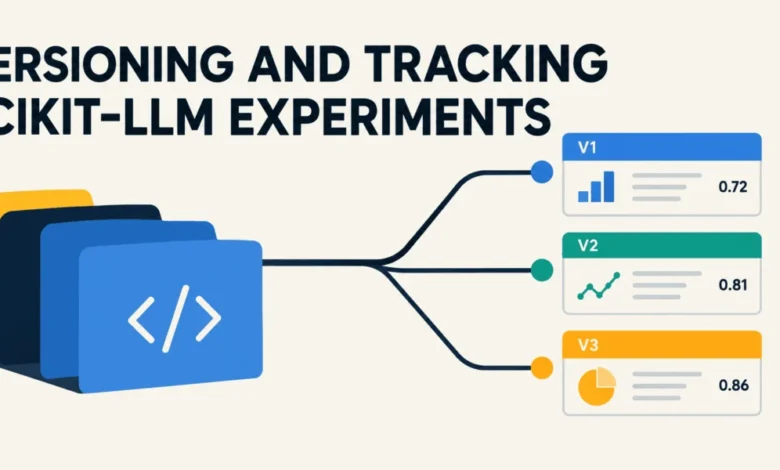
The integration of Large Language Models (LLMs) into traditional machine learning workflows has shifted from an experimental niche to a fundamental requirement for modern software development. As enterprises transition from basic prompt engineering to robust, reproducible pipeline architectures, the necessity for rigorous version control and lifecycle management has reached a critical juncture. The combination of the Scikit-LLM library—which allows developers to utilize LLM capabilities within the familiar scikit-learn API—and MLflow, the industry-standard platform for machine learning lifecycle management, provides a comprehensive solution for managing the complexity inherent in LLM-driven applications.
The Evolution of LLM Pipeline Governance
For years, the machine learning community relied on static versioning for traditional algorithms. However, the rise of LLMs introduced a dynamic, non-deterministic variable: the model backend. Whether switching between quantized models like GGUF files for local deployment or interacting with proprietary API-based models, developers must now track not only the code that processes the data but also the specific model weight, the quantization parameters, and the prompt templates used.
The failure to track these variables effectively leads to "model drift" and reproducibility crises. A pipeline that performs optimally with one version of an Orca-Mini model may fail entirely when transitioned to a Falcon or Llama variant if the underlying environmental configurations are not captured. By leveraging MLflow’s experiment tracking and model registry, developers can create an immutable audit trail of every pipeline iteration, ensuring that the transition from a research prototype to a production-grade system is seamless and transparent.
Setting the Foundation for Reproducible AI
The first step in establishing a robust MLOps framework for LLMs is the standardization of the development environment. Developers must ensure that dependencies, particularly those handling specialized inference backends, are strictly versioned. Installing the scikit-llm[gpt4all] and mlflow libraries is the baseline requirement, but the true configuration occurs in the initialization phase.
In professional environments, security is paramount. While local execution keys are often used for testing, production-ready pipelines require secure credential management. By configuring the SKLLMConfig to handle local model paths and establishing a persistent database backend via SQLite or enterprise-grade SQL instances, engineers create a centralized repository for their experiments. This setup is not merely a technical convenience; it is a regulatory necessity. In sectors such as finance or healthcare, the ability to trace an LLM’s output back to a specific model version and training configuration is a requirement for compliance and auditing.
Chronology of an Experiment: From Baseline to Production
The lifecycle of an LLM pipeline typically begins with a "Baseline Run." In this phase, a lightweight, efficient model—such as the orca-mini-3k-71m—is deployed to perform zero-shot classification on a labeled dataset. This baseline serves as a performance benchmark. By wrapping the pipeline execution in an MLflow start_run block, developers can log specific parameters like the llm_backend and the llm_model_file.
The chronological progression from the baseline to an "Upgraded Pipeline" represents the iterative nature of modern AI development. For instance, replacing the baseline model with a more sophisticated architecture like the Falcon-q4 model necessitates a new MLflow run. This modular approach allows for a direct "apples-to-apples" comparison. Data scientists can examine the run_id of each execution, compare the classification accuracy, and determine if the upgrade in model complexity justifies the increased latency and computational cost.
Data-Driven Model Selection and Registry Management
A significant challenge in LLM development is the "Model Bloat" that occurs when dozens of test runs are saved without clear categorization. Professional MLOps teams utilize the MLflow search API to programmatically filter through historical data. By converting the experiment logs into a Pandas DataFrame, engineers can quickly audit the status of every attempt—distinguishing between successful FINISHED runs and those that terminated due to memory errors or configuration mismatches.
The transition from a logged experiment to a registered model is the final, decisive step in the pipeline. Using mlflow.register_model, a vetted pipeline is moved from the experimental bucket into the Model Registry. This process assigns a version number to the model, effectively "freezing" it for deployment. This registry acts as a single source of truth for downstream applications, such as inference services or A/B testing frameworks, which can then pull the latest approved version by name rather than relying on hardcoded file paths.
Broader Implications for Enterprise AI
The implications of this workflow extend far beyond mere technical convenience. As LLMs become more deeply integrated into organizational workflows, the "Black Box" nature of these models poses a risk to operational stability. By treating LLMs as first-class citizens within a scikit-learn pipeline, developers gain the ability to apply standard MLOps best practices—such as automated testing, continuous integration, and performance monitoring—to their generative AI components.
Industry analysts note that companies capable of implementing these versioning strategies are better positioned to scale their AI operations. Without a structured registry, organizations often find themselves in a state of "deployment paralysis," where they are unable to update their models because they cannot verify the impact of the change against previous versions. The integration of Scikit-LLM and MLflow mitigates this risk by providing the necessary transparency to audit and validate model behavior across the entire development lifecycle.
Conclusion and Future Outlook
The methodology outlined—logging, auditing, and registering LLM-integrated pipelines—provides a blueprint for responsible and scalable AI deployment. By decoupling the LLM backend from the business logic of the pipeline and centralizing all metadata in an MLflow registry, developers ensure that their systems remain agile and reliable.
As the ecosystem continues to evolve, the ability to perform automated model selection based on metrics like accuracy or latency will become increasingly automated. Current trends suggest that the next frontier will involve the integration of automated model evaluation frameworks directly into the MLflow lifecycle, allowing for real-time promotion of models that exceed predefined performance thresholds. For now, the current two-step approach remains the gold standard for engineers looking to bring order to the inherently complex and rapid-fire world of Large Language Models. By adopting these rigorous tracking habits, teams not only protect their current investments in AI but also pave the way for the sophisticated, multi-model architectures of the future.