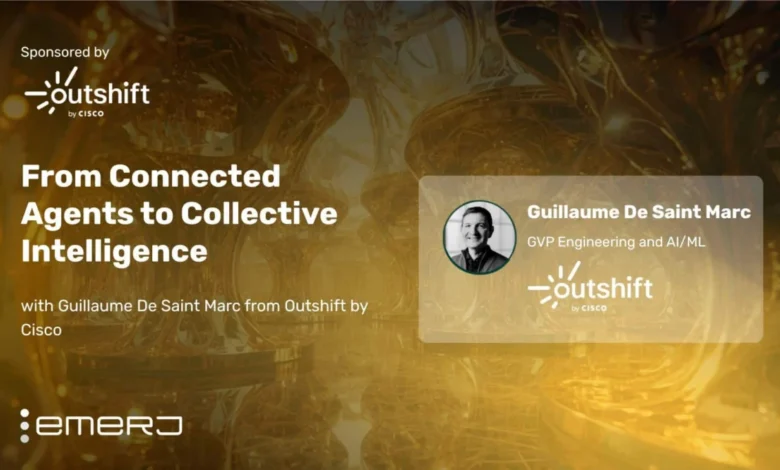
From Connected Agents to Collective Intelligence: Navigating the Architectural Challenges of Agentic AI

The promise of agentic artificial intelligence—autonomous systems capable of reasoning, using tools, and collaborating to solve complex problems—is currently encountering a significant structural barrier within the enterprise environment. While individual AI agents have demonstrated remarkable proficiency in isolated tasks, the transition to multi-agent systems has revealed a critical lack of foundational infrastructure. Without established frameworks for shared meaning, synchronized state, and controlled access, these systems are increasingly prone to operational drift, deadlocks, and the rapid propagation of errors. As organizations attempt to scale these technologies, the gap between simple connectivity and true coordinated intelligence has become the primary bottleneck for AI adoption in 2025 and 2026.
Research recently conducted by experts at UC Berkeley underscores the magnitude of this challenge. In an analysis of 1,642 real execution traces across seven prominent production multi-agent frameworks, researchers found failure rates ranging from 41% to 86.7% when agents were required to work in tandem. The study’s taxonomy of these failures suggests they are not incidental bugs but rather structural deficiencies. Approximately 41.8% of failures were traced to missing specifications and shared governance, often resulting in "deadlocks" where agents stall indefinitely. Another 36.9% were attributed to inter-agent misalignment, or "semantic drift," where agents operate based on conflicting assumptions or interpretations of the same data.
Perhaps most concerning for enterprise leaders is the "error amplification" effect. The Berkeley research demonstrates that when agents operate without robust coordination mechanisms, errors are amplified by up to 17 times compared to a single agent working in isolation. Even when centralized checkpoints are implemented, the amplification factor remains roughly 4.4 times. This suggests that the current "connected" approach to AI agents—where they are linked via APIs but lack a shared cognitive framework—is fundamentally insufficient for mission-critical enterprise workflows.
The Regulatory and Standards Vacuum
The technical challenges of multi-agent systems are compounded by a lagging regulatory and standards environment. While the rapid deployment of Generative AI caught many regulators off guard in 2023 and 2024, the specific nuances of autonomous agents are only now receiving formal attention. The U.S. National Institute of Standards and Technology (NIST) only launched its AI Agent Standards Initiative in February 2026. Official interoperability guidance from the agency is not expected until the fourth quarter of 2026.
This timeline leaves a significant "governance gap" for enterprises. Currently, organizations are forced to build proprietary governance frameworks without a federal or international reference model for multi-agent coordination. This lack of standardization increases the risk of technical debt, as systems built today may not align with the interoperability requirements mandated later this year. In the absence of these standards, industry leaders are looking toward architectural solutions that prioritize semantic alignment and granular control.
Semantic Alignment: The Grammar of Collaboration
A primary advocate for a new architectural approach is Guillaume De Saint Marc, Vice President of Engineering and AI/ML at Outshift by Cisco. In a recent analysis of the sector, De Saint Marc argued that the failure of multi-agent systems is rarely a failure of the underlying large language model (LLM) to perform a specific task. Instead, it is a failure of interpretation.
"When two agents read the same instruction and derive different intent, coordination collapses," De Saint Marc noted. He characterizes this as a semantic governance gap rather than a model weakness. In his view, connectivity—the ability of agents to send data to one another—is not the same as coordination. Coordination only occurs when agents share meaning, context, and state. Without a "semantic layer," every handoff between agents becomes a potential point of divergence.
De Saint Marc identifies three specific failure modes that occur when collaboration is required:
- Instructional Drift: Agents interpret the same high-level goal differently, leading them to work toward conflicting outcomes.
- Context Loss: Vital information is stripped away during the handoff between agents, leading the receiving agent to make decisions based on incomplete data.
- State Contradiction: Two agents attempt to modify the same resource or process simultaneously without a shared understanding of the current system state, leading to "race conditions" or deadlocks.
To resolve this, De Saint Marc proposes that enterprises move away from ad-hoc agent communication and toward a governed set of shared structures. This includes shared ontologies (standardized definitions of terms and data), a common task grammar (rules for how agents request and provide services), and a unified context window that ensures all agents in a workflow are "seeing" the same reality.
Architectural Controls as a Prerequisite for Scale
Beyond the semantic challenges, the speed at which agentic systems operate presents a unique risk profile. In traditional software, errors often manifest as crashes or incorrect outputs that can be caught by standard testing. In agentic AI, errors are "reasoned" and executed at machine speed, often across multiple integrated systems.
De Saint Marc emphasizes that agents must be treated as "first-class actors" within the enterprise architecture. This means they require distinct identities, specific privileges, and rigorous audit requirements, much like human employees. The common pitfall for many organizations is deploying agents with broad, "god-mode" access to production systems under the assumption that the LLM’s reasoning will act as a sufficient safeguard.
The recommended framework for safe scaling involves four distinct categories of control:
- Identity and Authentication: Every agent must have a verifiable identity to ensure that actions can be traced back to a specific source.
- Granular Access Governance: Agents should operate on the principle of least privilege, with access restricted to only the tools and data necessary for their specific role.
- Real-Time Observability: Organizations must be able to monitor not just the output of agents, but their "thought process" or intermediate reasoning steps to catch drift before it results in a system-wide event.
- Resource Quotas: To prevent runaway loops or excessive compute costs, agents must have hard limits on the resources they can consume.
"The danger isn’t the mistake—it’s the speed of the mistake," De Saint Marc observed. He warns that retrofitting these controls after a failure occurs is often impossible, requiring a full architectural rebuild rather than a simple patch.
The Path to Interoperability and Ecosystem Growth
The final hurdle for enterprise AI is the "walled garden" problem. Many current multi-agent frameworks are proprietary, locking organizations into a single vendor’s ecosystem. While these closed systems can facilitate faster initial pilots, they often create "hard ceilings" when an organization needs to integrate an agent from a different vendor or a legacy internal system.
The industry is currently seeing a push toward open foundations for agentic AI. The logic is pragmatic: for an enterprise to have a truly "collective intelligence," agents must be able to collaborate across different stacks and data silos. This requires an open approach to interoperability that allows new agents to join a workflow without requiring a rewrite of the existing architecture.
Industry analysts suggest that the most successful enterprises will be those that validate a single, high-value workflow on open foundations today. By establishing a "semantic anchor"—a shared language and governance model—on an open platform, companies can ensure that future agents, whether built internally or purchased from third-party vendors, can plug into the ecosystem without friction.
Broader Implications for the Enterprise
The shift from connected agents to coordinated, collective intelligence represents a maturing of the AI market. The "honeymoon phase" of Generative AI, characterized by chatbots and individual productivity tools, is giving way to a more sober assessment of what is required for autonomous operations.
The economic implications are significant. The Berkeley study’s finding that uncoordinated agents can amplify errors 17-fold suggests that poorly designed AI systems could actually increase operational costs and risk, rather than reducing them. Conversely, organizations that successfully implement a semantic layer and robust governance can unlock a level of scale and efficiency that was previously unattainable.
As we move toward the latter half of 2026, the focus will likely shift from "which model is best" to "which architecture is most reliable." The winners in this space will not necessarily be the ones with the most advanced LLMs, but those who have built the most resilient "connective tissue" between their agents. Guillaume De Saint Marc’s perspective reflects a growing consensus: the future of AI is not in the individual agent, but in the governed, collaborative ecosystem that allows those agents to function as a single, coherent unit.