RatHat Android malware leverages AI-powered automation to bypass security and seize remote device control


The mobile threat landscape has undergone a significant evolution with the discovery of RatHat, a sophisticated Android malware strain that integrates artificial intelligence to autonomously navigate compromised devices. Security researchers at Zimperium zLabs, who conducted an exhaustive analysis of the malicious code, have identified a highly complex architecture designed to evade traditional detection methods and maintain long-term persistence. By utilizing LLM-driven logic for interface navigation, RatHat represents a departure from the rigid, scripted automation techniques that have historically defined mobile banking Trojans and remote access tools.
Technical Anatomy and Provenance
The primary mechanism behind RatHat’s effectiveness lies in its ability to harness Android’s Accessibility Service, a feature designed to assist users with disabilities but frequently exploited by threat actors to gain elevated privileges. Once granted these permissions, RatHat does not merely log keystrokes or scrape data; it actively monitors the device’s UI hierarchy. It serializes the live Android Accessibility tree into XML format, transmitting this structural data to an external AI assistant. This integration allows the malware to "understand" the screen content, enabling it to navigate through settings, confirm malicious actions, and bypass security prompts without requiring direct, manual intervention from a remote operator.
Zimperium’s investigation suggests a strong nexus between this malware and threat actors operating from China. The conclusion is bolstered by the presence of Chinese-language prompts embedded within the AI interaction modules. The malware’s deployment strategy mirrors modern cyber-espionage tactics, relying on a multi-pronged delivery approach that includes malicious advertising (malvertising), targeted SMS phishing (smishing), and the hosting of compromised APKs on third-party websites outside the protective umbrella of the Google Play Store.

The Mechanism of Persistence
RatHat employs a dual-layered persistence strategy that ensures the malware remains operational even if the primary application is uninstalled. By exploiting Wireless Debugging and Developer Options—features often ignored by average users—the malware gains local shell-level execution context. This capability is reminiscent of other advanced families such as ToxicPanda and RedHook.
Once shell access is secured, RatHat installs a Go-based agent, identified as liblocal-service.so. This agent acts as the backbone of the operation, managing persistence by creating battery-restriction bypasses and maintaining a self-healing loop. If the user attempts to terminate the primary malware application, the Go agent detects the disruption and re-installs or restarts the process. Conversely, if the agent is interrupted, the main application is programmed to restore it. A second component, libmedia_codec.so, functions as a reverse-proxy client, establishing a persistent tunnel to the attacker’s command-and-control (C2) infrastructure using the FRP (Fast Reverse Proxy) protocol.
Advanced Evasion and Anti-Analysis Tactics
The developers of RatHat have incorporated several layers of obfuscation to frustrate security researchers and automated sandbox environments. The APK itself is bloated to approximately 61MB, a tactic intended to overwhelm static analysis tools that often struggle with large file sizes or deep, nested structures. Furthermore, the malware utilizes invalid DEX pseudo-instructions and deliberate APK container tampering to trigger crashes in debuggers and disassemblers.
The malware also employs active countermeasures against manual removal. When a user navigates to the Android settings menu to uninstall the application, RatHat intercepts the event. It uses its Accessibility privileges to close the uninstallation confirmation window and instead renders a convincing HTML overlay that mimics a legitimate Google Play error message. This psychological manipulation tricks the user into believing that the device is experiencing a technical fault rather than a security compromise, thereby dissuading further removal attempts.
Broader Implications of AI in Mobile Malware
The integration of AI into RatHat’s operational flow marks a critical turning point in the development of mobile threats. Traditional malware often relied on "hardcoded" paths; for instance, a script might be programmed to click a button at a specific coordinate or a specific button index. However, UI layouts frequently change across different Android versions, device manufacturers, and custom skins (such as Samsung One UI or Xiaomi MIUI). Fixed scripts often fail when these elements shift.
By contrast, RatHat’s AI-powered navigation engine adapts to the interface in real-time. It reads the labels and attributes of the buttons and menus, allowing it to achieve its objectives regardless of the device’s specific UI configuration. This adaptability makes the malware significantly more resilient and harder for security software to signature-match. The use of an external AI assistant to drive this process indicates that attackers are now outsourcing the "intelligence" of their malware to cloud-based models, reducing the complexity of the local code while increasing the sophistication of the outcome.
Impact on Banking and Data Privacy
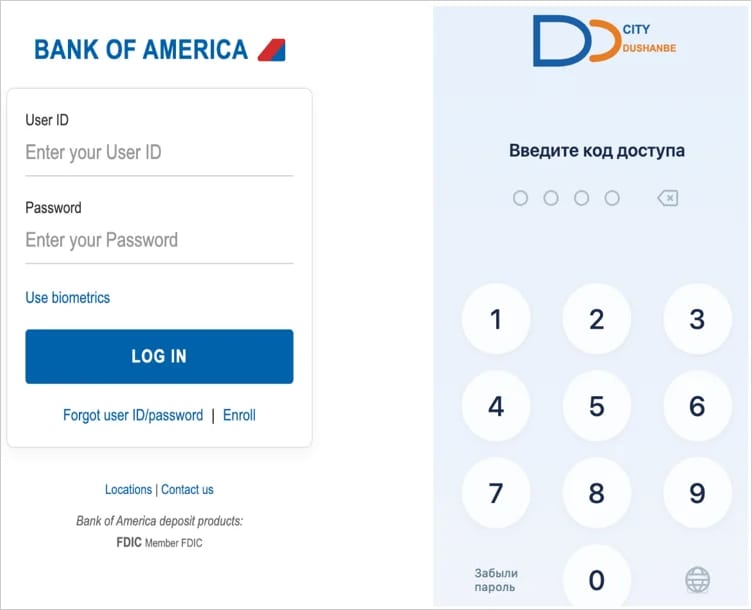
The functional payload of RatHat is broad, targeting both financial assets and sensitive personal information. Its HTML overlay capabilities are specifically crafted to target banking and cryptocurrency applications. When a user opens a legitimate app, the malware displays a perfectly mimicked interface designed to harvest login credentials, two-factor authentication (2FA) codes, and credit card information.
Beyond financial theft, the malware is capable of:
- Intercepting SMS messages and notifications, which are the primary vectors for delivering OTPs and security alerts.
- Extracting URLs from browser address bars to track user activity.
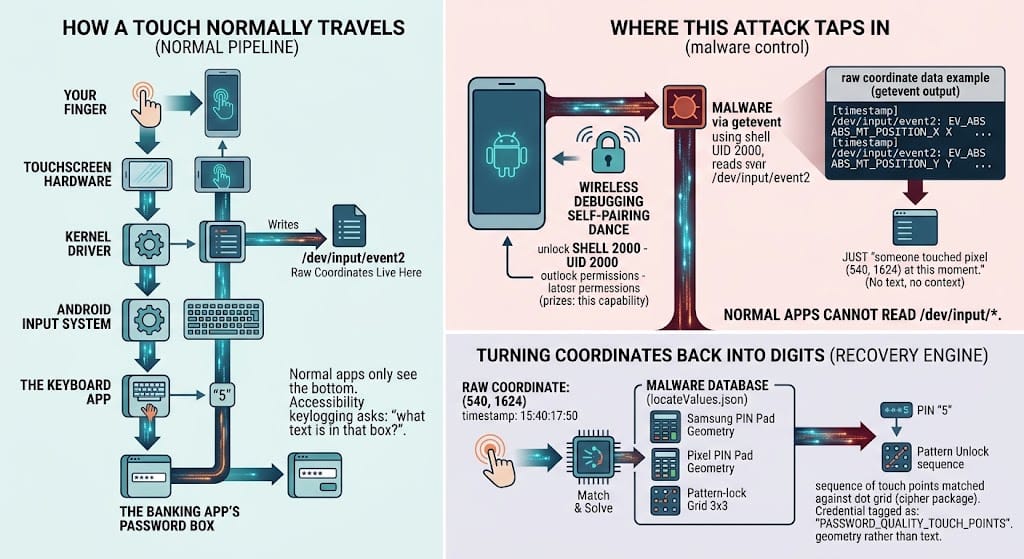
- Capturing lock-screen PINs, passwords, and gesture-based unlock patterns through its keylogging component.
- Exfiltrating text-change events, ensuring that even real-time edits are captured.
Recommendations for Mitigation
The emergence of RatHat underscores the inherent risks associated with sideloading applications. Security analysts emphasize that the vast majority of these infections originate from sources outside the Google Play ecosystem. Users are strongly advised to adhere to the following security hygiene practices:
- Restrict Sideloading: Disable the "Install unknown apps" permission for browsers and file managers. Only install applications from official, verified app stores.
- Audit Accessibility Permissions: Regularly review which applications have been granted Accessibility Service privileges. If an application is not specifically designed to assist with accessibility, these permissions should be revoked immediately.
- Use Play Protect: Ensure that Google Play Protect is enabled and perform periodic manual scans of the device.
- Monitor Developer Options: Check if "Developer Options" or "Wireless Debugging" are enabled. These settings are rarely needed by the average user and provide a massive attack surface for sophisticated malware.
- Enable Multi-Factor Authentication (MFA): Where possible, utilize hardware-based security keys or authenticator apps rather than SMS-based 2FA, as the latter can be intercepted by modern Android malware.
The Evolving Threat Horizon
As AI tools become more accessible, the barrier to entry for developing such sophisticated, autonomous malware continues to drop. Security professionals are now bracing for a future where "AI-as-a-Service" is integrated into the cybercrime supply chain. This shift necessitates a move away from static, signature-based defense models toward behavioral analysis and machine-learning-driven threat detection on mobile endpoints.
The security community remains concerned that the techniques pioneered by RatHat—specifically the use of AI to navigate UI trees—will likely be adopted by other threat actors, leading to a new generation of "self-navigating" mobile threats. The ability of such malware to circumvent standard user-facing security prompts by mimicking human interaction presents a challenge that the mobile operating system developers must address through more granular permission controls and tighter runtime monitoring of the Accessibility API.
As the industry looks toward 2026 and beyond, the focus will increasingly fall on validation and real-time response. Security leaders are emphasizing the need for robust organizational blueprints that account for "machine-speed" attacks. In this environment, the time between initial infection and data exfiltration is compressed, leaving little room for human intervention. The case of RatHat serves as a stark reminder that as defensive technologies evolve, attackers are leveraging the same advancements in generative AI to enhance the reach, stealth, and efficacy of their malicious campaigns. The digital landscape is shifting, and the ability to detect intent—rather than just file hashes—will be the defining factor in the next generation of mobile security.