Dolphin X Remote Access Trojan Leverages AI Profiling to Prioritize High-Value Victims

A sophisticated new remote access trojan (RAT) known as Dolphin X is making waves in the cybercriminal underground, distinguished by its innovative use of artificial intelligence to profile and rank infected users. This AI-powered capability allows malicious actors to efficiently identify and prioritize their most valuable targets, streamlining the often-arduous process of sifting through vast amounts of stolen data. The discovery and analysis of Dolphin X by Varonis Threat Labs shed light on a growing trend of threat actors integrating advanced technologies like AI to enhance their malicious operations.
The analysis of Dolphin X was spearheaded by Daniel Kelley, a researcher at Varonis Threat Labs. Kelley encountered the malware being actively advertised on a cybercrime forum by a vendor operating under the alias "Kontraktnik." The vendor promoted Dolphin X as an "all-in-one" remote access trojan, highlighting its extensive feature set designed to equip cybercriminals with a comprehensive toolkit for infiltration and data exfiltration. According to Varonis’s findings, the operator panel for Dolphin X boasts an impressive array of 329 features meticulously categorized into ten distinct areas. Among these are robust credential-stealing capabilities, which the vendor claims are capable of targeting over 300 different applications.
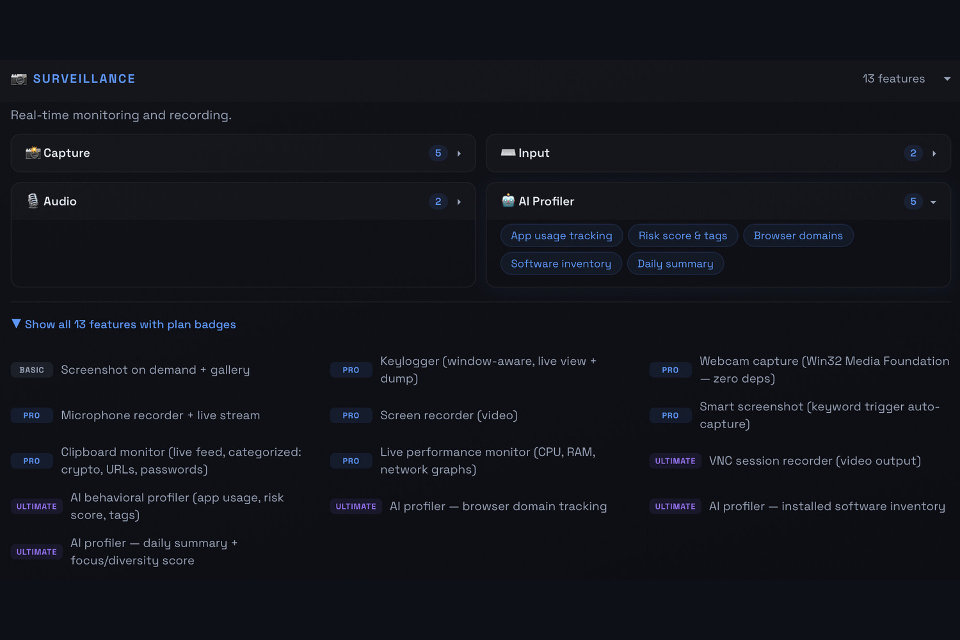
However, the truly standout feature of Dolphin X, and the one that has garnered significant attention from cybersecurity researchers, is its "AI Profiler." This component is designed to analyze the wealth of information gathered from compromised computers, assigning each infected user a specific risk score. This scoring mechanism effectively acts as a triage system, enabling attackers to distinguish between low-priority targets and those who might offer access to lucrative assets such as cryptocurrency holdings, sensitive corporate networks, cloud environments, or critical production systems.
"Beyond credential collection, the panel includes a surveillance tab containing the AI Profiler," Varonis explained in their analysis. "The seller describes it as an ‘AI behavioral profiler with app usage tracking, risk score, and daily summary.’" This description underscores the proactive and data-driven approach Dolphin X offers to its operators, moving beyond brute-force data acquisition to intelligent data exploitation.
Varonis Threat Labs gained access to the Dolphin X operator panel and conducted a thorough analysis within a secure, isolated laboratory environment. Their investigation focused on examining the malware builder and its associated network traffic, rather than executing a live Dolphin X agent on an infected system. This approach allowed researchers to understand the malware’s architecture and intended functionality without posing a direct risk.

AI Profiler: A New Frontier in Victim Prioritization
Credential-stealing malware has long been a formidable weapon in the arsenal of cybercriminals. The sheer volume of credentials that can be compromised in a single attack, often numbering in the hundreds or even thousands, presents a significant challenge for attackers attempting to manually identify high-value targets. This is where Dolphin X’s AI Profiler aims to revolutionize the process. By automating the analysis and ranking of infected users, it transforms a potentially overwhelming data dump into actionable intelligence.
The Dolphin X operator panel asserts that the AI Profiler is capable of processing a wide range of victim data to generate ranked profiles. This data includes the user’s application usage patterns, assigned risk scores and tags, frequented browser domains, and a comprehensive inventory of installed software. The system then synthesizes this information to produce detailed, ranked profiles for each compromised individual.
"In practice, the feature appears designed to help operators triage victims," Daniel Kelley elaborated. The daily summaries generated by the AI Profiler provide attackers with a clear hierarchy of compromised systems, allowing them to strategically focus their efforts on machines that are most likely to yield significant returns. This could translate to access to valuable online accounts, substantial cryptocurrency assets, confidential corporate data, or even control over critical infrastructure.
Kelley’s confirmation to BleepingComputer further solidifies the presence and functionality of the AI Profiler. He identified specific technical strings within the operator panel that directly support the profiling workflow. These strings include directives such as Auto-Start AI Profiler, ProfilerStart, ProfilerGetData, risk_score, risk_factors, and categoryusage. The existence of these internal commands strongly indicates that the profiling mechanism is indeed integrated and capable of processing the necessary data to rank victims effectively.
While the presence of the AI Profiler and its underlying technical framework are evident, Varonis was unable to definitively ascertain the specific artificial intelligence engine powering the rankings without the analysis of a live Dolphin X malware sample actively operating on an infected machine. This remains a critical area for future research and threat intelligence gathering.
Beyond Profiling: Comprehensive Credential Theft Capabilities
Dolphin X’s AI-driven victim prioritization is complemented by an extensive suite of credential-stealing functionalities. The operator panel claims to support the theft of credentials from over 300 distinct applications. This broad scope includes an impressive variety of targets:

- Web Browsers: The malware is designed to extract login data from nine popular Chromium and Gecko-based browsers, which form the backbone of most internet users’ online activities.
- Cryptocurrency Wallets: In a significant draw for cybercriminals, Dolphin X targets a vast array of cryptocurrency-related applications. This includes over 100 cryptocurrency wallet extensions for browsers and approximately 65 desktop cryptocurrency wallets.
- Password Managers: Recognizing the increasing reliance on password managers, Dolphin X also aims to compromise ten popular password management applications, potentially unlocking a treasure trove of other credentials.
- Cloud Command-Line Tools: With the widespread adoption of cloud computing, the malware’s ability to target over 30 cloud command-line tools is particularly concerning for organizations utilizing cloud infrastructure.
Furthermore, Dolphin X’s capabilities extend beyond typical application logins. It claims to be able to steal sensitive developer credentials and configuration files, such as .env files, SSH keys, and cloud access tokens. The theft of these types of assets can grant attackers direct access to development environments, code repositories, and cloud infrastructure, posing a severe risk to businesses and individuals alike.
It is important to note that, as Varonis’s analysis was based on the operator panel, builder, and network traffic rather than live malware execution, the full extent of Dolphin X’s advertised collection capabilities could not be independently verified by the researchers. This highlights the ongoing challenge in cybersecurity: the continuous need to validate the capabilities of emerging threats.
The Growing Influence of AI in Cybercrime
The integration of artificial intelligence into malicious cyber operations is not a new phenomenon, but Dolphin X’s specific application represents a significant advancement in efficiency and effectiveness for threat actors. AI has already been observed powering various cybercrime services, such as SpamGPT, which automates the generation of spam and phishing emails, and autonomous AI agents capable of conducting entire cyberattacks with minimal human intervention, as demonstrated by the JadePuffer ransomware.
However, Dolphin X’s approach is distinct. Instead of using AI to directly execute attacks or generate malicious content, it employs AI to solve a critical operational problem for cybercriminals: the management and exploitation of large volumes of compromised data. By automating the process of identifying high-value targets, Dolphin X allows attackers to optimize their efforts, maximizing their return on investment and minimizing the time and resources spent on less fruitful endeavors. This strategic use of AI signifies a shift towards more intelligent and efficient cybercrime.
Background and Chronology
The discovery of Dolphin X by Varonis Threat Labs, while recent, is part of an ongoing evolution in the sophistication of malware. The timeline leading to this discovery can be broadly outlined:
- Pre-2023: Remote Access Trojans (RATs) have been a staple of cybercrime for years, evolving in complexity and capability. Early RATs focused on basic remote control and data theft.
- Early 2023 onwards: The broader trend of integrating AI into various technologies, including cybersecurity tools and, subsequently, malicious tools, began to accelerate.
- Recent Discovery: Varonis Threat Labs identified the advertisement and features of Dolphin X on a cybercrime forum. Daniel Kelley conducted the initial analysis of the operator panel and builder.
- Ongoing Analysis: Cybersecurity researchers continue to monitor for live samples of Dolphin X to fully understand its operational deployment and confirm its advertised capabilities.
The vendor "Kontraktnik" represents a new face in the cybercrime marketplace, or at least a new alias. The specific date of Dolphin X’s initial release or advertisement is not publicly disclosed by Varonis, but its emergence signifies a new phase in the RAT landscape.
Broader Impact and Implications
The implications of Dolphin X are far-reaching for both individuals and organizations:
- Increased Efficiency for Attackers: By automating victim prioritization, Dolphin X significantly lowers the barrier to entry for less sophisticated attackers and amplifies the effectiveness of more experienced ones. This could lead to an increase in the success rate of targeted attacks.
- Enhanced Risk of Sophisticated Attacks: The ability to quickly identify high-value targets means that organizations and individuals with valuable assets are at a greater risk of being subjected to more sophisticated and persistent attacks, potentially leading to significant financial or data losses.
- Evolving Threat Landscape: Dolphin X is a clear indicator that threat actors are actively seeking and integrating cutting-edge technologies like AI to gain an advantage. This necessitates a continuous adaptation of defensive strategies and threat intelligence gathering.
- Challenges for Incident Response: The sheer volume of data that could be collected and the sophisticated profiling mean that incident response teams may face even greater challenges in identifying the full scope of a breach and determining the actual impact.
Official Responses and Industry Reactions
As of the reporting of this analysis, no official statements have been released by major cybersecurity agencies or government bodies specifically addressing Dolphin X. However, the broader cybersecurity community has reacted with concern and a renewed emphasis on proactive defense.
"The integration of AI into malware like Dolphin X is a worrying development," commented a hypothetical cybersecurity analyst from a leading firm, speaking on condition of anonymity due to the sensitive nature of threat intelligence. "It shifts the paradigm from broad-spectrum attacks to highly targeted and efficient exploitation. Organizations need to be more vigilant than ever, focusing on robust security hygiene, advanced threat detection, and rapid incident response capabilities."
The findings from Varonis Threat Labs serve as a crucial alert to the cybersecurity industry, prompting a reassessment of threat models and defensive strategies. The continuous arms race between attackers and defenders is now being accelerated by the rapid adoption of AI technologies on both sides.
Conclusion
Dolphin X represents a significant evolution in the realm of remote access trojans. Its AI-powered profiling feature, designed to identify and rank high-value victims, marks a critical step towards more intelligent and efficient cybercrime operations. While the full extent of its capabilities is still under investigation, the threat it poses is undeniable. As AI continues to permeate various technological domains, its application in cybercriminal activities is set to become more prevalent and sophisticated. Cybersecurity professionals and organizations must remain vigilant, adapt their defenses, and prioritize proactive threat intelligence to counter these evolving threats effectively. The battle against cybercrime is increasingly becoming a battle of intelligence, and Dolphin X demonstrates that the attackers are actively leveraging the most advanced tools at their disposal.