Beyond the Frontier: Why Africa Holds the True Economic Prize of the AI Revolution

The global artificial intelligence revolution is frequently characterized in contemporary policy and financial discourse as a high-stakes, binary race between the United States and China to develop the most advanced frontier models. However, this narrative overlooks a fundamental economic reality: the most substantial long-term financial and developmental rewards will likely not stem from the creation of general-purpose artificial intelligence at the bleeding edge, but rather from the practical deployment of applied intelligence within developing markets. Nowhere is this dynamic more pronounced than in Africa, a continent defined by young, dynamic, and rapidly expanding economies that are uniquely positioned to integrate artificial intelligence into the core of their structural transformation.
ABUJA and LAGOS — For generations, Africa has occupied a peripheral position on the global innovation chain. Historically, technological breakthroughs and industrial revolutions were conceptualized, financed, and commercialized in Western or Asian economies, leaving African nations to act as end-stage consumers. These innovations were subsequently imported at prohibitive costs and under terms dictated by foreign entities, severely limiting local value creation.
The structural vulnerabilities of this dependent model were starkly exposed during the COVID-19 pandemic. As global supply chains fractured and protectionist measures took hold across developed economies, African nations faced severe deficits in securing equitable access to vaccines that had been researched, developed, and manufactured abroad. That acute crisis served as a watershed moment, crystallizing a broader continental consensus that technological dependency is no longer a sustainable baseline for economic sovereignty or public health security.
The Shift from Importation to Applied Innovation
As artificial intelligence reshapes the global economic landscape, policymakers, technologists, and economists across the continent are determined to avoid repeating historical mistakes. Rather than attempting to outspend Washington or Beijing in training trillion-parameter frontier models—an endeavor requiring capital expenditures and computing power currently out of reach for most regional actors—African stakeholders are pivoting toward applied AI.
Applied AI focuses on solving localized friction points in agriculture, healthcare, logistics, financial inclusion, and education. By embedding machine learning and data analytics into existing infrastructure, African enterprises and governments are bypassing traditional developmental stages, much like the continent leapfrogged traditional landline telecommunications in favor of mobile cellular networks two decades ago.
This strategic redirection is supported by compelling demographic fundamentals. Africa is the youngest continent on Earth, with a median age of approximately 19 years, compared to over 40 in Europe and North America. By 2050, the continent’s population is projected to reach 2.5 billion, with a labor force larger than that of either China or India. When combined with rapid urbanization and expanding mobile internet penetration—which crossed the 50% threshold for unique mobile subscribers in Sub-Saharan Africa—the region presents a massive, digitally engaged market hungry for technological solutions.
Chronology of Technological Convergence in Africa
To understand the current momentum of artificial intelligence adoption in Africa, it is necessary to examine the foundational steps that paved the way over the past two decades:
- 2007–2010 (The Mobile Money Boom): The launch of M-Pesa in Kenya in 2007 demonstrated the continent’s capacity for leapfrogging legacy systems. By digitizing financial transactions via basic text messaging, East Africa laid the groundwork for a robust fintech ecosystem that would later attract billions in venture capital and create a culture of digital-first entrepreneurship.
- 2015–2018 (The Rise of Tech Hubs): Pan-African innovation hubs proliferated across major urban centers such as Lagos, Nairobi, Cape Town, and Cairo. Organizations such as CcHub in Nigeria and iHub in Kenya transitioned from co-working spaces into incubators for homegrown software engineering talent.
- 2019–2021 (The Venture Capital Influx): African tech startups began breaking fundraising records, attracting over $5 billion in venture capital by 2021. Although fintech dominated these inflows, early investments in agritech, healthtech, and logistics signaled a diversification of the digital economy.
- 2022–2024 (The Generative AI Awakening): Following the global explosion of generative AI tools, developers across Africa began building localized natural language processing models, adapting open-source algorithms to understand indigenous African languages, dialects, and institutional contexts.
- 2025–2026 (Institutional Policy and Infrastructure): Governments in countries like Rwanda, Nigeria, Kenya, and South Africa began formulating national AI strategies, establishing ethical frameworks, investing in local data centers, and partnering with international tech giants to secure sovereign cloud capabilities.
Quantitative Insights and Market Potential
Economic analyses indicate that the integration of artificial intelligence could add trillions of dollars to the global economy over the coming decade, with emerging markets capturing a significant share of productivity gains. According to data from industry groups and multilateral development banks, the digital economy in Africa is growing at a rate outpacing traditional GDP growth, fueled by a surge in software development talent and digital entrepreneurship.
Venture capital data compiled by African Private Capital Association (AVCA) shows that while global venture funding contracted sharply in 2023 and 2024, investments in artificial intelligence and deep-tech startups within Africa displayed remarkable resilience. Multinational technology corporations, including Google, Microsoft, and IBM, have established dedicated AI research and development centers in cities like Nairobi, Accra, and Lagos, signaling institutional confidence in the region’s human capital.
Furthermore, the economic impact of applied AI in specific sectors is projected to be transformative:
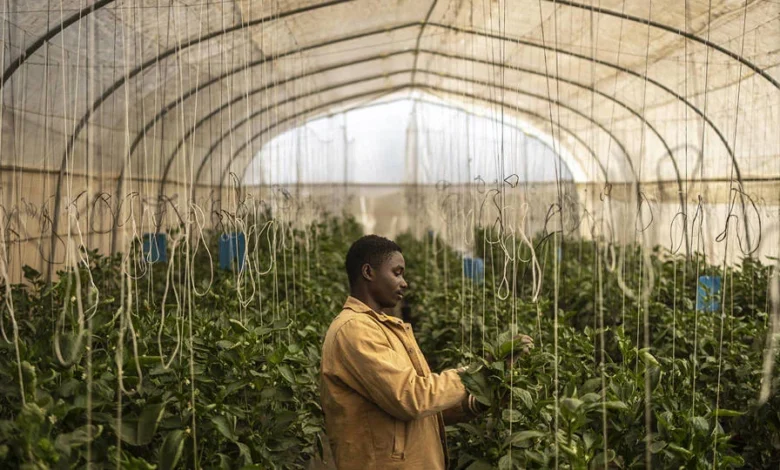
- Agriculture: With over 60% of the continent’s population dependent on smallholder farming, AI-driven predictive analytics, weather modeling, and precision agriculture tools are projected to boost crop yields by up to 30%, addressing critical food security challenges.
- Financial Inclusion: Machine learning algorithms are enabling micro-lending institutions and fintechs to assess credit risk for the unbanked population—numbering over 400 million adults in Sub-Saharan Africa—who lack traditional credit histories.
- Healthcare: AI-powered diagnostic tools deployed in rural clinics are bridging the gap caused by severe physician shortages, enabling early detection of infectious diseases and maternal health risks.
Official Responses and Strategic Policy Shifts
African governments and regional bodies are increasingly treating artificial intelligence not merely as a commercial tool, but as a core pillar of national security and economic independence. The African Union (AU) has initiated steps toward a unified continental AI framework aimed at harmonizing data protection laws, cross-border data flows, and ethical standards.
National leaders have echoed the sentiment that Africa must dictate the terms of its technological integration. In recent policy addresses, Nigerian and Kenyan trade and innovation officials emphasized that the continent will no longer accept being treated as a dumping ground for foreign technologies that fail to account for local socio-economic realities. Instead, regulatory bodies are emphasizing local data sovereignty—ensuring that data generated by African citizens is processed, protected, and monetized locally.
International financial institutions have also adjusted their lending and grant portfolios. The World Bank and the African Development Bank have earmarked substantial funding facilities specifically designed to support digital infrastructure, including fiber-optic cable expansion, high-performance computing centers, and STEM education initiatives tailored to young populations.
Broader Economic Impact and Geopolitical Implications
The pivot toward practical AI deployment in Africa carries profound geopolitical implications. For decades, the Global South has been a spectator to technological revolutions dictated by Washington, Silicon Valley, and Beijing. By cultivating an independent applied AI ecosystem, African nations are positioning themselves as vital partners rather than passive recipients in the global technology supply chain.
Moreover, the demographic dividend currently unfolding in Africa positions the continent to supply the world with technical talent. As developed nations face acute labor shortages due to aging populations, well-trained African software engineers, data scientists, and AI ethicists are increasingly contributing to remote global workforce pools, reversing historical brain drain trends through remote work models and localized tech campuses.
Ultimately, while the headlines will continue to track the race for general artificial intelligence supremacy between superpowers, the true test of AI’s value to humanity will be measured by its ability to lift living standards, optimize resource allocation, and drive sustainable growth. In meeting this test, Africa’s dynamic economies are uniquely situated to prove that the most profound technological revolutions are those that empower the everyday lives of the many, rather than the theoretical limits of the few.
Related posts: