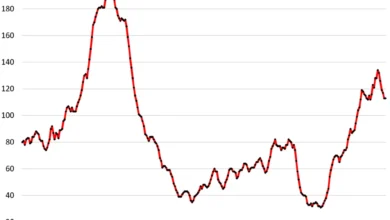
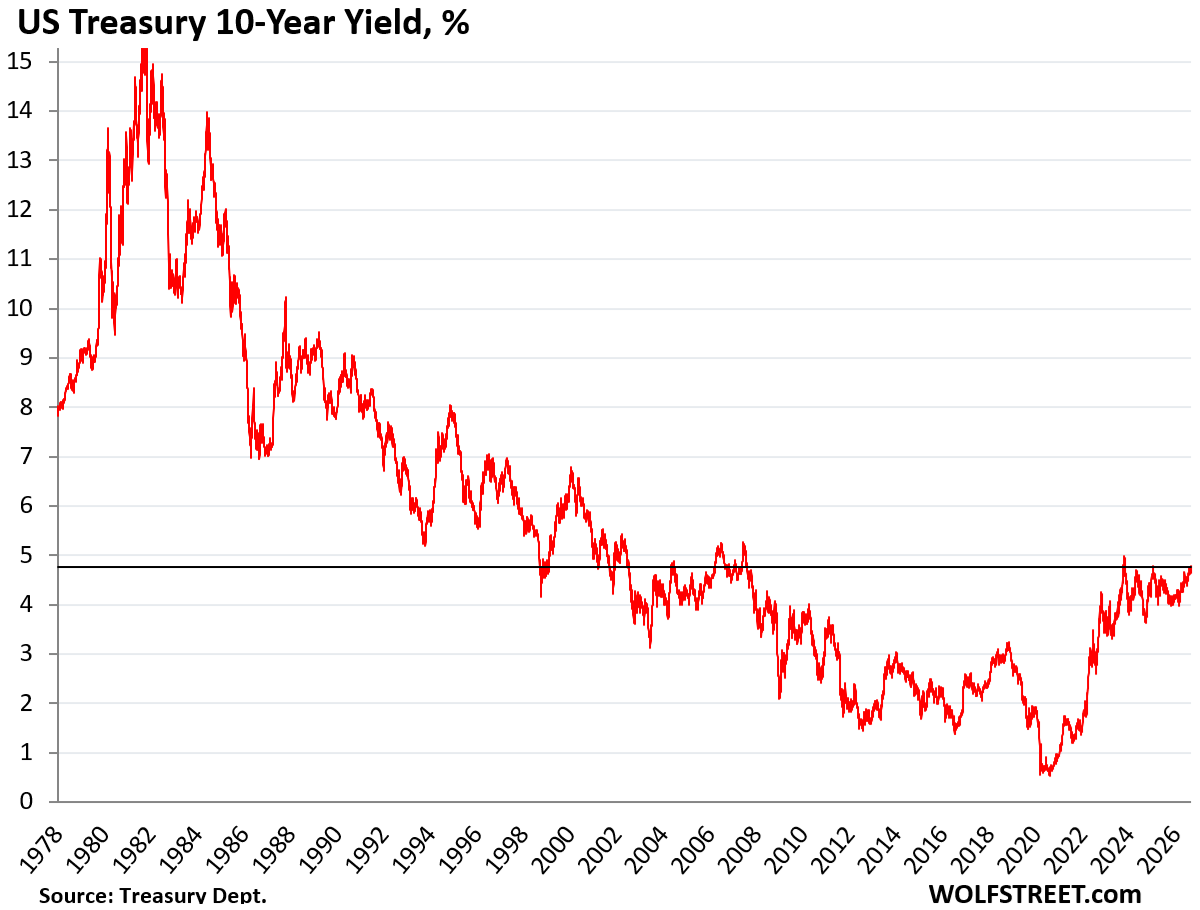
The economy did fine with a 10-year yield of 5-8%, including in the 1990s, amid a tight labor market and lots of economic growth.

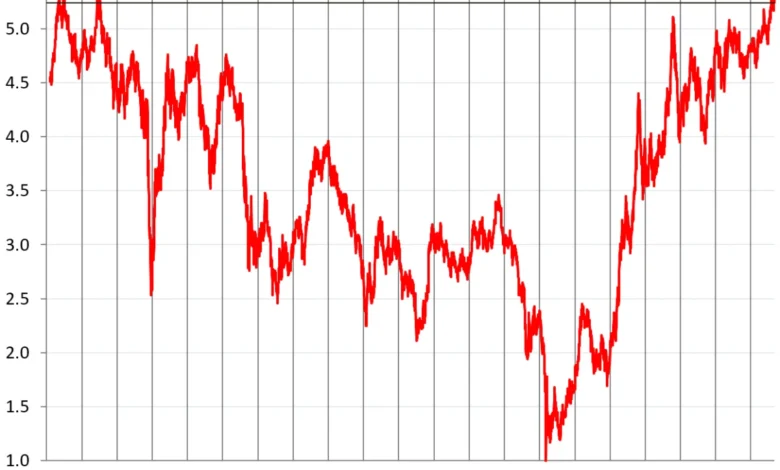
The trajectory of the United States Treasury market has once again become the central focal point for global investors as the 10-year Treasury yield inches closer to the psychologically significant 5% threshold. This move, characterized by a persistent upward trend since mid-November, reflects a complex interplay between federal monetary policy, structural fiscal deficits, and the stubborn persistence of inflationary pressures. As of the most recent market close, the 10-year yield stood at 4.78%, marking an 80-basis-point ascent following the Federal Reserve’s recent cycle of policy rate adjustments.
The Macroeconomic Landscape and Monetary Policy
The current yield environment is fundamentally shaped by the Federal Reserve’s recent decisions to lower policy rates despite clear signals that inflation remains above the central bank’s long-term targets. This divergence—where the Fed eases policy while inflation proves resistant to suppression—has created a disconnect in the bond market. Typically, a reduction in the Effective Federal Funds Rate (EFFR) is expected to lower borrowing costs across the curve. However, the market is currently signaling a different narrative. The 10-year yield is now trading approximately 115 basis points above the EFFR, suggesting that bond market participants are demanding a higher term premium to account for long-term inflation uncertainty and the sheer volume of sovereign debt issuance.
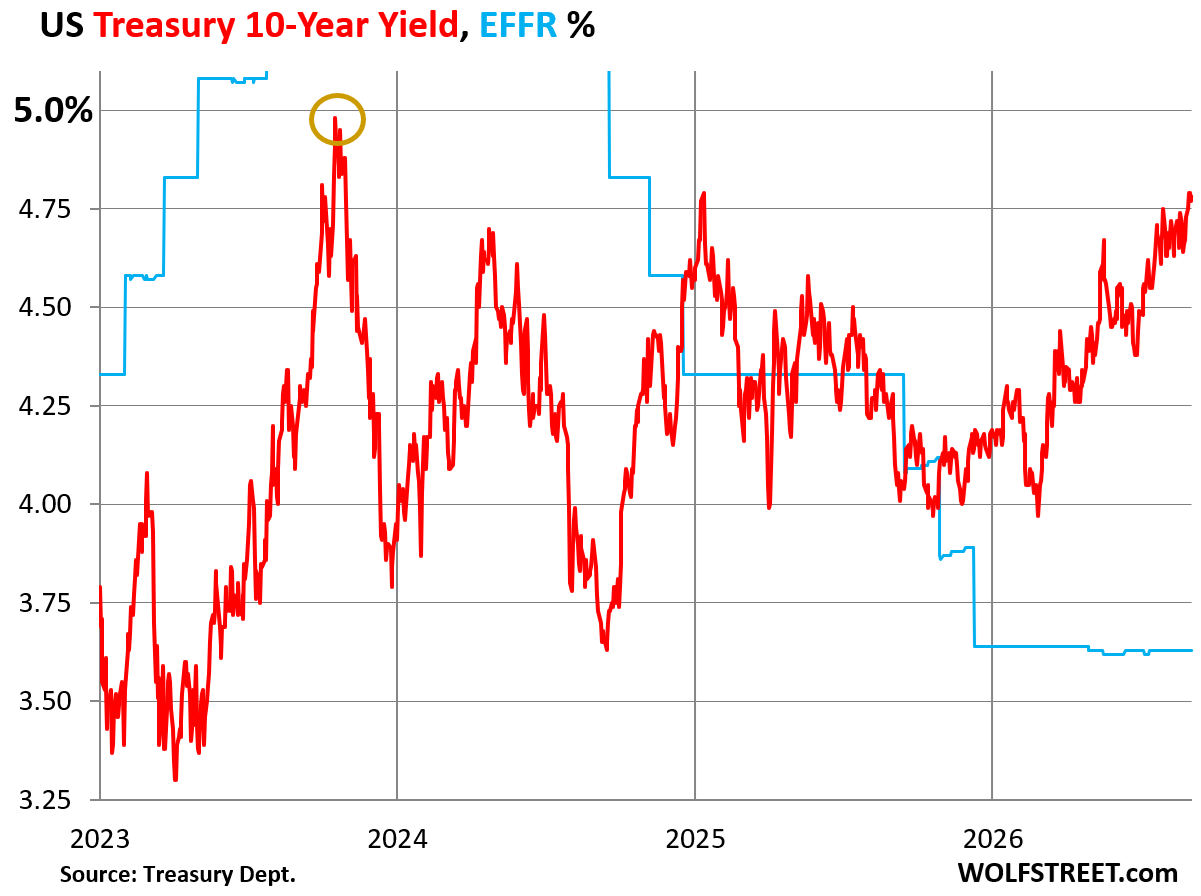
This yield volatility has been punctuated by various administrative efforts to stabilize the bond market, including public interventions and policy messaging. However, these attempts to "cap" long-term yields have faced stiff resistance from market forces. Without these interventions, analysts suggest the 10-year yield might have already breached the 5% barrier.
Chronology of Yield Movements
The current upward pressure on yields is not an isolated event but rather a continuation of a trend that has developed over several years.
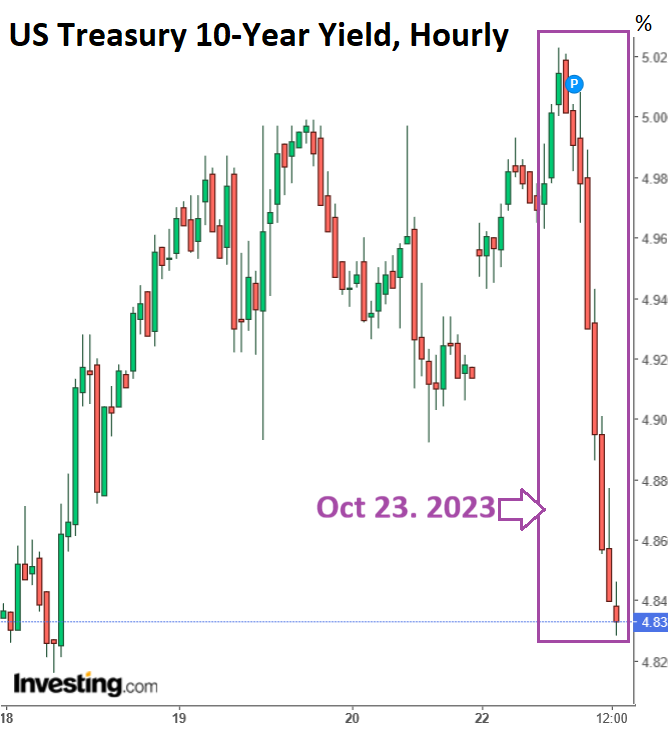
- October 2023: The 10-year Treasury yield famously pierced the 5% level, an event that triggered an immediate, massive influx of demand from buyers who viewed the level as an attractive entry point. This sudden surge in buying interest caused the yield to collapse by 19 basis points within a single trading session, from 5.02% to 4.83%.
- Late 2023 to Early 2024: Following the October peak, the bond market saw a sustained period of yield compression as investors anticipated a change in the interest rate environment.
- November 2026: The Federal Reserve initiated a series of rate cuts. Counterintuitively, rather than falling, the 10-year yield began a "zigzag" climb, as the market priced in the long-term consequences of persistent inflation and rising government borrowing requirements.
- Current Status: As of September 2026, the 10-year yield is steadily approaching the 5% level once more, while the 30-year Treasury yield has pushed past previous highs to reach a two-decade peak of 5.24%.
The Fiscal Deficit and Supply Dynamics
The primary driver behind the current yield environment is the structural imbalance in the U.S. federal budget. With federal spending remaining elevated and tax policy favoring continued cuts or stagnation, the Treasury Department has been forced to issue a significant volume of new debt to cover the resulting deficit. This creates a supply-demand mismatch.
For the bond market to absorb these massive issuances, yields must remain high enough to attract institutional investors, sovereign wealth funds, and domestic retail buyers. When the supply of new debt consistently outpaces the organic demand at current price points, the market forces the price of bonds down and the yields up. This process is currently ongoing, with investors waiting for higher yields before committing large-scale capital to long-term Treasury instruments.
Historical Context: Why 5% is Not Unprecedented
While a 5% yield is often discussed in the media as a "danger zone," historical data suggests that this level was considered the norm for the better part of the 20th century. Between the mid-1960s and the onset of the Dotcom Bust in the early 2000s, the 10-year Treasury yield frequently fluctuated between 5% and 15%.
The era of sub-5% yields was largely an anomaly triggered by the specific monetary policies implemented during the post-2008 financial crisis, most notably Quantitative Easing (QE). During the Dotcom era, the economy thrived despite high interest rates. Labor markets remained tight, corporate investment was robust, and real GDP growth was consistently positive. This historical record serves as a counterpoint to the current narrative that a 5% yield is inherently destructive to economic growth. In fact, a higher yield environment may be more reflective of a "normal" economic state than the artificially suppressed rates that characterized the post-2008 decade.
Implications of Continued Upward Pressure
The implications of sustained yields above 5% are manifold. For the government, it necessitates higher interest payments on the $40 trillion national debt, which in turn exacerbates the deficit in a feedback loop. For the private sector, it increases the cost of capital, potentially cooling real estate and slowing corporate expansion. However, for savers and pension funds, higher yields provide a long-overdue return on fixed-income investments, potentially stabilizing retirement portfolios that suffered during the zero-interest-rate policy (ZIRP) era.
The crucial question for the remainder of the year is whether the market will see a repeat of the October 2023 "spectacle." If yields break through 5% and stay there, it will signal a fundamental shift in the market’s assessment of long-term economic risk. If, conversely, the 5% mark triggers a rush of "nibblers"—investors who view the yield as a value opportunity—the market may experience another sharp, short-term correction.
Conclusion and Future Outlook
As the bond market navigates this transition, both the Federal Reserve and the Treasury face limited policy space. The Fed is constrained by the need to balance inflation control with the potential for systemic financial stress, while the Treasury is constrained by the necessity of funding a historic deficit.
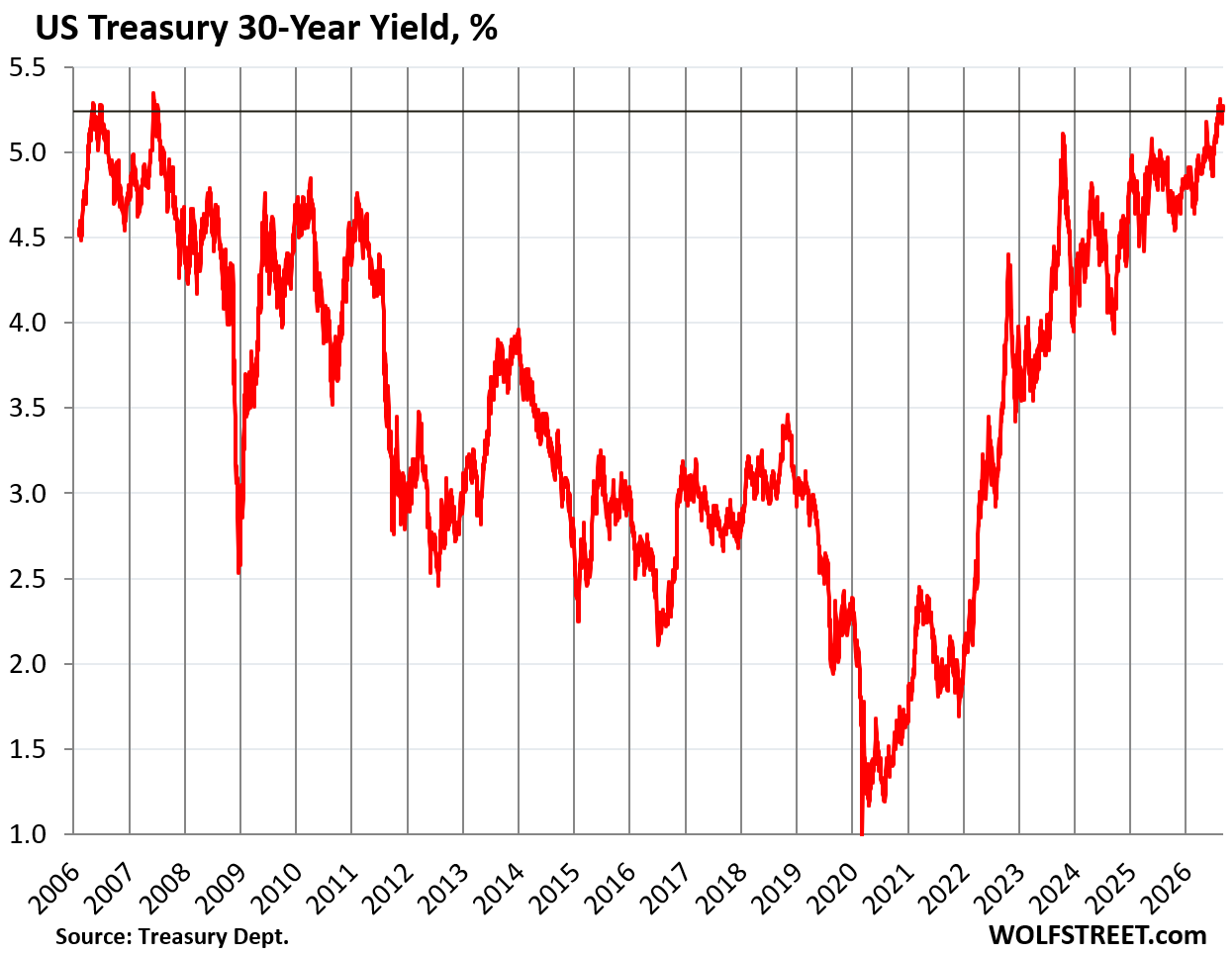
The data suggests that the economy has historically shown resilience in high-interest-rate environments, provided that the labor market remains sound and corporate productivity holds. Whether the U.S. can transition back to a "higher for longer" yield environment without triggering a significant contraction remains the central challenge for the current economic cycle. With the 10-year yield leaving its previous trading range of 4.62% to 4.72% behind, the market is currently in a state of price discovery, testing the resolve of both buyers and sellers as they prepare for the next phase of the interest rate cycle.
Related posts: