EUR/USD Technical Analysis: Consolidation Ahead as Short-Term Rebound Fails at 1.1710

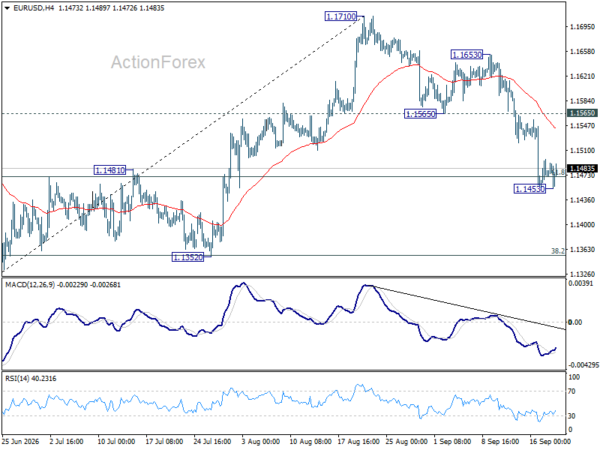
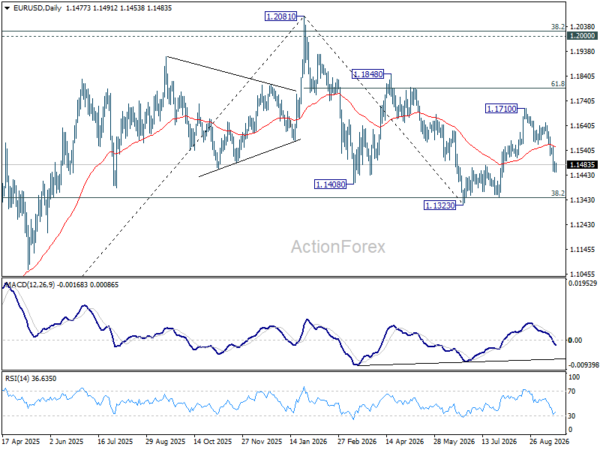
The exchange rate for the euro against the United States dollar (EUR/USD) faces renewed downward pressure following an extended decline over the previous week. This recent price action strongly indicates that the preceding upward correction—which originated from the 1.1323 low—has effectively concluded at the 1.1710 threshold. Although the currency pair encountered temporary friction near the 61.8% Fibonacci retracement level of the 1.1323-to-1.1710 leg at 1.1471, triggering a period of sideways movement, market sentiment remains cautious. Initial trading bias for the week has shifted toward neutrality, paving the way for a phase of technical consolidation. Nevertheless, downside risks will persist over the near term provided that the former 1.1565 support level—now acting as immediate resistance—holds firm against bullish advances. A definitive break below the 1.1453 mark would expose the pair to further losses, directing focus squarely back toward the 1.1323 cyclical low.
Main Facts and Current Market Structure
Foreign exchange markets are closely monitoring the EUR/USD pair as it navigates a critical juncture following weeks of volatile corrective activity. The recent failure to maintain momentum above the 1.1700 handle underscores the tenacity of broader macroeconomic headwinds weighing on the single currency. Technical indicators on daily and weekly charts point to a delicate balance between persistent bearish pressure and localized support zones.
Traders and institutional analysts are parsing the significance of the 1.1471 level, where the 61.8% retracement has temporarily halted the downward slide. However, the inability of buyers to generate a meaningful recovery highlights underlying market fatigue. As long as the newly formed resistance at 1.1565 remains unbreached, path-of-least-resistance forecasts favor the bears. A drop beneath the 1.1453 minor support threshold would likely accelerate selling momentum, paving the way for a retest of the foundational 1.1323 floor established earlier in the cycle.
Medium-Term Perspective and Trend Integrity
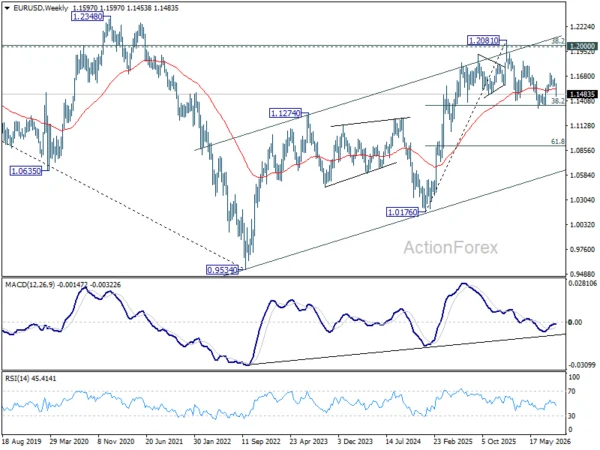
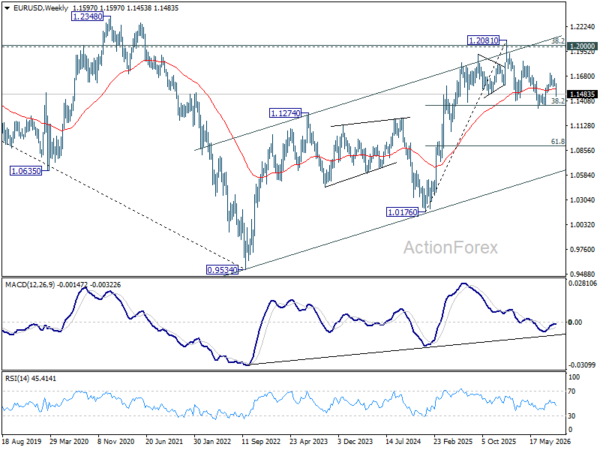
Zooming out to a broader market perspective, the longer-term structural integrity of the euro remains anchored by critical Fibonacci retracement levels stemming from the 2025 low. Specifically, the 38.2% retracement of the broader structural rally from 1.0176 to 1.2081 is situated at 1.1353. As long as this crucial floor remains intact, the downward correction witnessed from the 1.2081 peak is classified by market technicians as a routine counter-trend retracement rather than a fundamental trend reversal.
Under this prevailing technical thesis, once the current corrective phase exhausts itself, the pair is expected to resume its longer-term upward trajectory, eventually targeting a decisive break above the 1.2081 barrier. Conversely, a sustained and confirmed breakdown beneath the 1.1353 threshold would fundamentally alter this constructive outlook, significantly increasing the probability of a broader medium-term trend reversal in favor of the greenback.
Long-Term Historical Context and Key Psychological Levels
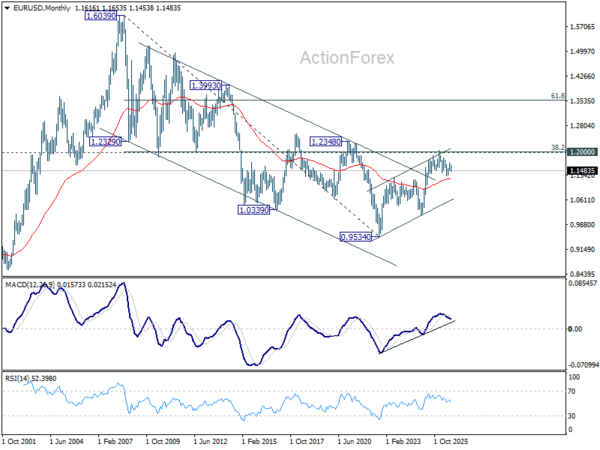
Evaluating the multi-decade trajectory of the EUR/USD exchange rate reveals even more profound structural boundaries that dictate long-term capital allocation and hedging strategies. At the heart of the long-term outlook lies the 38.2% retracement of the monumental historical decline spanning from the all-time high of 1.6039 recorded in 2008 down to the cyclical low of 0.9534. This crucial retracement level sits precisely at 1.2019, converging closely with the psychologically significant 1.2000 parity zone.
Market historians and macroeconomic strategists view the 1.2000/19 band as the ultimate litmus test for the currency pair. A definitive rejection of price action within this zone would reaffirm the dominance of the multi-decade downtrend originating from the 2008 financial crisis, confining the euro’s long-term prospects to a neutral or defensive stance at best. On the other hand, a sustained, high-volume break above the 1.2000/19 resistance cluster would signal a monumental shift in global currency flows, pointing toward a long-term bullish trend reversal with an extended measured target near the 61.8% retracement level at 1.3554.
Chronology of Recent Price Movements
To fully contextualize the current technical standing of the EUR/USD pair, it is necessary to examine the chronological sequence of events that has shaped the currency market over the past year:
- 2008 Peak: The EUR/USD reaches its historical zenith at 1.6039, establishing a multi-decade ceiling that continues to cast a shadow over long-term structural forecasts.
- 2022 Low: Prolonged macroeconomic pressures, divergent central bank policies, and energy crises drive the pair down to a cyclical trough at 0.9534.
- 2025 Low: A gradual stabilization of European economies and shifting Federal Reserve rate expectations help establish a higher low at 1.0176, sparking a new multi-year upward trend.
- Interim Peak: The recovery gathers immense steam, culminating in a local high of 1.2081 before encountering formidable long-term resistance.
- Recent Weeks: Profit-taking and shifting macroeconomic data prompt a sharp pullback from 1.1710 down to test the 1.1323 support area, followed by a minor corrective rebound that has now fizzled out, bringing spot prices to the current consolidation phase near 1.1471.
Supporting Data and Technical Metrics
A quantitative breakdown of the critical Fibonacci levels, support zones, and resistance barriers governing current trading parameters provides clear benchmarks for market participants:
- Immediate Resistance: 1.1565 (former support turned resistance)
- Recent Swing High: 1.1710 (endpoint of the latest upward correction)
- Current Consolidation Pivot: 1.1471 (61.8% retracement of the 1.1323–1.1710 move)
- Immediate Downside Trigger: 1.1453
- Primary Near-Term Support / Cycle Low: 1.1323
- Medium-Term Structural Floor: 1.1353 (38.2% retracement of the 1.0176–1.2081 rally)
- Major Upside Milestone: 1.2081 (high of the current larger uptrend)
- Long-Term Psychological and Technical Barrier: 1.2000 / 1.2019 (38.2% retracement of the 1.6039–0.9534 historical range)
- Macro Target Upon Long-Term Reversal: 1.3554 (61.8% historical retracement)
Market Sentiment and Analyst Perspectives
Foreign exchange strategists across major financial institutions have expressed varied opinions regarding the near-term fate of the euro. While some short-term desks emphasize the risk of an extended pullback toward the 1.1323 handle due to sluggish economic indicators within the Eurozone, long-term asset managers remain attentive to structural support levels.
"The inability of the euro to maintain its foothold above the mid-1.1500s suggests that bulls are currently lacking the fundamental catalysts required to challenge higher structural barriers," noted a senior currency strategist at a London-based financial advisory firm. "However, as long as the broader 1.1353 base holds on weekly closing bases, the grand narrative remains one of consolidation within a larger secular recovery rather than a structural breakdown."
Conversely, bearish commentators point to persistent fiscal divergence between the United States and the Eurozone, arguing that sticky inflationary pressures across the Atlantic could compel central bankers to maintain divergent monetary policy stances. This dynamic, they contend, keeps the door open for a test of deeper multi-year supports should macro data disappoint in the upcoming quarters.
Broader Economic Impact and Macroeconomic Implications
The technical fluctuations of the EUR/USD pair carry profound implications for international trade, corporate earnings, and global liquidity conditions. As the world’s most heavily traded currency pair, movements in the euro-dollar exchange rate directly influence import and export costs for multinational corporations headquartered both in the Eurozone and the United States.
A softer euro traditionally acts as a tailwind for export-driven economies within the European Union—such as Germany—by making European goods more competitively priced on international markets. At the same time, however, a depreciating currency can exacerbate imported inflation pressures, particularly concerning energy commodities and raw materials denominated in U.S. dollars.
Conversely, a robust recovery toward the psychological 1.2000 barrier would alleviate domestic inflationary pressures within the Eurozone by cheapening dollar-denominated imports, but it would simultaneously squeeze profit margins for European manufacturers reliant on overseas revenue streams. Consequently, central bank policymakers in Frankfurt and Washington monitor these technical thresholds intently, as exchange rate volatility directly informs broader assessments of financial stability and economic momentum.
Related posts: