Bitcoin.org launches comprehensive wallet selector tool to simplify user adoption and improve security standards

Bitcoin.org, the long-standing informational hub for the global Bitcoin network, has officially launched a redesigned wallet selection platform aimed at streamlining the onboarding process for new users. This update represents a significant shift in how the platform facilitates the discovery of secure, functional storage solutions for digital assets. By replacing a cumbersome, legacy-based navigation system with an interactive, data-driven wizard and a comparative matrix, the site seeks to mitigate the steep learning curve often associated with early-stage Bitcoin adoption.
Addressing the Friction of Adoption
The necessity for this overhaul stemmed from long-standing feedback regarding the user experience on the legacy Bitcoin.org wallet pages. Previously, the platform presented a static list of wallets, forcing users to manually navigate between individual product pages to discern differences in security, platform compatibility, and features. This process was described as "cumbersome and tedious," requiring users to maintain multiple browser tabs or engage in repetitive navigation to perform even basic head-to-head comparisons.
For the millions of visitors who flock to Bitcoin.org annually—many of whom are nascent users with minimal technical background—the complexity of choosing a wallet was a significant barrier to entry. Without a clear mechanism to understand the trade-offs between "hot" (online) and "cold" (offline) storage, or the nuances of non-custodial versus custodial solutions, users were prone to choosing suboptimal options. The new design addresses these challenges by consolidating technical specifications into a centralized, queryable interface, allowing users to filter results based on operating system, specific security features, and technical environment.
A Data-Driven Approach to Wallet Ratings
Central to the new infrastructure is a robust classification system that evaluates wallets across a standardized set of criteria. The platform now utilizes four distinct ratings—Good, Acceptable, Caution, and Neutral—to provide users with immediate visual cues regarding a wallet’s reliability and adherence to security best practices.
These ratings are applied across six primary evaluation categories, designed to offer a comprehensive assessment of the user experience. By making these ratings visible on both the primary overview page and individual product pages, the platform ensures that users are consistently informed of the security posture of their chosen tools. The inclusion of nine distinct feature-filtering options—ranging from two-factor authentication and multisig support to open-source verification—further allows users to tailor their wallet search to their specific threat models and operational needs.
Chronology of the Development Cycle
The transition from the legacy site to the modern, wizard-based interface was the result of a multi-year effort involving community contributors and independent developers. The project gained momentum following the identification of specific UX bottlenecks in 2018. Throughout 2019, the development team worked to reconcile user feedback with the technical requirements of a site that must remain neutral while providing high-quality information.
Key project milestones included:
- Late 2018: Initial audit of the legacy wallet pages, highlighting the need for side-by-side comparison tools.
- Q1 2019: Design phase and prototype testing, focusing on the "wallet wizard" to guide beginners through basic concepts.
- Q2 2019: Community review period, where developers and power users provided feedback on the weighting of wallet ratings.
- September 2019: Official deployment of the new interface and the integration of the enhanced search functionality.
Community and Collaborative Stewardship
The success of this redesign is rooted in the open-source nature of Bitcoin.org. While the site is a private entity, it functions as a community-driven repository, maintaining a commitment to transparency and decentralized governance. The project was made possible by community donations and the voluntary labor of several key contributors, including Craig Watkins, Cábra, Natalia Kirejczyk, Alex Cherman, and Maxwell Mons.
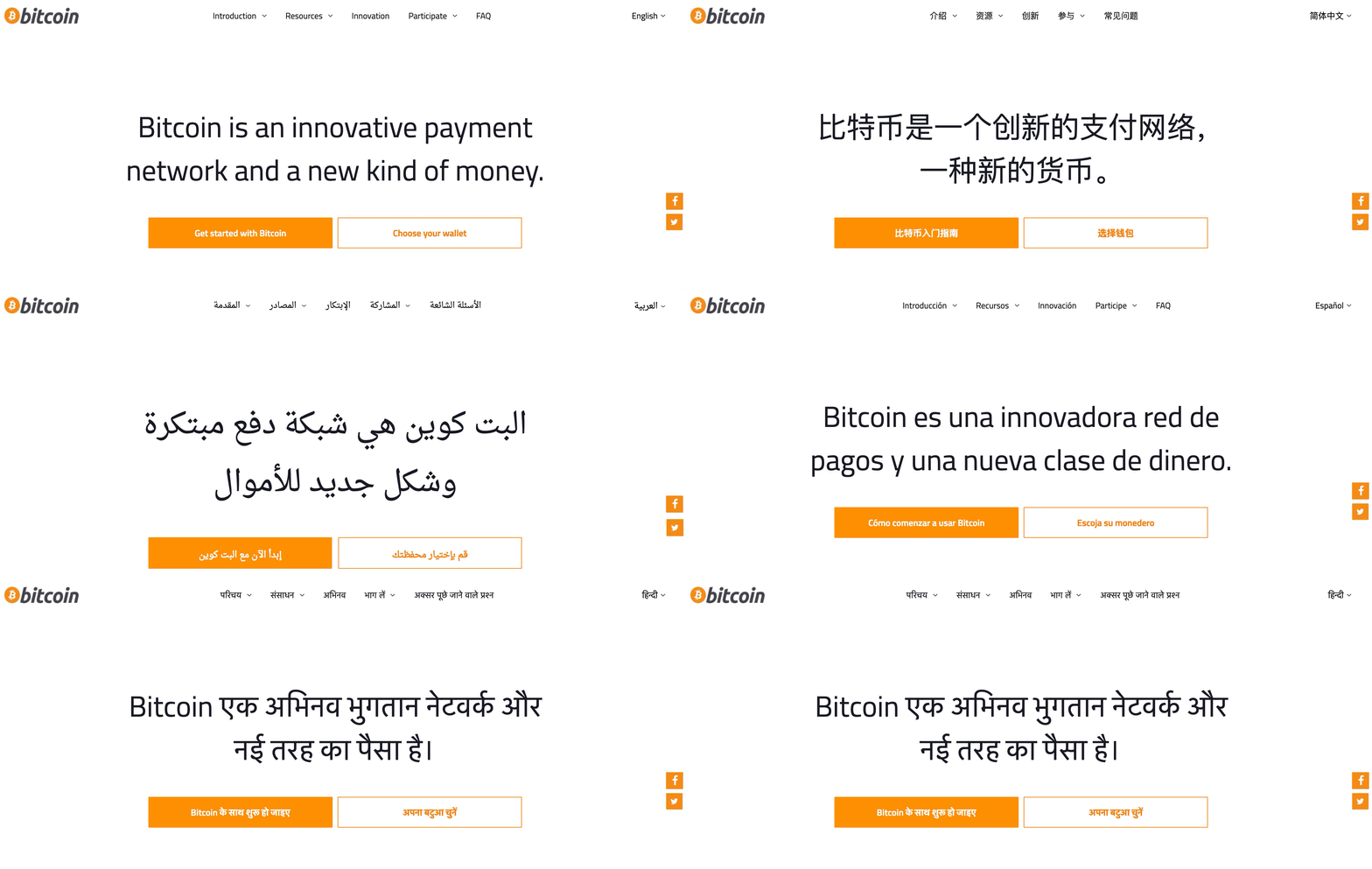
The platform’s evolution reflects the broader ethos of the Bitcoin ecosystem: self-regulation through community participation. Hundreds of contributors from around the globe have committed code to the project, and over a thousand translators have worked to ensure the content is available in 25 different languages. This multilingual reach is vital, as Bitcoin’s user base continues to grow rapidly in regions where English-language resources are not the primary medium of communication.
Implications for the Bitcoin Ecosystem
The release of the improved wallet selector carries broader implications for the security of the Bitcoin network. By providing a clear, vetted pathway for users to select non-custodial wallets, the site effectively steers new participants toward personal sovereignty—a cornerstone of the Bitcoin protocol. Encouraging the use of wallets that prioritize privacy, security, and open-source code helps to harden the ecosystem against centralized points of failure and phishing attacks.
Furthermore, the implementation of a standardized rating system exerts a positive pressure on wallet developers. To be featured prominently or receive high ratings on the industry’s most visited portal, developers are incentivized to maintain high standards for code audits, feature sets, and user support. The documentation provided for those wishing to submit new wallets for inclusion ensures that the quality threshold remains high, preventing the proliferation of low-quality or potentially malicious software.
Looking Toward the Future
Despite the successful launch of the new pages, the project remains a work in progress. The developers behind Bitcoin.org have encouraged continued engagement, requesting that users report issues or suggest improvements via the platform’s GitHub repository. This iterative approach is essential in a space that moves as quickly as cryptocurrency. As new technologies—such as Lightning Network integration or advanced hardware security—become standard, the wallet selector is designed to adapt, ensuring that the information provided remains current.
The history of Bitcoin.org itself provides context for this commitment. Originally registered by Satoshi Nakamoto and Martti Malmi, the domain was transitioned to independent stewards to ensure no single entity could exert centralized control. This structure has allowed the site to remain a neutral, educational resource, insulated from the pressures of commercial interests that often dominate other financial-tech websites.
As millions of people continue to enter the Bitcoin space, the challenge of user education remains paramount. The new wallet pages are not merely a UI update; they represent a fundamental commitment to the "don’t trust, verify" philosophy of Bitcoin. By providing the tools for users to make informed, independent decisions about how they store their assets, Bitcoin.org continues to play a critical role in the maturation and stabilization of the global digital asset market.
The platform’s transparency extends to its own governance, as it continues to rely on community feedback and GitHub-based issue tracking to maintain its relevance. As the industry moves toward mainstream adoption, the availability of clear, unbiased, and user-friendly educational resources will be the deciding factor in ensuring that the next generation of users is empowered to manage their financial assets with confidence and security.