The Evolution of the VIP Economy: Why Personalized Access is Redefining Consumer Loyalty

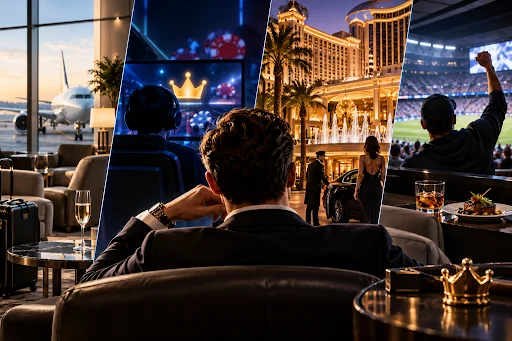
The traditional definition of a "VIP customer"—once tethered to simple point-accumulation schemes and tiered discount structures—is undergoing a profound transformation. In an increasingly saturated digital marketplace, modern consumers are moving away from transactional loyalty in favor of experiential, personalized engagement. Recent industry data indicates that 42% of consumers now view personalized rewards as the primary indicator of a mature and effective loyalty program. Furthermore, approximately two-thirds of the population report that loyalty initiatives have become integral components of their daily lives, signaling a shift in consumer expectations toward brands that offer convenience, exclusivity, and human-centric service.
The Shift from Transactions to Membership Models
For decades, the loyalty industry relied on the "earn and burn" model: customers made purchases, accumulated points, and eventually redeemed those points for modest discounts or merchandise. However, the rise of the "VIP Economy" suggests that for premium brands, the focus has shifted from commodified discounts to high-touch membership services. This model mimics a heightened version of the product itself, where the reward is not a discount code but rather access to exclusive environments, human assistance, and unique life experiences.
This evolution is particularly evident in sectors where competition is fierce, including financial services, digital gaming, and entertainment. By moving away from purely financial incentives, companies are cultivating a sense of belonging among their most valuable customers. The value proposition is no longer about saving money; it is about saving time and accessing spaces that are otherwise unavailable to the general public.
Case Study: The Blueprint of Access in Financial Services
American Express has long served as the industry standard for this transition. The Platinum Card, for instance, has successfully pivoted from a credit instrument to a lifestyle concierge. By offering access to over 1,550 airport lounges across 140 countries, the company addresses the fundamental pain points of travel.
The strategy relies on the concept of "curated access." Through partnerships like Resy, the card provides members with priority reservations at high-demand dining venues, effectively selling the convenience of bypassing the common hurdles of urban living. This represents a critical pivot: the "VIP" status is defined by the elimination of friction in the user’s daily life. Financial institutions are discovering that when a service becomes indispensable to a user’s comfort, the retention rate increases significantly, as the cost of switching providers outweighs the potential savings of a cheaper alternative.
The Rise of High-Touch Gaming and Crypto Entertainment
The "VIP Economy" has migrated rapidly into the digital gaming and cryptocurrency sectors, where user retention is a critical metric for platform longevity. Platforms such as 1win, which currently supports a user base exceeding 30 million across more than 100 countries, have implemented sophisticated multi-tiered loyalty structures that mirror private banking services.
The 1win model utilizes a 20-level VIP hierarchy, split into six distinct groups. While lower tiers offer standard benefits like weekly cashback, the upper echelons shift toward highly personalized management. Top-tier members are provided with dedicated account managers, 24/7 concierge assistance, and invitations to private, closed-door tournaments. This approach acknowledges that high-value users—often termed "high-lifers"—value human recognition as much as financial gain. By providing a personal manager who understands individual preferences, the platform transcends the screen, creating a relationship that is fundamentally more durable than one based on algorithmic bonuses alone.
Blurring the Lines: Hospitality and Gaming Integration
MGM Resorts represents a broader, physical application of the VIP economy. By leveraging an ecosystem that includes casino gaming, luxury hotel accommodations, high-end dining, and live entertainment, MGM creates a "walled garden" of experiences.

The MGM Rewards program serves as a connective tissue between these disparate services. A customer’s activity in one vertical—such as a stay in a luxury suite—accrues status that unlocks exclusive reservation channels or event access in another. For the most significant clients, the "product" is not the individual hotel room or the casino table, but the seamless nature of the entire trip. This integration highlights a key trend: the best loyalty programs now function as a concierge service for the consumer’s entire lifestyle, rather than just their activity on a single platform.
Data-Driven Personalization: The DraftKings Example
The transformation within the online sports betting and casino space is equally indicative of these broader trends. DraftKings has recently revamped its rewards ecosystem to encompass a wider array of products, including Golden Nugget Online Casino and Jackpocket. By centralizing the data from these different platforms, the company can provide a more holistic view of the user’s behavior, allowing for more precise tier-based rewards.
The structure—progressing from Bronze to an invite-only "Onyx" level—demonstrates the power of exclusivity. Once a user reaches the Diamond or Onyx level, the rewards shift from bonus bets to "VIP hosting" and exclusive live experiences. This strategy effectively digitizes the traditional casino host model. In a physical casino, a host is tasked with knowing the player’s preferences and ensuring their needs are met; by replicating this in a digital environment, platforms like DraftKings are moving toward a model where high-value customers are treated as individuals with distinct tastes rather than aggregate data points.
Broader Economic Implications and Industry Analysis
The implications of this shift are profound for both the retail and digital service sectors. As the market reaches a point of maturity, simply offering a loyalty program is no longer a competitive advantage. Instead, the "VIP Economy" creates a high barrier to entry for smaller competitors. Building a network of airport lounges, private event hosts, or dedicated concierge staff requires massive capital investment and operational infrastructure that smaller, nascent platforms struggle to replicate.
Furthermore, the data suggests that the "VIP" of the future is not necessarily the customer who spends the most money in a single transaction, but the customer who is the most integrated into the brand’s ecosystem. The long-term goal of these companies is to reduce the "churn" rate by making the brand experience so comfortable and personalized that the customer feels a sense of loss when engaging with a competitor.
Critics, however, point to the potential for "gamification" fatigue, where users may feel pressured to spend more to maintain status levels. Despite these concerns, the trend toward human-centric loyalty remains strong. The current trajectory indicates that as AI and data analytics continue to improve, the ability of brands to provide "hyper-personalized" service—anticipating a user’s needs before they explicitly request them—will become the new gold standard of the VIP economy.
Looking Ahead: The Human Element in a Digital Age
The common thread across these four platforms—American Express, 1win, MGM, and DraftKings—is the recognition that the modern consumer values human-centered service. Whether it is a concierge helping secure a dinner reservation, a personal manager facilitating a travel itinerary, or a host ensuring a seamless gaming experience, the "VIP" experience is increasingly defined by the human element.
As we move toward 2026, industry reports suggest that loyalty programs will continue to evolve into "lifestyle memberships." The most successful brands will be those that effectively bridge the gap between their digital services and the real-world needs of their customers. In an era where digital noise is constant, the ability of a brand to recognize a customer, simplify their decision-making process, and provide exclusive access to the world around them will be the ultimate arbiter of success. The VIP economy is no longer just about the transaction; it is about the elevation of the customer’s entire lifestyle.