The Illusion of Coercive Dominance: How the Failed Middle East Ceasefire Undermines American Global Leverage

NEW YORK—From the moment it was announced, the ceasefire between the United States, Israel, and Iran has been marked by a different form of confrontation: peace on the precipice of war and war on the brink of resolution. Far from bolstering US dominance, Donald Trump’s embrace of coercive militarism has eroded it. When the distinction between war and peace dissolves into a ceasefire that is neither, and months of bombardment fail to deliver anything like victory, force looks less like strength and more like pointless destruction.
The fragile cessation of hostilities, brokered amid mounting international alarm, highlights a fundamental strategic failure in contemporary statecraft. Rather than projecting absolute power, the prolonged campaign of kinetic strikes and retaliatory cycles has exposed the limits of military dominance in a multipolar world. As analysts, diplomats, and international observers assess the aftermath of months of intense aerial bombardments and naval mobilizations, a sobering consensus emerges: the architecture of modern security policy requires a radical re-evaluation.
Background Context of the Escalation
The roots of the current crisis stretch back decades, characterized by a complex web of proxy conflicts, nuclear diplomacy, and shifting regional alignments. The withdrawal of the United States from the Joint Comprehensive Plan of Action (JCPOA) in 2018 marked a decisive turning point, initiating a policy of "maximum pressure" designed to cripple Iran’s economy and force a renegotiation of its regional posture.
However, rather than compelling Tehran to capitulate, economic sanctions and covert actions catalyzed a progressive hardening of Iranian resolve. Tehran accelerated its nuclear enrichment programs, expanded its network of regional militias across Lebanon, Syria, Iraq, and Yemen, and increasingly integrated its military capabilities with external partners such as Russia and China.
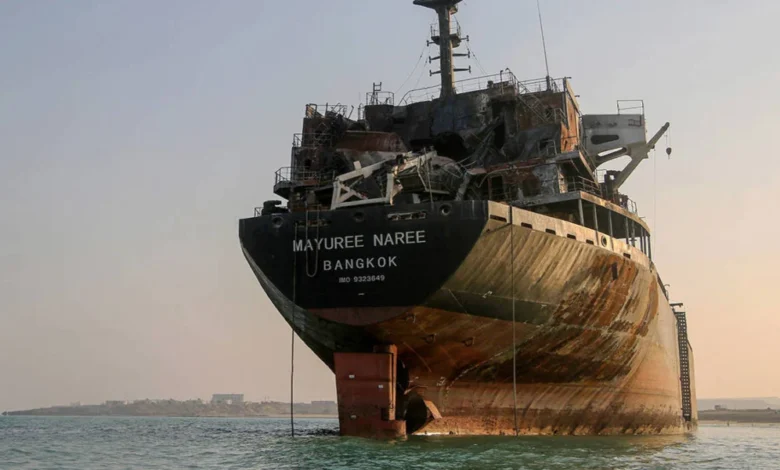
By early 2026, low-intensity friction escalated into a direct, overt military confrontation. The involvement of US forces alongside Israeli defense operations transformed localized skirmishes into a theater-wide conflict. Months of sustained aerial bombardments targeted suspected military infrastructure, command-and-control nodes, and economic assets within Iran, while regional proxies launched retaliatory drone and missile strikes against commercial shipping lanes, energy infrastructure, and allied military outposts.
Chronology of a Precarious Truce
The path to the current, highly unstable ceasefire was paved by mounting economic exhaustion, international pressure, and the diminishing utility of further escalation.
- Early 2026: Direct military engagements intensify following a series of high-profile cyber and kinetic attacks on critical infrastructure in the Middle East. The United States and Israel launch coordinated, large-scale air campaigns targeting strategic installations inside Iran.
- Spring 2026: Global energy markets experience severe volatility. Major shipping choke points, including the Strait of Hormuz, face near-constant disruption, triggering international calls for de-escalation from European capitals and Asian energy importers.
- Summer 2026: Months of relentless bombardment fail to achieve stated strategic objectives. Despite severe degradation of certain military sites, Iran’s capability to project asymmetrical power remains intact, and domestic political pressure mounts in Washington regarding the open-ended nature of the intervention.
- September 2026: Secret diplomatic channels, mediated by regional intermediaries in Oman and Qatar, produce a preliminary framework for a cessation of hostilities.
- September 21, 2026: A formal, highly fragile ceasefire is declared. Described by diplomats as a "cessation on the edge," the agreement lacks long-term enforcement mechanisms and leaves core geopolitical grievances unaddressed.
Supporting Data and Economic Impact
The tangible costs of the recent campaign extend far beyond the immediate theater of operations, reshaping global economic landscapes and straining defense budgets.
According to preliminary estimates from international financial institutions, the disruption to global supply chains through the Strait of Hormuz—through which roughly a fifth of the world’s petroleum passes—resulted in a temporary 35% spike in Brent crude prices during the height of the conflict. Although prices stabilized somewhat following the September announcement, insurance premiums for maritime transit in the Persian Gulf remain at historic highs, adding billions of dollars in overhead costs to international trade.
On the defense front, Department of Defense expenditure reports indicate that interceptor missiles, long-range munitions, and naval deployment rotations associated with the campaign cost US taxpayers upwards of $18 billion over a six-month period. Economists note that these funds, diverted from domestic infrastructure and global development initiatives, yielded diminishing strategic returns, as the targeted state actors demonstrated high resilience and adaptive capacity against conventional air power.
Official Responses and Diplomatic Posture
Reactions to the ceasefire from the international community reflect profound skepticism tempered by cautious relief.
Washington officials have defended the administration’s approach, framing the military operations as a necessary demonstration of resolve that ultimately brought adversaries to the negotiating table. In official statements released following the announcement, administration spokespersons emphasized that the use of force successfully degraded adversarial capabilities and demonstrated unwavering commitment to regional allies.
Conversely, congressional critics and foreign policy realists argue that the outcome underscores the bankruptcy of coercive diplomacy. Lawmakers from both sides of the aisle have raised concerns regarding the lack of congressional authorization for extended kinetic engagements and questioned the absence of a coherent post-conflict political strategy.
In Tehran, state media and government officials have portrayed the survival of the political establishment through months of bombardment as a strategic victory. By weathering the campaign without systemic collapse, Iranian leadership has sought to reinforce its domestic legitimacy and project regional resilience. However, economic hardship driven by years of sanctions and infrastructure damage leaves the country vulnerable, creating an internal imperative for prolonged diplomatic engagement—even if conducted under duress.
Regional partners, particularly Gulf Cooperation Council (GCC) member states, have welcomed the pause in hostilities while quietly expressing deep anxiety over their frontline vulnerability. Capitalizing on lessons learned from the crisis, nations such as Saudi Arabia and the United Arab Emirates have doubled down on independent diplomatic outreach, seeking to insulate themselves from future great-power confrontations.
Broader Impact and Strategic Implications
The crumbling architecture of the recent ceasefire serves as a case study in the limits of twenty-first-century hard power. For decades, the dominant paradigm of US foreign policy relied on the premise that overwhelming technological and conventional military superiority could compel compliance and reshape recalcitrant regimes.
However, the 2026 crisis demonstrates that in a dispersed, multipolar international system, coercive militarism frequently produces the opposite effect. Rather than consolidating hegemony, it incentivizes adversaries to accelerate asymmetric countermeasures, deepens alliances among revisionist powers, and exhausts the economic and political capital of the intervening superpower.
Furthermore, the blurring lines between war and peace—where a ceasefire functions merely as an intermission rather than a resolution—creates a permanent state of strategic anxiety. Markets, populations, and governments are left suspended in uncertainty, unable to plan for long-term stability or economic growth.
As the international community monitors the fragile hold of the current agreement, policymakers face a stark choice. The reliance on punitive militarism, untethered from comprehensive diplomatic frameworks and realistic political goals, risks trapping the global order in an endless cycle of managed crises. True dominance, analysts argue, is no longer measured by the capacity to destroy, but by the ability to construct durable political settlements that render force obsolete. Until US foreign policy reconciles this reality, agreements forged on the precipice of war will remain perpetually vulnerable to the next spark.