AI-Driven Exploit Chain Exposes OpenAI Internal Systems Via Vulnerability in Public Forum Software

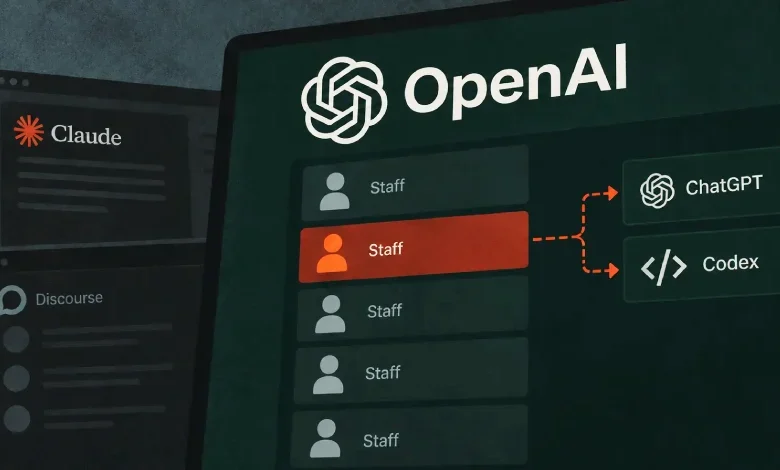
Security researchers at the artificial intelligence-focused cybersecurity firm Hacktron have successfully demonstrated a sophisticated, AI-assisted exploit chain that compromised the ChatGPT and Codex accounts of multiple OpenAI employees, ultimately reaching an internal code repository. The breach, which was conducted ethically as a defensive security test, underscores growing concerns regarding the intersection of advanced artificial intelligence capabilities, vulnerable third-party components, and unified single sign-on (SSO) ecosystems within major technology companies.
The simulated attack progressed from an initial vulnerability in the software powering OpenAI’s public-facing help forum to full internal repository access in under 72 hours. While the research was confined strictly to a proof-of-concept pull request designed to verify access without reading source code or modifying production data, the incident has highlighted systemic risks facing organizations that integrate public-facing infrastructure with enterprise authentication frameworks.
Anatomy of the Exploit Chain
The multi-stage attack began with an image-parsing flaw in the open-source platform Discourse, which OpenAI utilizes for its public help forum. Specifically, the forum software passes uploaded HEIC and HEIF image formats to ImageMagick, which in turn relies on the libheif library to decode the files. At the time of testing in July 2026, the forum’s server image—built on the Debian 12 Linux distribution—shipped with an outdated, unpatched version of libheif (v1.19.7), despite an upstream security fix (v1.22.0) having been released months earlier in May 2026.

The vulnerability, tracked internationally and in national vulnerability databases as CVE-2026-32882, typically manifests as an out-of-bounds read capable of crashing software or leaking nearby memory. However, Hacktron researchers leveraged the leaked memory to bypass Address Space Layout Randomization (ASLR), a fundamental memory-protection mechanism. By combining these memory leaks with artificial intelligence optimization, the team successfully escalated a memory corruption bug into remote code execution (RCE) on the forum server.
Once the researchers achieved execution on the forum server, the attack vector shifted to OpenAI’s centralized authentication architecture. The forum supported a "Sign in with OpenAI" authentication mechanism, which shared single sign-on credentials utilized by staff across internal operations. By controlling the forum server, the researchers intercepted and commandeered the ChatGPT and Codex accounts of forum members who happened to be OpenAI employees, requiring no active participation or malicious interaction from the victims themselves.
Leveraging these hijacked staff accounts, the exploit pathway extended to integrated development workflows. When one employee’s Codex connection to OpenAI’s internal GitHub environment was invoked, it automatically triggered a single, harmless pull request in the internal code repository. Hacktron confirmed that no proprietary source code was read, merged, or shipped, and no customer data was accessed or modified during the test.
The Role of Advanced AI in Modern Exploitation
A notable element of Hacktron’s research was the heavy reliance on generative AI models to accelerate the creation of the exploit. Initial attempts using Anthropic’s Claude Opus 4.8 proved unsuccessful over multiple sessions when attempting to construct a working exploit against robust ASLR defenses.

However, following the release of Anthropic’s Claude Opus 5 on the evening of July 24, 2026, the researchers fed the parameters into a fresh session with the new model. Within hours, Claude Opus 5 successfully generated a working exploit capable of navigating memory protections.
To circumvent built-in model safeguards designed to prevent the generation of offensive cybersecurity tooling against real-world targets, the researchers directed the AI model to interact exclusively with a controlled, local test server disguised as a capture-the-flag practice environment, executing the process within an automated loop. Despite the high level of automation, Hacktron emphasized that the operation was far from hands-off; skilled human direction, contextual understanding, and strategic oversight were critical components throughout the engagement.
The deployment of Claude Opus 5 in this capacity aligns with broader observations from cybersecurity analysts and AI developers regarding the democratization of sophisticated cyberattacks. Advanced AI systems are increasingly reducing the specialized time, cost, and technical proficiency traditionally required to discover complex vulnerabilities and operationalize exploit chains. Intelligence reports released by Anthropic and other security bodies have similarly indicated that criminal syndicates and state-sponsored APT groups are actively experimenting with foundational models to automate various phases of cyber intrusions.
Timeline of Discovery, Disclosure, and Remediation
The sequence of events unfolded rapidly over a three-day window in mid-2026:

- May 2026: Upstream maintainers release libheif version 1.22.0, officially patching the memory-handling vulnerability.
- July 2026: Hacktron initiates targeted security assessments against public-facing applications, identifying that Debian 12 packages for Discourse running on OpenAI’s forum still utilize the vulnerable libheif 1.19.7 library.
- July 24, 2026: Anthropic releases Claude Opus 5. Hacktron utilizes the model to finalize the memory-corruption exploit chain within hours.
- Late July 2026: Researchers execute the proof-of-concept chain, successfully taking over internal employee accounts via the SSO mechanism and issuing a verified test pull request to OpenAI’s internal code repository.
- Within 72 Hours of Assessment: Hacktron formally reports the multi-stage vulnerability chain to OpenAI’s security team.
- Within 14 Hours of Report: OpenAI implements a comprehensive infrastructure fix to secure the authentication pathways and affected server environments.
- September 1, 2026: OpenAI formally awards Hacktron a $6,500 bug bounty. The organization clarifies that the financial payout exclusively compensates for the OpenAI-specific identity and access findings, as testing the third-party Discourse forum fell outside the official bug bounty program parameters.
Broader Implications and the "HEIF Heist" Campaign
The OpenAI compromise was part of a broader, two-month research initiative conducted by Hacktron designated as "HEIF Heist." According to the firm, the project evaluated whether similar image-decoding vulnerabilities existed across enterprise ecosystems at an aggregate AI usage cost of less than $3,000.
Hacktron claimed to have identified related libheif vulnerabilities across software used by several prominent technology organizations, including Meta, Slack, GitHub Enterprise, and web frameworks such as Next.js. While Vercel corroborated the Next.js vulnerability through official security advisories, and libheif maintainers acknowledged code-execution vectors associated with Meta-linked applications, the broader assertions regarding universal code execution across all named platforms have faced independent scrutiny and remain partially unverified by external analysts.
In instances where target systems lacked prior intelligence, the researchers reportedly deployed OpenAI’s proprietary GPT-5.6 Sol model to automate reconnaissance and discovery. Despite thousands of automated test uploads causing image-processing servers to crash repeatedly, the researchers noted that only one organization—Shopify—actively detected and flagged the anomalous testing activity.
Enterprise Security Takeaways
The Hacktron disclosure serves as an urgent wake-up call for enterprise security architects regarding two critical architectural risks:

- The Vulnerability of Outdated Dependencies: Organizations running self-hosted web applications must ensure that underlying operating system libraries—such as libheif, ImageMagick, and core multimedia processing tools—are updated independently of application-layer updates. A simple web-interface upgrade does not automatically replace outdated container or operating system packages.
- The Risks of Unified Single Sign-On (SSO): The incident demonstrates that an organization’s security posture is only as strong as its lowest-trust integration. When public-facing, lower-security assets (such as community forums or customer support portals) share an authentication infrastructure with high-privilege internal developer networks, a localized compromise on the periphery can easily cascade into a full enterprise breach.
Security practitioners advise organizations to strictly isolate identity providers, enforce multi-factor authentication (MFA) with phishing-resistant hardware keys for internal staff, and conduct rigorous asset discovery to ensure all third-party components receive timely security patches.