Russian State-Sponsored Hackers Exploit Zero-Click Vulnerability in Zimbra Collaboration Suite to Target Western Organizations

Russian state-supported hackers are employing a sophisticated new attack technique, leveraging a "zero-click" method that bypasses user interaction, to compromise organizations and establish persistent access. This alarming development, detailed in a joint advisory from a coalition of Western cyber intelligence agencies, highlights a significant escalation in cyber espionage capabilities.
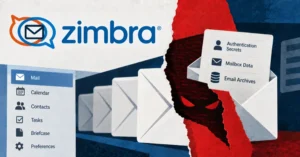
The alert, issued on July 23, 2026, reveals that state-backed threat actors operating on behalf of Russia have been actively targeting and compromising various Western government and commercial organizations utilizing the Zimbra Collaboration Suite (ZCS) software. This campaign has been ongoing since at least July 2025, indicating a prolonged and systematic effort to infiltrate sensitive networks.
Targets and Scope of the Campaign
Organizations identified as targets in these espionage attacks span a broad spectrum of critical sectors. These include entities within the defense, government, education, energy, law enforcement, media, non-governmental organizations (NGOs), and technology industries. This diverse range of targets suggests a broad strategic objective to gather intelligence and potentially disrupt operations across multiple facets of Western infrastructure and governance.
The joint advisory represents a unified front against this threat, issued by prominent cyber and intelligence agencies from the United Kingdom’s National Cyber Security Centre (NCSC), United States agencies including the Cybersecurity and Infrastructure Security Agency (CISA), the National Security Agency (NSA), and the Federal Bureau of Investigation (FBI). Additionally, cyber and intelligence agencies from other Five Eyes nations—Canada, Australia, and New Zealand—along with European counterparts, have contributed to the warning, underscoring the global nature and severity of the threat.
Attribution and Operational Details
The cyber espionage operation behind this campaign has been attributed to a Russian-linked threat actor group known as Laundry Bear. This group is also recognized by other monikers, including Void Blizzard and UAC-0190, reflecting the complex and often obfuscated nature of state-sponsored cyber operations.
The Laundry Bear campaign ingeniously exploits a zero-day vulnerability within the Zimbra Collaboration Suite, identified as CVE-2025-66376. This vulnerability was publicly disclosed in November 2025, but the threat actors appear to have weaponized it prior to or immediately after its public revelation, demonstrating advanced threat intelligence and rapid exploit development. The core of their attack mechanism is a "zero-click" exploit, codenamed "beehive," designed to steal emails and other sensitive data without requiring any user action.
The "Zero-Click" Advantage
Traditional phishing campaigns have long relied on social engineering tactics, compelling users to click malicious links, open infected attachments, or download compromised files. The "beehive" exploit, however, represents a paradigm shift. It leverages a view-based exploit that activates simply by a user viewing a malicious email within a vulnerable version of the ZCS webmail service. This means that even passive users, who are merely checking their inboxes, can fall victim to this sophisticated attack. The absence of a user interaction requirement significantly lowers the barrier to entry for attackers and makes detection through conventional user awareness training more challenging.
Data Exfiltration and Persistence
Upon successful exploitation, the primary objective of the Laundry Bear campaign is the exfiltration of data. Attackers aim to steal at least the last 90 days of emails from the compromised server, along with other sensitive information. This data theft is crucial for intelligence gathering and espionage.
Beyond immediate data theft, Laundry Bear also endeavors to establish persistent access within the victim’s network. This is achieved through stealthy methods, including the secret theft of passwords and the circumvention of multi-factor authentication (MFA) protections. Attackers can achieve this by stealing session tokens, which allow them to impersonate legitimate users and maintain access without repeatedly needing to re-authenticate. This persistent presence allows for prolonged surveillance, further data extraction, and the potential for lateral movement within the network to compromise other systems.
Timeline of the Campaign
While the joint advisory was issued on July 23, 2026, the observed malicious activity dates back to at least July 2025. The vulnerability CVE-2025-66376 was publicly disclosed in November 2025. This suggests that the threat actors likely had prior knowledge of the vulnerability or discovered it shortly after its public disclosure and moved swiftly to develop and deploy the "beehive" exploit. The prolonged period of activity indicates that the campaign has been effective in evading detection for a significant duration.
Official Responses and Mitigation Strategies
In response to this evolving threat, organizations utilizing Zimbra Collaboration Suite have been strongly urged to take immediate and decisive action. The primary recommendation is to apply critical patches to address the identified vulnerabilities. Concurrently, enhancing network monitoring capabilities is crucial for detecting any suspicious activity that might indicate a compromise.
Beth Hopkins, COO of the NCSC, emphasized the adaptive nature of malicious actors. "This phishing campaign demonstrates how hostile actors will ruthlessly adapt techniques and exploit vulnerable technology in pursuit of their aims to steal sensitive information from Western organizations," she stated. Hopkins further highlighted the broader implications of the "zero-click" technique: "With our international partners, we strongly encourage organizations to familiarize themselves with the ‘zero-click’ techniques described in the advisory which could be used against other platforms, and act on the mitigation advice." This underscores the need for proactive defense strategies that go beyond specific vendor advisories.
System administrators have been advised to maintain vigilance for any anomalous behavior on their networks. Beyond patching, the advisory recommends that organizations consider implementing third-party authentication services that support advanced authentication methods like passkeys. Integrating such services can act as a mediating layer for access to ZCS and other systems that may not natively support passkeys. This strategy aims to mitigate the risk of threat actors exploiting stolen credentials to gain unauthorized access to servers.
The Role of Artificial Intelligence in Cybercrime
A particularly concerning aspect of this campaign, as indicated by technical analysis, is the role that Artificial Intelligence (AI) may have played in the development of the codebase for the operation. This finding aligns with growing concerns from intelligence agencies worldwide regarding the potential for malicious threat actors to harness AI capabilities to enhance their cyber campaigns. AI could be used to automate exploit development, generate more sophisticated phishing content, or even create novel attack vectors, thereby accelerating the pace and increasing the efficacy of cyber threats.
Broader Implications and Future Outlook
The Laundry Bear campaign serves as a stark reminder of the persistent and evolving threat posed by state-sponsored cyber actors. The adoption of "zero-click" exploits signifies a move towards more sophisticated and harder-to-detect attack methods. The targeting of a widely used collaboration suite like Zimbra suggests a strategic approach to maximize impact and reach across diverse organizations.
The involvement of multiple international intelligence agencies in issuing the advisory highlights the coordinated and global nature of cybersecurity threats. This collaborative effort is essential for sharing intelligence, developing unified defenses, and holding malicious actors accountable.
For organizations, the key takeaways are clear:
- Proactive Patching: Staying current with software updates and applying critical security patches without delay is paramount.
- Enhanced Monitoring: Implementing robust network monitoring solutions to detect unusual activity is crucial for early detection and response.
- Advanced Authentication: Exploring and adopting modern authentication methods like passkeys can significantly strengthen defenses against credential-based attacks.
- Threat Intelligence: Staying informed about emerging threats and attack techniques, such as zero-click exploits, is vital for maintaining an effective security posture.
- AI Awareness: Understanding the potential impact of AI on cybersecurity threats and preparing for AI-driven attacks is becoming increasingly important.
The Laundry Bear campaign, with its innovative use of zero-click exploits and potential AI integration, underscores the dynamic landscape of cybersecurity. Western organizations must remain vigilant, adapt their defenses, and foster collaboration to counter these sophisticated and persistent threats. The ongoing battle against cyber espionage requires continuous innovation in defensive strategies to stay ahead of evolving offensive capabilities.