Binance Invests $100 Million in USDC Issuer Circle in Major Five-Year Partnership Expansion

Cryptocurrency markets witnessed a significant strengthening of ties between two of their most influential heavyweights as Binance injected $100 million into Circle Internet Financial, the issuer of the widely used USD Coin (USDC). This substantial capital commitment forms the cornerstone of an expansive, multi-year strategic agreement designed to deeply embed USDC throughout the Binance ecosystem, drive global adoption, and alter the competitive dynamics of the digital-asset stablecoin sector.
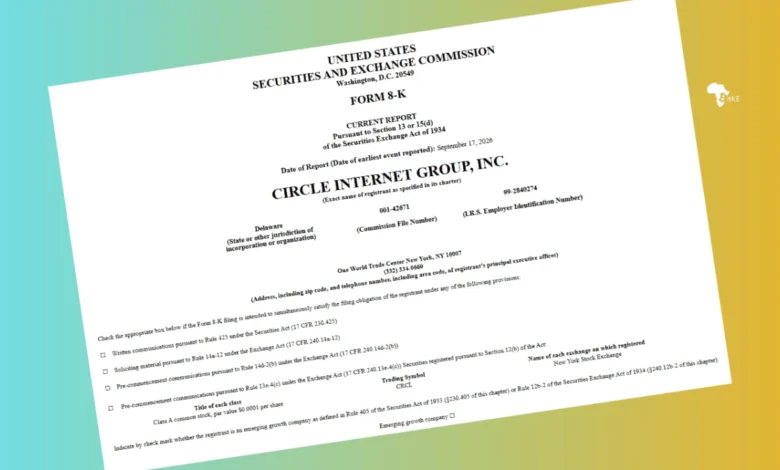
According to regulatory filings released following the transaction, the private placement occurred on September 17, 2026. Under the terms of the equity purchase, Circle issued 1.24 million Class A shares to Binance at a valuation of $80.84 per share. This financial maneuver not only solidifies a commercial alliance but also aligns the corporate interests of the world’s largest cryptocurrency exchange by trading volume with one of the most prominent regulated stablecoin issuers in the global financial technology landscape.
The newly minted five-year roadmap supersedes and replaces previous agreements forged by the two companies in November 2024 and August 2025. As part of the updated pact, Binance has committed to a stringent lock-up provision, agreeing not to sell, assign, pledge, or otherwise transfer its newly acquired Circle shares for a duration of up to two years, barring specific, pre-approved conditions. This restriction underscores a long-term commitment by Binance to the partnership, signaling to markets that both entities are looking far beyond short-term market fluctuations.
Strategic Integration and Product Expansion
Central to the five-year agreement is the aggressive promotion and integration of USDC across Binance’s extensive suite of financial services. While Binance has historically supported multiple stablecoins—most notably Tether’s USDT and its own branded assets—this pact elevates USDC to a preferred status within specific core products.
Under the rollout plan, Binance will integrate USDC into an expanded range of savings and investment products, allowing retail and institutional users to earn yields, stake assets, and deploy capital using the regulated stablecoin. Furthermore, the exchange will roll out targeted promotional incentives, reduced fee structures, and trading rewards designed to encourage market participants to choose USDC for spot trading, derivatives margining, and cross-border settlement.
In tandem with Binance’s consumer-facing initiatives, Circle has committed to financial mechanisms that incentivize ecosystem growth. Under the terms of the deal, Circle will disburse monthly incentive fees to Binance. These payouts are directly linked to the volume of USDC held and utilized through Circle’s Modular Smart Contract Wallet infrastructure, creating a mutually beneficial financial feedback loop that rewards Binance for driving liquidity and user adoption onto Circle-powered architecture.
Chronology of a Developing Alliance
The path toward this landmark $100 million investment and equity exchange has been carefully cultivated over several years, marked by iterative agreements that progressively deepened cooperation.
The foundational framework for the partnership was laid in late 2024. In November 2024, Circle and Binance announced their initial collaborative effort aimed at accelerating global USDC adoption. At the time, the partnership focused primarily on reducing friction for users transferring funds between different blockchain networks and expanding the availability of USDC trading pairs on the Binance platform.
As the regulatory landscape surrounding stablecoins matured globally—particularly with the implementation of frameworks like Europe’s Markets in Crypto-Assets (MiCA) regulation—both companies recognized the necessity of closer alignment. This realization culminated in an updated agreement in August 2025, which expanded the operational scope of their collaboration and laid the groundwork for deeper technological integration.

By mid-2026, the partnership evolved from a purely commercial arrangement into a strategic equity-backed alliance. The September 17, 2026 private placement institutionalized this relationship, transforming Binance from a mere distribution channel for USDC into a direct equity stakeholder in Circle Internet Financial. This progression reflects a broader trend within the digital-asset sector, where exchanges and infrastructure providers increasingly forge capital ties to ensure long-term stability and regulatory alignment.
Market Analysis and Competitive Implications
The tightening relationship between Binance and Circle carries profound implications for the broader cryptocurrency market, particularly concerning the fierce competition for stablecoin dominance. For years, Tether’s USDT has maintained an unchallenged lead as the world’s largest stablecoin by market capitalization, dominating trading pairs across almost all major centralized exchanges. However, the regulatory scrutiny facing offshore stablecoins, coupled with a growing global demand for fully audited, reserve-backed, and US-regulated digital dollars, has created an opening for competitors.
Circle, which manages USDC alongside major institutional banking partners, has positioned itself as the compliant, transparent alternative designed to integrate seamlessly with traditional banking systems and institutional treasuries. By securing the backing of Binance—an exchange boasting millions of active global users—Circle gains access to an unmatched distribution network. This partnership significantly narrows the distribution gap that USDT has historically enjoyed on the platform.
For Binance, the agreement aligns with its broader strategic pivot toward regulatory compliance and institutional-grade offerings. By championing a stablecoin that adheres strictly to Western regulatory standards, Binance can better navigate compliance hurdles in jurisdictions where regulators demand high transparency regarding asset backing. The integration of USDC into savings and investment products also provides Binance users with diversified risk options, enhancing the overall maturity of the exchange’s yield-generating ecosystem.
Industry Reactions and Broader Context
While direct public statements from competing stablecoin issuers have been muted, industry analysts note that the deal represents a paradigm shift in how infrastructure providers and trading venues collaborate. Stablecoins have evolved from simple trading utilities used to park funds during market volatility into the fundamental plumbing of the digital economy, facilitating decentralized finance (DeFi) settlements, cross-border remittances, and institutional treasury management.
The inclusion of Circle’s Modular Smart Contract Wallet infrastructure within the agreement points to another critical trend: the convergence of centralized exchanges and decentralized, programmable financial tools. By tying monthly incentive fees to smart contract wallet utilization, Circle is encouraging Binance to familiarize its user base with advanced Web3 infrastructure, potentially bridging the gap between centralized trading accounts and self-custodial financial applications.
Furthermore, the timing of the investment reflects a maturing market where venture-style private placements involving established crypto giants are becoming more commonplace. Valuing Circle Class A shares at $80.84 in a structured private placement provides a valuable benchmark for Circle’s private valuation as speculation continues regarding a potential future public offering by the stablecoin issuer.
Looking Ahead
As the five-year agreement takes effect, market participants will closely monitor metrics such as USDC market capitalization on Binance, trading volume distributions across stablecoin pairs, and the success of the newly incentivized savings products.
The success of this partnership will likely serve as a litmus test for how centralized trading venues and regulated token issuers can cooperate to drive mainstream adoption. With regulatory frameworks continuing to tighten across the globe, alliances that prioritize transparency, technological integration, and institutional-grade compliance—such as the one forged between Binance and Circle—are poised to define the next era of digital finance.
Related posts: